The rays that locate an image
Countless rays leave the top of an object in every direction and strike the mirror. We cannot draw all of them, so to find where the image forms we draw only two rays whose path after reflection we already know. Wherever those two reflected rays meet, that point is the image of the top of the object.
Ray diagram: a drawing that traces the path of a few chosen rays striking a mirror, in order to show where the image forms, what it looks like and how big it is.
On a spherical mirror the rays listed below always behave in a fixed way, so any two of them can be chosen when a diagram is drawn.
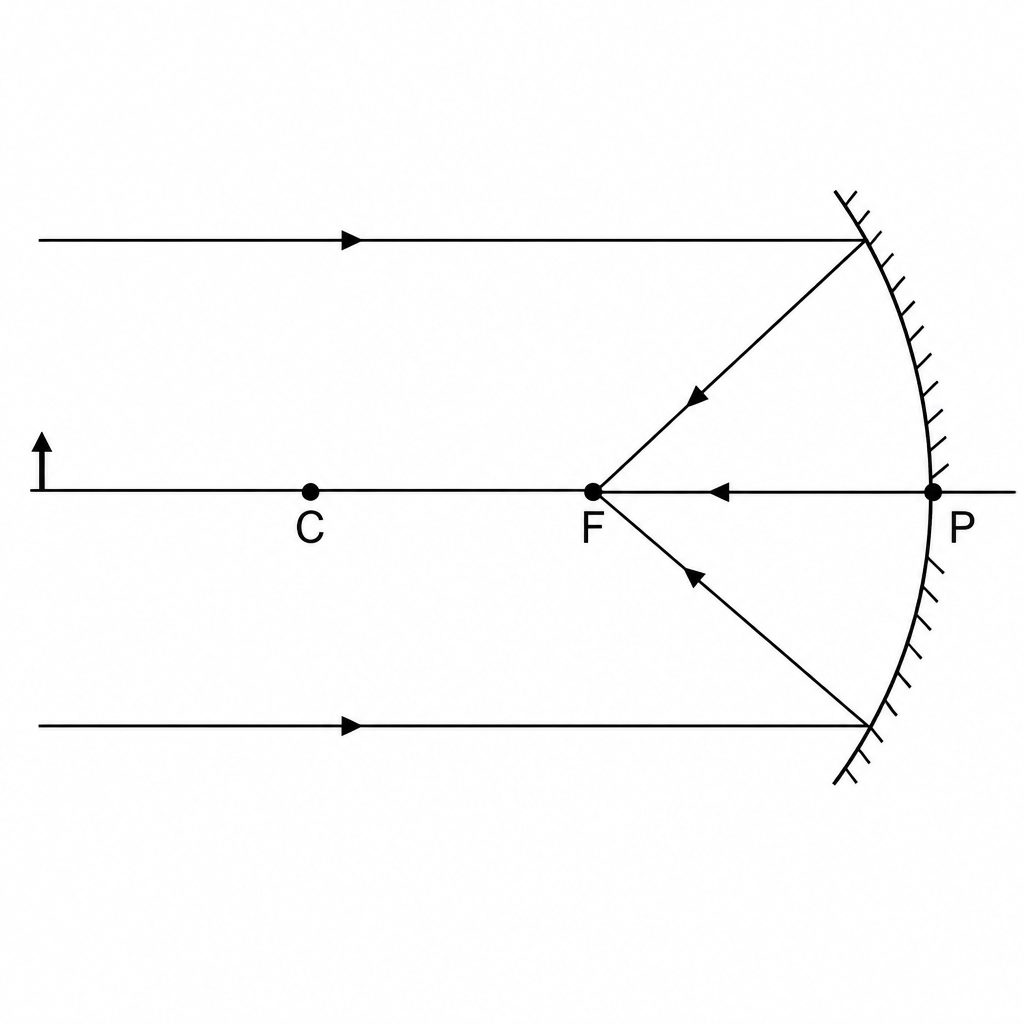
- A ray that arrives parallel to the principal axis passes through the focus F after reflection. On a convex mirror the same ray comes away looking as if it had started from F behind the mirror.
- A ray aimed at the centre of curvature C meets the mirror surface at a right angle, so it returns straight back along the same line.
- A ray that passes through the focus F comes away parallel to the principal axis after reflection.
When the two reflected rays really do meet, a perpendicular dropped from that meeting point to the principal axis completes the image. Sometimes the reflected rays spread apart instead and never meet in front of the mirror. Then the rays are extended backwards as dotted lines, and the point where they appear to meet behind the mirror is taken as the image.
Telling a real image from a virtual one
Those two situations decide the nature of the image. An image built where the rays truly meet is a real image, and it can be caught on a screen. An image built where the rays only seem to meet is a virtual image, and it is seen behind the mirror. For every diagram you read, you should be able to state three things: where the image sits, what its nature is and what size it is.
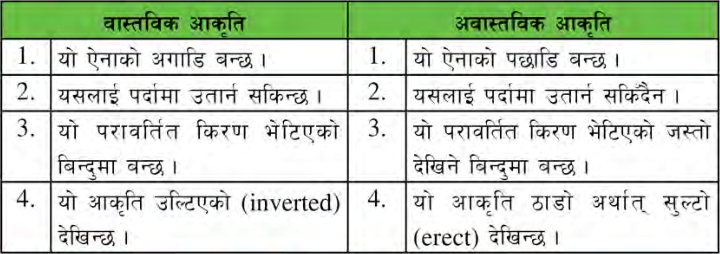
Real image: the image formed in front of the mirror at the place where reflected rays actually meet. It can be caught on a screen and it is always inverted.
Virtual image: the image formed behind the mirror at the point where reflected rays only appear to meet. It cannot be caught on a screen and it is always erect.
Ray diagram for concave mirror
The size, the position and the nature of the image made by a concave mirror all depend on where the object is placed. One and the same mirror gives a tiny image at one moment and a huge one at another, inverted in some positions and erect in another. So the object is tried at six different places in front of a concave mirror.
When the object is at infinity, the rays that reach the mirror are parallel to the principal axis. After reflection they all gather at the focus, so the image forms right at the focus. That image is real, inverted and extremely small, hardly bigger than a bright point.
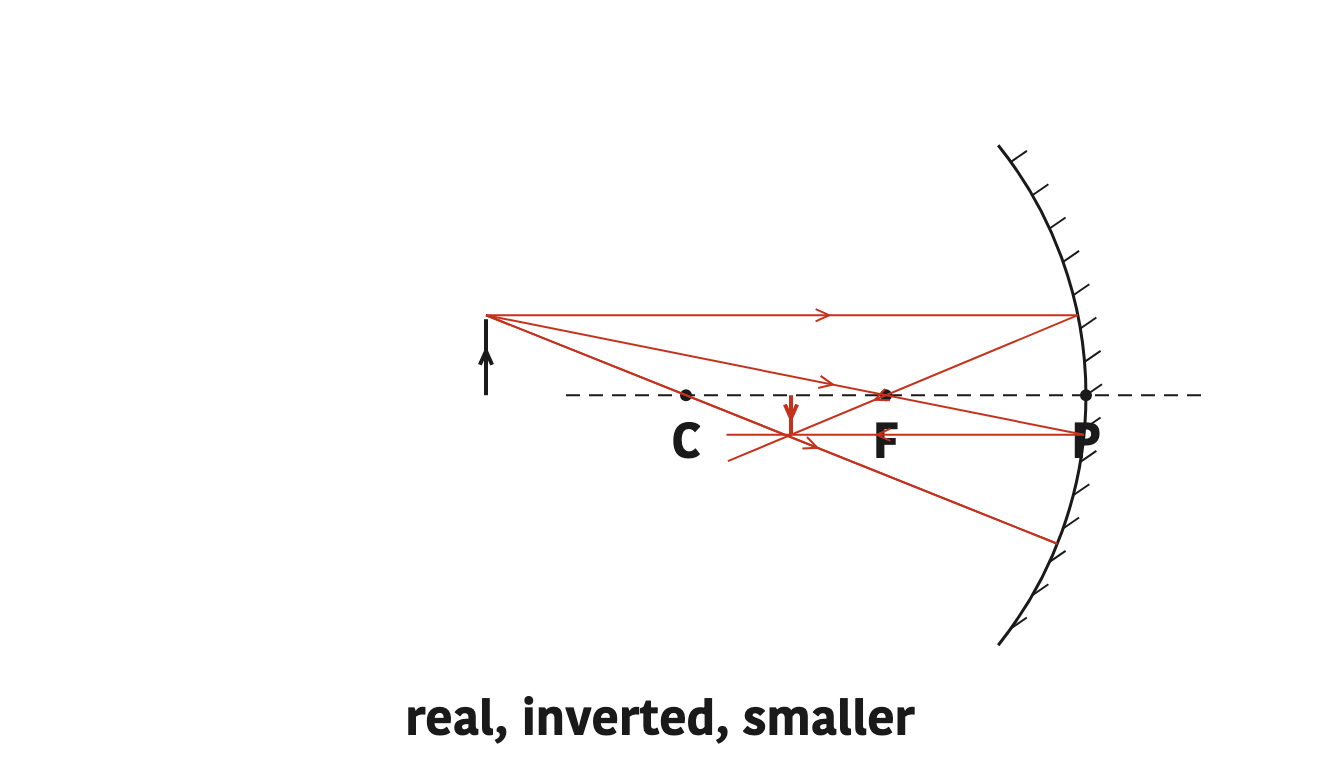
When the object is placed beyond the centre of curvature C, the image forms between C and F. It is inverted, real and smaller than the object. This is the case you meet most often, because standing a little way back from a concave mirror shows you a small upside down picture of yourself.
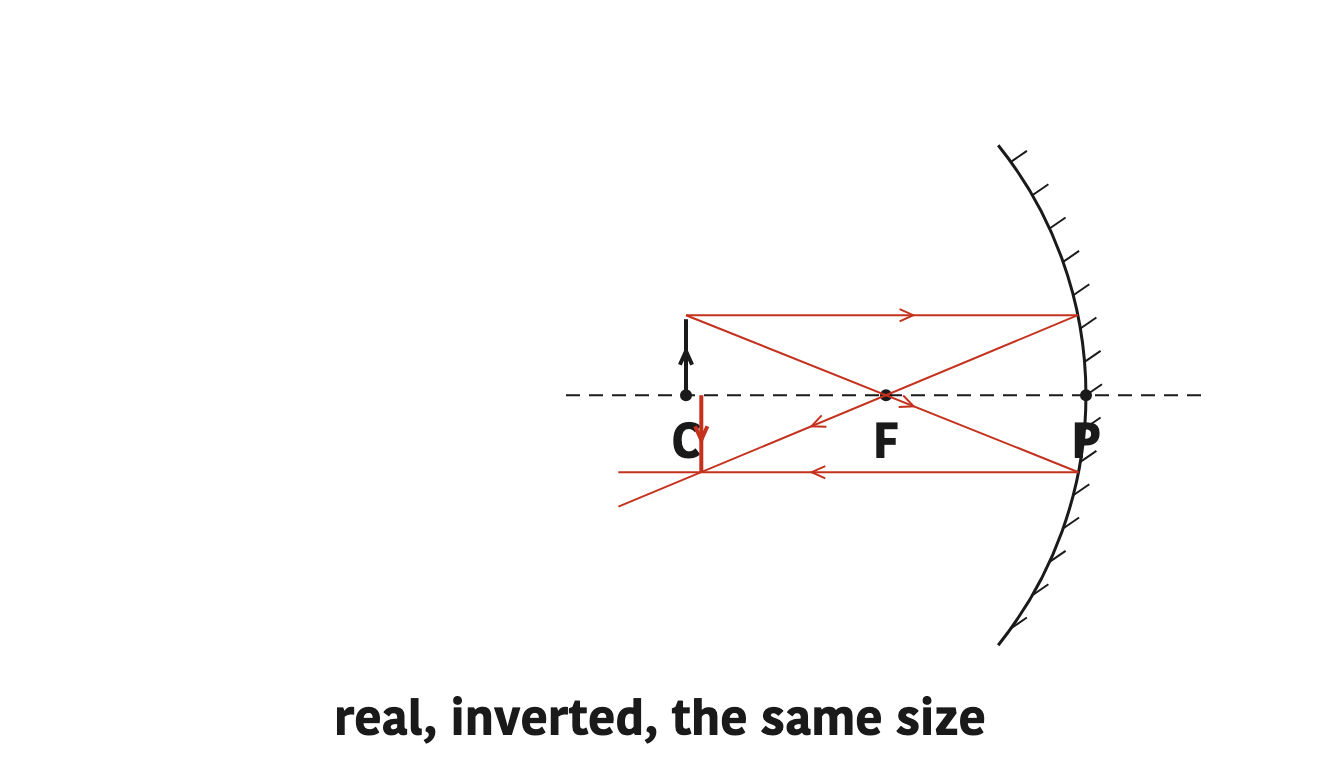
When the object is placed exactly at the centre of curvature C, the image also forms at C. It is inverted, real and the same size as the object. Of the six positions this is the only one where image and object match in size.
When the object is placed between C and F, the image forms beyond C, that is further from the mirror than C. It is inverted, real and larger than the object. As the object creeps towards the mirror, the image moves further away and grows bigger.
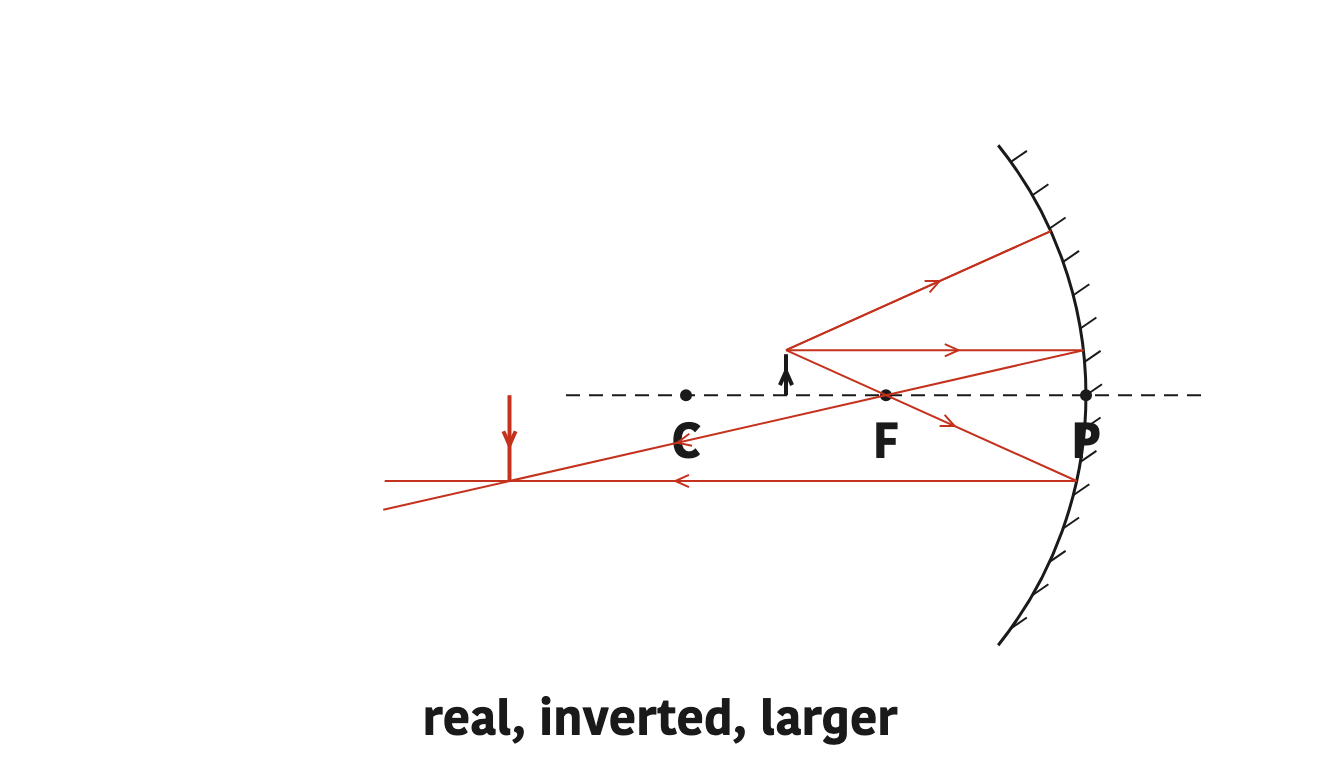
When the object is placed at the focus F, the reflected rays travel away parallel to one another. They do not meet anywhere nearby, so the image forms at infinity, far beyond C. That image is inverted, real and very much larger than the object.
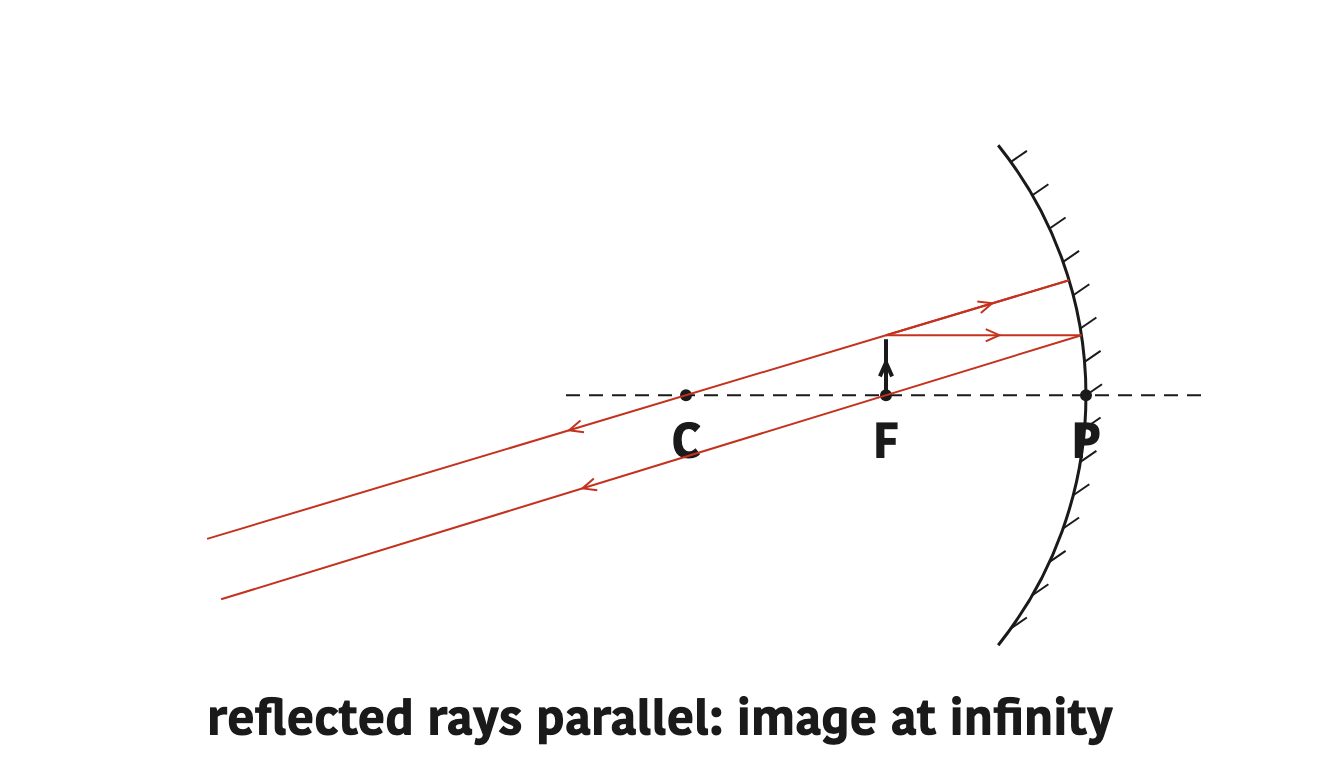
When the object is placed between F and the pole P, the reflected rays spread apart and never meet in front of the mirror. Extended backwards, they appear to meet behind it, so the image is formed behind the mirror. It is erect, virtual and larger than the object. Of the six positions, this is the only one that gives a virtual image.
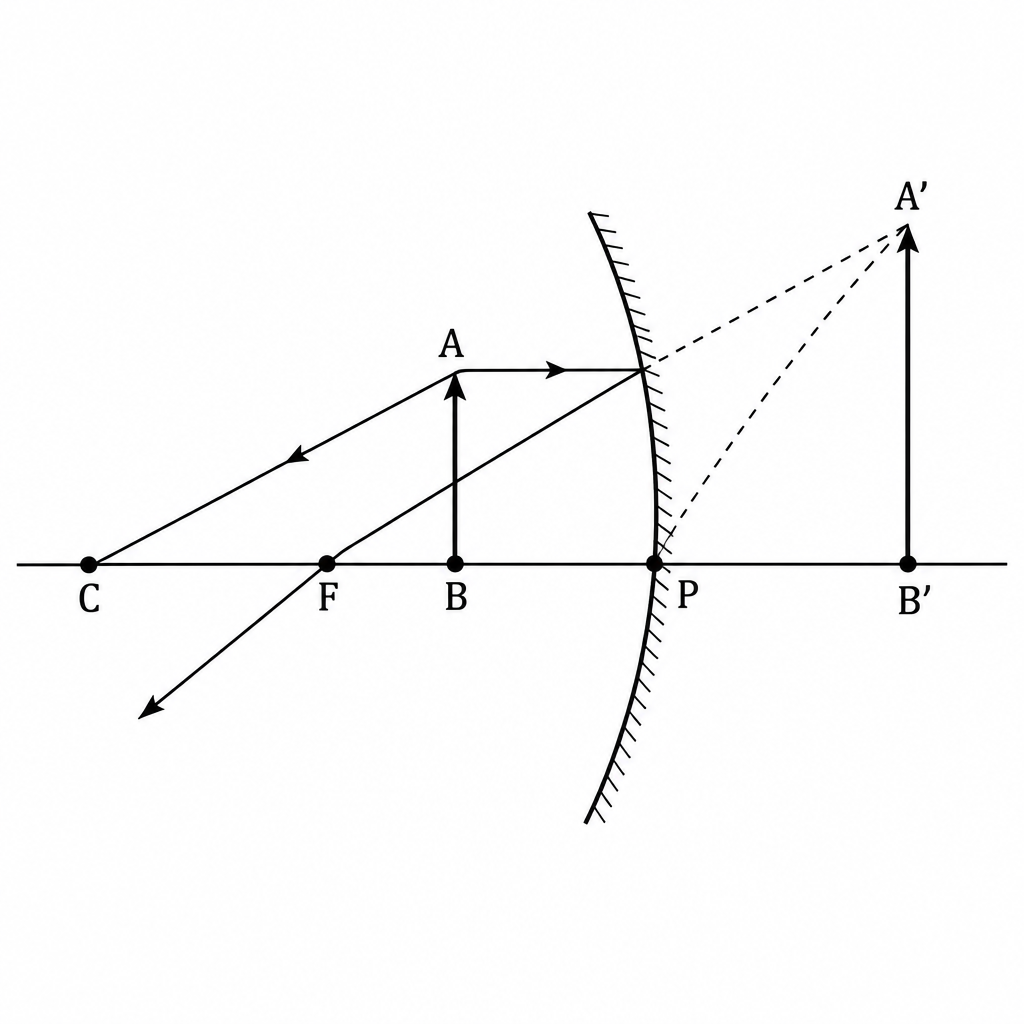
Except when the object lies between F and P, every image a concave mirror makes is real and inverted.
The infinity case and the focus case are very easily swapped. When the object is at infinity the image forms at F, and when the object is at F the image forms at infinity. They are two different situations, not one.
The six positions in one table
| Where the object is | Where the image forms | Nature | Size |
| At infinity | At the focus F | Real, inverted | Extremely small |
| Beyond C | Between C and F | Real, inverted | Smaller than the object |
| At C | At C | Real, inverted | Same size as the object |
| Between C and F | Beyond C | Real, inverted | Larger than the object |
| At F | At infinity | Real, inverted | Very much larger |
| Between F and P | Behind the mirror | Virtual, erect | Larger than the object |
Ray diagram for convex mirror
Whatever object is placed in front of a convex mirror, its image is formed behind the mirror. The reflected rays always spread apart, so the image can only be found by extending them backwards. That is why a convex mirror always makes an image that is virtual, erect and smaller than the object. Moving the object changes none of those three things, it only changes how small the image is.
When the object is at infinity, parallel rays reach the mirror. After reflection they look as though they had come from the focus F behind the mirror, so the image forms at F. That image is virtual, erect and extremely small.
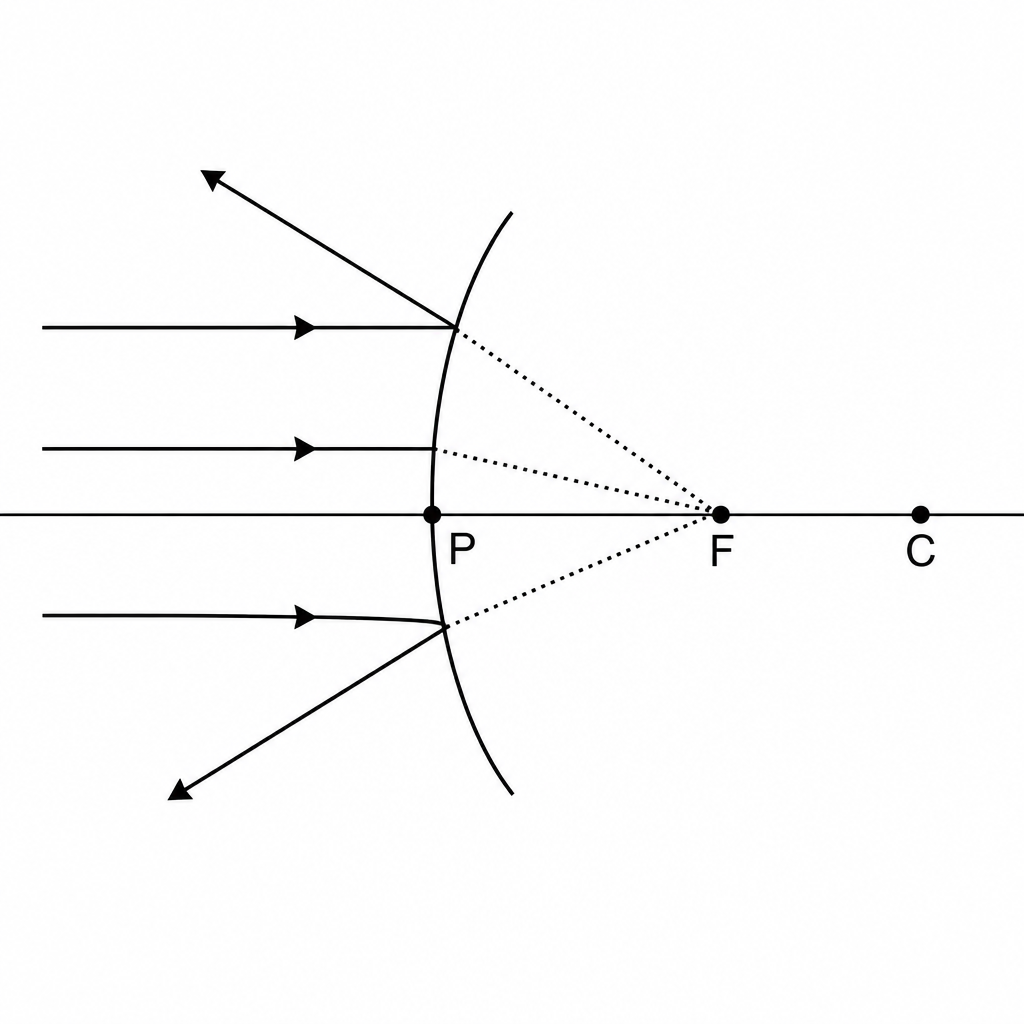
Wherever the object stands between the pole P and infinity, the image forms behind the mirror, between P and F. It is erect, virtual and smaller than the object. Being small is useful rather than a loss, because a mirror that shrinks what it shows can show a much wider stretch of the world at once.
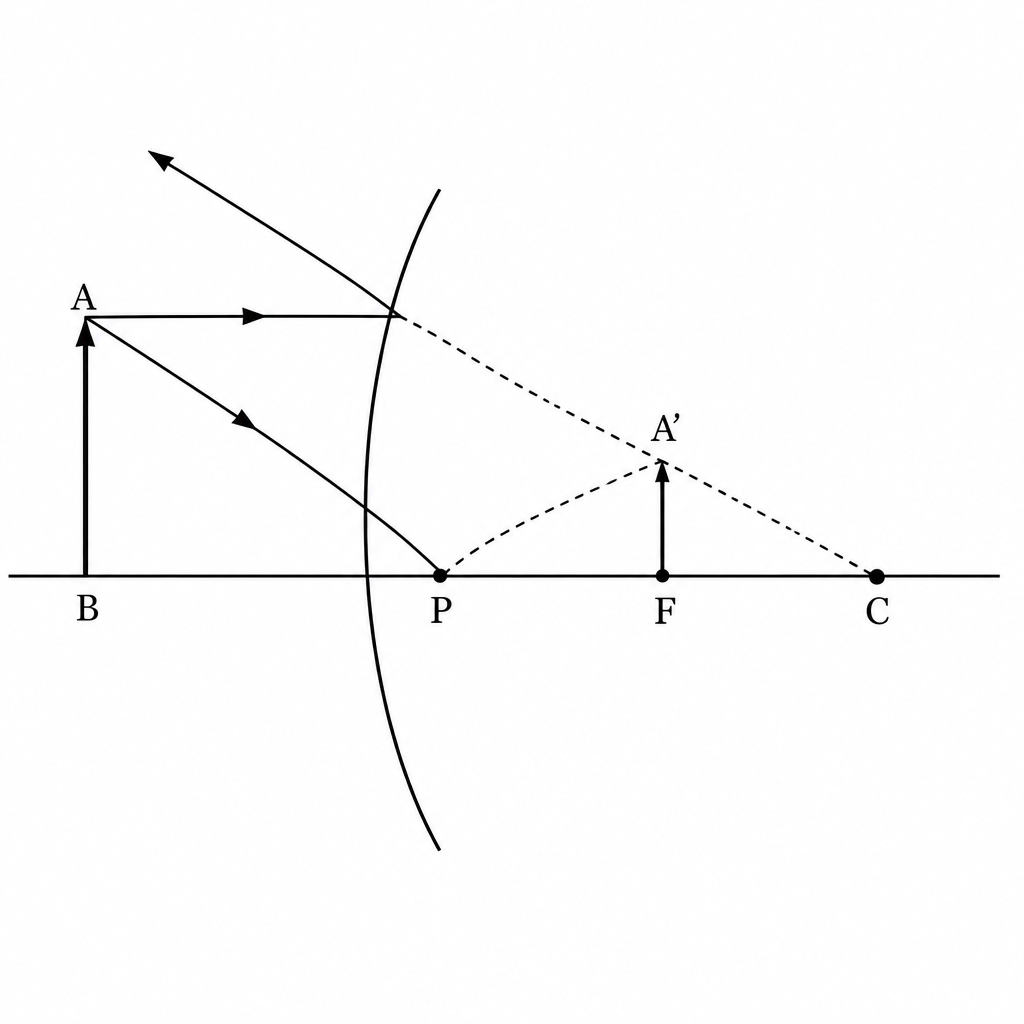
A convex mirror never makes a real image, so its image can never be caught on a screen.
Do not let inverted and erect change places in your answer. An image standing head downwards is inverted, and an inverted image is always real. An image standing head upwards is erect, and an erect image is always virtual.
Uses of spherical mirrors
A concave mirror gathers light rays into one place, and it shows a nearby object larger than it really is. Those two properties give it a long list of uses.
- In a torch, in a searchlight and in a vehicle headlight it is used to throw the light far ahead.
- A doctor uses it to look into the inner parts of a patient's nose, ear, mouth and throat.
- It is used while shaving and while putting on make up, because it shows the face enlarged.
- It is used in a telescope as the reflector of light.
- Since gathering light rays raises the temperature, it is used in a solar cooker to collect the heat energy of the sun.

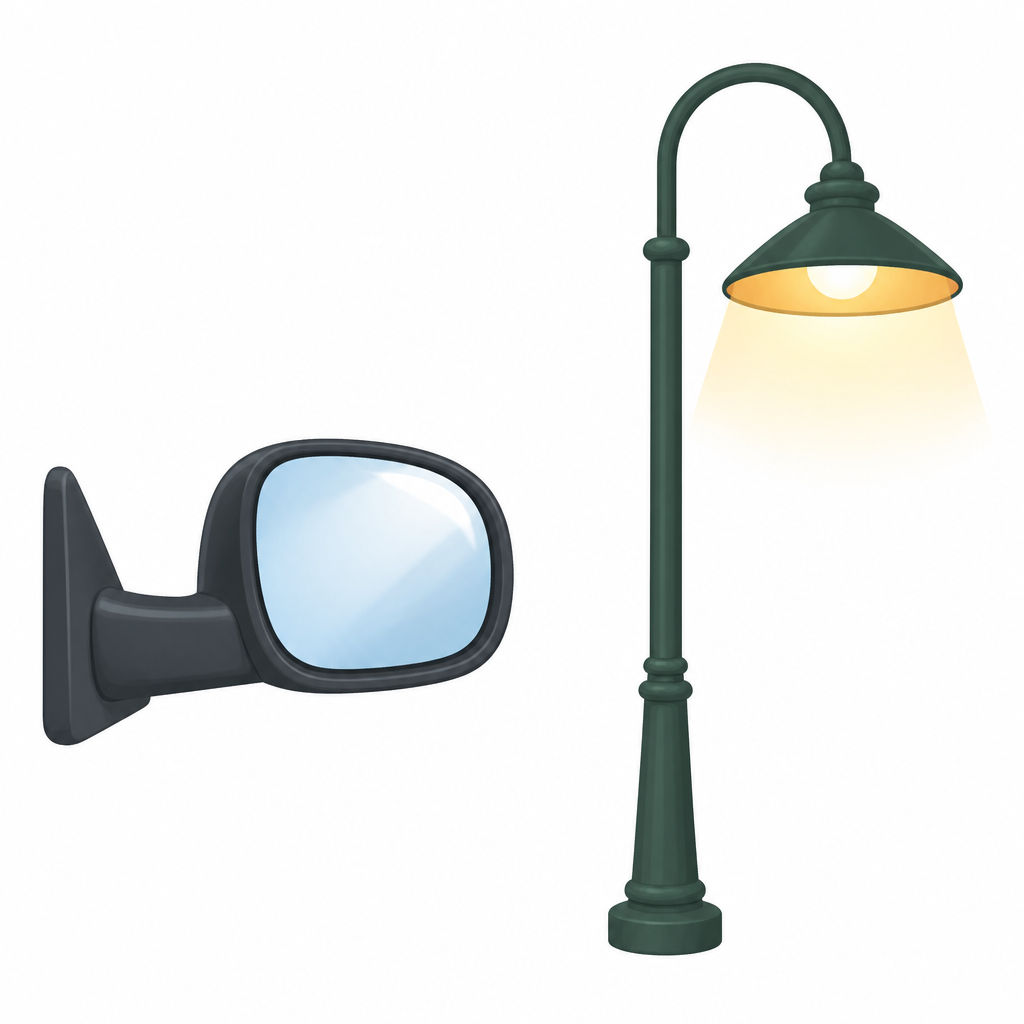
A convex mirror shows a small but very wide view, and it spreads light outwards. That sends it to a different set of jobs.
- It is fitted on the right and left of a vehicle as a side mirror, to see what is behind.
- It is used in street lamps to scatter the light over a large area.
Never put your hand, a piece of paper or your eye at the point where a concave mirror gathers sunlight. The heat there is very high and it can burn.
Find the mirrors around you
What you have learnt can be tested at home and at school. Work through the steps below.
- Collect a list of the devices at your home, at your school or nearby that use a concave or a convex mirror.
- Decide which of the two mirrors each device carries and write it beside the name.
- Find out, by looking or by asking, what each of those devices is used for.
- Take your finished list to the class, discuss it and compare it with what your friends found.
The full lesson is waiting for you
The notes are free to read in full. A free account opens the rest of the practice, and tracks your progress and confidence score for every subject. Presentations and videos need approval from Learn Yeti.