Every Sound Source Has Its Own Frequency
A flute, a drum, a school bell and a person talking all send out sound, yet no two of them sound alike. The reason is frequency. When the source that makes the sound changes, the frequency of the sound it sends out changes with it. Two sounds may be travelling through the same air at the same speed and still carry quite different frequencies. Taken all together, the sound waves around us run from a frequency of 1 Hz up to \( 10^8 \) Hz.
The voices of small boys and of girls carry a higher frequency, so those voices sound sharp. After a boy reaches physical maturity his sharp voice changes and turns deep. The voice of a man reaches a frequency of about 6.5 kHz, while the voice of a woman reaches about 8.5 kHz. That is why two people speaking in one classroom can be told apart without looking.
Frequency is counted in hertz, written Hz, and one hertz means one vibration in one second. Larger frequencies are written in kilohertz.
\[ 1 \text{ kHz} = 1000 \text{ Hz} \]
The Limits of Human Hearing and the Three Kinds of Sound
The human ear cannot hear sound of every frequency. A person hears only sound whose frequency lies from 20 Hz up to 20 kHz. Sounds below that lower limit and sounds above the upper limit are all around us too, but the ear does not answer to them. On the basis of frequency, sound is therefore sorted into three kinds. Below the lower limit comes infrasonic sound, between the two limits comes audible sound, and above the upper limit comes ultrasound.
20 Hz and 20 kHz are the two boundary marks of sound. Once these two numbers are held in mind, telling the three kinds apart becomes easy.
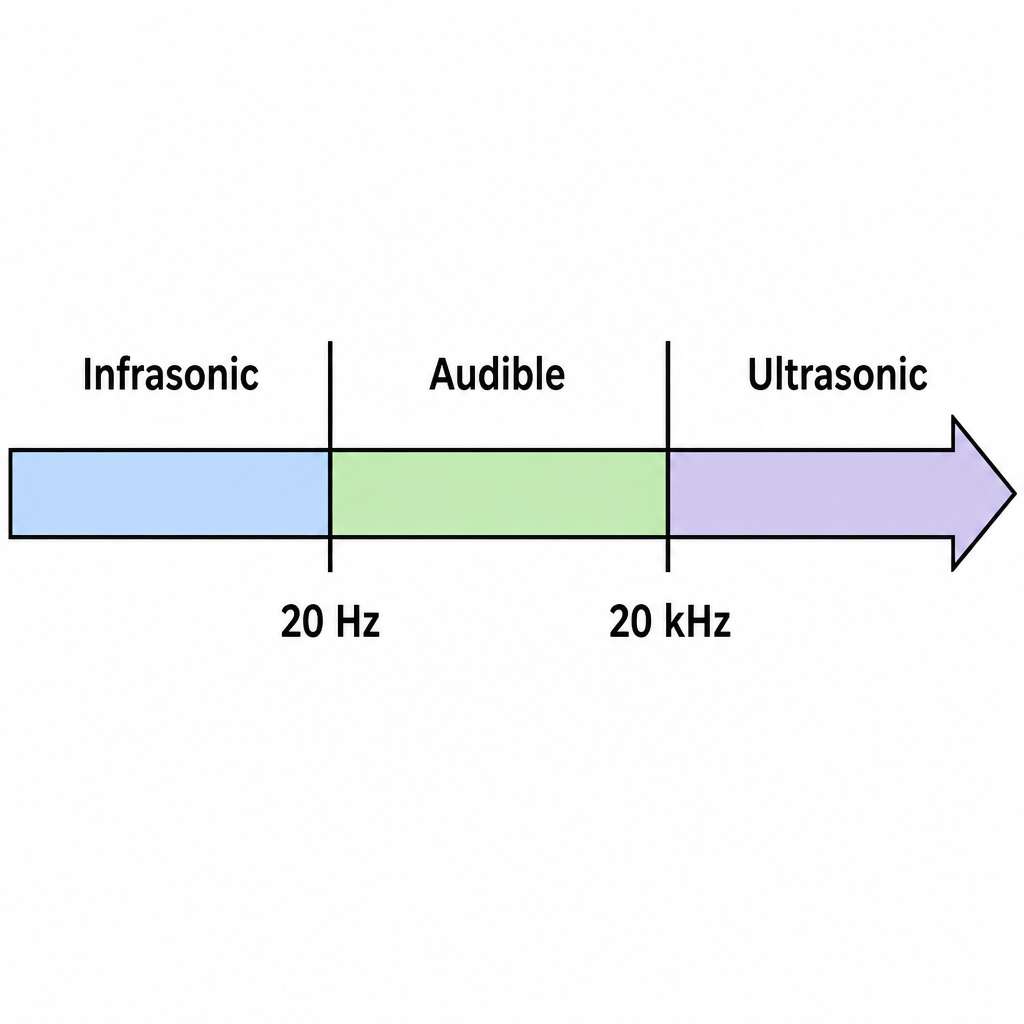
| Kind of sound | Frequency | Heard by people? | Examples |
| Infrasonic sound | Less than 20 Hz | No | Earthquake, volcano, whale, elephant |
| Audible sound | More than 20 Hz and less than 20 kHz | Yes | Guitar, singing, radio |
| Ultrasound | More than 20 kHz | No | Bat, rat, bird, insect |
Infrasonic Sound
Sound whose frequency is less than 20 Hz is called infrasonic sound.
The frequency of such a wave is called sub sonic, and sound of this frequency is also called infrasound or subsound. The ear cannot hear it, but it can be felt by touch. Sound of this kind comes out when an earthquake happens and when a volcano bursts. That is why the floor or a wall can feel as though it is trembling before an earthquake even though the ear has heard nothing.
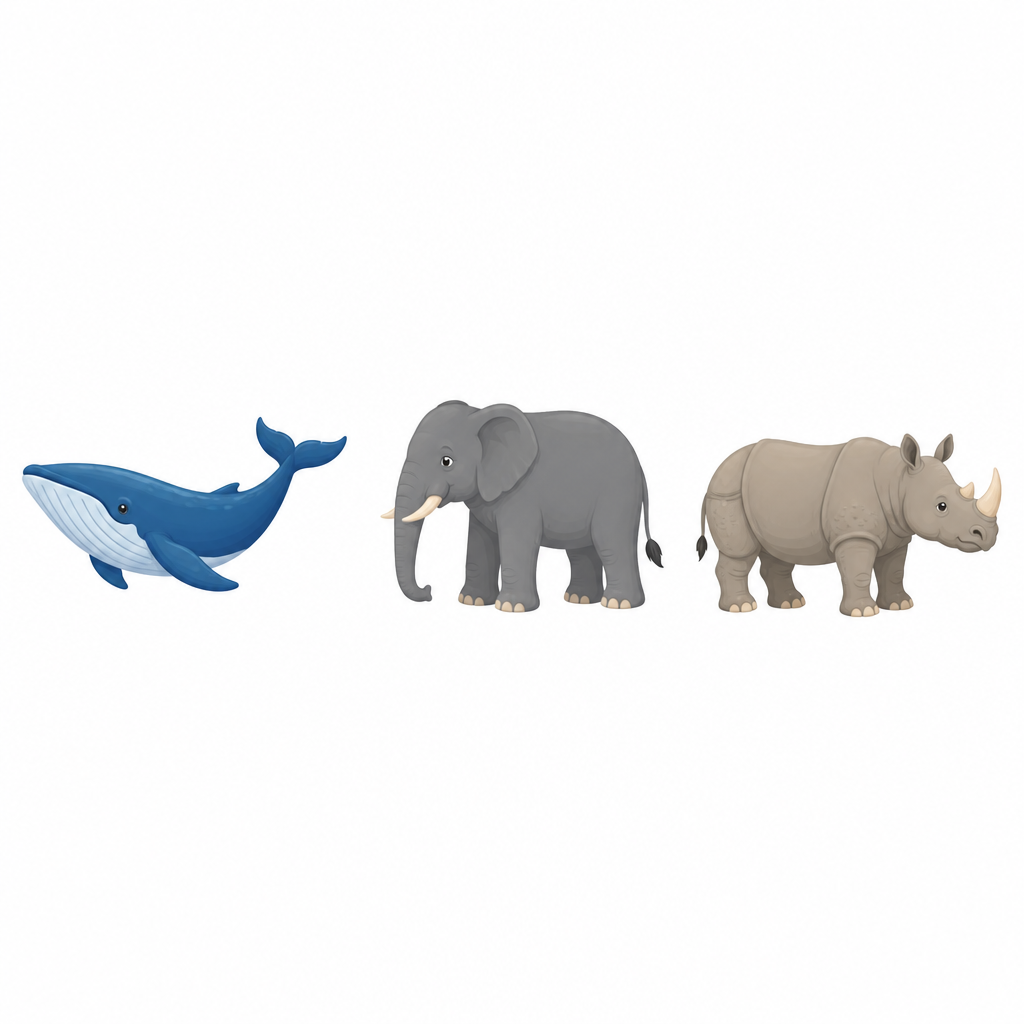
Animals such as whales and elephants give out infrasonic sound. Rhinoceroses also produce infrasonic sound of a frequency less than 5 Hz. With sound like this those animals can pass a message to one another across a very long distance.
Audible Sound
Sound whose frequency is more than 20 Hz and less than 20 kHz is called audible sound.
The human ear can hear these sounds. The note that comes out when a guitar is played, the sound made while singing a song and the sound of a radio playing are some examples of it. All the talking heard through the day, a teacher reading aloud and a friend laughing fall inside this same band. Every conversation and all the music people make therefore live inside audible sound.
Ultra Sound
Sound whose frequency is more than 20 kHz is called ultrasonic sound. It is also called ultrasound.
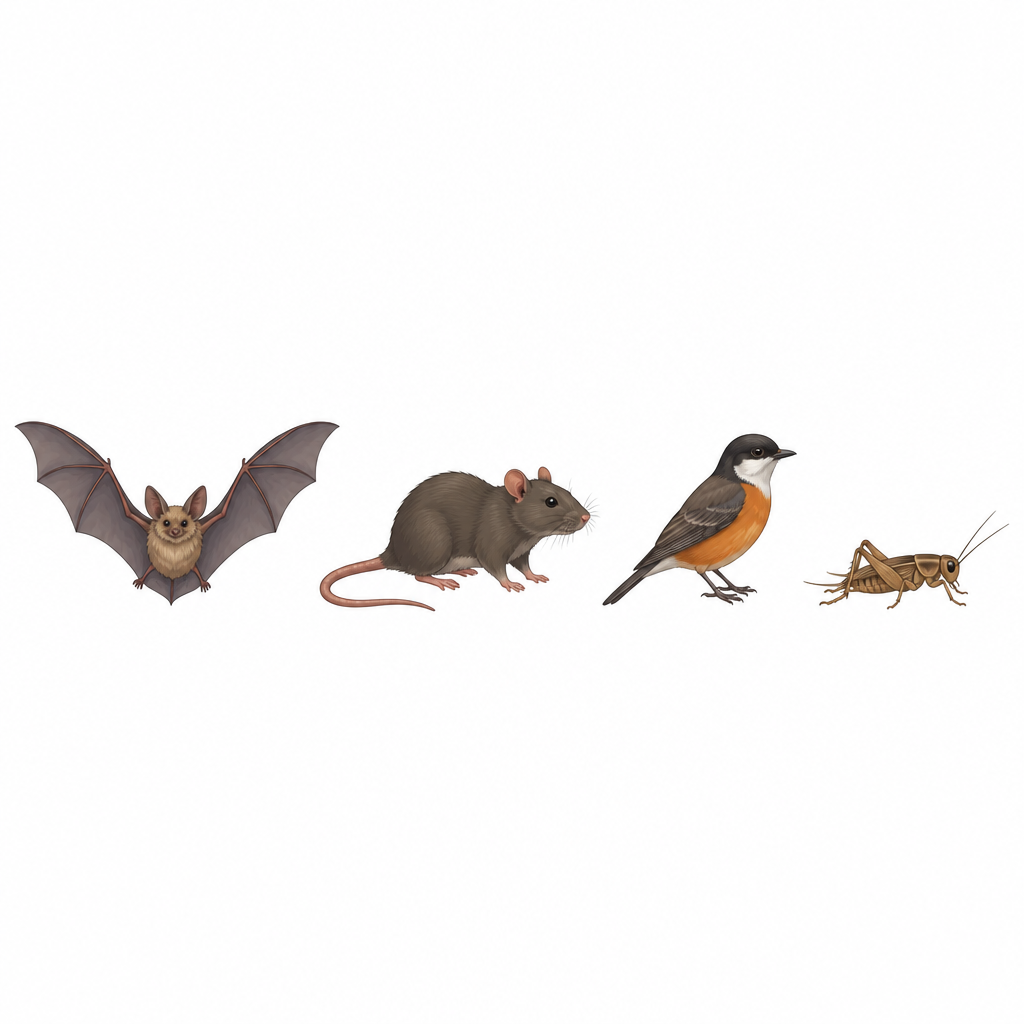
The human ear cannot hear these sounds. Some animals, such as the bat, the rat, the bird and the insect, can both produce this sound and hear it. Because the frequency of this sound is high, the amount of energy it carries is also high. It is that extra energy which lets ultrasound be put to work. In medicine, examining the inner organs of the body by means of ultrasound is now in wide practice.
Swapping infrasonic and ultrasonic is an easy slip to make. Infrasonic means sound below the lower boundary of 20 Hz, and ultrasonic means sound above the upper boundary of 20 kHz. Neither can be heard, but they sit at opposite ends of the scale.
Practical Uses of Ultrasound
Sound waves of frequency more than 20 kHz are ultrasound, and so their wavelength is extremely short. When they travel from one place to another they go without spending energy and without bending. A short wavelength and a straight path together mean these waves can be aimed exactly at one chosen spot inside the body or inside the sea.
Because of these qualities, doctors use ultrasound for the work listed below:
- to find out the growth and condition of the baby inside the mother's womb
- to carry out a bloodless operation
- to kill bacteria
- to identify a disease in the inner parts of the body
- to detect a tumour and to find its exact location as well
Ultrasound shows the baby inside the mother's womb, but the law of Nepal does not allow the sex of an unborn baby to be found out and told. The scan is done only to see the health and the growth of the baby.
Sonar and the Depth of the Sea
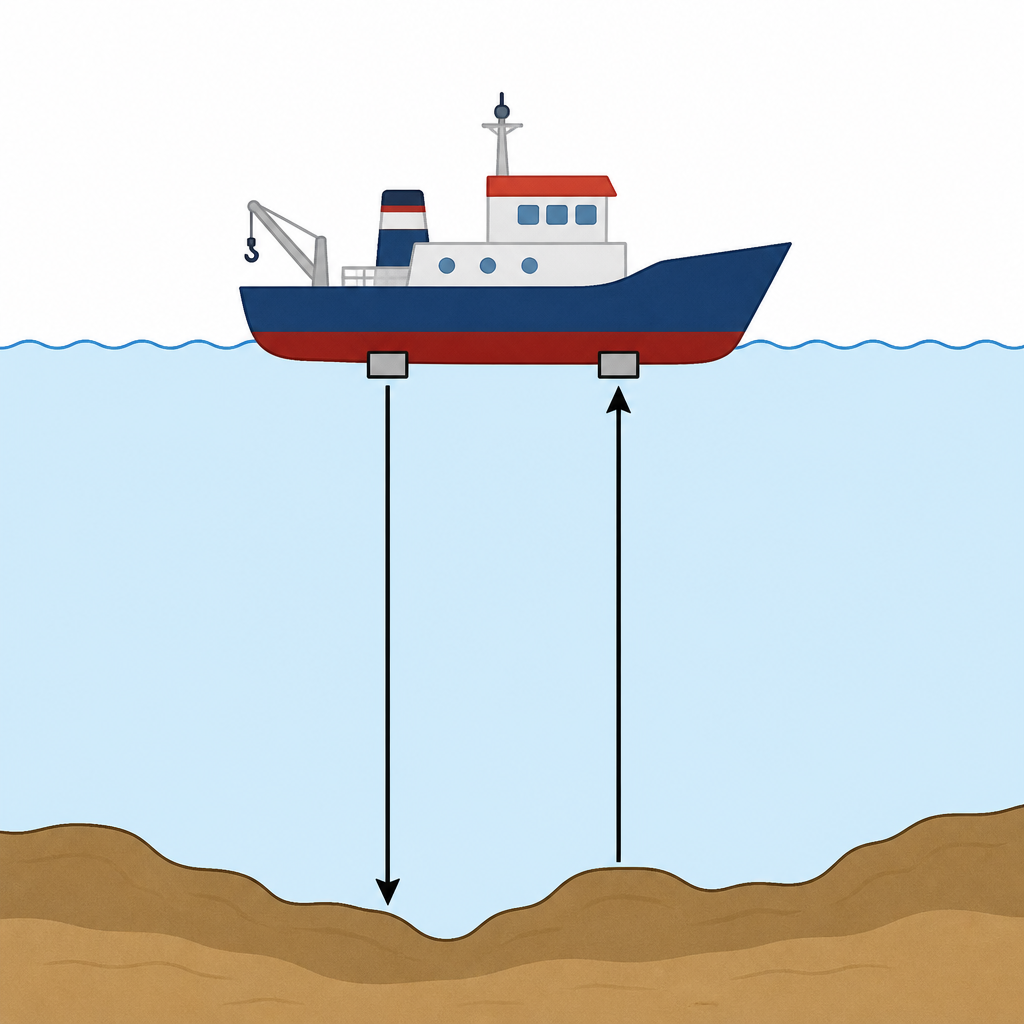
To measure the depth of the sea, sonar, which stands for sound navigation ranging, is used. No measuring tape can be carried down to the sea bed, but a wave of ultrasound can go down to the bed and come back. That returning wave is what tells the depth.
- A wave of ultrasound is sent from the surface of the sea down towards its bed.
- The wave strikes the sea bed and is reflected.
- The wave that comes back after reflection is picked up by the receiver.
- The time the wave takes to go from the surface to the bed and reach the surface again is recorded.
- From that recorded time and the speed of sound, the depth is worked out.
One point here needs care. In the time that is recorded, the wave has crossed the depth not once but twice, once going down and once coming back up. The depth of the sea is therefore only half of that whole journey.
Find Out for Yourself
Ultrasound is not only something written about; it is running in the nearest hospital right now. Doing this task lets the use of ultrasound be seen with one's own eyes.
- Go to the nearest hospital or health institution.
- Observe the ultrasonography machine kept in its laboratory.
- Ask the health workers there which conditions ultrasound is used to identify.
- Prepare a list of the conditions learnt from them and read it out to the class.
The full lesson is waiting for you
The notes are free to read in full. A free account opens the rest of the practice, and tracks your progress and confidence score for every subject. Presentations and videos need approval from Learn Yeti.