The Work We Do Every Day
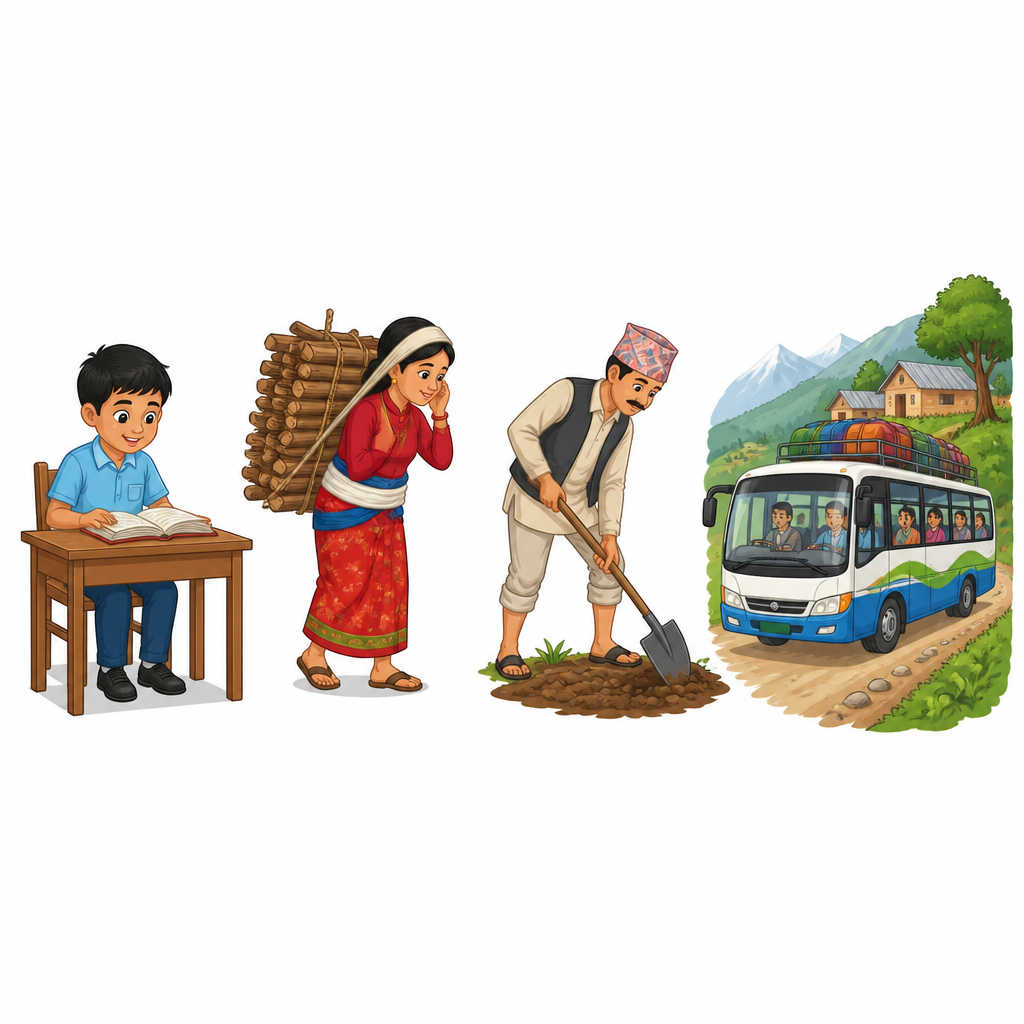
From the moment we get up until we go to bed, we are doing one kind of work or another. Reading a book, writing in a copy, carrying a pot of water, weeding a field, walking to school: all of these are work. If we try to do them all day without eating anything, the body soon becomes weak and the work simply stops. That tells us something. Doing work needs something, and our body gets that something from food.
The same is true of machines. A bus or a truck will not move a single step until diesel or petrol is put into it. A fan, an iron and a lamp stay dead until electricity reaches them. Food gives our body the ability to work, fuel gives that ability to vehicles, and electricity gives it to electrical appliances. Science has one name for that ability.
What Energy Is
The capacity to do any kind of work is called energy. After a meal we have the capacity to run, so food has given us energy. After petrol is filled, a motorcycle has the capacity to move, so petrol has given it energy. Energy is not a substance you can hold in your hand. It is the ability to get work done.
Energy: the capacity to do any kind of work. In the SI system, energy is measured in the unit called the joule (J).
Length needs the metre and mass needs the kilogram. In the same way, saying how much energy something has needs a unit of its own, and that unit is the joule. How much energy a food holds, or how much energy a machine has used up, is stated in joules.
The Different Forms of Energy
Different jobs need different forms of energy. Lighting a bulb needs electrical energy, cooking food needs heat energy, and reading needs light energy. Sunshine dries clothes, but sunshine alone will not light a bulb. So energy has to be recognised by the form it takes. These are the main forms.
Mechanical energy: the energy of something moving or stretched, such as flowing water.
Heat energy: the energy that gives warmth, such as the energy from a burning fire.
Light energy: the energy that lets the eye see, such as the light from the sun or a lamp.
Sound energy: the energy the ear hears, such as the sound a bell gives out.
Magnetic energy: the energy of a magnet, which pulls iron towards it.
Electrical energy: the energy that flows in wires and runs appliances.
Chemical energy: the energy stored inside food, batteries and fuels.
Nuclear energy: the energy held inside the centre of an atom.
One single form of energy cannot do every job in daily life. The form of energy needed changes with the job.
Where Energy Comes From
Before a bulb lights up, the electricity has come from somewhere, and the petrol in a motorcycle has come from somewhere too. Whatever a form of energy is obtained from is called a source of energy. The sun, mineral fuels, air, water and plants are our main sources.
Source of energy: whatever place or material energy is obtained from is called a source of energy. The sun, mineral fuels, air, water and plants are sources of energy.
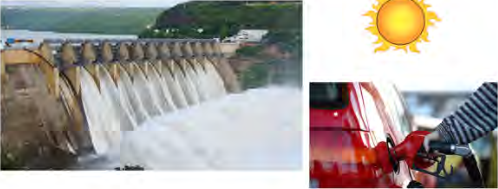
The sources found in nature are not all of one kind. The store of some sources goes down as we use them, and one day it will be finished. Other sources keep being produced again even while they are being used, so using them does not empty the store.
- Sources that run out: mineral fuels such as coal and petroleum, whose store shrinks the more we take out.
- Sources that are produced again: the sun, air, water and plants, which keep becoming available again as we use them.
| Source | What we get from it |
| The sun | Light and heat; a solar panel makes electricity from it |
| Mineral fuels | Heat from petrol, diesel and coal; vehicles and factories run on it |
| Air | Moving air turns a turbine and makes electricity |
| Water | Flowing water turns a turbine and makes electricity |
| Plants | Firewood and food; our body gets its energy from food |
Heat Is a Form of Energy
Heat is a form of energy. We cannot see it with our eyes, but we can feel it. Sitting beside a fire in winter, heat gives us warmth. Heat at the stove boils water and cooks rice, which means heat does work. Anything that can do work is energy, and that is why heat is energy.
Heat: heat is a form of energy that makes objects hot and gives us a feeling of warmth.
Telling Hot From Cold by Touch
We can tell a hot object from a cold one by touching it, and our own skin is the measure we use. When we touch something hotter than our skin, heat moves out of that object into the skin, so we feel it as hot. When we touch something colder than our skin, the opposite happens: heat moves out of our skin into that object, so we feel it as cold.
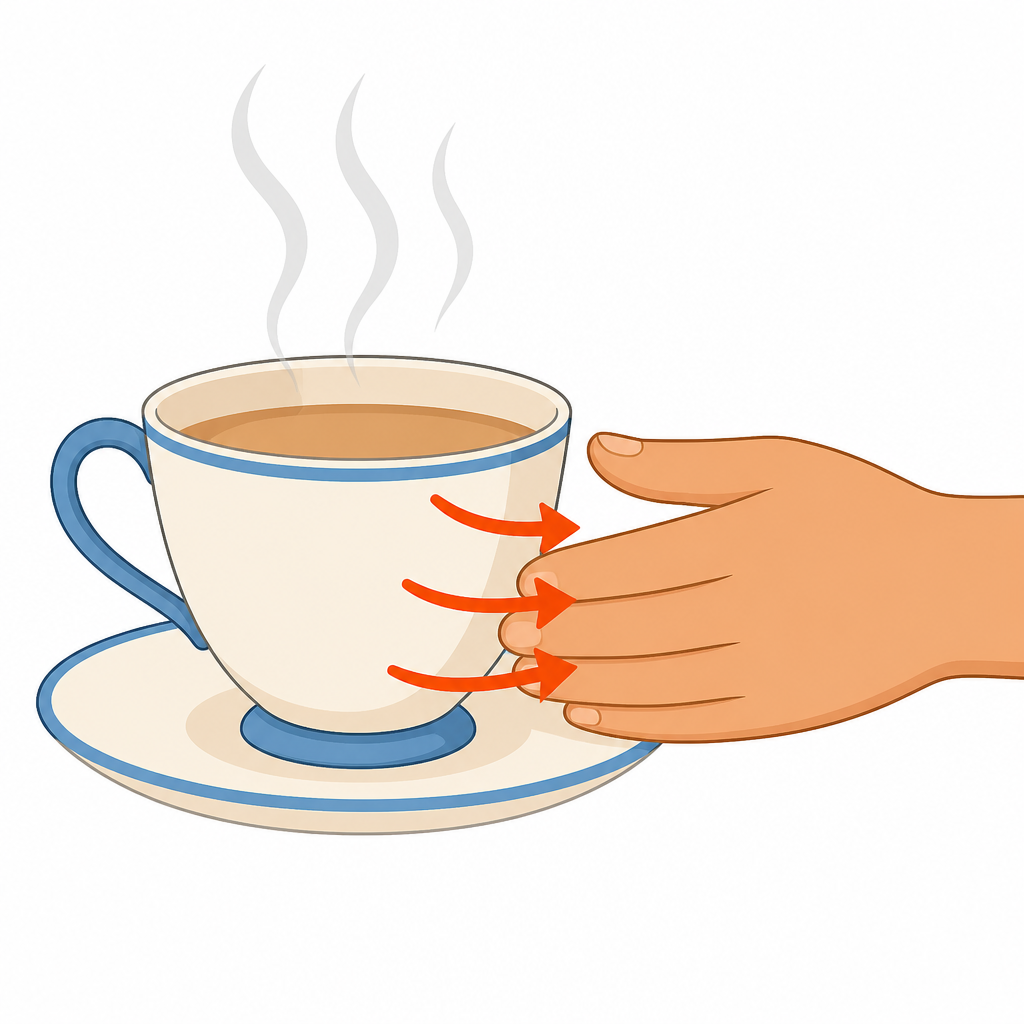
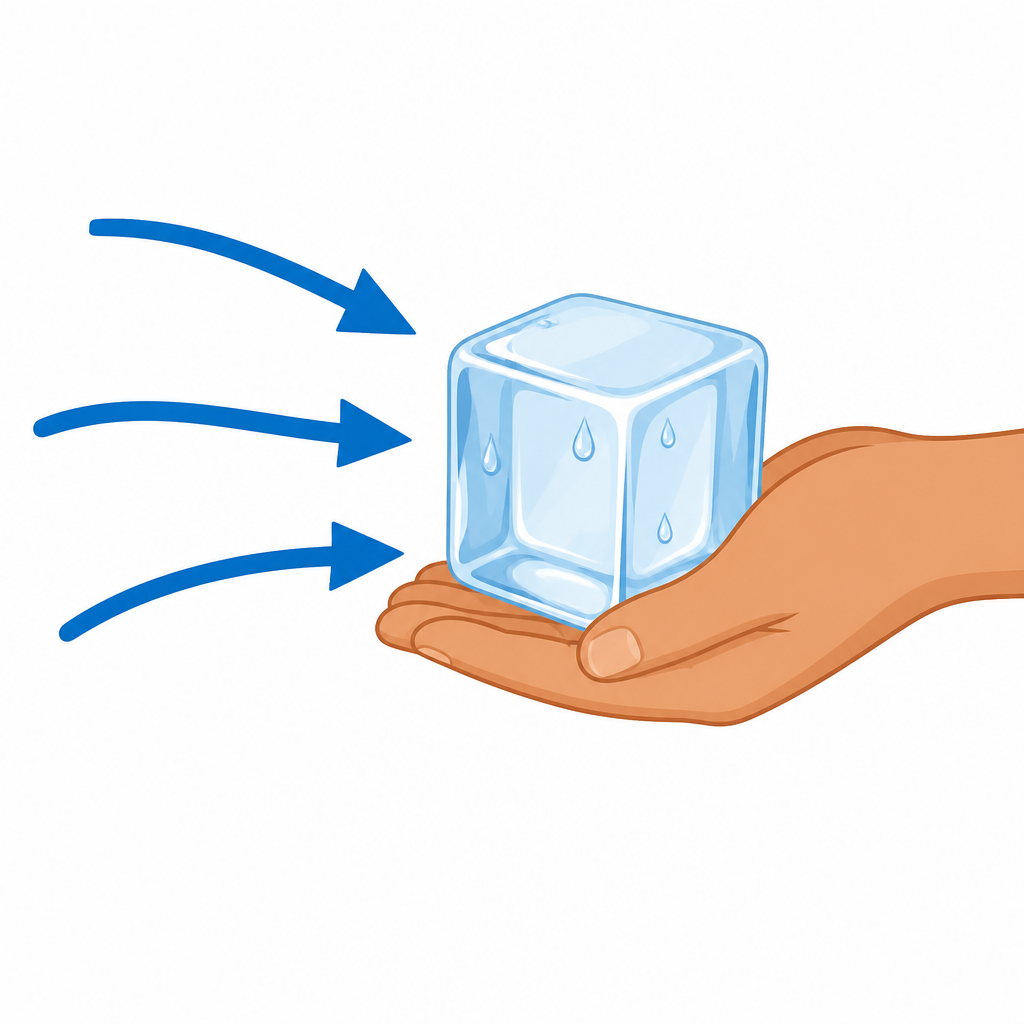
It is wrong to think that ice sends cold into your hand. There is no such thing as cold energy. When you hold ice, heat goes out of your hand into the ice, and losing that heat is what your hand feels as cold.
Heat Moves From Hotter to Colder
Heat moves from one object to another, but it does not move just anywhere. Heat always moves from the hotter object towards the less hot one. This rule holds every single time and is never reversed. Heat does not move on its own from a colder object into a hotter one.
Heat always moves from the hotter body to the colder one. That single sentence explains most of what we feel as hot and cold.
This one rule explains a great deal of everyday life. When we cook, the fire burns only under the pot, yet after a while the handle and the sides become hot too, because heat has moved from the hot lower part towards the less hot parts. Pour hot water into a metal glass and the glass becomes hot, because heat has moved from the water into the glass. A cup of hot tea slowly goes cold, because heat keeps leaving the tea and going into the cup and the air around it.
How Heat Spreads
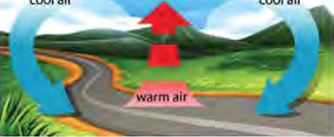
This very process, in which heat moves from one place to another, is called the transfer of heat. Standing near a fire and feeling warm, wet clothes drying once the sun comes out, and warm air rising from a valley floor during the day are all examples of heat transfer.
Transfer of heat: the process in which heat moves from one place to another is called the transfer of heat.

The way heat travels, however, is not the same in every material. Heat travels through a metal rod in one way and through open air in quite another. So the transfer of heat happens in three ways, and each one has its own name.
- Conduction
- Convection
- Radiation
The full lesson is waiting for you
The notes are free to read in full. A free account opens the rest of the practice, and tracks your progress and confidence score for every subject. Presentations and videos need approval from Learn Yeti.