Light Is a Form of Energy
During the day, sunlight lets us see the trees, houses, books and friends around us without any trouble. At night, when the lamp in a room is switched off, all those things are still there, but we cannot see them. Switch the lamp on and everything around us becomes visible again. One thing is clear from this. An object needs light before it can be seen. Light is a form of energy, and it is light that makes objects visible to us.
A thing that gives out light is called a source of light. There are many such sources around us.
- The sun, which is our biggest natural source.
- A burning candle, which lights up only a small space.
- A torch that is switched on, which sends its light in one direction.
- An electric bulb, which spreads light all over a room.
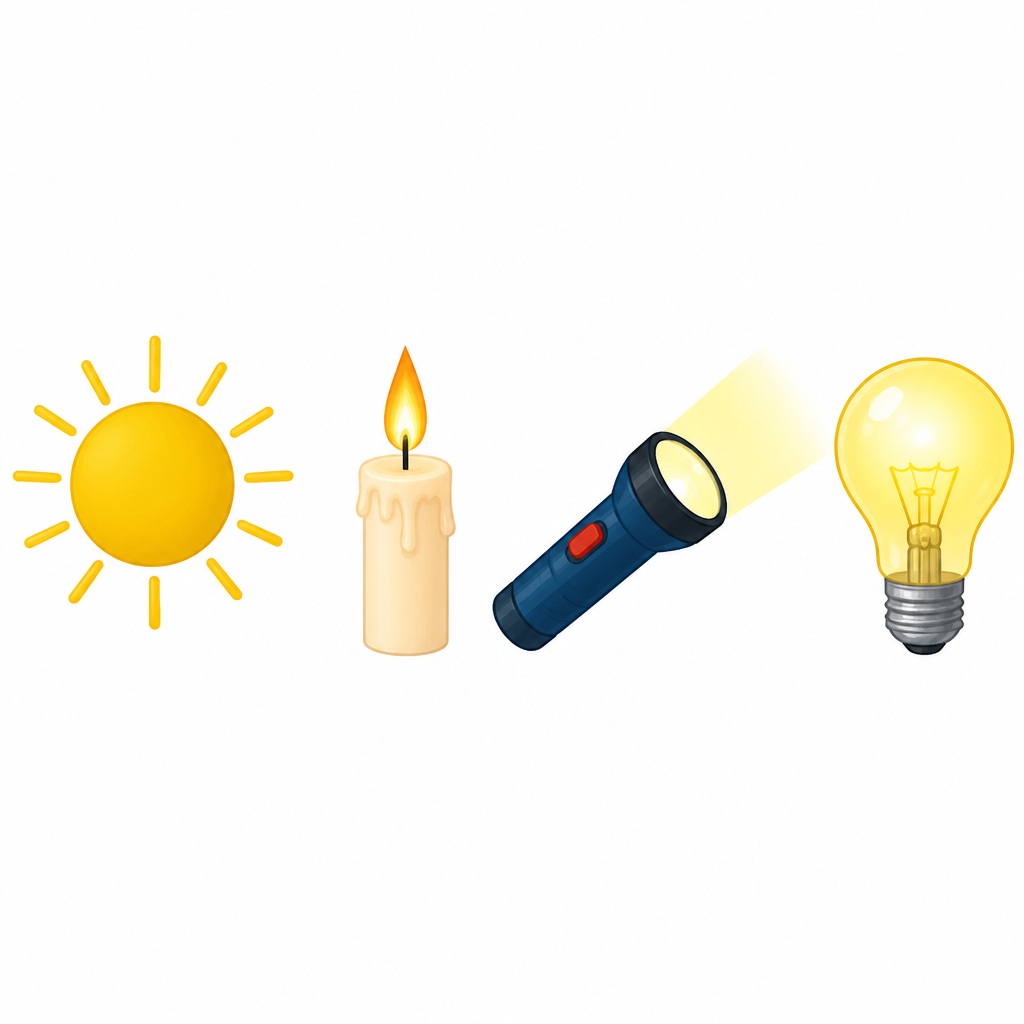
Light: light is a form of energy that makes objects visible to our eyes.
Three Things That Happen When Light Falls on an Object
When light falls on an object, that light does not simply vanish there. Part of it is absorbed by the object, part of it passes through the object to the other side, and part of it comes back from the surface. How much is absorbed, how much passes through and how much comes back depends on what the object is made of. A lot of light passes through a window pane, a lot of light is absorbed by black cloth, and a lot of light comes back from a mirror.
- Absorbed: part of the light is taken in by the object.
- Passed through: part of the light goes right through the object and comes out on the other side.
- Reflected: part of the light comes back from the surface.
Reflection of light: when light falls on an object and comes back from its surface, that returning of light is called reflection of light.
Reflection does not happen in the same way on every object. Things that send back a large amount of light look shiny. Things that scatter the light instead of sending it back neatly do not look shiny. Smooth, glossy surfaces shine, while rough surfaces do not. That is why the scene around us appears in a polished mirror or in still clean water, but nothing appears on rough wall plaster or on a mud floor.
A shiny object is not a source of light. A mirror, a polished spoon and clean water do not produce any light of their own. They only send back light that has come from somewhere else. Put a mirror in a fully dark room and you still see nothing.
A Mirror and the Image It Forms
When an object is placed in front of a mirror, light coming from that object falls on the mirror's surface and is reflected back. The light that comes back forms a picture of the object in the mirror. That picture is exactly what we look at when we comb our hair or straighten our clothes. Without a mirror we could never look at our own face.

Mirror: a mirror is a device that reflects the light coming from an object and forms a picture of that object.
Mirrors are mainly of two kinds. The first is the plane mirror, whose reflecting surface is flat. The ordinary mirror hung on a wall at home is this kind. The second is the spherical mirror, whose reflecting surface is curved like a piece cut out of a ball. A spherical mirror is again of two kinds, the concave mirror and the convex mirror.
The Two Surfaces of a Spoon
A steel spoon from the kitchen is enough to understand the two kinds of curved surface. The two sides of a spoon are not the same, and each of them sends light back in its own way.
- Step 1: Take a clean steel spoon.
- Step 2: Look at the front of the spoon, the side that holds the food. Its middle part is pressed inward.
- Step 3: Now turn the spoon over and look at its back. Here the middle part is raised outward.
- Step 4: Look at your own face in both surfaces and note how different the two look.
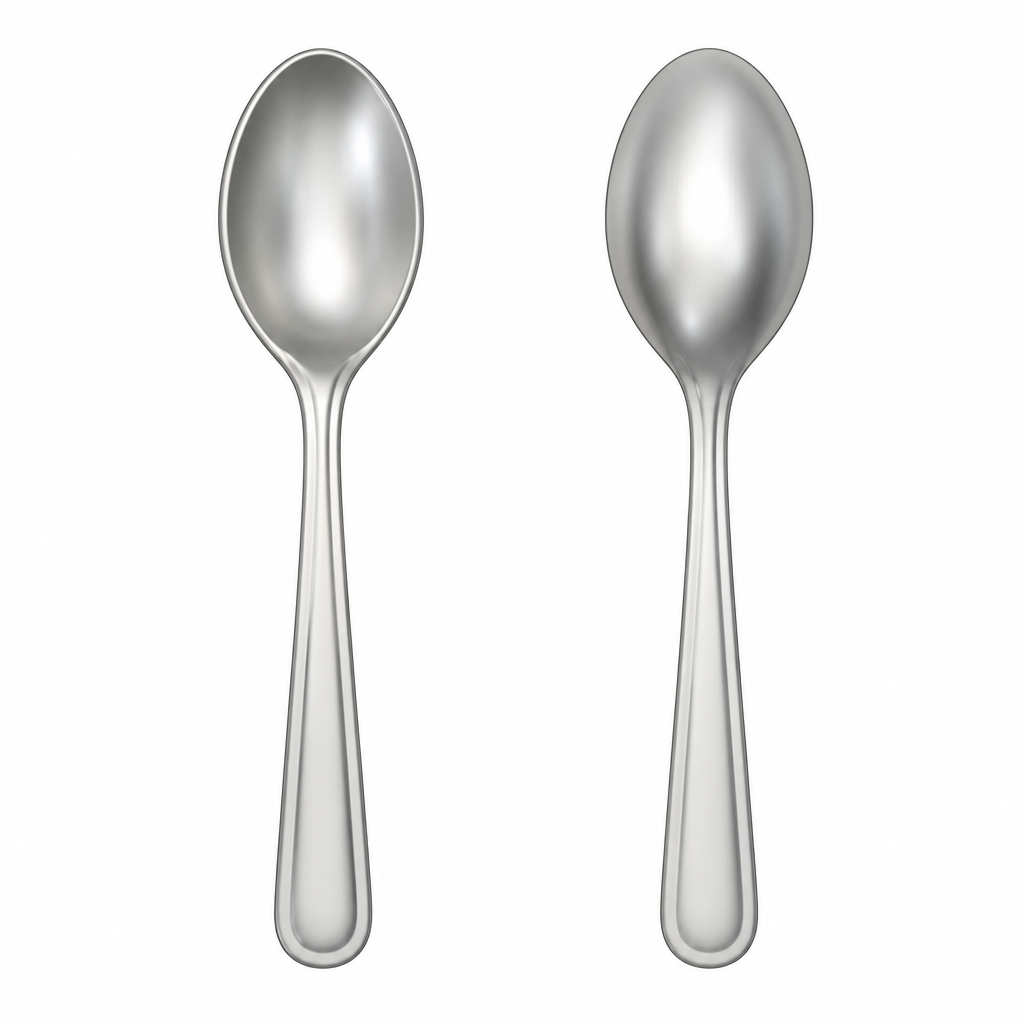
Concave surface: a surface whose middle part is pressed inward is called a concave surface.
Convex surface: a surface whose middle part is raised outward is called a convex surface.
The Concave Mirror
A mirror whose edges are raised and whose middle is regularly pressed inward is called a concave mirror. The reflecting surface is the hollow inner side, while the back is a hard surface from which no light comes back.
When parallel rays of light fall on this kind of mirror, they are reflected and gather at one single point. Because a concave mirror brings together the rays that fall on it, it is also called a converging mirror. A concave mirror usually makes a large picture of a small object placed near it, which is why a mirror of this kind is useful while shaving or while a dentist examines teeth.
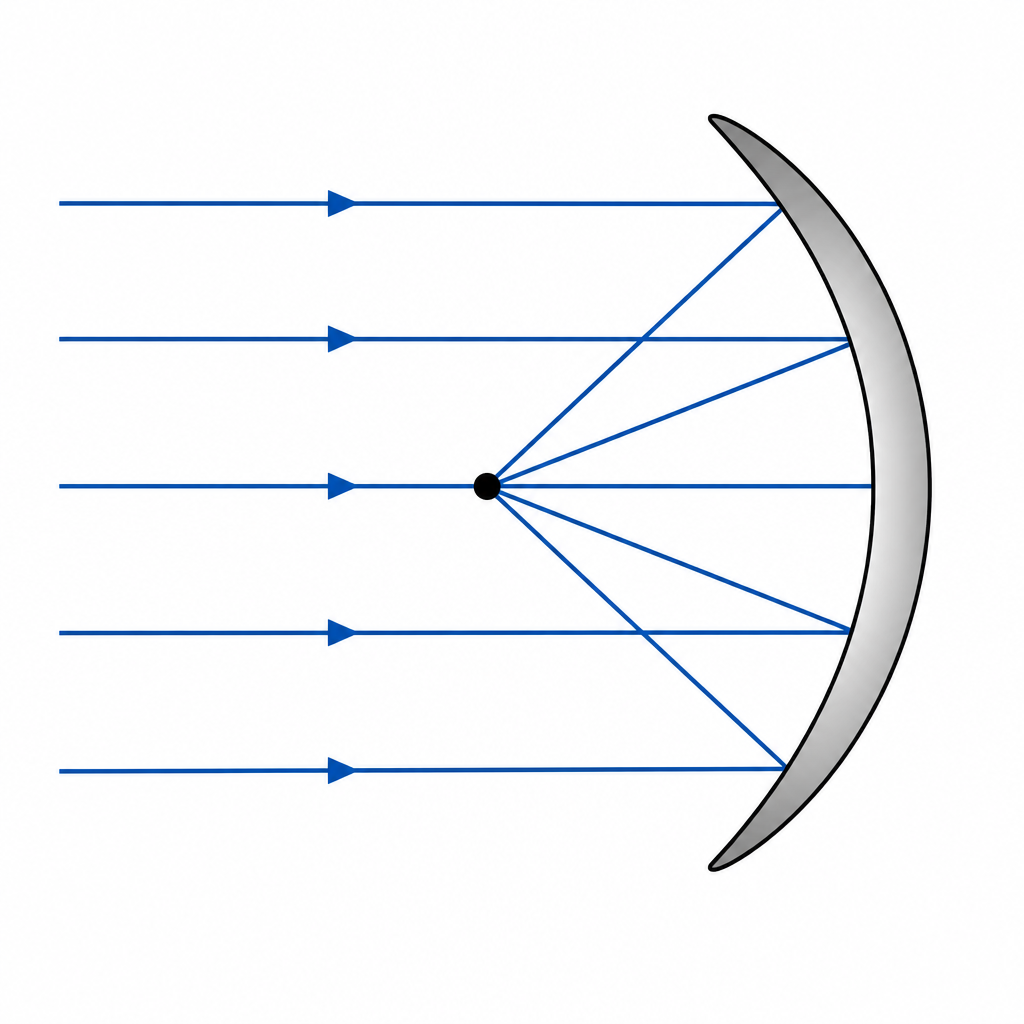
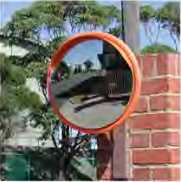
A concave mirror gathers rays into one place, so it can make light strong and send it far.
A concave mirror is fitted inside a torch and inside a search light, with the bulb placed at its centre. Light that spreads in every direction from the bulb falls on the concave mirror, is reflected, and travels away in one direction as a parallel beam. That is why the light of a torch reaches so far. The light of a plain bulb, on the other hand, grows dim after only a short distance.
Never let the beam of a lit search light or torch shine straight into anyone's eyes. A concave mirror can gather sunlight into one point, so never use one to focus sunlight onto anybody's eyes or skin.
The Convex Mirror
A mirror whose edges are pressed in and whose middle is regularly raised outward is called a convex mirror. Its reflecting surface is the side that bulges outward.
When parallel rays of light fall on this kind of mirror, they are reflected and spread apart, that is, they diverge. For this reason a convex mirror is also called a diverging mirror. If those spreading rays are traced backwards, they appear to come from one single point behind the mirror.
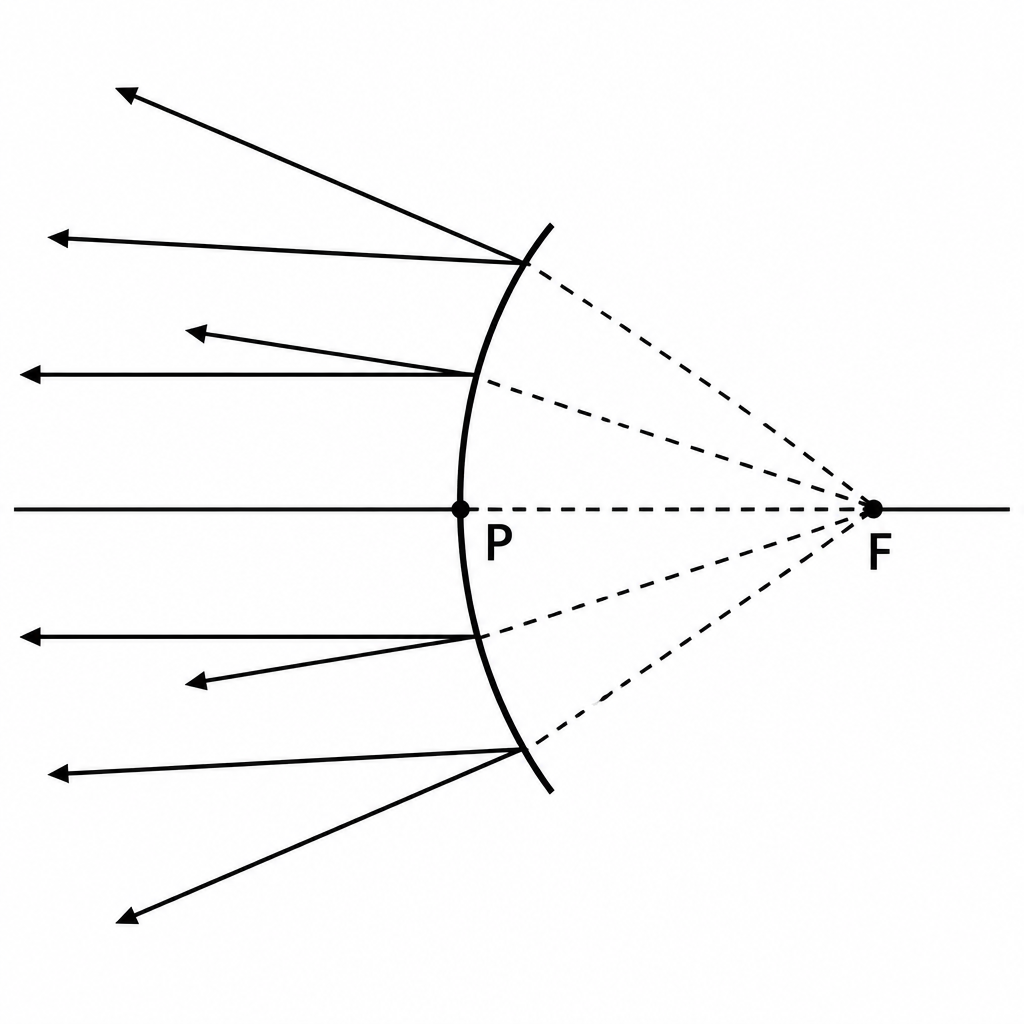
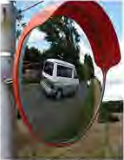
A convex mirror usually makes an erect and smaller picture. Because the picture is small, a wide area can be seen in it all at once.
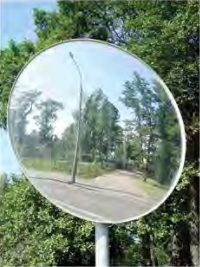
That is exactly why drivers use convex mirrors as the side mirrors on the right and the left of a vehicle to watch the road behind. A far wider area appears in such a mirror than in a plane mirror, so a vehicle coming up from behind is noticed early. The same mirror is fixed at narrow road bends and inside shops for the same reason.
Concave and Convex Mirrors Side by Side
| Point | Concave mirror | Convex mirror |
| Shape of the surface | Middle pressed in, edges raised | Middle raised, edges pressed in |
| Effect on parallel rays | Brings them together at one point | Spreads them apart |
| Other name | Converging mirror | Diverging mirror |
| Picture it forms | A large picture of a small nearby object | An erect and smaller picture |
| Area that can be seen | Narrow | Wide |
| Where it is used | Torch, search light | Vehicle side mirror, road bend |
The reflecting surface of a concave mirror is hollowed inward, and that of a convex mirror bulges outward. Remember that the eating side of a spoon is concave and its back is convex, and the two names will never get swapped.
These Mirrors in Everyday Life
Look at a street lamp in the evening and you will see a bright curved surface behind the bulb. That surface turns the light going backwards from the bulb towards the road as well, so the light is spread over a large area. In this way a single bulb lights up a much bigger space.
- A concave mirror in a torch and a search light, so that the light reaches far.
- A concave mirror in a shaving mirror and in a dentist's small mirror, so that a small thing looks larger.
- A convex mirror as a vehicle's side mirror, so that a wide area behind can be seen.
- A convex mirror at a narrow road bend, so that a vehicle coming from the other side is seen in advance.
- A convex mirror in the corner of a shop, so that much of the shop can be watched at one glance.
The full lesson is waiting for you
The notes are free to read in full. A free account opens the rest of the practice, and tracks your progress and confidence score for every subject. Presentations and videos need approval from Learn Yeti.