Wanted Sound and Unwanted Sound
Some sound is always around us. Birds call in the morning, the school bell rings, a friend shouts your name across the ground, a teacher explains a lesson. These sounds carry news, they teach us and they make work easier. So sound by itself is not a bad thing.
But the same sound turns into trouble when it is too loud or when it comes at a time nobody wants it. A mill roaring beside your house all day, a neighbour playing a speaker at full volume, a line of vehicles pressing their horns without stopping: reading, sleeping and even talking become difficult. Unwanted loud sound of this kind begins to spoil the environment itself, and science has a name for that condition.
What Noise Pollution Is
Noise Pollution: when loud sound fills the environment and does harm to human beings and to other living things, that condition is called noise pollution.
Two things are joined together in that sentence. First, the sound has to be loud. Second, it has to do harm to people or to other living things. And there is more to it. Producing sound that nobody needs is itself noise pollution, so making a sound that serves no purpose already counts as polluting.
Noise: sound that has a negative effect on human beings is called noise.
Noise is what creates noise pollution in the environment. The din of a market, the clatter of machines, the blare of horns: all of these are noise. When they gather in one place, that place becomes a place with noise pollution.
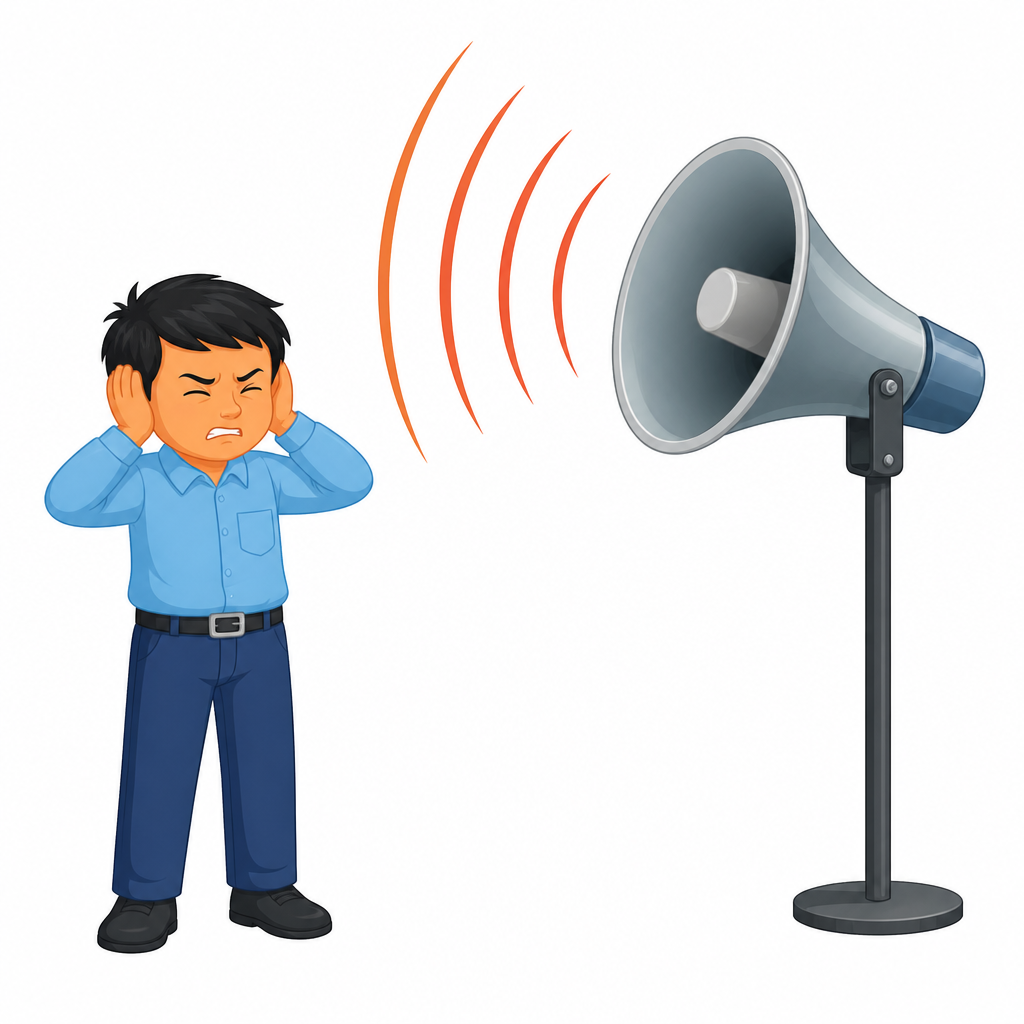
A sound can be pleasant to the person playing it and still be noise, so long as it is harming a neighbour, a sick person or a student trying to study.
What Causes Noise Pollution
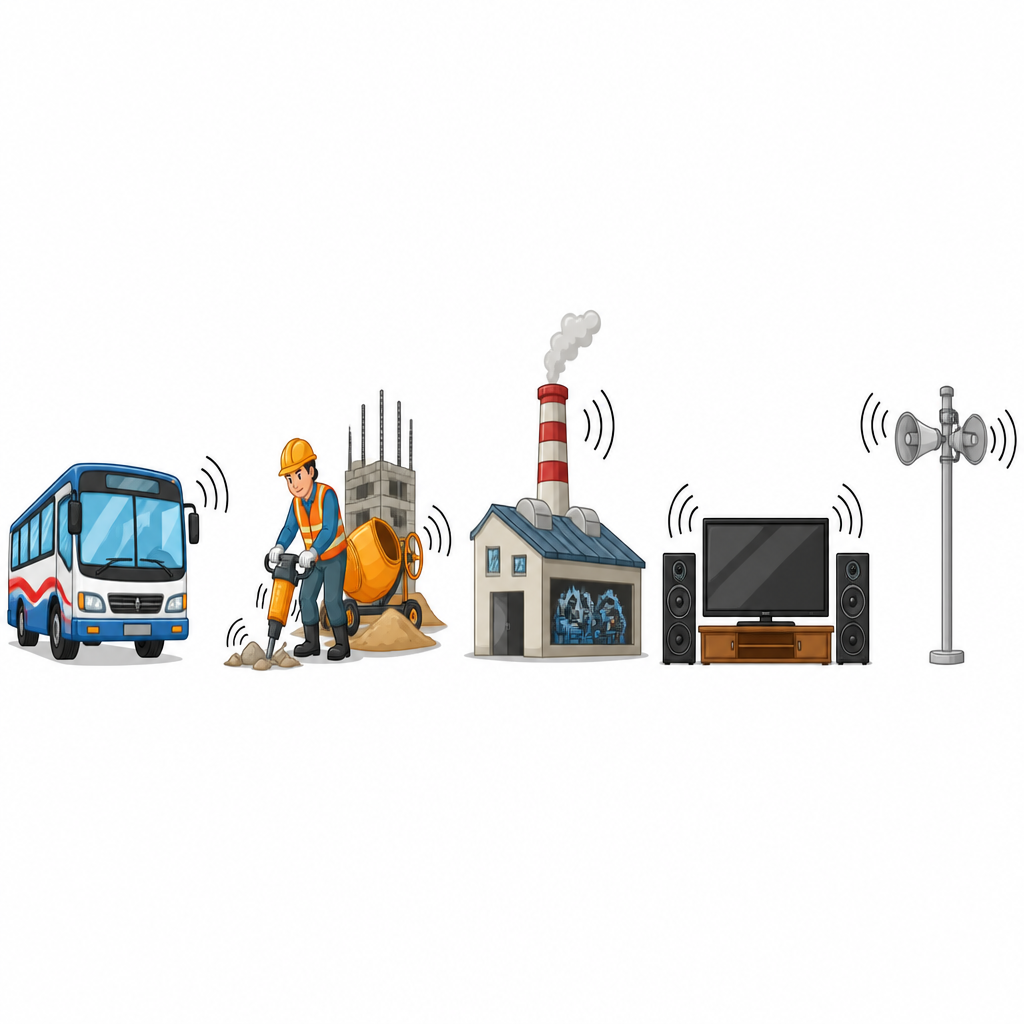
Noise pollution does not come from one single place. Wherever people crowd together, wherever machines run, wherever vehicles move, unwanted sound is produced and noise pollution follows. These are its main causes.
- Market areas, thickly settled neighbourhoods, city areas with heavy traffic and areas crowded with factories give out unwanted sound and din all day long, and that produces noise pollution.
- Places where roads are being built and buildings are going up produce noise pollution, because the machines and tools there work loudly.
- Radios, televisions and musical instruments played at high volume cause noise pollution even inside a house.
- Cement industries, mills and metal industries give out unnecessary sound, and that becomes noise pollution.
- In towns and markets, the shouting of crowds and advertising done through loudspeakers also cause noise pollution.
The Harm Noise Pollution Does
Noise pollution shows several different effects. Some are felt at once, such as losing your concentration while studying. Others appear only after years, such as hearing that slowly grows weaker. The main effects are these.
- The power of hearing grows weaker and weaker.
- A person's blood pressure rises.
- A very loud sound can tear the eardrum, and the ear can stop hearing altogether.
- Health problems such as loss of sleep and poor digestion appear.
- It becomes hard to read, write or do any piece of work with a settled mind.
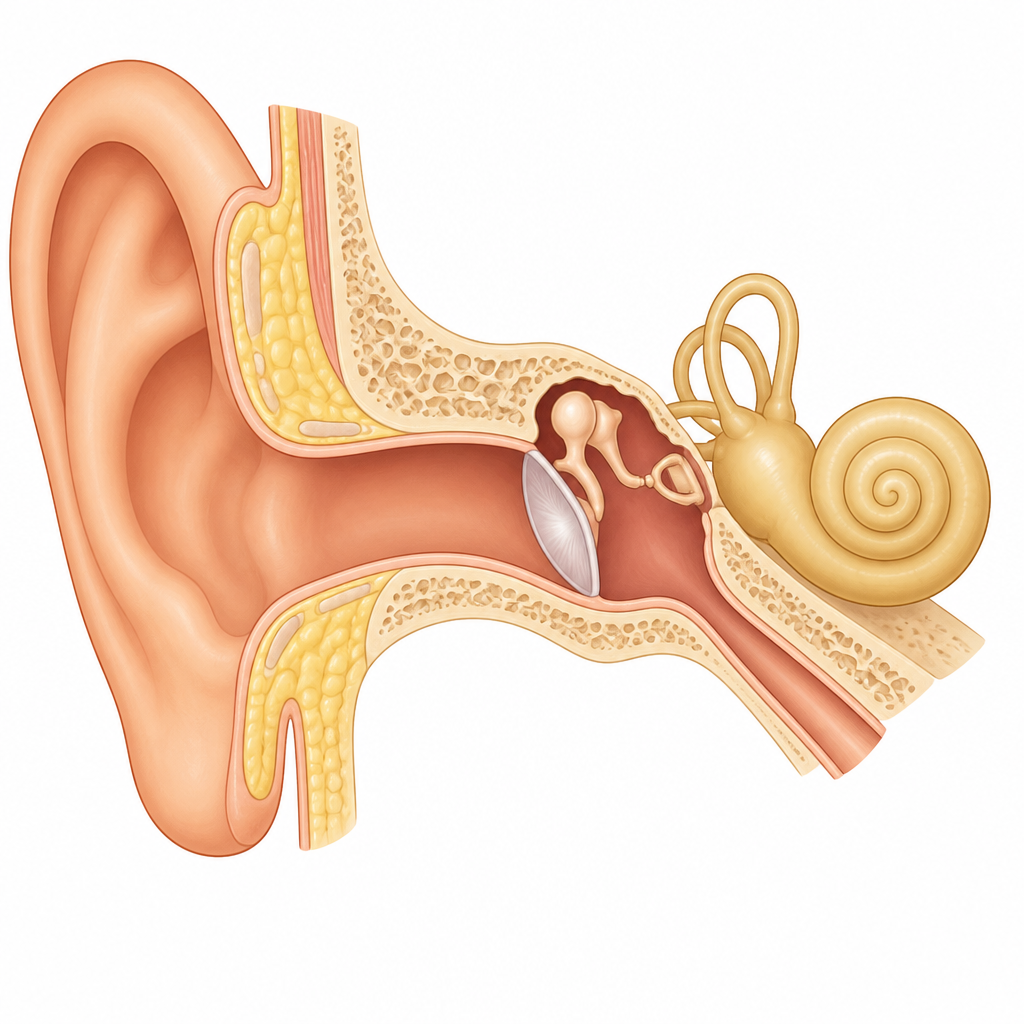
Do not stand right beside a firecracker going off, a speaker playing at full volume or a mill machine that is running. An eardrum that has once been torn does not heal easily.
Ways of Reducing Noise Pollution
Reducing noise pollution works in two ways. One is to make less sound in the first place. The other is to stop the sound that has already been made before it reaches people. The measures below do both jobs.
- Planting trees along both sides of roads and around industrial areas reduces noise pollution.
- Using silencers on vehicles and machines also reduces noise pollution.
- Keeping radios, televisions, musical instruments and loudspeaker announcements down to a low volume also reduces noise pollution.
- Spreading public awareness about noise pollution reduces the harm that comes from it.
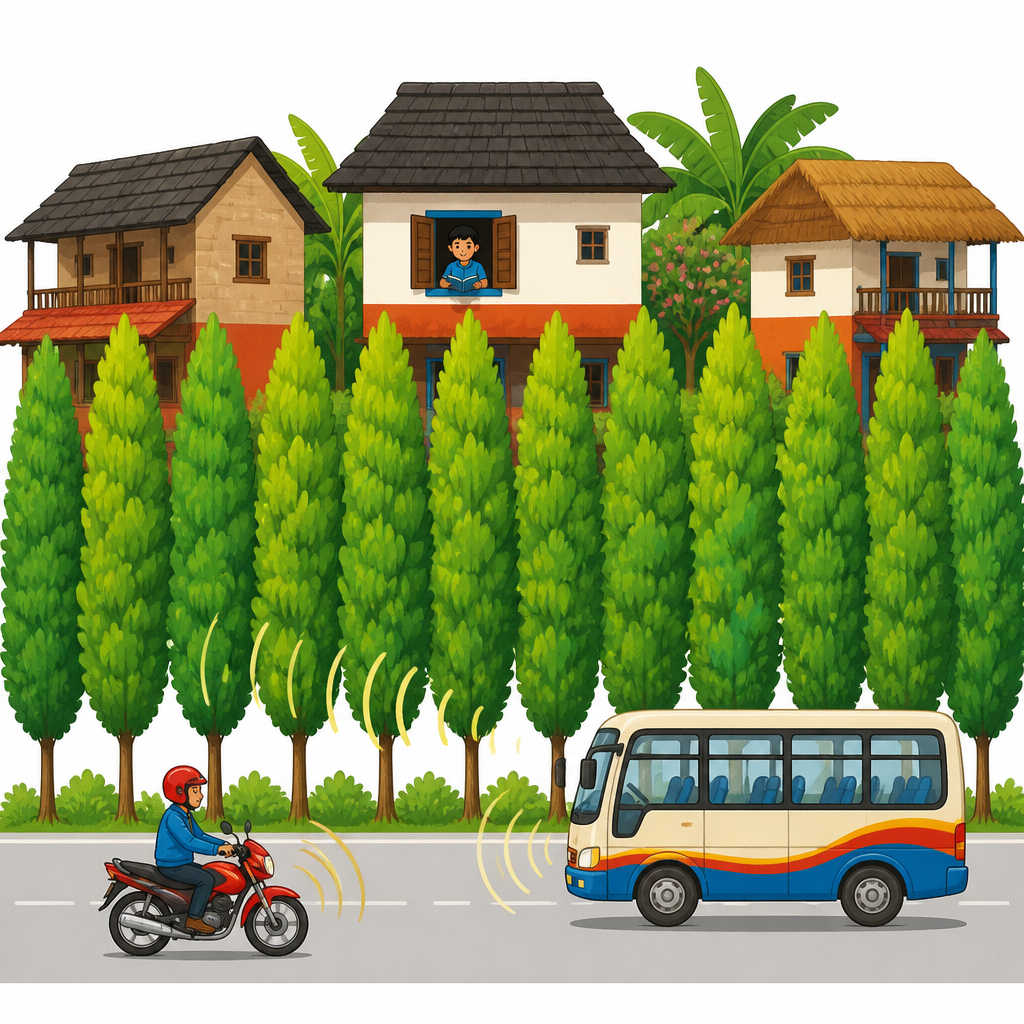
Awareness is the cheapest measure of all. When people stop pressing the horn for no reason and keep their speakers at a moderate volume on their own, the gain is as large as planting hundreds of trees.
Matching Each Cause with Its Cure
Once you know where a sound is coming from, choosing the measure that will reduce it becomes easy.
| Cause of noise pollution | Measure that reduces it |
| Vehicles moving on the road | Silencers, and trees on both sides |
| Factories and mills | Trees planted around them |
| Radio, television, loudspeaker | Keeping the volume low |
| The din of crowds | Spreading public awareness |
Studying Noise Pollution Where You Live
To find out how bad noise pollution is where you live, your ears and a notebook are enough. Work through it like this.
- Make a list of the places around your house, your school and your road that loud sound is coming from.
- Note down what time of day each sound comes and how long it lasts.
- Write your own experience of how far that sound makes reading, sleeping or talking difficult.
- Separate the sounds that are needed from the sounds that are not needed at all.
- Prepare a list of what you yourself can do, and what you can ask others to do, to cut down the unnecessary sound.
The list you end up with is a small report on noise pollution in your own neighbourhood. Set it beside the lists your friends have made and you can also see which neighbourhood is the noisiest.
The full lesson is waiting for you
The notes are free to read in full. A free account opens the rest of the practice, and tracks your progress and confidence score for every subject. Presentations and videos need approval from Learn Yeti.