How Many Minerals Nepal Has Found
What lies under the ground cannot be known by looking at the surface. Geologists study the rock first, collect samples from many places and test those samples in a laboratory. Only then can they say that a particular mineral is present at a particular place. Work of this kind has so far identified more than 60 minerals in Nepal.
These identified minerals can be sorted into groups according to what they are used for. There are 21 in the metallic mineral group, 23 in the chemical fertiliser and insulator group, 6 in the gemstone group, 9 in the materials and construction group, and 4 in the fuel mineral and geothermal group.
| Group of minerals | Number identified |
| Metallic minerals | 21 |
| Chemical fertiliser and insulator | 23 |
| Gemstones | 6 |
| Materials and construction | 9 |
| Fuel minerals and geothermal | 4 |
One thing stands out from these numbers. The largest group identified in Nepal is the one that supplies chemical fertiliser and insulator material, and the metallic minerals come next. So the search under Nepal's ground has not been only for gold and gemstones. Minerals that feed farming and supply raw material to industry have been identified with just as much importance.
Three Belts and What Each One Promises
Nepal's ground is not the same everywhere. The Tarai in the south is flat land built from soil and sand that rivers carried down, the middle belt is hill country made of much older rock, and the mountain belt in the north is the newest and highest part of all. Where the rock is different, the minerals hidden inside it are different too. That is why the possibilities are studied belt by belt.
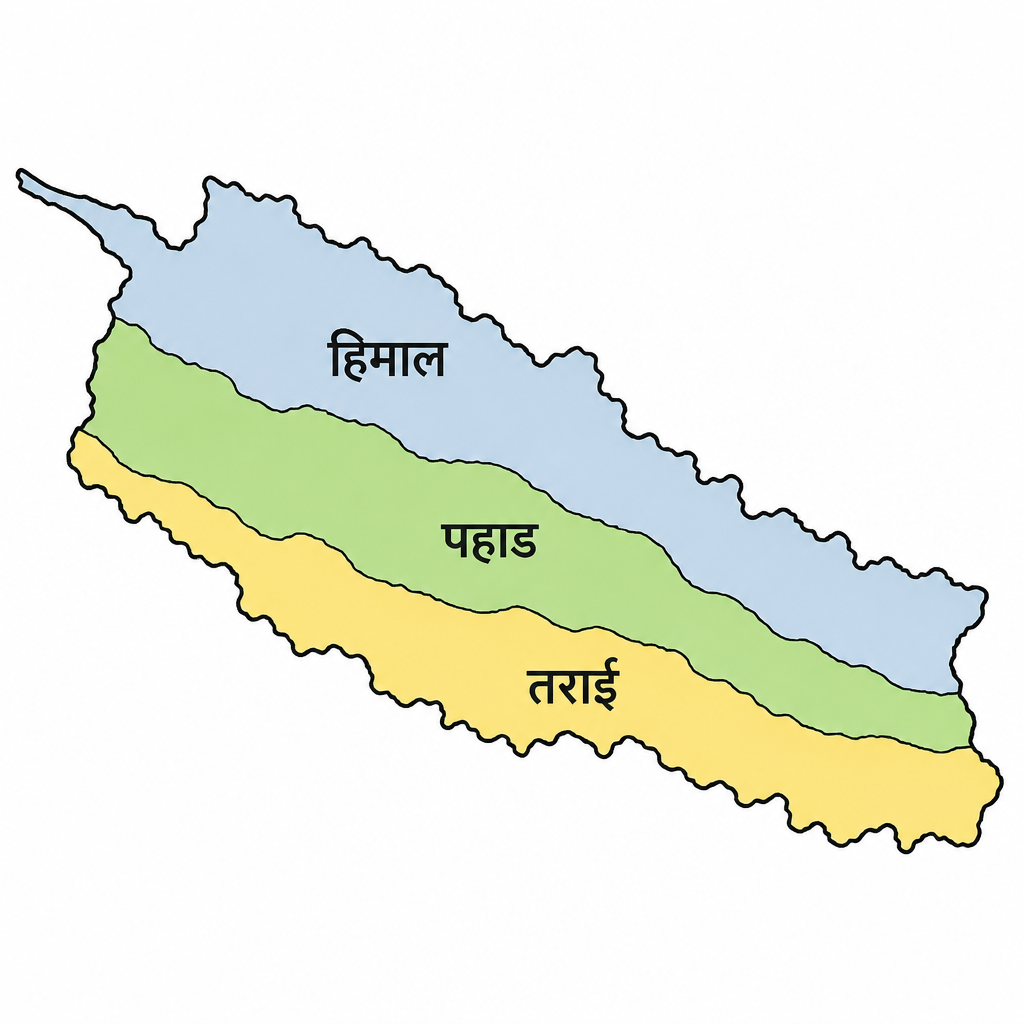
The flat land of the Tarai is a region of possibility for construction material, groundwater, petroleum and natural gas. The mountain belt is important for construction material, radioactive minerals, petroleum and natural gas. The ground lower than the mountain belt is the region that carries the possibility of iron, copper, lead, zinc, gold, magnesite, phosphorite, limestone, dolomite and others.
| Belt | Minerals it may hold |
| The flat Tarai | Construction material, groundwater, petroleum, natural gas |
| The mountain belt | Construction material, radioactive minerals, petroleum, natural gas |
| The ground below the mountain belt | Iron, copper, lead, zinc, gold, magnesite, phosphorite, limestone, dolomite |
About 83% of Nepal's mineral substances are found in the Himalaya and the hill areas around it. The larger share of the country's minerals lies in the high ground.
The possibilities are plentiful, but not much exploration has been carried out into Nepal's minerals. In many places it is known that a mineral is present, yet there has been no detailed study of how much of it there is, how deep it lies and how much it would cost to bring out. So only a small number of the identified minerals have actually been mined.
Identifying a mineral and mining it are not the same thing. If a district appears in the list, that does not mean a mine is working there. The list only says that the mineral has been found in that place.
The Main Minerals Found in Nepal
Nepal holds metallic minerals, non-metallic minerals and energy-giving minerals, along with stone used for building and decoration. The main ones are limestone, gypsum, mica, magnesite, dolomite, silica, coal, gold, iron and even a radioactive mineral such as uranium.
Metallic mineral: a mineral from which a metal can be taken out by smelting or refining. Iron, copper, zinc, lead and gold are examples.
Non-metallic mineral: a mineral that yields no metal but is used directly in industry, in building and in other work. Limestone, dolomite, silica, mica and gypsum are examples.
Energy-giving mineral: a mineral that releases energy when it is burned or processed. Coal, petroleum and natural gas belong here.
Radioactive mineral: a mineral that gives out radiation on its own. In Nepal, uranium has been identified in Upper Mustang.
Limestone and the Cement Industry
Of all the minerals found in Nepal, limestone is the one in heaviest use. It is a soft white or grey rock, and there are quarries for it at Udayapur, at Makwanpur and at Chobhar in Kathmandu. Limestone is burned in a kiln and mixed with clay to make cement, which is why a cement works is always placed close to a limestone quarry. The cement industry at Hetauda is an example of this.
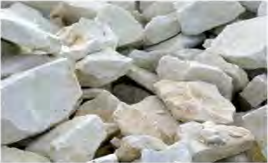
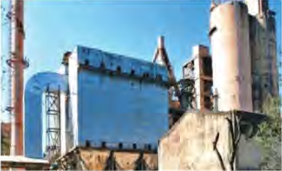
Another mineral, dolomite, is found in the same kind of country as limestone. It runs through the Mahabharat mountain range. Dolomite looks much like limestone, but it also contains magnesium, and it is useful in the cement industry and the iron industry.
Stone for Building and Decoration
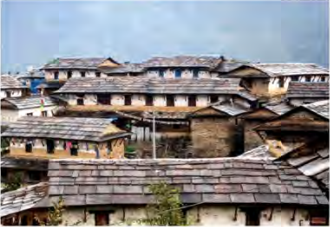
Not every mineral has to be melted or processed before it is useful. Some stone is simply cut, split and polished and then put straight to work. Slate is one such stone. It splits into thin sheets and is found at Dhankuta, Achham and Gorkha. Traditional Nepali houses are roofed with slate, which keeps the rain out and lasts for years.
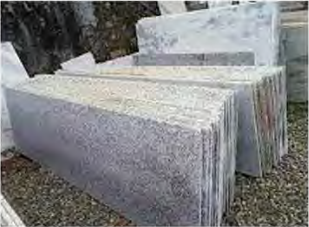
Marble and granite are stones of the same kind. Once polished they look very handsome, so they are used on the floors, stairs and walls of buildings. Quarries for them have been found at Godavari in Lalitpur and at Sindhuli. Stone like this is counted in the materials and construction group of minerals.
Which Mineral Is Found Where
The main minerals of Nepal and the places where they are found are set out below. As you read the list, notice that one mineral is rarely limited to a single place. Iron has been found at more than 88 sites and copper at more than 107 sites.
| No. | Mineral | Where it is found |
| 1 | Iron | Phulchoki (Lalitpur), Those (Ramechhap), more than 88 sites |
| 2 | Copper | More than 107 places |
| 3 | Zinc and lead (Sphalerite, Galena) | Ganesh Himal and more than 57 places |
| 4 | Gold (alluvial) | Rapti river, Sunkoshi river, the sand of most rivers |
| 5 | Limestone | Udayapur, Makwanpur, Chobhar in Kathmandu |
| 6 | Dolomite | The Mahabharat mountain range |
| 7 | Phosphorite | Dang, Pyuthan, Baitadi |
| 8 | Magnesite | Dolakha, Udayapur, Palpa |
| 9 | Ceramic clay | Makwanpur, Kathmandu |
| 10 | Silica | In river sand |
| 11 | Rock salt / common salt | Mustang, Dolpa |
| 12 | Quartz crystal | Dailekh, Taplejung, Rasuwa |
| 13 | Marble and granite | Godavari Lalitpur, Sindhuli |
| 14 | Slate | Dhankuta, Achham, Gorkha |
| 15 | Coal | Dang, Palpa, Pyuthan |
| 16 | Radioactive mineral (uranium) | Upper Mustang |
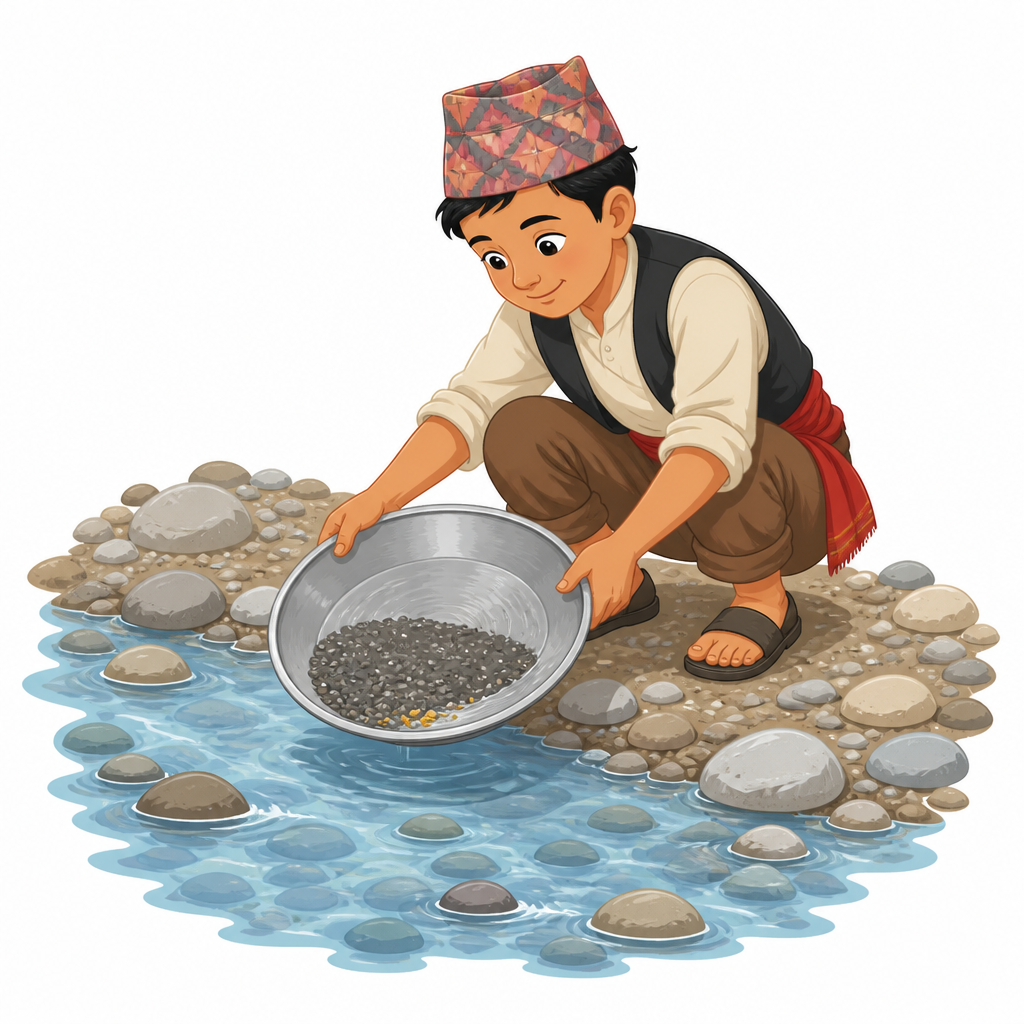
Beside gold in the list the word alluvial is written. It means that this gold was not dug out of a mine. Gold locked in the rock of the upper hills is broken loose by landslides and water, reaches a river, is carried downstream and settles among the sand wherever the current slows. Because gold is heavy, it sinks sooner than the sand does. So the sand of rivers such as the Rapti and the Sunkoshi is washed in water and the grains of gold are separated out. Silica is another mineral that is found in the same river sand.
The two English names written beside zinc and lead, Sphalerite and Galena, are not two spellings of one mineral. Sphalerite is the mineral that yields zinc and Galena is the mineral that yields lead. The two are usually found together in the same place, which is why they share one line in the list.
Mines Nepal Has Worked in the Past
Taking minerals out of the ground is not new in Nepal. There is a history of iron, copper and coal mines being worked here from long-standing tradition. The Those iron mine in Ramechhap and the coal mine in Dang were the main mineral mines worked in the past. Iron from those mines was made into tools, weapons and household goods.
Phulchoki in Lalitpur and Those in Ramechhap are still the two places named most often when iron is discussed. These old mines make one thing clear. Having the mineral is not enough on its own. There must also be a way to bring it out, to process it and to get it to a market. That is why many mines have still not opened in Nepal even though the possibilities are plentiful.
How useful a mineral is depends not only on how much of it there is, but also on how easily it can be put to work. That is why limestone, an ordinary looking rock, has become the most useful mineral in Nepal.
The full lesson is waiting for you
The notes are free to read in full. A free account opens the rest of the practice, and tracks your progress and confidence score for every subject. Presentations and videos need approval from Learn Yeti.