The Shapes We See in the Sky
On a clear night the sky is full of stars, and at first glance they look scattered without any order. Look carefully for a while and something else appears. Certain stars sit together in a shape that never changes. That shape is not new. Your grandparents saw the same shape in the same part of the sky, and so did people thousands of years before them.
Some of these shapes look like animals, some look like plain geometric figures, and some look like everyday objects. That is why people named them the ram, the bull, the lion, the scorpion, the scales and the water pot. No costly instrument is needed to pick them out. Most constellations can be seen with the naked eye.
What a Constellation Is
A constellation is a region of the sky that holds stars set in a fixed shape.
The word that matters most in this definition is region. A constellation is not merely a handful of stars. It is the whole patch of sky those stars occupy. The number of stars inside one constellation is not fixed from one to the next. Ursa Major, for example, has seven stars, and joining those seven in the mind gives the shape by which it is known.
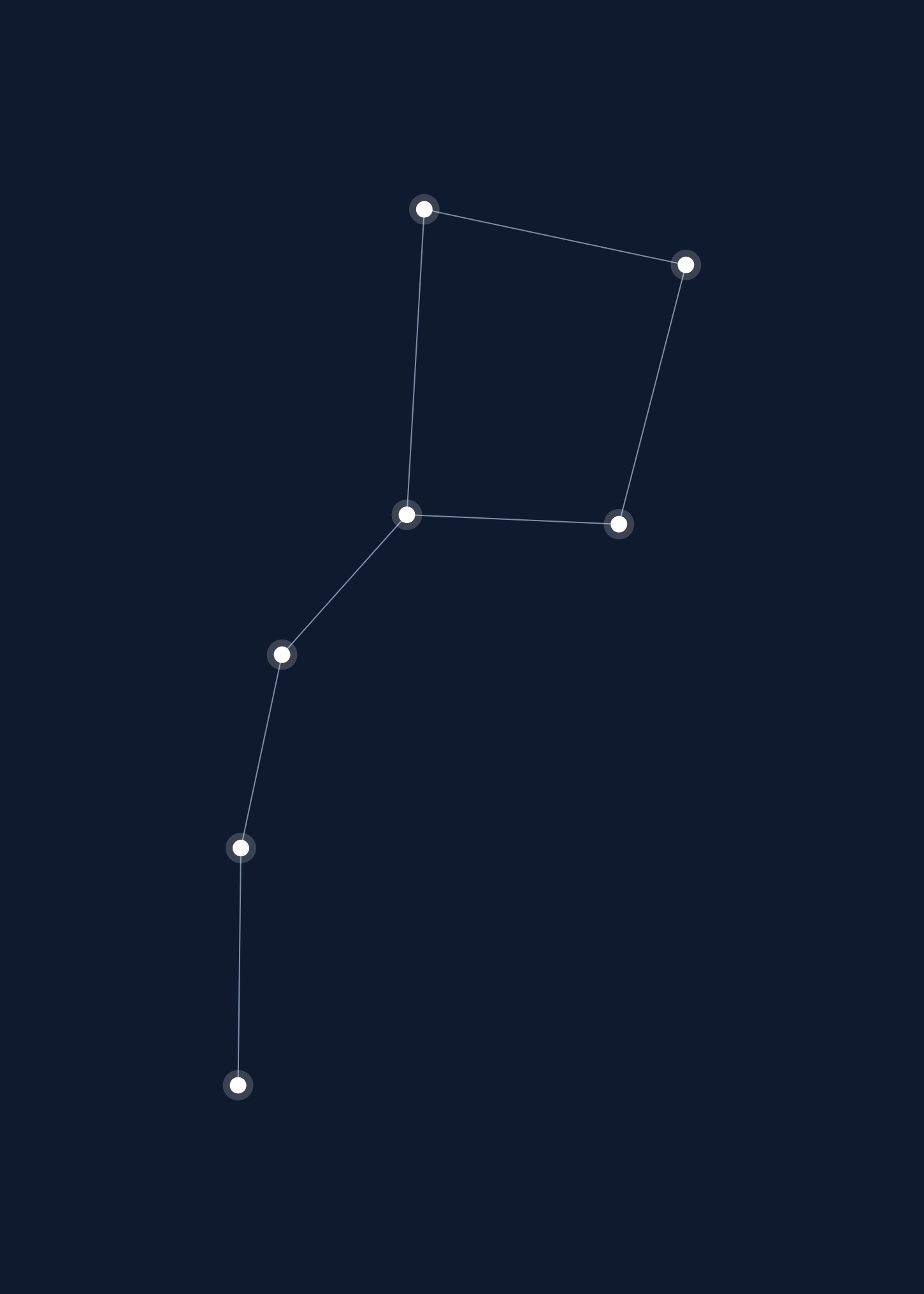
Recognising a constellation needs no equipment. Most of them are visible to the naked eye.
The 88 Constellations of the Sky
The number of constellations recognised in the sky is 88. Together these 88 cover the whole sky, so whichever part of the sky you look at falls inside one of them. Some are visible all year, some appear only in a particular season, some are seen in the northern sky and others only in the southern sky.
The Ecliptic and the Twelve Zodiac Constellations
The ecliptic is the path along which the Sun appears to travel across the sky in the course of one year.
The twelve constellations that lie along the ecliptic are called the zodiac constellations.
Of the 88 constellations, twelve lie along the ecliptic. Through the year the Sun appears to pass in front of these twelve one after another, so which zodiac constellation stands in that part of the sky at a given time follows a settled order. Aries, Taurus, Gemini, Cancer, Leo, Virgo, Libra, Scorpius, Sagittarius, Capricornus, Aquarius and Pisces are the twelve zodiac constellations.
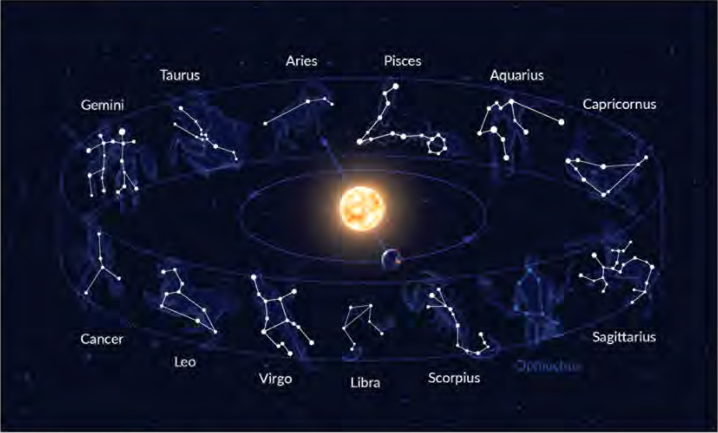
| Zodiac constellation | The figure it stands for |
| Aries | The ram |
| Taurus | The bull |
| Gemini | The twins |
| Cancer | The crab |
| Leo | The lion |
| Virgo | The maiden |
| Libra | The weighing scales |
| Scorpius | The scorpion |
| Sagittarius | The archer |
| Capricornus | The sea goat |
| Aquarius | The water carrier |
| Pisces | The fishes |
The twelve zodiac constellations are not extra ones added to the 88. They are twelve of those same 88, the ones that lie along the ecliptic. The total is therefore 88, not 100.
Other Well Known Constellations
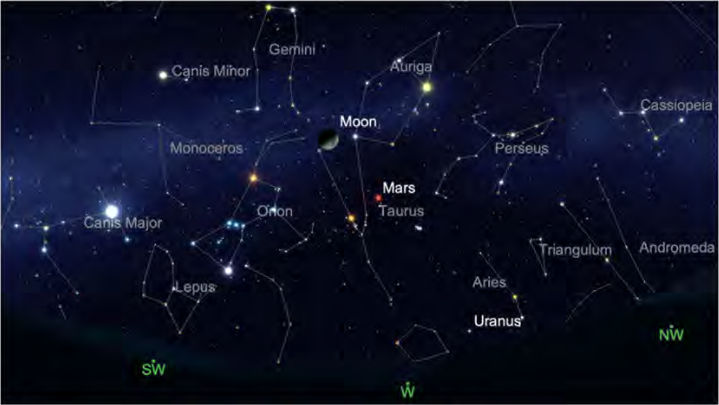
Many constellations outside the zodiac are just as easy to recognise. The ones listed below are examples.
- Ursa Major
- Orion
- Scorpius
- Carina
- Vela
- Draco
- Cepheus
- Cassiopeia
The Smallest and the Largest Constellation
The number of stars is not the same from one constellation to another. Ursa Major, for instance, has seven. The smallest constellation in the sky is Crux and the largest is Hydra. Small and large here describe how much of the sky each one covers.
Smallest constellation: Crux
Largest constellation: Hydra
Stars in Ursa Major: seven
Telling Time, Season and Direction
A constellation does not stay fixed in one spot through the night. Its position shifts as the hours pass, and as the seasons change the constellations on show in the evening sky change with them. People with experience can look at where a constellation stands and work out the time and the season from it without difficulty.
The same positions also tell a watcher the geographical direction. Before the compass and the clock were invented, sailors who took their ships out to sea lost sight of the shore and had no instrument to guide them. They found the direction they had to travel by looking at the constellations.
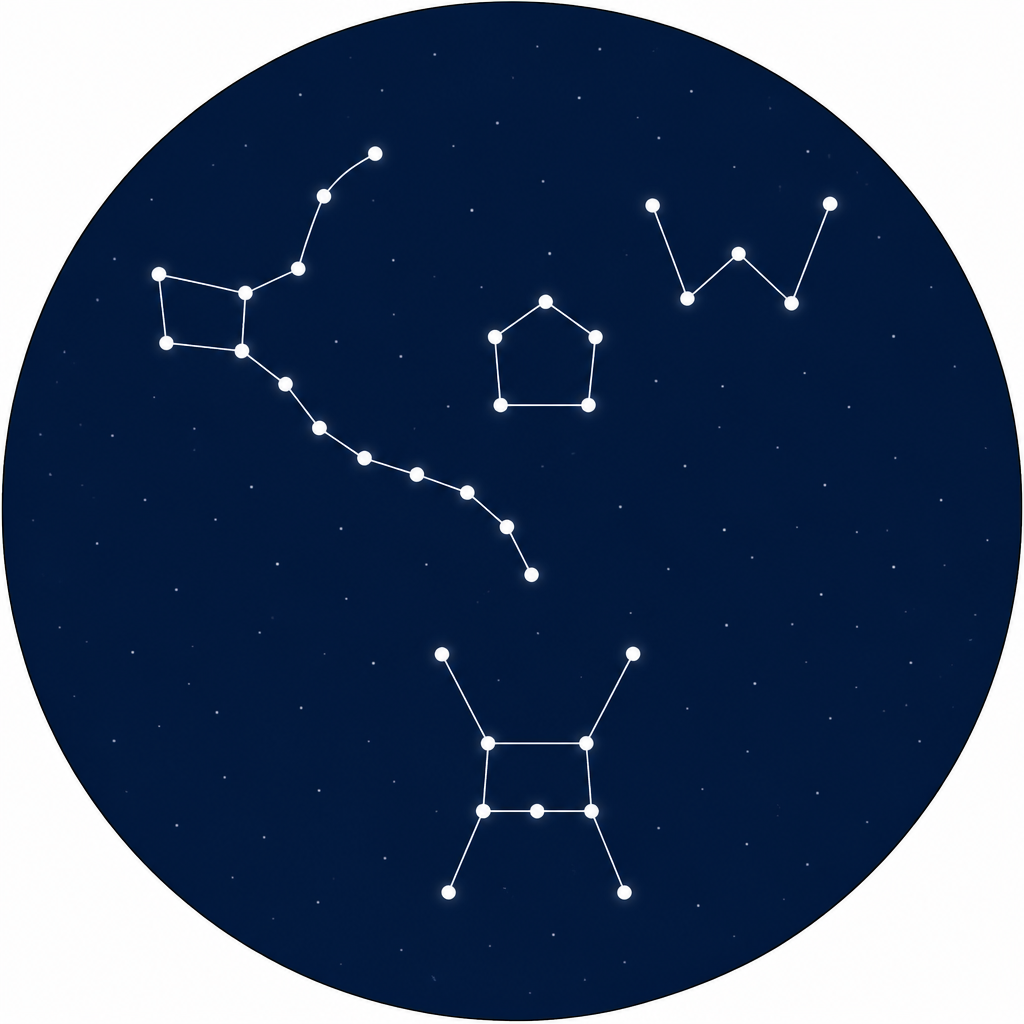
Long before clocks, calendars and compasses existed, the sky itself was the clock, the calendar and the compass.
A Constellation Is Not a Galaxy
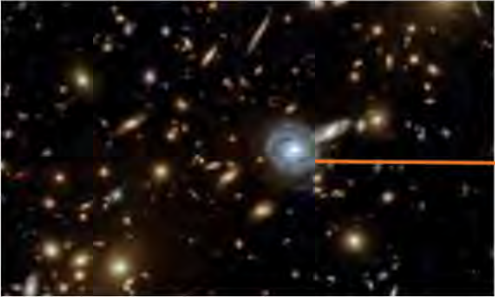
Both belong to the sky, but a galaxy and a constellation are different things. A galaxy is an enormous system of billions of stars along with gas and dust, all held together by gravity, so it is a real gathering of bodies in one place. A constellation is a region of the sky in which the stars appear, from the Earth, to form a fixed shape. A galaxy is an object you can count. A constellation is a marked out part of the map of the sky.

Observing the Night Sky Yourself
A constellation is learnt far better from the sky than from a page. Do this work on an evening when the night is clear.
- Go out with an adult and observe the clear night sky.
- Try to pick out bodies such as a comet, a meteor, Ursa Major and the Milky Way.
- Use a telescope if one is available.
- Make a list of the bodies you were able to identify.
- Discuss your list in class.
Never turn a telescope or a pair of binoculars towards the Sun. Sunlight entering the eye through them can damage your sight permanently. Always go outside with an adult when you watch the sky at night.

Constellations can be studied on a cloudy night, or even by day. Take a virtual tour of the sky using a piece of software, an application or a device, observe planets, stars, asteroids, comets, galaxies and constellations in it, then prepare a report of what each one is like and show it to your teacher.
The full lesson is waiting for you
The notes are free to read in full. A free account opens the rest of the practice, and tracks your progress and confidence score for every subject. Presentations and videos need approval from Learn Yeti.