What a Comet Is
Now and then a faint glowing body appears in the night sky with a long bright tail stretching out behind it. A body that goes round the Sun carrying such a tail is called a comet. Its Nepali name means tailed star, but a comet is not a star at all, because it does not burn and make its own light. A comet is a member of the Sun's family, and it looks bright only because sunlight falls on it and is thrown back to us.
Comet: a heavenly body that revolves round the Sun and shows a long, bright tail while doing so.
Comets are among the oldest bodies in the solar system. They were formed at the same time as the solar system itself, so the material frozen inside them is the same material out of which the Sun's family was built. The surface of a comet is made of ice, grains of dust, pieces of rock and gas. This mixture decides how a comet behaves: out in the cold it stays a frozen lump, and the moment it gets warmth it begins to give off vapour.
Where Comets Come From
Most comets travel round the Sun near the Kuiper belt, which lies at the outer edge of the solar system. A comet that stays inside the solar system while making its round is called an endocomet. Some comets arrive from outside the solar system altogether, and these are called exocomets. Two comets seen in the same sky may have homes very far apart, and that is one reason why they take such different lengths of time to return.
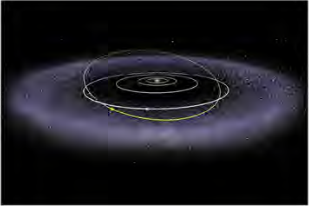
Endocomet: a comet that stays within the solar system while it revolves round the Sun.
Exocomet: a comet that comes in from outside the solar system.
The Parts of a Comet
A comet can be understood in three parts, and those three parts do not all exist at the same time. The innermost part is the nucleus. At the central region of a comet its material lies frozen in the solid state, and this frozen solid centre is called the nucleus. The nucleus is always there, even when the comet is far away from the Sun.
When a comet comes near the Sun, the frozen material is turned into vapour and gas by the heat of the Sun. This vapour and gas form a cloud like shell all round the nucleus, and that shell is called the coma. The solar wind then blows the material of the coma far out behind the comet, and sunlight falling on the blown out material makes it look bright. That bright stream is called the tail.
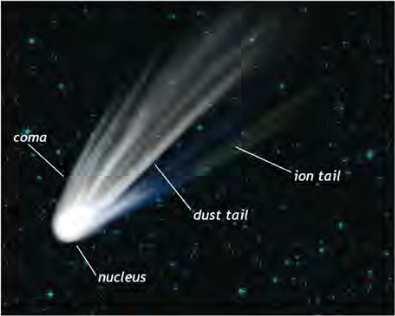
Nucleus: the solid part at the centre of a comet, where its material stays frozen.
Coma: the cloud like shell that forms round the nucleus when the Sun's heat turns the frozen material into vapour and gas.
Tail: the long bright part formed when the solar wind blows the material of the coma far out behind the comet.
The Two Tails of a Comet
Because the tails are made by the solar wind, they are always seen stretching in the direction opposite to the Sun. Whether the comet is moving towards the Sun or moving away from it, the tail stays on the far side from the Sun. This means that on the outward journey the tail actually runs ahead of the comet rather than behind it.
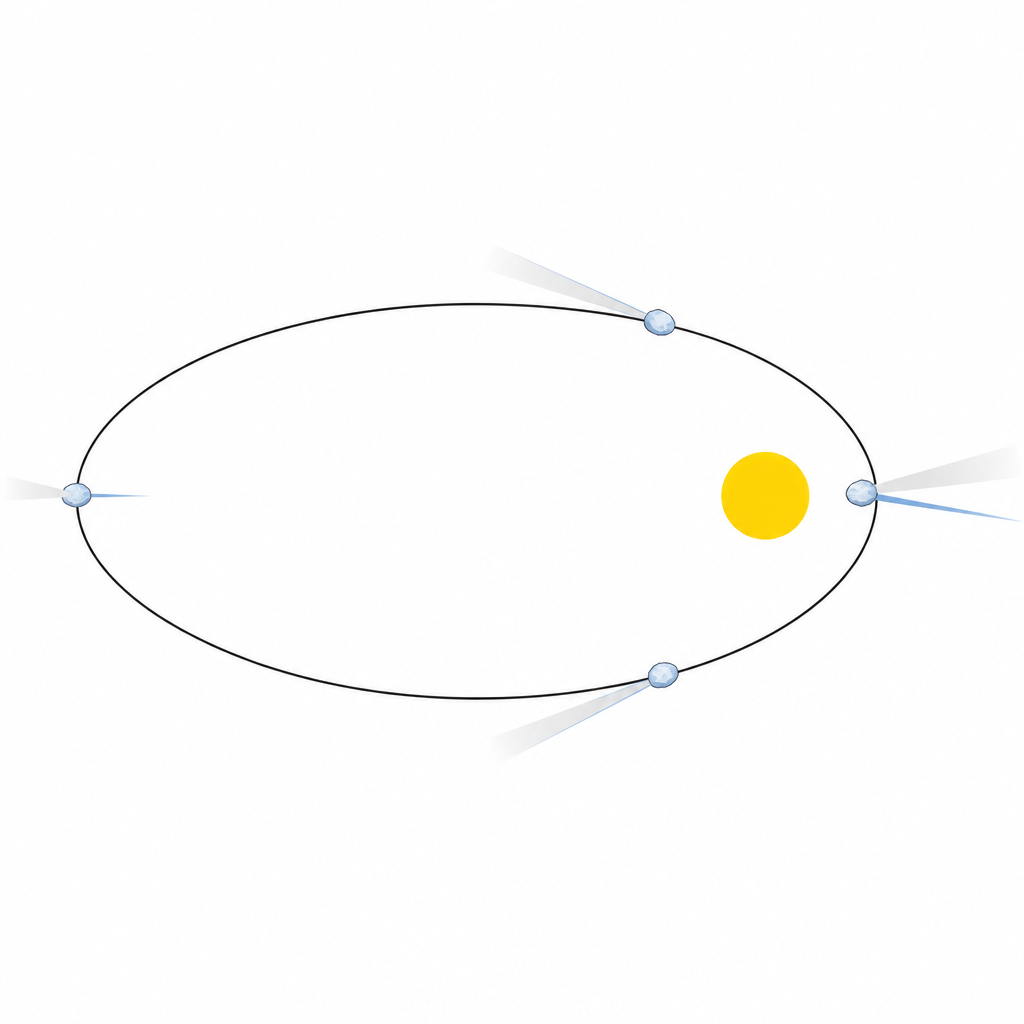
Looked at carefully, a comet has two tails. The thick white tail made of grains of dust is called the dust tail. The bright, thin, bluish tail made of gas in the form of ions is called the ion tail. As the comet moves further from the Sun the solar wind acts on it less and less, so the tails slowly fade away.
| Tail | Made of | How it looks |
| Dust tail | grains of dust | thick and white |
| Ion tail | gas in the form of ions | bright, thin and bluish |
Do not write that the tail points opposite to the comet's motion. The tail points away from the Sun, not away from the direction in which the comet is travelling.
The Orbit of a Comet
The orbit of a comet is highly elliptical. Because of that shape, a comet sometimes comes very close to the Sun and at other times goes very far away from it. Only when it is near the Sun do the solar heat, the sunlight and the solar wind give it a tail. When it has gone far from the Sun the cold increases, the comet shrinks to a very small size, and the light it gives becomes so dim that it can no longer be seen. That is why one and the same comet seems to be lost for years and then appears in the sky once again.
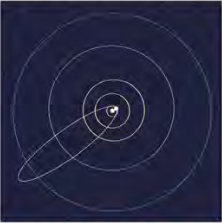
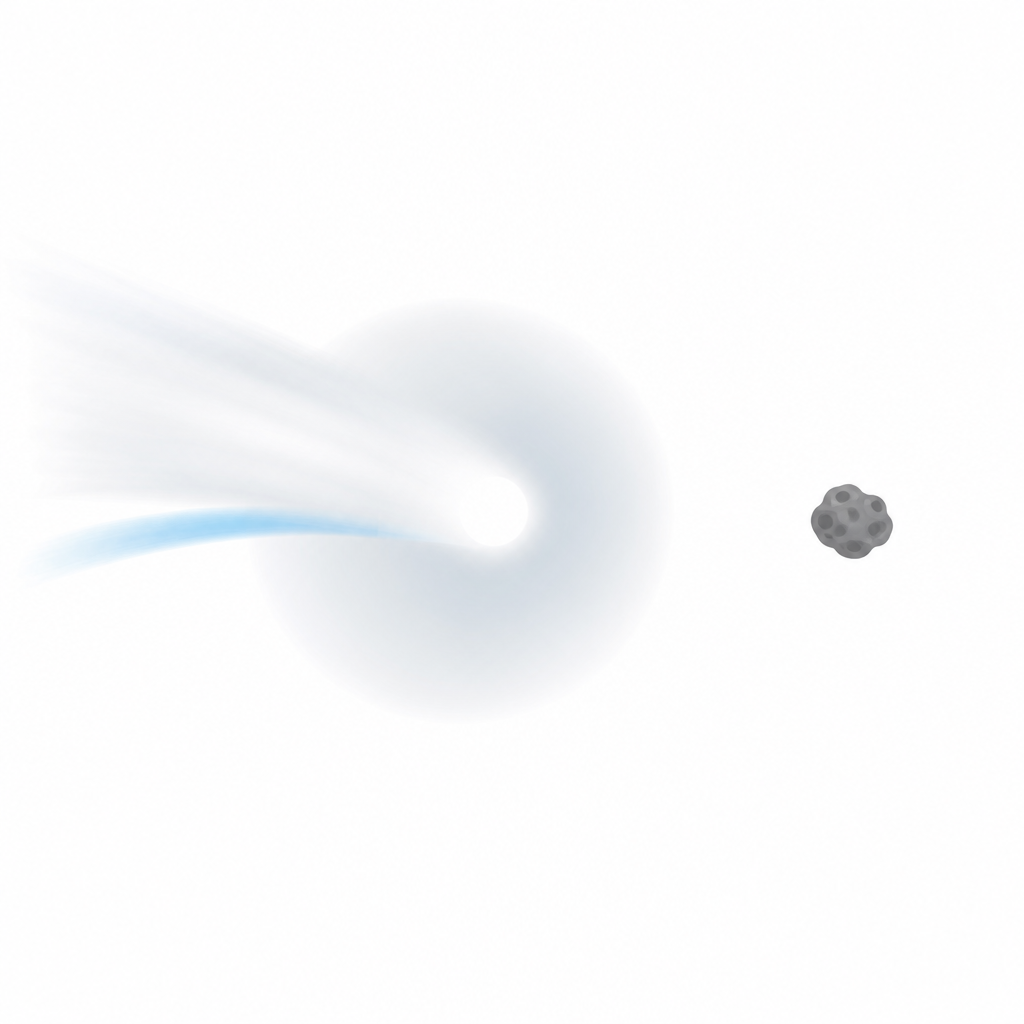
A comet does not carry a tail all the time. The tail is made only while the comet is near the Sun.
How Long One Round Takes
Depending on the size of its orbit, a comet has been found to take anywhere from 2 years to 2,50,000 years to complete one round of the Sun. The longer the orbit, the longer the comet takes to come back. Hyakutake, which was discovered in 1996, had taken 70,000 years for one round of the Sun, so this comet will be seen again only after 70,000 years. Encke is the opposite case: its period of revolution is only 3.3 years, so one person can see it many times in a single lifetime.
Some Well Known Comets
More than 4584 comets have been found so far. Some of them are named after the scientist who found them, and their periods of revolution are known to an exact figure.
| Comet | Discovered by | Orbital Period (Years) | Finding Date (AD) |
| Halley | E. Halley | 75.32 | 1758 |
| Enke | J. Encke | 3.30 | 1786 |
| Tempel Tuttle | H. Tuttle | 13.61 | 1858 |
What Happens When a Comet Strikes
Some comets pass close by a planet, and the pull of the planet's gravity brings them down onto its surface. Such a strike can change a planet's surface greatly. During the Cretaceous period of the Mesozoic era many comets struck the Earth and the dinosaurs were destroyed. In 1994 the comet Shoemaker Levy struck Jupiter and was itself destroyed.
Comets That Run Out
Each time a comet comes near the Sun on its many rounds, the ice, dust grains and gas in its outer part are lost. After a long time only the inner solid material is left. The comet then turns into an asteroid. A comet in this state is called an extinct comet. In other words, a comet spends its own material every time it visits the Sun, and one day it has nothing left with which to make a tail.
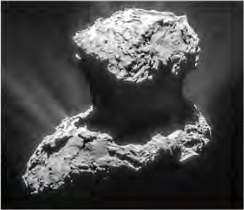
Extinct comet: a comet whose outer ice, dust and gas have been used up, so that only the inner solid material is left and it turns into an asteroid.
The full lesson is waiting for you
The notes are free to read in full. A free account opens the rest of the practice, and tracks your progress and confidence score for every subject. Presentations and videos need approval from Learn Yeti.