The Bodies That Travel Round the Sun
Many different kinds of bodies move round the Sun. Planets, satellites, comets and asteroids all travel round it. Every body that goes round the Sun, whether it is large or small, is a member of the solar system. So the solar system is much more than its eight planets. Between the planets, and far beyond the outermost planet, countless small bodies keep travelling round the Sun where no eye can pick them out.
One very large group of these small bodies is the asteroids. Asteroids are members of the solar system in just the way the planets are. Their number is extremely large, and like the planets they keep going round the Sun.
What an Asteroid Is
Asteroid: a small celestial body with no definite shape that goes round the Sun.
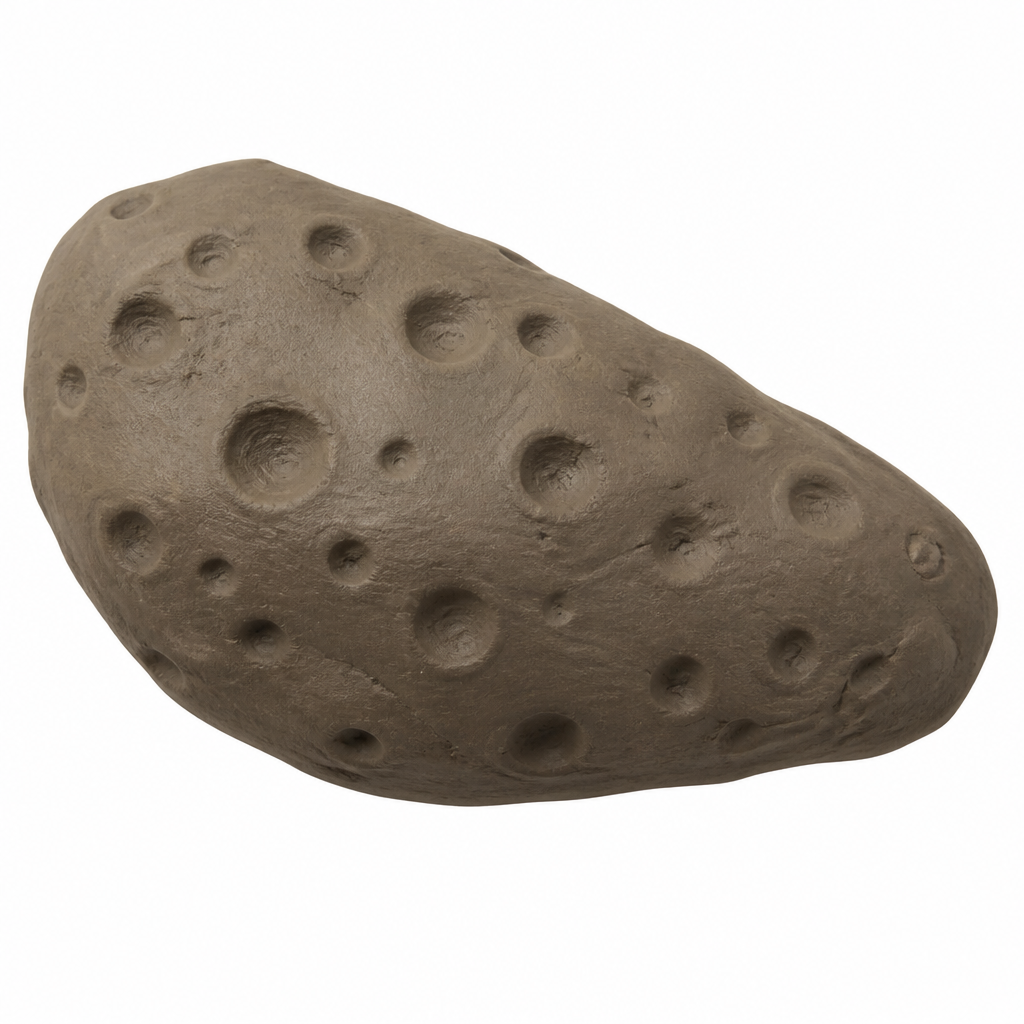
This definition has three parts and all three must hold. It goes round the Sun, it is small, and it has no definite shape. A planet is heavy enough that its own gravity has pulled it into a ball. Most asteroids are nowhere near that heavy, so they stay as irregular lumps of rock. One may be long, another may look like a squashed potato, and another may end in a blunt point.
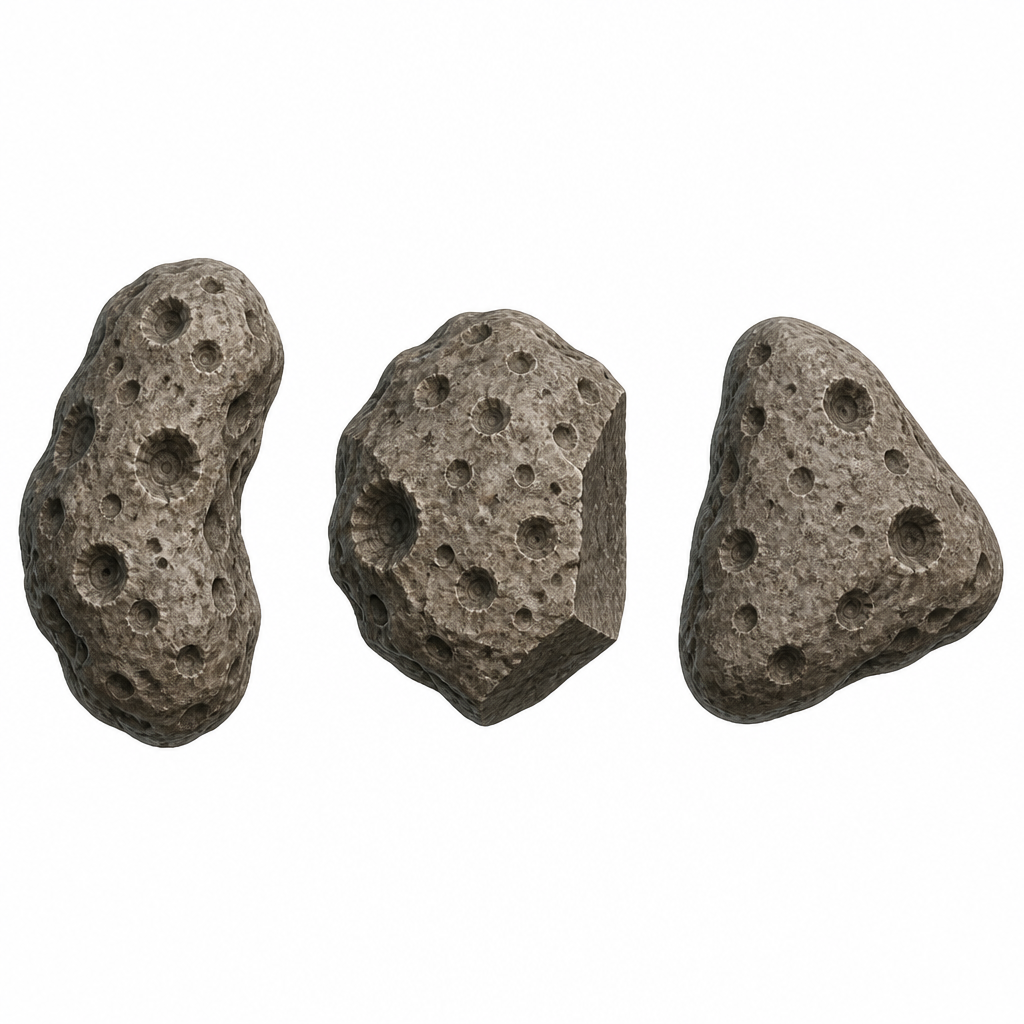
The Irregular Orbit of an Asteroid
The orbit of an asteroid is irregular in shape. A planet keeps to a clean, regular path, but an asteroid does not. One asteroid may come in close to the Sun and then swing far out again. Because there are so many of them, they knock into one another as they travel round the Sun. A collision breaks a large asteroid into smaller pieces, which is one reason the small ones are far more numerous than the big ones.
Do not call an asteroid a satellite. A satellite goes round a planet, the way the Moon goes round the Earth. An asteroid goes round the Sun itself, not round any planet.
The Asteroid Belt
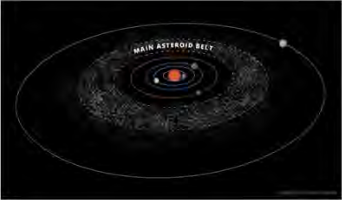
Most asteroids travel round the Sun in the space between the orbits of Mars and Jupiter. That region is called the asteroid belt. Millions of asteroids circle the Sun in this one wide band, so from far away the region looks like a thick ring of dust.
Asteroid belt: the region between the orbits of Mars and Jupiter where most asteroids are found.
The Kuiper Belt
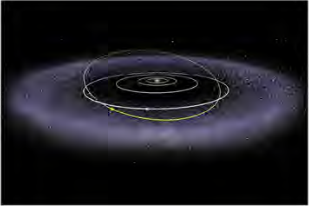
In the same way, the region lying beyond the orbit of Neptune holds a great many small asteroids together with the leftovers from the time the solar system was formed. That region is called the Kuiper belt. It lies much further out than the asteroid belt and is much wider. The bodies there are so far from the Sun that they are bitterly cold, and ice is mixed in with their rock.
Kuiper belt: the region beyond the orbit of Neptune that holds many small asteroids and the remains left over from the formation of the solar system.
Trojan Asteroids
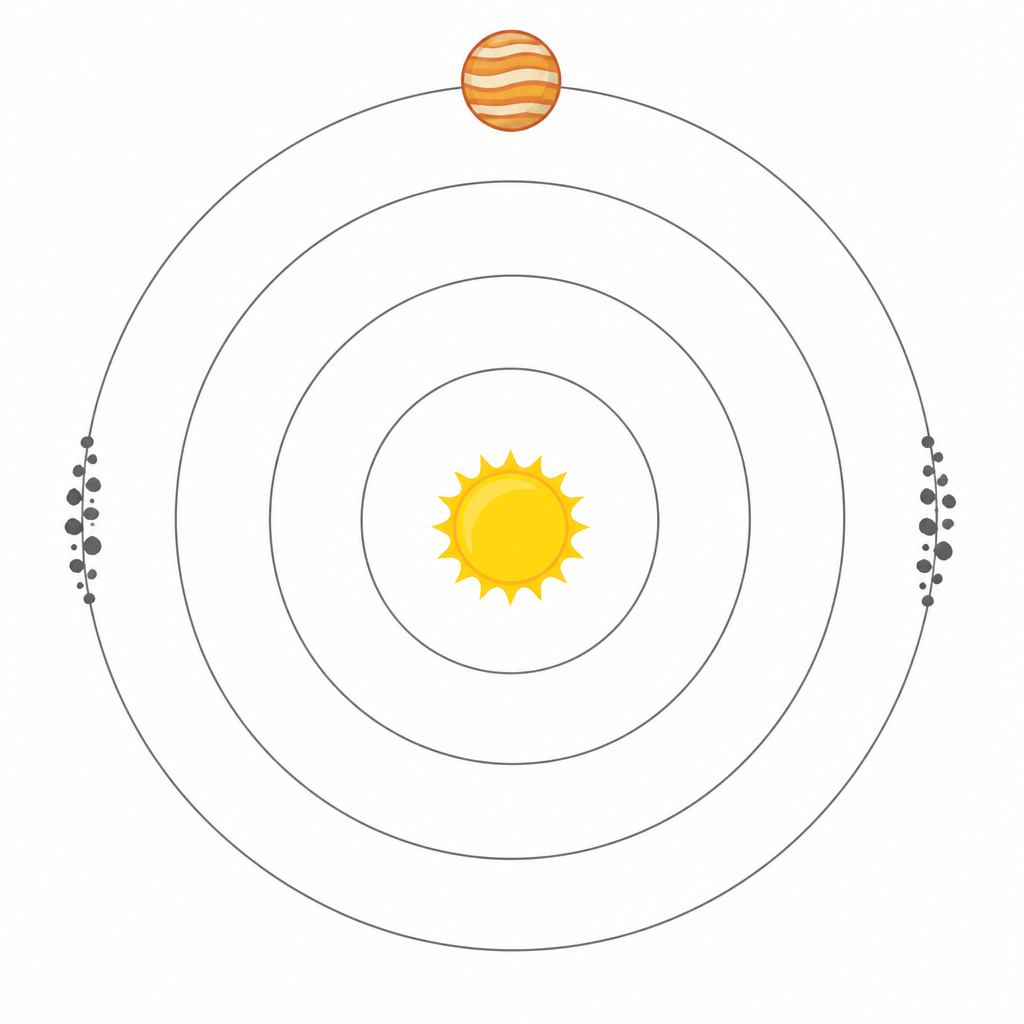
Some asteroids take the very orbit of a planet such as Jupiter or Mars and make it their own path round the Sun. These are called Trojans. A Trojan does not go round the planet. It travels along the same road the planet uses, some of them running ahead of the planet and some behind, and it goes round the Sun as the planet does. So the planet and its Trojans journey along one shared orbit together.
Trojans: asteroids that take a planet's own orbit as their path and travel round the Sun along it.
Near-Earth Asteroids
Many asteroids come close to the Earth and cut across the Earth's orbit as they travel round the Sun. These are the near-Earth asteroids. Because their road crosses ours, one of them sometimes strikes the surface of the Earth and causes damage. A large one digs out a wide crater, sets fires burning and harms a great stretch of land around the spot where it lands. For that reason scientists keep measuring the paths of the asteroids that come near us.
Near-Earth asteroids: asteroids that come close to the Earth and cross the Earth's orbit while travelling round the Sun.
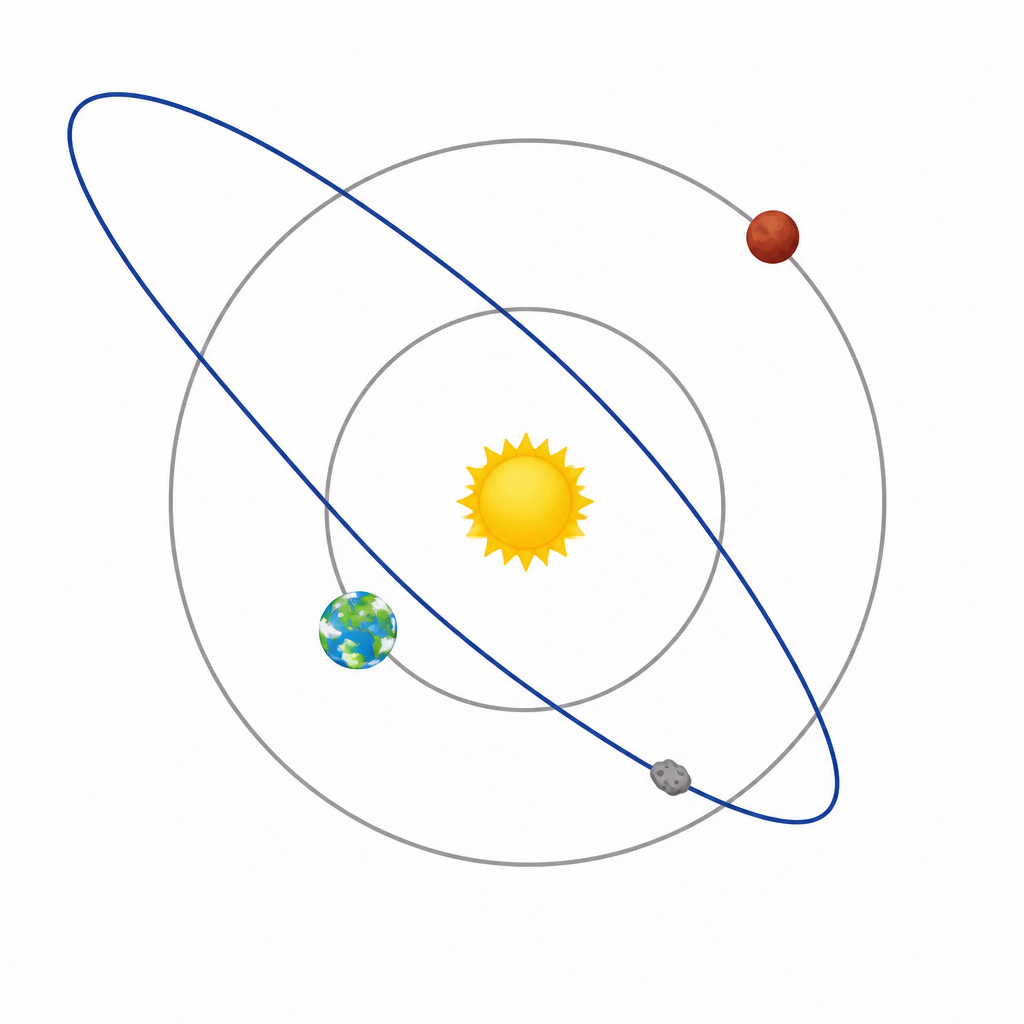
Asteroid belt: between the orbits of Mars and Jupiter
Kuiper belt: beyond the orbit of Neptune
Trojans: on a planet's own orbit, travelling with it
Near-Earth asteroids: cutting across the Earth's orbit
The Shape and Size of Asteroids
Asteroids come in many shapes and sizes. Most of them are irregular in shape. Their diameters run from 1 km up to 1000 km. That means one asteroid may be no wider than a village, while another is wide enough to cover a large part of a country.
Ceres is the largest asteroid. It is round in shape and its diameter is 940 km. Eros is long and narrow, and its diameter is 16.8 km. Setting the two side by side shows plainly how much asteroids differ in both shape and size.
| Asteroid | Shape | Diameter |
| Ceres | Round | 940 km |
| Eros | Long and narrow | 16.8 km |
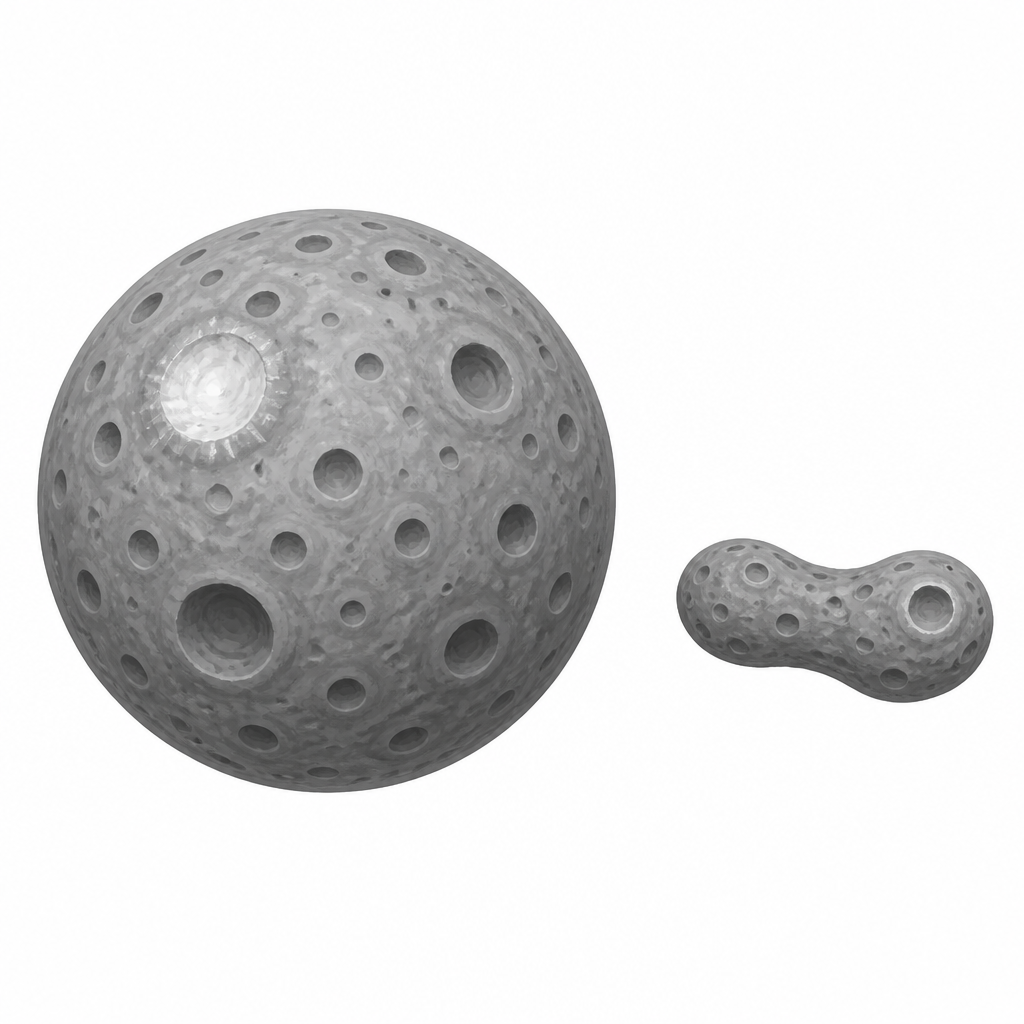
Ceres, the largest asteroid of all, is round. So remember the wording carefully: most asteroids are irregular in shape, but not every one of them is.
What Asteroids Are Made Of
An asteroid is made of rock, mineral, metal, soil and material of that sort. Because of this an asteroid is not a body that shines by itself the way a star does. Asteroids are lumps of solid matter, and they are seen only because sunlight bounces off them. Some hold a larger share of metal, while others are mostly rock and soil.
Activity: Making a Model of an Asteroid
The purpose of this activity is to build a model of an asteroid. These are the materials you need:
- Soil or clay
- Water
- Colour paint
- A knife
Carry out the method in the order given below.
- (a) Soak the soil in water, knead it well and leave it to stand for a while.
- (b) Using the knife and your hands, shape the wet clay into the form of an asteroid to make the model.
- (c) Let the model dry, then paint it.
Always keep the cutting edge of the knife turned away from your own hand and away from your friends. Show the knife to your teacher before you begin to use it.
The full lesson is waiting for you
The notes are free to read in full. A free account opens the rest of the practice, and tracks your progress and confidence score for every subject. Presentations and videos need approval from Learn Yeti.