Arthropoda: Animals with Jointed Legs
Picture a butterfly moving from one flower to another, a crab walking sideways across wet sand, a prawn swimming in a pond, a spider waiting in its web and a centipede hurrying out from under a stone. They live in very different places and at first they look nothing alike. Look closely, though, and the same body plan appears in every one of them. Each body is wrapped in a hard outer case, and each leg bends at several joints, much like your own finger. Because of this shared plan, all of these animals are placed in one phylum, Arthropoda. The name itself means 'jointed foot'.
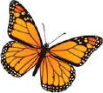
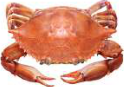
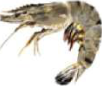
Arthropoda is the largest phylum in the animal kingdom. Most of the kinds of animals known to science are arthropods, and they are found in every type of habitat: in the air, in water and on land. Insects such as bees and houseflies, crustaceans such as crabs and prawns, spiders, centipedes and millipedes all belong here.
Exoskeleton: a hard covering on the outside of an animal's body that protects and supports it. In arthropods the exoskeleton is made of chitin.
The Body Plan of an Arthropod
An arthropod's body is bilaterally symmetrical. If you draw one line from the head to the tail down the middle of a butterfly, the left half and the right half match like mirror images. The body is also triploblastic, which means it develops from three layers of cells in the embryo. And it is segmented: it is built from a row of repeated rings or segments, which you can see clearly on the tail of a prawn or along the whole length of a centipede.
The body is divided into three regions: the head, the thorax and the abdomen. In some arthropods, such as the crab, the prawn and the spider, the head and the thorax are fused into one piece called the cephalothorax. The head carries the animal's main sense organs. It bears a pair of compound eyes, each made of many tiny units that together give a wide view, a pair of antennae that feel and smell the surroundings, and mouthparts suited to the animal's food: a butterfly sucks nectar, while a grasshopper chews leaves.
Cephalothorax: the single body part formed when the head and thorax of an arthropod are fused together, as in a crab, a prawn or a spider.
The legs are jointed and arise from the thorax. Joints let a stiff, armoured leg bend, so the animal can walk, climb, jump or swim even inside its hard case. Wings also grow from the thorax. Generally an insect has two pairs of wings, as the butterfly and the bee do. Some have only one pair, such as the housefly, and in others, such as the spider, the crab and the centipede, wings are absent altogether.
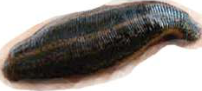
A segmented body alone does not make an animal an arthropod. Earthworms and leeches are segmented too, but their skin is soft and moist, they have no chitin exoskeleton and they have no jointed legs at all. Check for the hard case and the jointed legs together.
How Arthropods Breathe, Reproduce and Live
Arthropods live in such different places that no single way of breathing would suit them all. They breathe through the body surface, through gills or through trachea. Crabs and prawns in water take oxygen from the water with gills. Insects on land have trachea, a network of fine air tubes that open through small holes along the sides of the body and carry air straight to the tissues. Some very small arthropods simply take in oxygen through their body surface.
In arthropods the male and the female are separate animals, and they reproduce sexually. The common examples of this phylum are listed below.
- Butterfly
- Bee
- Centipede
- Millipede
- Crab
- Spider
- Prawn
- Housefly
Two features identify an arthropod at once: a hard exoskeleton made of chitin, and jointed legs.
Mollusca: Soft-bodied Animals
After rain you may see a slug or a snail sliding slowly over damp soil. Far away, in the sea, live the octopus and the cuttlefish. A slug and an octopus seem to have little in common, but they share three things. Their bodies are soft. They have tentacles on the head. And they move on a strong, muscular foot. Animals with these features are grouped in the phylum Mollusca, a name that comes from a word meaning 'soft'.
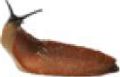
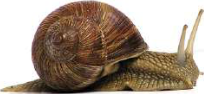
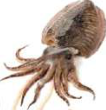
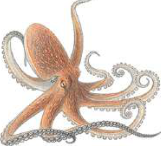
The tentacles are sensory. They detect stimuli from the surroundings such as touch, and help the animal find food and notice danger. Touch the tip of a snail's tentacle gently and it pulls back at once, and soon the whole snail withdraws into its shell. That is how these animals sense an enemy and hide.
Tentacles: long, soft, flexible structures on the head of a mollusc that are sensory in function and detect stimuli from the surroundings.
The Body Plan of a Mollusc
A mollusc's body is divided into four parts: the head, the visceral mass, the muscular foot and the mantle. The head bears the tentacles and the eyes. The visceral mass is the hump that holds the internal organs, such as those for digestion. The foot is the broad, muscular underside on which the animal moves. The mantle is a thin fold of body wall that covers the visceral mass. In shelled molluscs, the mantle lines the inside of the shell.
Visceral mass: the part of a mollusc's body that contains its internal organs.
Mantle: the fold of body wall in a mollusc that covers the visceral mass.
Most molluscs have their body covered by a hard exoskeleton made of calcium, which we call the shell. The shell protects the soft body. When a snail touches an object or senses danger, it hides its body inside this hard cover until the danger passes. Not every mollusc has an outer shell, though. The slug and the octopus do not, which is why the word used is 'most'.
Molluscs are asymmetrical. Try to draw a line through a snail that splits it into two equal halves, and you cannot: the coiled shell and the body twisted inside it do not match on any side. This is different from the arthropods, whose bodies split neatly into left and right halves.
Asymmetrical: having a body that cannot be divided into equal halves by any means.
How Molluscs Move, Breathe and Reproduce
The muscular foot helps a mollusc swim in water or glide on a surface. A snail's foot moves in slow waves and slides over a thin layer of slime, which is why it leaves a shiny trail behind it. Molluscs respire through the body surface, through gills or through a pulmonary sac. Molluscs in water, such as the octopus, use gills. Land snails and slugs breathe with a pulmonary sac, a space inside the mantle that works like a simple lung. Their digestive system, circulatory system and nervous system are all developed.
Molluscs are usually unisexual, but a few are hermaphrodite, or bisexual. The garden snail is one of these. Molluscs are found both on land and in water. Examples are the slug, the snail, the octopus, the cuttlefish and unio, a freshwater mussel whose soft body sits between two shells.
Unisexual: an animal in which male and female are separate individuals.
Hermaphrodite (bisexual): an animal that has both male and female reproductive organs in the same body.
Echinodermata: Spiny-skinned Animals
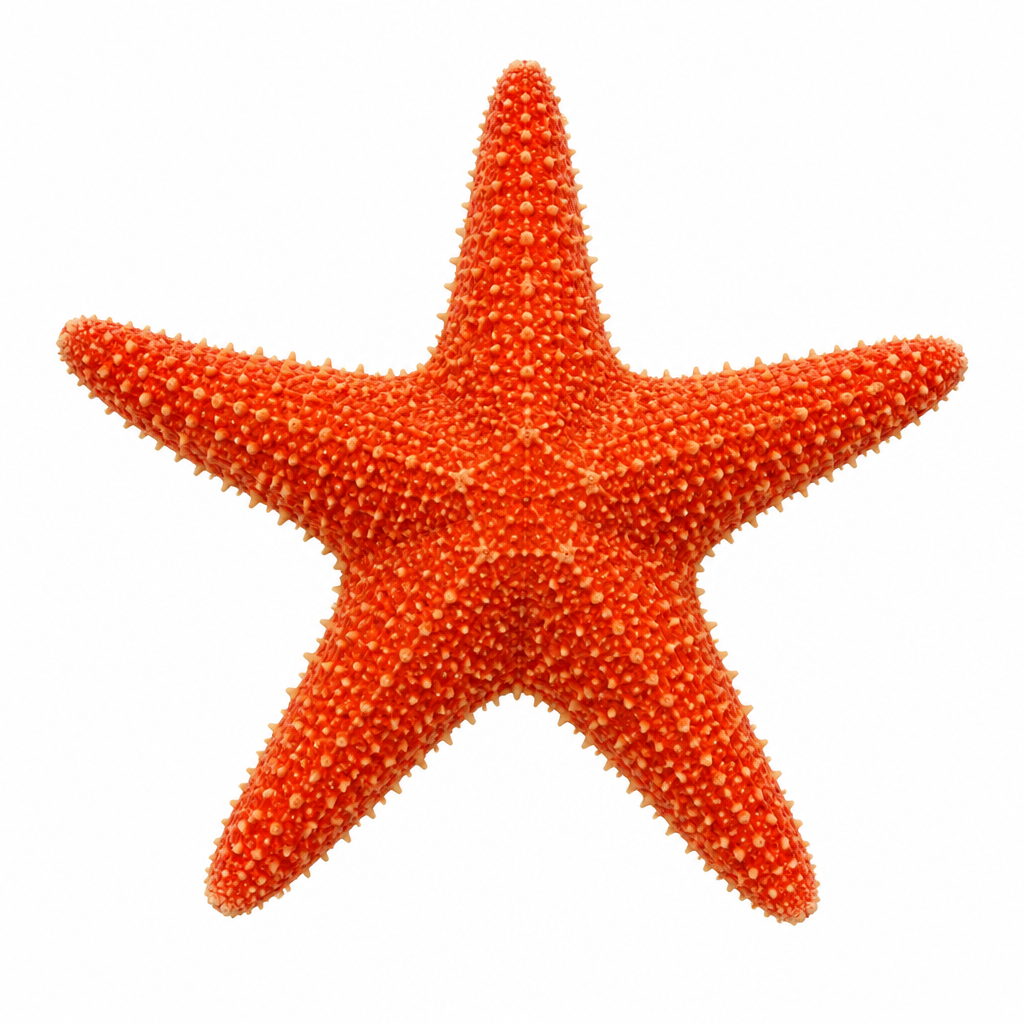
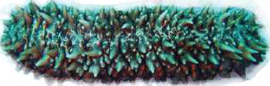
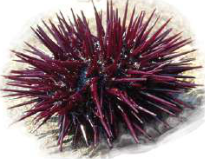
A starfish lying on a rock, a sea cucumber resting on the sea floor and a sea urchin covered in long spikes all have one thing you can feel with your fingers: rough, spiny skin. Animals like these belong to the phylum Echinodermata, a name that means 'spiny skin'. Every one of them lives in the sea.
Features of Echinoderms
The body of an echinoderm is covered on the outside by hard calcareous spines, meaning spines made of calcium carbonate. The animals come in various shapes: globular like the sea urchin, star-like like the starfish, elongated like the sea cucumber, and spherical. None of them has a distinct head. They are triploblastic, and they are radially symmetrical: their body parts are arranged around a central point, like the spokes of a wheel. A starfish can be cut into two equal halves along several different lines, as long as each line passes through the centre.
Calcareous: made of calcium carbonate.
Radial symmetry: an arrangement in which body parts lie evenly around a central point, so the body can be divided into equal halves along more than one line through the centre.
Echinoderms move with the help of tube feet. Turn a starfish over and you see rows of hundreds of small, soft tubes on the underside of each arm. Each tube foot can stretch, grip the rock and pull, and many of them working together move the animal slowly along.
Tube feet: small, soft, tube-like structures on the underside of an echinoderm that it uses for movement.
Their digestive system is developed, and they respire through gills. They are unisexual and reproduce sexually. Regeneration is common in them: a starfish that loses an arm can grow a new one. All the animals of this phylum are found in marine water, that is, in the sea. Examples are the starfish, the sea urchin and the sea cucumber.
Regeneration: the ability of an animal to grow back a body part that has been lost or damaged.
Comparing the Three Phyla
Setting the three phyla side by side shows how to tell them apart quickly. Symmetry is one of the clearest differences: an arthropod divides into two matching halves along one line, a starfish along many lines through its centre, and a snail along none.
| Feature | Arthropoda | Mollusca | Echinodermata |
| Outer covering | Exoskeleton of chitin | Mostly a shell made of calcium | Calcareous spines |
| Symmetry | Bilateral | Asymmetrical | Radial |
| Head | Compound eyes, antennae, mouthparts | Tentacles and eyes | No distinct head |
| Movement | Jointed legs, often wings | Muscular foot | Tube feet |
| Breathing | Body surface, gills, trachea | Body surface, gills, pulmonary sac | Gills |
| Sexes | Separate | Usually unisexual, a few hermaphrodite | Unisexual |
| Habitat | Air, water and land | Land and water | Sea only |
| Examples | Butterfly, crab, spider | Snail, slug, octopus | Starfish, sea urchin |
Classifying Animals Around Your School
The features you have learnt are tools for sorting real animals. Working in groups with your teacher, you can collect small animals from around your school, observe them carefully and classify them into phyla on the basis of their external features. Then prepare a report and present it to the class. Asking these questions, one after another, will place most small animals you find:
- Does it have a hard outer case and jointed legs? Then it is an arthropod.
- Is its body soft, with tentacles on the head and a broad muscular foot, perhaps inside a shell? Then it is a mollusc.
- Is its skin spiny, does it move on tube feet, and does it come from the sea? Then it is an echinoderm.
- If none of these fits, compare it with the features of the other phyla you have studied.
Follow your teacher's instructions throughout. Never pick up bees, spiders or centipedes with bare hands, because they can sting or bite; use a jar, a leaf or gloves. Handle every animal gently, wash your hands afterwards, and return the animals to where you found them when you have finished.
The full lesson is waiting for you
The notes are free to read in full. A free account opens the rest of the practice, and tracks your progress and confidence score for every subject. Presentations and videos need approval from Learn Yeti.