Flowering plants that hide their seeds
Walk past a clump of bamboo, a soybean field or an orange tree and you are looking at the largest and most successful group of plants on Earth. All of these plants produce real flowers. After a flower is pollinated, its ovary swells and becomes a fruit, and the seeds form inside that fruit. The fruit wraps the seeds and protects them until they are ready to grow. Plants that bear their seeds enclosed in a fruit are placed in the subdivision angiosperm.
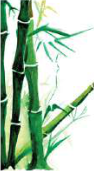
Angiosperm: a seed-bearing plant that produces real flowers and whose seeds are enclosed inside a fruit. The name means 'enclosed seed'.
Compare this with pine, juniper and cycas. These are gymnosperms. They also make seeds, but their seeds sit uncovered on the scales of a cone or on leaf-like parts. No fruit ever grows around them. So a single question separates the two subdivisions: is the seed inside a fruit, or is it naked?
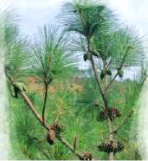
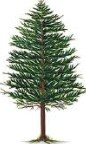
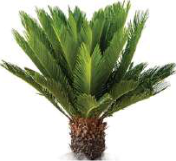
Seed enclosed in a fruit: angiosperm. Seed naked on a cone or leaf: gymnosperm.
Characteristics of angiosperms
Angiosperms range from a tiny floating Lemna to a huge mango tree, yet they share a set of features. These are the general characteristics of the plants kept under angiosperm:
- They are the most advanced plants of the plant kingdom.
- They are found everywhere, both on land and in water.
- Their body is well developed into root, stem, leaf, flower and fruit.
- They bear real flowers, and the flower contains both an ovary and ovules.
- Some of these plants are bisexual and some are unisexual.
- Pollination takes place through many agents such as wind, water, insects and other animals.
- Their seeds are enclosed inside the fruit.
The ovary and the ovules explain why the seeds end up inside a fruit. The ovary is the swollen base of the female part of the flower, and the ovules are tiny bodies sitting inside it. After fertilisation each ovule develops into a seed, while the ovary around it develops into the fruit. Cut an orange or a pea pod open and you see exactly this: the seeds are still sitting inside the old ovary.
A bisexual flower has both the male part (the stamens) and the female part (the pistil) in the same flower, as in mustard and pea. A unisexual flower carries only one of them. Pumpkin makes separate male and female flowers, and in maize the male flowers form the tassel at the top while the female flowers form the cob lower down.
Orange, maize, banana, paddy and soybean are angiosperms of the land. Water hyacinth, Lemna and Pistia are angiosperms that float on ponds and slow rivers. They flower too, which is why they belong in the same subdivision as a mango tree.
Two classes: counting the cotyledons
Every seed holds a baby plant, the embryo, together with one or two seed leaves called cotyledons. The cotyledons store food or pass food to the young plant until its first green leaves can make their own. Soak a gram seed overnight, peel off its skin and press it gently: it falls apart into two halves, because it has two cotyledons. A maize grain will not split like that, because it has only one.
Cotyledon: a seed leaf inside the seed that stores or supplies food for the young plant as it begins to grow.
On the basis of the number of cotyledons in their seeds, angiosperms are grouped into two classes: monocotyledon and dicotyledon. You do not have to cut open every seed to decide. The number of cotyledons goes hand in hand with features you can see at a glance: the veins of the leaf, the kind of root, the stem and the flower.
Monocotyledon: an angiosperm whose seed contains only one cotyledon.
Dicotyledon: an angiosperm whose seed contains two cotyledons.
Monocotyledons
Look closely at a paddy plant or a field of barley. The leaves are slender and long, like ribbons. Hold one up to the light and the veins run side by side from the base to the tip without joining into a net. Pull up a young plant and there is no single main root. Instead there is a tuft of thin roots, all about the same size, growing out from the same place at the base of the stem. Paddy, bamboo, turmeric, barley and banana all show these features, and their seeds have one cotyledon, so they are kept in the class monocotyledon.
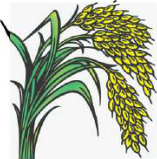
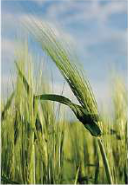
Parallel venation: an arrangement of veins in which the veins run side by side along the length of the leaf and do not form a network.
Fibrous root: a root system made of a bunch of thin roots of about equal size that all arise from the base of the stem, with no single main root.
Vascular bundle: a strand of conducting tissue in which xylem carries water and minerals and phloem carries food through the plant.
The general characteristics of plants in the monocotyledon class are:
- Their leaves have parallel venation.
- They have a fibrous root.
- The stem is usually hollow. Nodes are prominent and occur at equal intervals, and branches and leaves arise from the nodes. The leaf base expands into a sheath that covers the stem.
- The vascular tissues, xylem and phloem, are scattered throughout the stem.
- The floral parts are three or multiples of three in number.
- Their seeds are enclosed in fruit, and each seed has only one cotyledon.
- They are found both on land and in water.
Two of these features are easy to check at home. The rings on a bamboo pole are its nodes, and they are spaced quite evenly up the stem. Peel back a leaf of maize or paddy and its lower part wraps right round the stem like a sleeve. That sleeve is the leaf sheath.
Wheat, sugarcane, banana, barley and bamboo belong to this class, and so do maize, paddy and turmeric.
Size does not decide the class. Bamboo grows as tall as a tree and a banana plant looks like a tree, yet both are monocots. Judge a plant by its leaf veins, roots and seed, never by how big it is.
Dicotyledons
Now look at a pea plant, an orange tree, mustard, soybean or bean. Their leaves are broad and flat. A thick vein called the mid-rib runs down the middle of each leaf, and from it smaller veins branch out and branch again into fine veinlets, forming a network across the whole leaf blade. Dig up a young plant and you find one strong main root going straight down, with small side roots growing from it. Their seeds contain two cotyledons, so they are placed in the class dicotyledon.
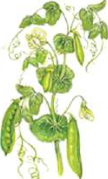
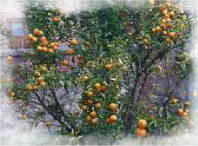
Reticulate venation: an arrangement of veins in which a mid-rib gives off veins and veinlets that join to form a network across the leaf.
Taproot: a root system with one prominent main root growing downward, from which smaller branch roots arise.
Dicotyledonous plants have the following characteristics:
- They range from small shrubs to very large trees.
- They have a taproot system.
- The stem is solid, strong and mostly woody. Nodes are present at unequal intervals.
- The vascular bundles are arranged in a ring inside the stem.
- The leaf has reticulate venation. The leaf is attached by a stalk, the petiole, and it is either simple or compound.
- Seeds are enclosed within the fruit, and each seed has two cotyledons.
A simple leaf has one undivided blade on its stalk, like a mango leaf. A compound leaf has its blade split into several small leaflets on one stalk, like the leaf of a pea or a soybean plant. Either kind can be found on a dicot.
Soybean, mustard, pea, orange, mango, gram, beans and pumpkin belong to this class.
Monocots and dicots side by side
Every difference between the two classes can be read off one plant if you know where to look. This table puts them together.
| Feature | Monocotyledon | Dicotyledon |
| Cotyledons in the seed | One | Two |
| Leaf venation | Parallel | Reticulate, a network |
| Leaf | Slender and long; base forms a sheath | Broad and flat; attached by a petiole |
| Root | Fibrous | Taproot |
| Stem | Usually hollow; nodes at equal intervals | Solid, strong, mostly woody; nodes at unequal intervals |
| Vascular bundles in the stem | Scattered | Arranged in a ring |
| Floral parts | Three or multiples of three | Usually in fours or fives |
| Examples | Maize, paddy, wheat, bamboo, banana | Gram, pea, mustard, mango, orange |
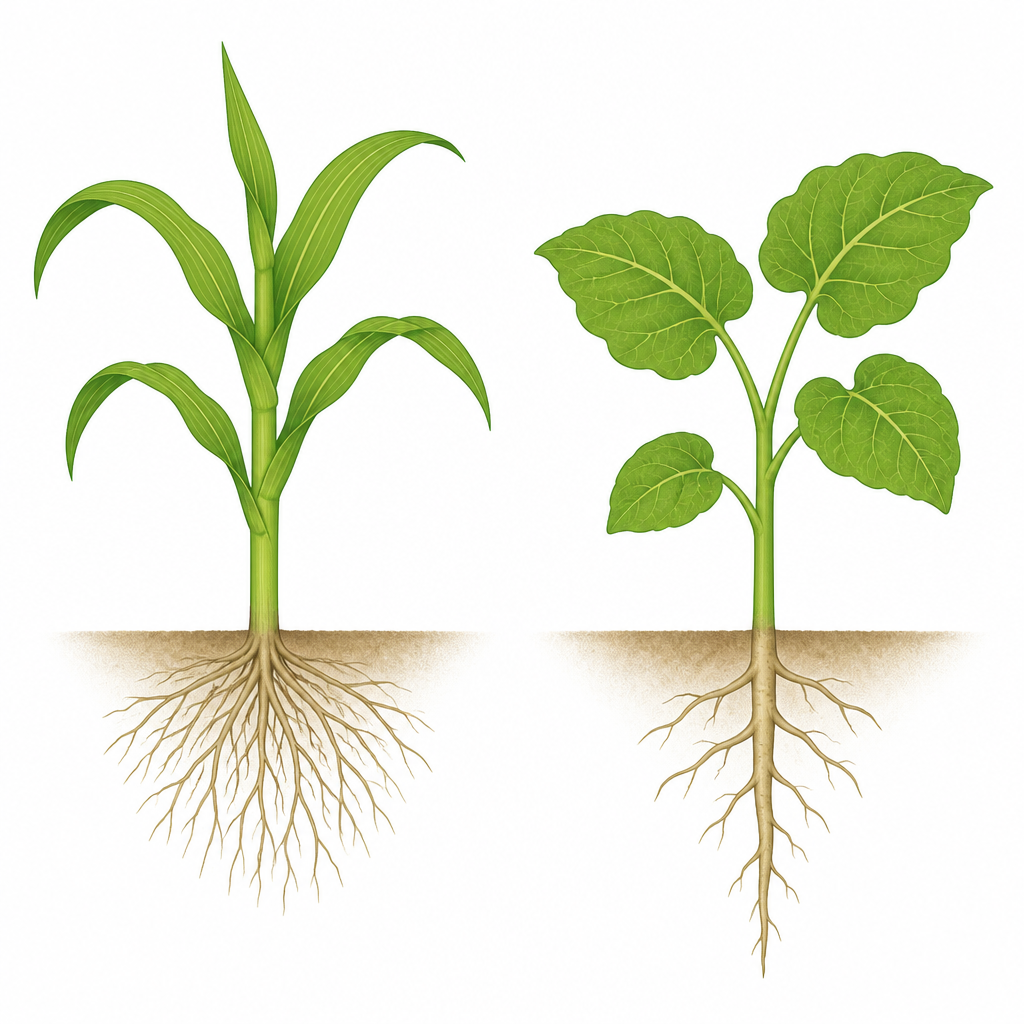
The difference inside the stem cannot be seen from outside. Cut a thin slice across a maize stem and look at it under a microscope: the vascular bundles are dotted all over the cut face. Do the same with a sunflower or bean stem and the bundles sit in a neat ring near the edge.
Use more than one clue. Parallel veins, fibrous roots, one cotyledon and flower parts in threes point to a monocot. Net veins, a taproot, two cotyledons and a ring of vascular bundles point to a dicot.
Sorting the plants around you
With these clues you can place almost any flowering plant from your garden or field. Work through it in this order:
- Step 1: Check that the plant flowers and carries its seeds inside a fruit. If it does, it is an angiosperm.
- Step 2: Hold a leaf up to the light and see whether its veins run side by side or form a net.
- Step 3: If the plant is small, pull it up gently and see whether it has a tuft of equal roots or one main root.
- Step 4: Count the petals or other parts of a flower. Threes or sixes suggest a monocot.
- Step 5: If you have a seed, soak it and see whether it splits into two cotyledons.
Try it on two kitchen plants. A turmeric plant has long leaves with parallel veins and a bunch of roots growing from its underground stem, so it is a monocot. A pumpkin vine has broad leaves with a network of veins, a main root, and seeds that split into two halves, so it is a dicot.
Never taste a plant you have collected. Stay away from thorny plants and from stinging nettle, and wash your hands with soap after handling plants and soil.
Keeping plants for study: the herbarium
A fresh plant wilts and rots within days, so botanists keep plants for study by pressing and drying them. A well-made collection lets you compare the roots, stems, leaves and flowers of many plants long after the season is over.
Herbarium: a collection of whole plants or plant parts that have been pressed, dried, mounted on sheets of paper and labelled, kept for study.
- Step 1: Collect small plants with their roots, stems, leaves and flowers.
- Step 2: Shake or wash the soil off the roots gently.
- Step 3: Spread each plant flat between sheets of newspaper so that no leaf is folded.
- Step 4: Press the pile under heavy books and change the newspaper every day or two until the plant is completely dry, which takes one to two weeks.
- Step 5: Fix the dry plant on a sheet of chart paper with glue or thin strips of tape.
- Step 6: Write a label in the corner: the plant's name, where and when it was collected, who collected it, and whether it is a monocot or a dicot.
Keep the finished sheets flat in a dry folder, away from damp and insects. Arranged by class, they become your own record of the monocots and dicots that grow where you live.
The full lesson is waiting for you
The notes are free to read in full. A free account opens the rest of the practice, and tracks your progress and confidence score for every subject. Presentations and videos need approval from Learn Yeti.