Phylum Chordata: The Most Advanced Animals
Earthworms, insects, snails and starfish have no supporting rod running along their back. Fish, frogs, snakes, pigeons and tigers belong to a different group altogether. They are placed in phylum Chordata, and so are human beings. This phylum contains the most advanced animals of the animal kingdom.
The phylum takes its name from a structure called the notochord. Every animal that has a notochord at any stage of its life is classified in phylum Chordata. In some animals the notochord stays for the whole of life. In others, such as humans, it appears only in the early embryo and is later replaced by the backbone. An adult human has no notochord, but a human is still a chordate because the notochord was there in the embryo.
Chordata: The phylum of animals that have a notochord at some stage of their life. Animals of this phylum are called chordates.
The Notochord and Other Chordate Features
Imagine cutting a chordate lengthwise from head to tail. At the top, along the back, lies a nerve cord. Just below it lies a firm but flexible rod, the notochord. Below the notochord runs the alimentary canal, the tube that carries food from the mouth to the anus. Nerve cord on top, notochord in the middle, alimentary canal below: this order is the same in every chordate.
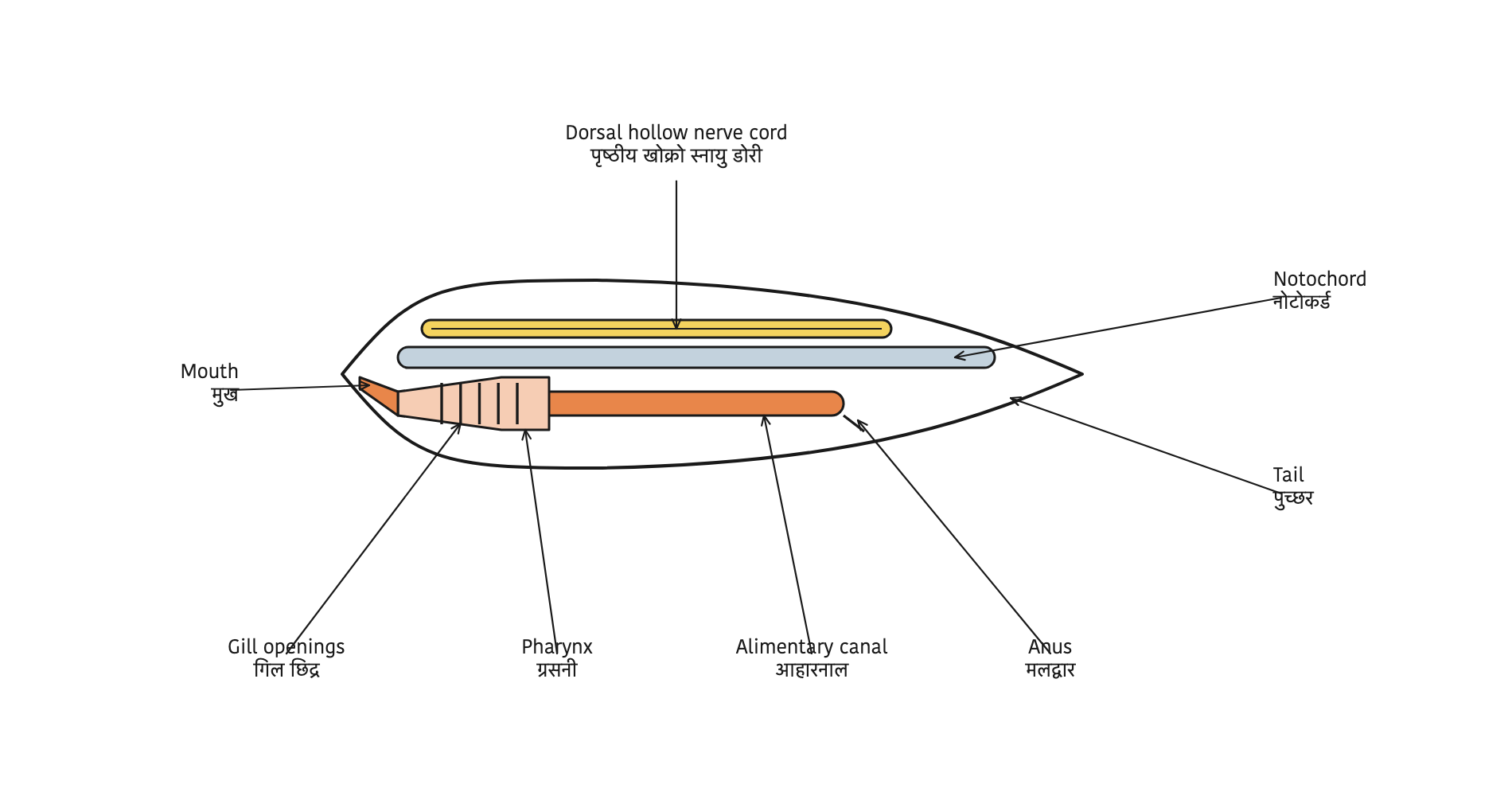
Notochord: A developed, elastic, rod-like structure lying between the nerve cord and the alimentary canal, which supports the body of a chordate at some stage of its life.
Animals of phylum Chordata have the following characteristics:
- They have a developed, elastic, rod-like notochord between the nerve cord and the alimentary canal at some stage of life.
- In the embryonic stage, paired gill openings lie on both sides of the pharynx, the part of the throat just behind the mouth.
- A hollow, tube-like nerve cord runs along the back. In vertebrates it lies safely inside the vertebral canal, the tunnel formed by the backbone.
- The skeleton is covered with muscles.
- They have a closed circulatory system.
Dorsal hollow nerve cord: A hollow, tube-like nerve cord running along the back of a chordate. In vertebrates it becomes the spinal cord and lies inside the vertebral canal.
Gill openings: Paired openings on both sides of the pharynx that appear in the embryonic stage of a chordate.
Gill openings are worth a closer look. A fish keeps them all its life and breathes through its gills. A human embryo also has such openings for a short time, but they close or change into other structures long before birth. That is why this feature is described at the embryonic stage: every chordate shows it then, even if the adult does not.
Closed circulatory system: A system in which blood always flows inside the heart and blood vessels and never flows loose into open body spaces.
Chordates and Non-chordates
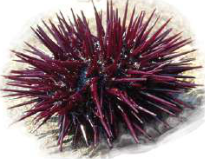
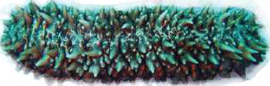
Animals that never have a notochord at any stage of life are called non-chordates. All the phyla from Porifera to Echinodermata are non-chordates. The sea urchin and the sea cucumber are good examples. One is a ball covered in spines and the other is a soft, sausage-shaped body. They look very different, yet neither has a notochord, and neither has a hollow nerve cord along its back. Both move with the help of tube feet.
| Feature | Chordates | Non-chordates |
| Notochord | Present at some stage of life | Never present |
| Nerve cord | Hollow, along the back | Solid, usually along the belly side, or absent |
| Gill openings on the pharynx | Present at least in the embryo | Absent |
| Examples | Fish, frog, snake, pigeon, tiger | Earthworm, insect, snail, sea urchin |
The Four Sub-phyla of Chordata
Phylum Chordata is divided into four sub-phyla:
- Hemichordata: worm-like sea animals such as Balanoglossus, the acorn worm.
- Urochordata: sea animals such as Herdmania, in which the notochord is found only in the tail of the larva.
- Cephalochordata: small fish-like sea animals such as Amphioxus, in which the notochord reaches right into the head and stays for life.
- Vertebrata: animals with a backbone, such as fish, frogs, snakes, birds and mammals.
The first three sub-phyla, Hemichordata, Urochordata and Cephalochordata, are together called Protochordata. Their animals are simpler and more primitive than the animals of Vertebrata. They have no backbone, and they all live in the sea. From here on, only sub-phylum Vertebrata is described.
Protochordata: The collective name for Hemichordata, Urochordata and Cephalochordata, the three sub-phyla whose animals are more primitive than vertebrates.
Sub-phylum Vertebrata
Look at the five animals below: a fish, a frog, a snake, a pigeon and a tiger. One lives in water, others live on land, and one flies. They look nothing alike. Yet all five share one hidden feature: each has a backbone, also called the vertebral column.

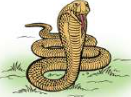
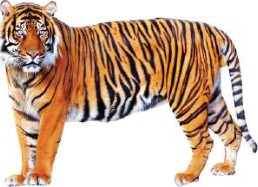
A vertebral column is a chain of small bones joined one after another along the back. Each small bone is called a vertebra. Animals having a vertebral column are called vertebrates. In a vertebrate embryo a notochord forms first. As the embryo grows, the vertebrae form around it, and the notochord is replaced by the vertebral column. So a vertebrate is still a chordate: it had a notochord, and the backbone later took over its job.
Vertebrates: Animals that have a vertebral column, or backbone. They make up sub-phylum Vertebrata.
The notochord and the backbone are not the same thing. The notochord is a flexible rod in the embryo; the backbone is a chain of bones that later replaces it. Writing that an adult vertebrate has a notochord is wrong.
Fish, frogs, snakes, pigeons, whales, bats and many more animals belong to sub-phylum Vertebrata. They share most of their features, and only a few features differ between them.
General Features of Vertebrates
Animals of sub-phylum Vertebrata have the following features:
- Their body is bilaterally symmetrical.
- Respiration takes place through gills, moist skin or lungs.
- The body temperature of some, called poikilothermic or cold-blooded animals, changes according to the surrounding environment.
- The body temperature of others, called homeothermic or warm-blooded animals, does not change with the surroundings. They keep it slightly higher than that of the environment.
- They have a well developed circulatory system. The heart has from two to four chambers.
- Some, called oviparous animals, produce their young by laying eggs, while others, called viviparous animals, give birth to their young directly.
Bilateral symmetry: The body can be divided into two similar halves, a left half and a right half, along one plane only.
The way a vertebrate breathes depends on where it lives. A fish takes in oxygen dissolved in water through its gills. A frog breathes through both its moist skin and its lungs, which is why its skin always feels cool and damp. A snake, a pigeon and a tiger breathe with lungs. The number of heart chambers also varies: a fish heart has two chambers, a frog heart has three, and the hearts of a pigeon and a tiger have four.
Cold-blooded and Warm-blooded Animals
On a cold winter morning in the hills, a snake lies still and hardly moves. Only after the sun has warmed it does it become active. This happens because a snake's body temperature rises and falls with its surroundings. On that same morning a pigeon is already flying and a tiger is out hunting, because their body temperature stays the same even in the cold.
Poikilothermic (cold-blooded) animals: Animals whose body temperature changes according to the surrounding environment. Examples: fish, frog, snake.
Homeothermic (warm-blooded) animals: Animals whose body temperature does not change with the surroundings and is kept slightly higher than that of the environment. Examples: pigeon, tiger, human.
Warm-blooded animals produce heat inside their bodies from the food they digest. Feathers, fur and fat under the skin stop that heat escaping. A healthy human body stays at about 37 °C whether the room is at 10 °C or at 30 °C. Many cold-blooded animals, on the other hand, become sluggish in severe cold, and frogs and snakes spend the winter hidden in holes.
| Point | Cold-blooded | Warm-blooded |
| Other name | Poikilothermic | Homeothermic |
| Body temperature | Changes with the surroundings | Does not change with the surroundings |
| Examples | Fish, frog, snake | Pigeon, tiger, human |
Cold-blooded does not mean the blood is always cold. A lizard resting on a sunny rock can be quite warm. The word only means that its temperature follows the surroundings.
Oviparous and Viviparous Animals
A hen or a pigeon lays eggs, sits on them, and chicks hatch out. The young one develops inside the egg, outside the mother's body. In a cow or a tiger, the young one grows inside the mother's body and is born alive.
Oviparous animals: Animals that produce their young by laying eggs. Examples: fish, frogs, most snakes and all birds.
Viviparous animals: Animals that give birth to their young directly. Examples: tiger, cow, human, whale, bat.
A whale lives in water and a bat flies, but a whale is not a fish and a bat is not a bird. Both give birth to their young and feed them milk, so both are mammals.
The Five Classes of Vertebrates
Based on their physical structure and development, the animals of sub-phylum Vertebrata are divided into five classes: Pisces, Amphibia, Reptilia, Aves and Mammalia.
| Class | What the name means | Examples |
| Pisces | Fish | Rohu, goldfish |
| Amphibia | A double life, in water and on land | Frog, toad |
| Reptilia | Creeping or crawling | Snake, lizard, tortoise |
| Aves | Birds | Pigeon, crow, hen |
| Mammalia | Feeding young on milk from mammary glands | Tiger, human, whale, bat |
The five animals shown earlier fit neatly into these classes: the fish into Pisces, the frog into Amphibia, the snake into Reptilia, the pigeon into Aves and the tiger into Mammalia. Animals of the first three classes are cold-blooded, while birds and mammals are warm-blooded.
Every vertebrate is a chordate, but not every chordate is a vertebrate. Protochordates have a notochord but never a backbone.
The full lesson is waiting for you
The notes are free to read in full. A free account opens the rest of the practice, and tracks your progress and confidence score for every subject. Presentations and videos need approval from Learn Yeti.