Plants with Root, Stem and Leaf
A fern on a damp wall, a Cycas in a garden pot, a banana plant behind the house and a peepal tree at the village chautara look nothing alike. One is small and feathery, one looks like a short palm, one has broad soft leaves and one is a huge tree that gives shade to travellers. Still, all four are built on the same plan. Each has a root that holds it in the soil and takes in water, a stem that holds it up, and leaves that make food. Mosses, Riccia and Marchantia have no such clear root, stem and leaf.
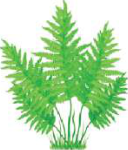
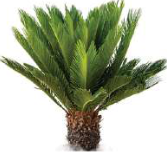
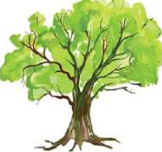
When a plant body is clearly divided into root, stem and leaf, something else is hidden inside it. A network of fine tubes runs from the tip of the root to the tip of every leaf. These tubes are the reason such plants can grow tall and can live on dry land, far from standing water.
Xylem and Phloem: The Transport System
A tall tree has two problems to solve. Water enters through the roots deep in the soil, but the leaves that need it may be many metres above the ground. At the same time, food is made in the leaves, but the roots under the ground also need food to stay alive. The plant solves both problems with two kinds of tissue that run side by side through its whole body.
Xylem: the tissue that carries water and dissolved minerals from the roots upward to the stem and leaves.
Phloem: the tissue that carries food made in the leaves to all other parts of the plant, such as the stem, roots, flowers and fruits.
Vascular tissue: xylem and phloem taken together. Vascular tissue transports substances throughout the plant body.
Plants whose body is differentiated into root, stem and leaf, and which have xylem and phloem as vascular tissue, are placed in the division Tracheophyta. The name comes from the long, tube-like cells of the xylem, which work like tiny water pipes inside the plant.
Tracheophyta: the division of plants whose body is differentiated into root, stem and leaf, and which have vascular tissue, xylem and phloem, to transport substances throughout the body.
Vascular tissue is what lets a plant grow tall. Bryophytes have none, so they grow only a few centimetres high or spread flat on the ground. Tracheophytes, with xylem and phloem, range from small ferns to trees many metres tall.
Three Subdivisions of Tracheophyta
Division Tracheophyta is very large. It includes non-flowering ferns, small herbs, shrubs and huge, well-developed trees. On the basis of their structure, these plants are classified into three subdivisions: pteridophyta, gymnosperm and angiosperm. Two questions are enough to tell them apart. Does the plant make seeds? If it does, is each seed covered by a fruit?
| Subdivision | Seeds and flowers | Examples |
| Pteridophyta | No flowers and no seeds; reproduce by spores | Fern, horsetail, clubmoss |
| Gymnosperm | Cones instead of flowers; naked seeds with no fruit | Cycas, Pinus, Juniper |
| Angiosperm | Flowers; seeds enclosed inside a fruit | Banana, peepal |
Among the four plants at the start, the fern is a pteridophyte, Cycas is a gymnosperm, and banana and peepal are angiosperms. Pteridophytes are described first, because they are the simplest of the three.
Pteridophyta: Ferns and Their Relatives
Ferns grow on damp walls, beside streams and on shady forest floors in almost every part of Nepal. Horsetail and clubmoss are their close relatives. In all of these plants the root, stem and leaves are prominent, yet none of them ever bears a flower or a seed. Their leaves are feather-like: one long central stalk carries many small leaflets on both sides, like the barbs of a bird's feather. The young leaves of the fiddlehead fern come up tightly coiled, and in the hills they are picked and cooked as a green vegetable.
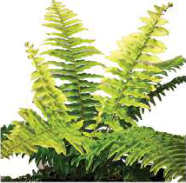
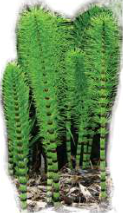
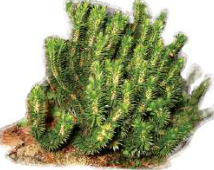
Pteridophyta: the subdivision of tracheophyta made up of non-flowering, seedless plants such as fern, horsetail and clubmoss, whose body is differentiated into root, stem and leaf and which reproduce by spores.
Generally, the stem of a fern is not seen above the ground at all. It is a rhizome, a stem that lies horizontally under the soil. Roots grow downward from the rhizome and new leaves rise upward from it. What looks like a bunch of separate plants is often one rhizome sending up many leaves.
Rhizome: an under-developed stem that lies horizontally under the soil, giving out roots below and leaves above.
Characteristics of Pteridophyta
All plants of this subdivision share the following general characteristics:
- They are found in moist and shady places.
- They have no seed, but the plant body is differentiated into root, stem and leaf. The leaf is feather-like, the stem is under-developed in the form of a rhizome, and the root is developed.
- They have developed vascular tissue, xylem and phloem.
- There are numerous brown spots called sori on the lower surface of the leaves. Inside each sorus lie sporangia, which produce spores.
- When the sporangia rupture, spores fall on the ground. Under suitable conditions they germinate into gametophytes called prothalli, and each gametophyte produces both male and female gametes.
- Their life cycle shows alternation of generation. The sporophytic phase is dominant and lasts longer.
Fern, fiddlehead fern, horsetail, clubmoss, Lycopodium, Selaginella and Pteris are examples of plants that fall under this subdivision.
Sori, Sporangia and Spores
Turn a mature fern leaf over and you will find rows of small brown dots on its lower surface. These dots are the fern's reproductive structures. Each dot is a sorus (plural: sori). Inside each sorus lie many tiny sporangia (singular: sporangium), and each sporangium is a small case packed with spores.
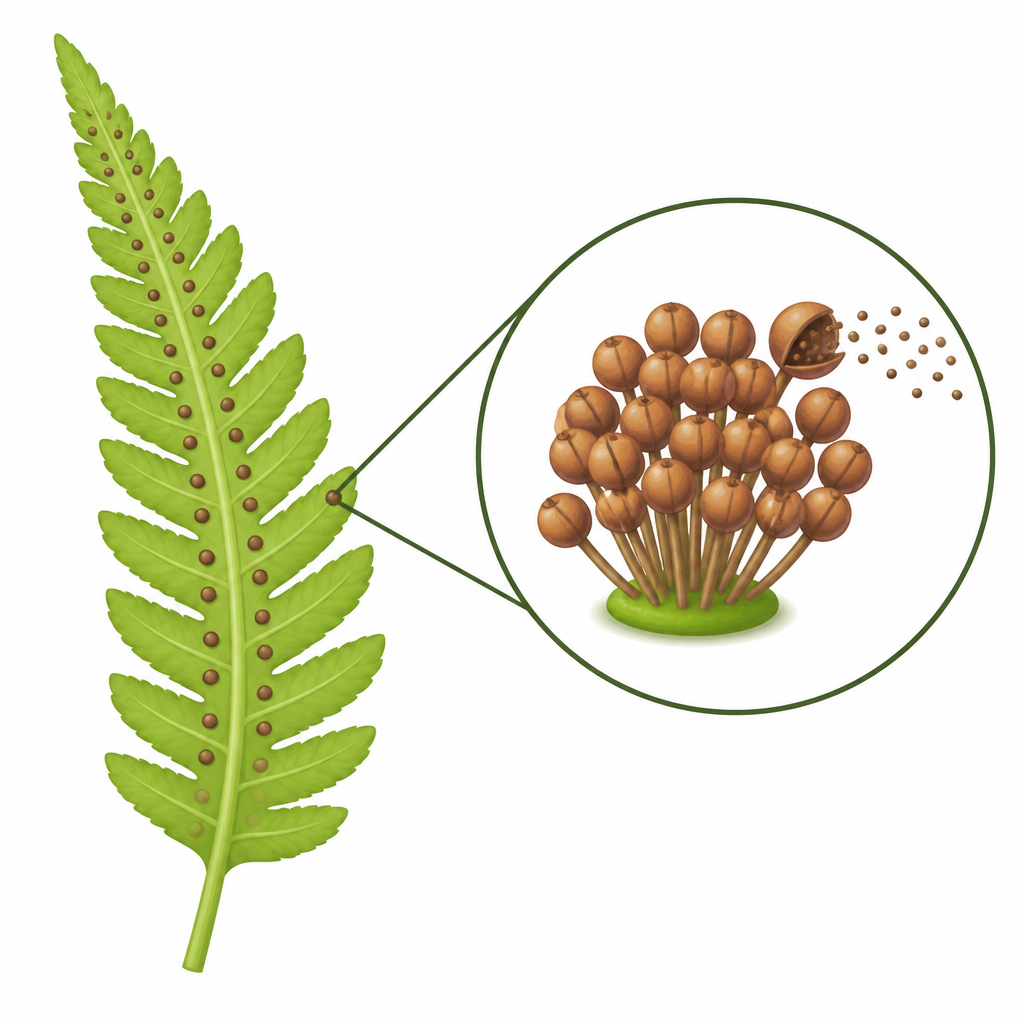
Sorus (plural: sori): one of the brown spots on the lower surface of a fern leaf, inside which the sporangia lie.
Sporangium (plural: sporangia): the small case inside a sorus that produces spores.
The brown spots under a fern leaf are not a disease, a fungus or insect eggs. They are sori, and they appear on healthy, mature leaves.
Not every leaf of a fern carries sori. Young leaves, and some mature ones, have none. The two kinds of leaf have different names.
Sporophyll: a fern leaf that bears sori.
Trophophyll (also spelt tropophyll): a fern leaf without sori. It only makes food.
Because the fern plant we see produces spores, the whole plant body is called the sporophyte. The spores it produces are haploid. They are formed when spore mother cells inside the sporangia divide by meiosis, so each spore carries only one set of chromosomes.
Sporophyte: the spore-producing phase of a plant's life. In a fern, the plant body with root, stem and leaves is the sporophyte.
Life Cycle of a Fern
A fern cannot make seeds, so it passes from one generation to the next through two stages that take turns. The large leafy fern is one stage. A tiny flat green plant that most people never notice is the other. The stages follow one another in this order:
- The mature fern plant, the sporophyte, develops sori on the underside of its leaves.
- Inside the sporangia, spore mother cells divide by meiosis and form haploid spores.
- When a sporangium ruptures, the spores are thrown out and fall on the ground.
- In moist, suitable conditions, a spore germinates into a small, flat, heart-shaped gametophyte called a prothallus.
- The prothallus produces both male and female gametes.
- The male gamete swims through a thin film of water to the female gamete and fuses with it, forming a zygote.
- The zygote grows into a young fern, which becomes a new sporophyte, and the cycle starts again.
Prothallus (plural: prothalli): the small, flat, heart-shaped gametophyte of a fern that grows from a spore and produces male and female gametes.
Alternation of generation: the phenomenon in which the sporophytic and gametophytic generations come one after another to complete the life cycle of a plant.
In a fern, the sporophytic phase is dominant and lasts longer, while the prothallus lives only a short time. This is the reverse of a moss, where the green plant we see is the gametophyte and the gametophytic phase is dominant.
The swimming male gamete also explains where ferns live. Without a film of water on the ground, the male gamete cannot reach the female gamete and no zygote forms. This is why pteridophytes are found in moist and shady places.
Gymnosperm: Plants with Naked Seeds
On the hills of Nepal, pine forests cover whole slopes. Juniper grows high up in the mountains, and its twigs are burned as incense. Cycas is planted in gardens and parks. Look closely at any of these plants and you will never find a flower. Instead, they carry hard, woody or scaly structures called cones. Their seeds sit openly on the scales of these cones, with no fruit wrapped around them. Their leaves are also different from ordinary broad leaves: pine and juniper have long, thin, needle-like leaves.
Because they make seeds, these plants are grouped with the flowering plants as seed-bearing plants. But they bear cones instead of flowers, and their seeds are naked, without fruits. So they are kept in a subdivision of their own, the gymnosperm. The word itself means 'naked seed'.
Gymnosperm: the subdivision of tracheophyta whose plants bear cones instead of flowers and have naked seeds that are not enclosed in a fruit.
Cone: the reproductive structure of a gymnosperm, made of scales arranged on a central axis, which it bears in place of a flower.
Characteristics of Gymnosperms
Plants of the subdivision gymnosperm have the following characteristics:
- In the course of the evolution of plants, gymnosperms are the first plants to produce seed.
- They bear cones instead of flowers. Male and female cones are separate, so they are unisexual. Pollination takes place through wind.
- There is no ovary in the cone, so no fruit is formed. The seed is naked.
- Their leaves are elongated and needle-like.
- The stem is enclosed within thick bark.
- The shape of these plants is cone-like, so they are called coniferous plants.
- Their roots spread far into the ground.
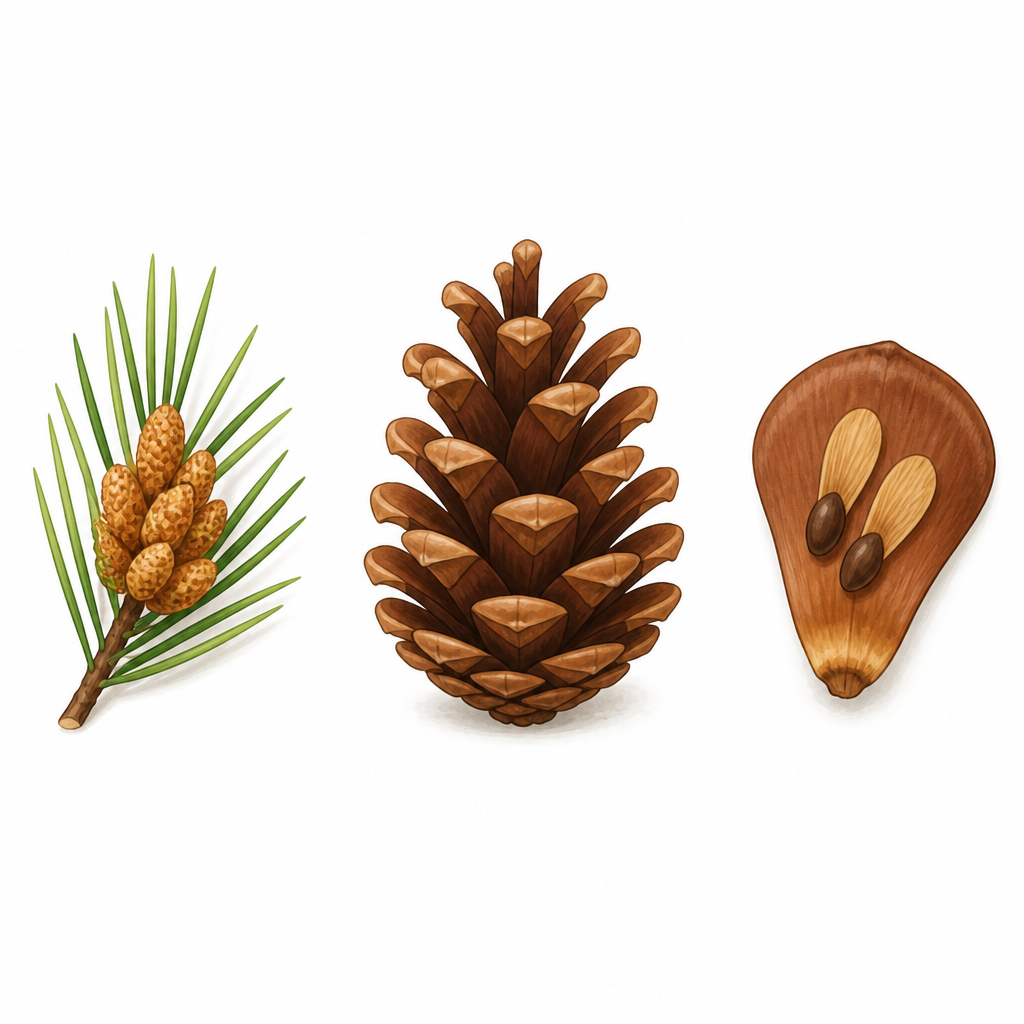
Coniferous plants: plants whose overall shape is like a cone, broad near the ground and narrowing to a pointed top. Pine and juniper are coniferous plants.
These features suit the cold hills and mountains where many gymnosperms grow. Narrow needle leaves lose less water than broad leaves, and snow slides off a cone-shaped tree without breaking its branches. Thick bark protects the stem, and roots spreading far into the ground hold the tree firmly on steep slopes. Cycas, Pinus, Juniper, Himalayan yew and Himalayan cedar are examples of gymnosperms.
Pteridophyta and Gymnosperm Compared
Both groups have a root, a stem, leaves and vascular tissue, which is why both belong to tracheophyta. The differences lie in how they reproduce and how they are built.
| Feature | Pteridophyta | Gymnosperm |
| Seeds | No seeds; reproduce by spores | Naked seeds, not covered by fruit |
| Reproductive structures | Sori with sporangia on the underside of leaves | Separate male and female cones |
| Leaves | Feather-like | Elongated and needle-like |
| Stem | Rhizome lying under the soil | Upright stem enclosed in thick bark |
| How gametes meet | Male gamete swims through water | Pollination through wind |
| Examples | Fern, horsetail, clubmoss | Cycas, Pinus, Juniper |
The full lesson is waiting for you
The notes are free to read in full. A free account opens the rest of the practice, and tracks your progress and confidence score for every subject. Presentations and videos need approval from Learn Yeti.