What Makes an Animal an Animal
A sycon, an earthworm, a cockroach, a starfish, a fish, a pigeon and a cow could hardly look more different. The sycon is a clump of yellow tubes fixed to a rock on the sea floor. The earthworm is a soft tube that burrows through damp soil. The cow is a large mammal grazing in a field. Still, all seven belong to one kingdom, Kingdom Animalia. They are grouped together because their bodies are built in the same basic way, even though their outer shapes are so different.
Every member of this kingdom shares three features:
- Their bodies are made of eukaryotic cells. A eukaryotic cell has a true nucleus wrapped in a nuclear membrane.
- Their cells have no cell wall. A plant cell is boxed in by a stiff wall of cellulose, but an animal cell has only a thin, flexible cell membrane around it.
- They are heterotrophs. No animal can make its own food, so every animal depends on plants or on other animals for food.
Kingdom Animalia: the kingdom of multicellular organisms whose bodies are made of eukaryotic cells without cell walls and which depend on other organisms for their food.
Heterotroph: an organism that cannot prepare its own food and obtains it from plants or other animals.
Inside this one kingdom there is enormous variety. Animals differ in body structure, shape and form. In some the body is very simple. A sponge, for example, has no tissues and no organs at all. In others, such as a cow or a human being, every organ system is fully developed, from the digestive system to the nervous system. Animals also differ in how their bodies are supported. Some have a hard frame inside the body, and some are covered by a hard shell on the outside.
Animals With and Without a Backbone
Run your fingers down the middle of your back and you will feel a row of small bony bumps. That is your vertebral column, also called the backbone. It is a chain of small bones called vertebrae, and it protects the spinal cord that runs inside it. Whether an animal has a vertebral column or not is the first big division made inside Kingdom Animalia.
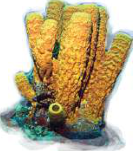
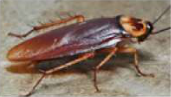
Sycon, earthworm, cockroach and starfish have no vertebral column in their bodies. Animals like these are called invertebrates. Most kinds of animals on Earth are invertebrates.
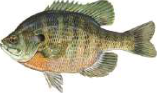
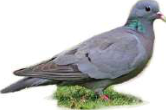
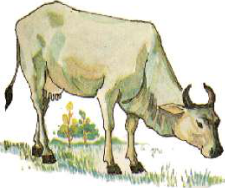
Fish, pigeon and cow all have a vertebral column. Animals like these are called vertebrates. Fishes, frogs, snakes, birds and mammals, including human beings, are all vertebrates.
Invertebrates: animals that have no vertebral column in their body. Examples: sponge, earthworm, cockroach, starfish.
Vertebrates: animals that have a vertebral column in their body. Examples: fish, pigeon, cow.
The starfish and the fish show the difference clearly, even though one is named after the other. A fish has a backbone, a skull, fins for swimming and gills for breathing. A starfish has no backbone at all. Its body is a star of five arms spreading out from a centre, its skin is tough and spiny, and it creeps slowly over the sea floor on hundreds of tiny tube feet. It is called a starfish only because it is star shaped and lives in the sea.
Starfish and jellyfish are not fish. Neither of them has a backbone, so both are invertebrates. A true fish is a vertebrate.
Animals also differ in their skeleton. A fish, a pigeon and a cow have an endoskeleton, a framework of bones inside the body covered by muscles and skin. A cockroach has an exoskeleton, a hard outer covering that protects the soft body inside it like a suit of armour.
Endoskeleton: a skeleton that lies inside the body, as in fish, birds and mammals.
Exoskeleton: a hard covering on the outside of the body that protects it, as in a cockroach.
Nine Phyla in Kingdom Animalia
Kingdom Animalia holds millions of kinds of animals, so they are sorted into large groups called phyla. The singular is phylum. Animals in one phylum share the same basic body plan. According to the five kingdom system, the invertebrates are divided into eight phyla. Animals that have a notochord and a vertebral column are placed together in one phylum, Chordata. So there are nine phyla altogether in Kingdom Animalia.
| No. | Phylum | Group |
| 1 | Porifera | Invertebrate |
| 2 | Coelenterata | Invertebrate |
| 3 | Platyhelminthes | Invertebrate |
| 4 | Nemathelminthes | Invertebrate |
| 5 | Annelida | Invertebrate |
| 6 | Arthropoda | Invertebrate |
| 7 | Mollusca | Invertebrate |
| 8 | Echinodermata | Invertebrate |
| 9 | Chordata | Has a notochord and a vertebral column |
Eight phyla of invertebrates plus one phylum, Chordata, make nine phyla in Kingdom Animalia.
The list runs roughly from the simplest body plan to the most complex. The first two phyla, Porifera and Coelenterata, have the simplest bodies of all animals, and they are described below.
Phylum Porifera: Animals Full of Pores
Look closely at a sponge and you see that its whole body is riddled with holes. The name Porifera means pore bearer, and it fits: every member of this phylum has pores all over its body. Spongilla, Sycon and Euspongia are three such animals.
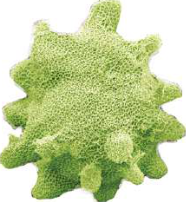
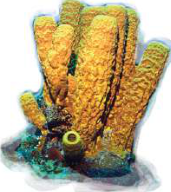
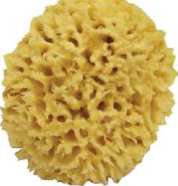
These animals are multicellular. They live in water, and most of them are marine, which means they live in the sea. A few, such as Spongilla, live in fresh water in ponds and streams. Water enters and leaves their bodies through their pores, and that is why they are placed in phylum Porifera. They are also called poriferans or sponges.
Substratum: the surface on which an organism rests or is fixed, such as a rock, a shell or the sea bed.
An adult sponge does not move from place to place. It stays attached to its substratum for the whole of its adult life, much as a plant stays in one spot. The soft bath sponge sold in shops is actually the dried skeleton of Euspongia, left behind after its living cells have been removed.
The Water Canal System
A sponge cannot chase its food, so it makes the food come to it. Its body wall is pierced by a great many tiny pores called ostia. The singular is ostium. At the top of the body there is one large opening called the osculum. Water is drawn in through the ostia, flows through narrow channels into a central cavity, and then leaves the body through the osculum.
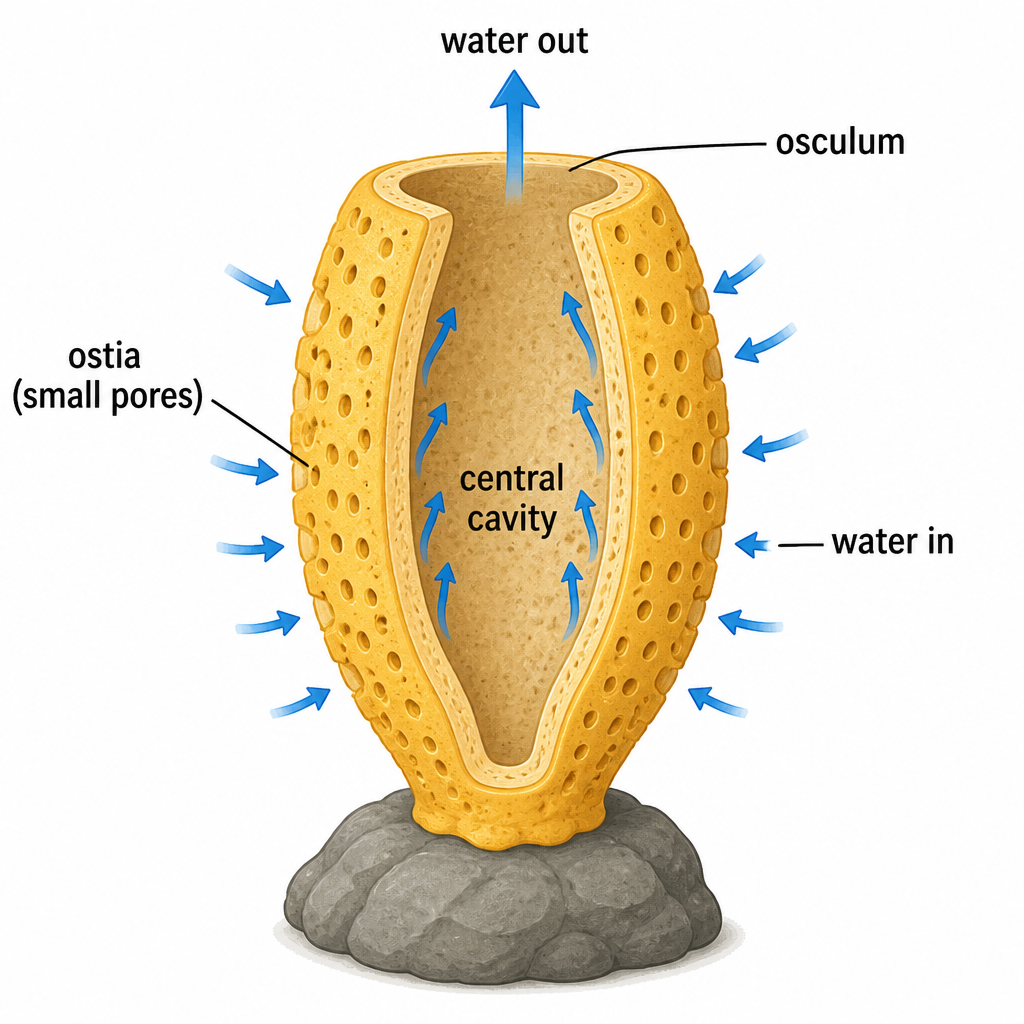
Ostia: the many small pores in the body wall of a sponge through which water enters the body.
Osculum: the single large pore of a sponge through which water leaves the body.
Water canal system: the flow of water in a sponge, entering through the ostia and leaving through the osculum.
This steady current of water is the sponge's lifeline. The water brings in tiny particles of food and dissolved oxygen. Cells lining the inner channels trap the food particles and take them in. The same current then carries carbon dioxide and waste out through the osculum. So nutrition, respiration and excretion in a sponge all depend on water flowing through its canal system.
Many small doors in, one big door out: water enters through the ostia and exits through the osculum.
Characteristics of Porifera
The main features of the animals in phylum Porifera are these:
- They are the first multicellular animals.
- Tissues are not developed in them. Their cells do different jobs, but cells of the same kind are not grouped into tissues.
- Their body develops from two germ layers in the embryonic stage, so they are diploblastic animals.
- Their body has pores. The small pores are the ostia and the one large pore is the osculum. Water enters through the ostia and leaves through the osculum, forming the water canal system.
- They respire through the general body surface.
- Their adult forms are found attached to a substratum.
- They have a high power of regeneration. If the body breaks into pieces by accident, each piece can grow into a new sponge.
- They reproduce both asexually and sexually. Asexual reproduction takes place by budding and regeneration. Sexual reproduction takes place by the formation of gametes.
- Most of them are asymmetrical. Some forms are radially symmetrical.
Diploblastic: describes an animal whose body develops from two germ layers in the embryonic stage, an outer layer and an inner layer.
Regeneration: the growth of a whole new body, or a lost part, from a piece of the body.
Budding: a kind of asexual reproduction in which a small outgrowth, the bud, forms on the parent's body and grows into a new individual.
Radial symmetry: a body plan in which the body can be divided into equal halves by any one of many longitudinal planes passing through its centre.
Asymmetrical: having a body that cannot be divided into equal halves by any plane.
Examples of Porifera: Sycon, Spongilla, Euspongia (the bath sponge), Leucosolenia, Hyalonema and Cliona.
Phylum Coelenterata: Animals with Tentacles
Hydra, jellyfish and coral look nothing like sponges. Each has long, thin, finger-like outgrowths arising from its body, usually in a ring around the top. These outgrowths are called tentacles, and they help the animal to catch its food and to move.
Tentacles: long, thin outgrowths arising from the body of animals such as Hydra, jellyfish and coral, used for feeding and movement.
Inside the body of these animals there is one large hollow space, like the inside of a bag. This cavity is called the coelenteron, and the phylum takes its name from it: Coelenterata means the animals with a coelenteron. The coelenteron does two jobs. Food is digested inside it, and from it the digested food is carried to all parts of the body. For this reason it is also called the gastrovascular cavity. Gastro refers to digestion and vascular refers to transport.
Coelenteron: the hollow, vessel-like cavity inside the body of a coelenterate. It is also called the gastrovascular cavity because it performs both digestion and transportation.
How a Hydra Catches Its Food
A hydra is a tiny freshwater animal, only about 1 centimetre long, that clings to water plants in ponds. Watching how it feeds shows every special part of a coelenterate at work. Its body has only one opening, the mouth, at the top. The mouth is surrounded by tentacles, and the tentacles are loaded with stinging cells called nematocysts.
When a small animal such as a water flea brushes against a tentacle, this is what happens:
- Step 1: The nematocysts shoot tiny coiled threads into the prey, and the sting paralyses or kills it.
- Step 2: The tentacles wrap around the prey and hold it tight.
- Step 3: The tentacles bend inwards and push the prey into the mouth.
- Step 4: The food is digested inside the coelenteron, and the digested food spreads to the cells of the body.
- Step 5: Undigested waste is thrown out through the same mouth, because there is no second opening.
Nematocysts: the stinging cells on the tentacles of coelenterates, which help to sting or kill prey and to capture it.
Do not touch a jellyfish, even one lying still on the sand. Its nematocysts can still fire and give a painful sting.
In a coelenterate one opening does two jobs: food goes in through the mouth, and waste comes out through the mouth.
Characteristics of Coelenterata
The main features of the animals in phylum Coelenterata are these:
- They are multicellular and diploblastic.
- They are the first tissue grade animals. They have a hollow, vessel-like cavity inside the body called the coelenteron, which is also called the gastrovascular cavity because it carries out both digestion and transportation.
- The alimentary canal has a single opening, the mouth, which is surrounded by tentacles. Feeding and locomotion take place by the tentacles. The tentacles carry stinging cells, or nematocysts, which help to sting or kill the prey and capture it.
- They respire through the general body surface.
- They reproduce both sexually and asexually. Asexual reproduction takes place by budding and regeneration.
- They are found in ponds, lakes and seas.
- Their bodies show radial symmetry.
Tissue grade animal: an animal in which cells doing the same work are grouped together to form tissues. Coelenterates are the first animals built this way.
Examples of Coelenterata: Hydra, which lives in fresh water, and jellyfish, coral and sea anemone, which live in the sea. A coral reef is built from the hard skeletons of millions of tiny coral animals living together in one place.
Porifera and Coelenterata Side by Side
The two simplest phyla share a few features, but they differ in almost everything that matters for how they live:
| Feature | Porifera | Coelenterata |
| Other name | Sponges | Coelenterates |
| Tissues | Not developed | First tissue grade animals |
| Germ layers | Two (diploblastic) | Two (diploblastic) |
| Openings | Many ostia and one osculum | One mouth only |
| Body cavity | Channels for water flow | Coelenteron (gastrovascular cavity) |
| Tentacles and nematocysts | Absent | Present |
| Feeding | Food particles carried in by water | Prey caught by tentacles |
| Respiration | General body surface | General body surface |
| Symmetry | Mostly asymmetrical, some radial | Radial |
| Where found | Mostly in the sea, a few in fresh water | Ponds, lakes and seas |
| Examples | Sycon, Spongilla, Euspongia | Hydra, jellyfish, coral |
The full lesson is waiting for you
The notes are free to read in full. A free account opens the rest of the practice, and tracks your progress and confidence score for every subject. Presentations and videos need approval from Learn Yeti.