Five Classes of Vertebrates
Animals that have a backbone are called vertebrates. They are far from alike. A fish swims in a pond, a frog hops from water onto land, a snake crawls, a pigeon flies and a tiger runs on four legs. On the basis of their physical structure and the way they develop from young to adult, vertebrates are divided into five classes: Pisces, Amphibia, Reptilia, Aves and Mammalia.
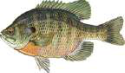


Pisces and Amphibia are the first two of these classes. Pisces are the fishes, which spend their whole life in water. Amphibia are animals such as frogs, toads and salamanders, which live partly in water and partly on land.
Three words come up again and again in both classes. An animal whose body temperature changes with the temperature around it is poikilothermic, or cold blooded. An animal that produces young ones by laying eggs is oviparous. An animal that gives birth to its young ones directly is viviparous.
Class Pisces: Animals Built for Water
Pisces: the class of vertebrates that live in water, have a body covered with scales, breathe through gills, move with fins and have a two-chambered heart. All fishes belong to this class.
Pisces is the Latin word for fish. The class includes the common fish of rivers and ponds, the huge shark of the sea, and even the sea horse. A sea horse swims upright and wraps its tail around seaweed, so it looks nothing like an ordinary fish. Yet it has gills and fins and lives only in water. That makes it a fish, and it belongs to Pisces.
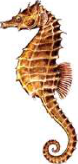
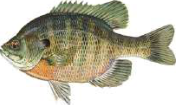
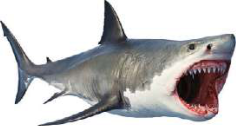
These three differ in size and colour, but a careful look from head to tail shows the same features in all of them. Those features are set out below.
Body Shape, Scales and Fins
The body of a fish is elongated, flattened from side to side, and streamlined.
Streamlined body: a body that is narrow at the front, widest in the middle and narrow again towards the tail, so that it moves through water with very little resistance.
Boats are built in the same shape for the same reason. Water is much thicker than air, so a streamlined body lets a fish slip through it using little energy. The body is covered with scales. The scales overlap like tiles on a roof, which protects the skin while still letting the body bend.
A fish's body is divisible into three parts: head, trunk and tail. The neck is absent. The head joins the trunk directly, so a fish cannot turn its head on its own; it turns its whole body instead. A neck would break the smooth outline and slow the fish down.
Fish move with fins. Some fins are paired: the pectoral fins just behind the head and the pelvic fins on the underside come in twos, one on each side of the body. Others are unpaired: the dorsal fin on the back, the anal fin underneath near the tail, and the tail fin (caudal fin) stand alone along the middle line of the body. The tail fin drives the fish forward, the unpaired fins keep it upright and steady, and the paired fins help it steer, stop and balance.
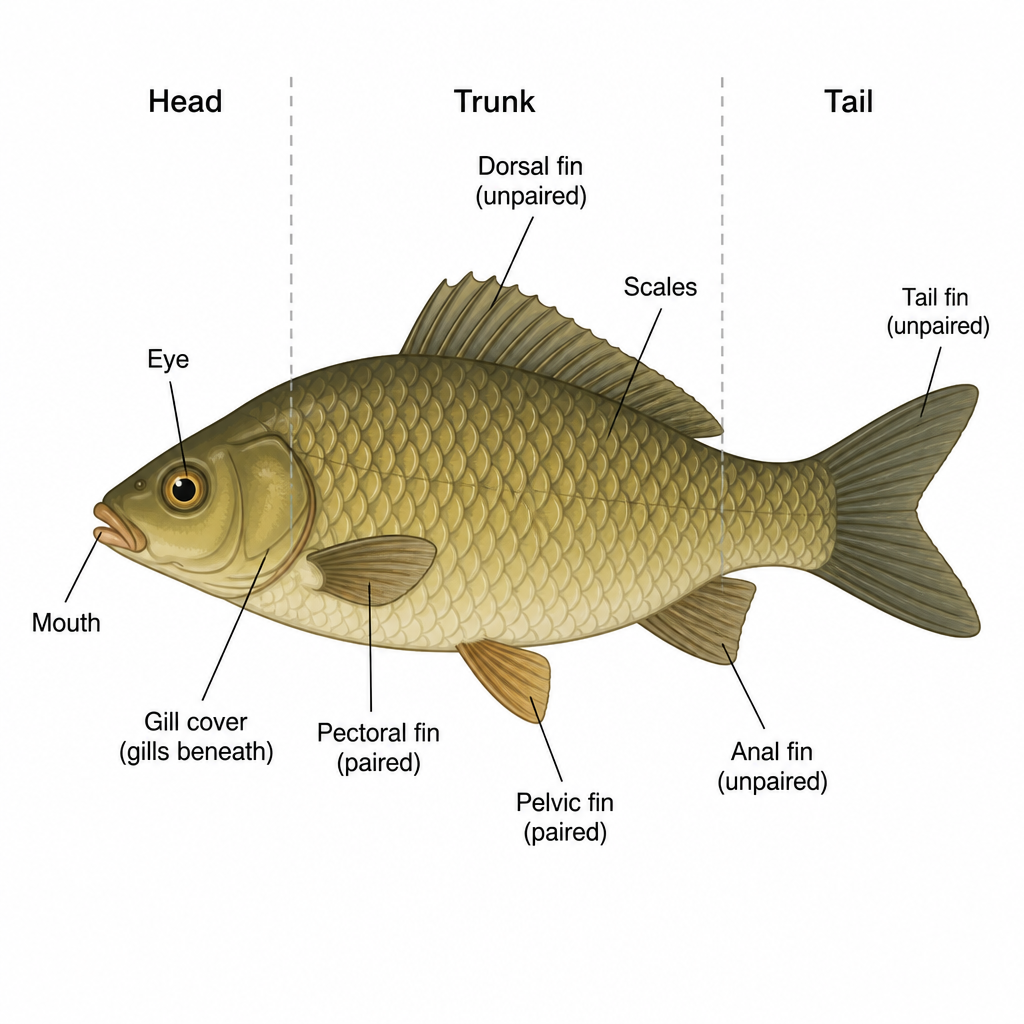
Fish have air sacs in their body. An air sac is a bag filled with gas. By changing the amount of gas in it, a fish can stay afloat at the depth it chooses, without sinking to the bottom or rising to the surface.
Breathing, Heart and Body Temperature in Fish
Gills: the respiratory organs of fish, found on the lateral sides of the head, which take in the oxygen dissolved in water.
A fish never comes up for air. It takes water in through its mouth and pushes it out over the gills, which lie under a flap on each side of the head. As the water flows past, the gills absorb the oxygen dissolved in it and release carbon dioxide into it. This is how a fish carries out respiration. It is also why a fish taken out of water soon dies: its gills cannot take oxygen from air.
The heart of a fish is two-chambered. It has only two chambers: one receives blood and the other pumps it out to the gills and the rest of the body. This is the simplest heart found among vertebrates.
Fish are poikilothermic. A fish in a cold, snow-fed Himalayan river has a body as cold as the water, while a fish in a warm pond in the Terai has a warmer body. Its body temperature follows the water around it.
Reproduction in Fish
Unisexual animal: an animal in which male and female are separate individuals.
Fish are unisexual: each fish is either male or female. Most fish are oviparous and lay a large number of eggs in water. A few fish are viviparous and give birth to their young ones directly.
External fertilization: the joining of the male and female sex cells outside the female's body, usually in water.
Internal fertilization: the joining of the male and female sex cells inside the female's body.
Most fish carry out external fertilization. The female releases her eggs into the water and the male releases sperm over them, so fertilization takes place in the water, outside the body. Many eggs in open water are eaten or washed away, which is why such fish lay thousands of eggs at a time. Some fish, such as sharks, carry out internal fertilization instead: the eggs are fertilized inside the female's body.
Do not write that all fish have external fertilization. Most do, but some fish such as sharks have internal fertilization. In the same way, not every fish is oviparous; a few are viviparous.
Class Amphibia: Life in Water and on Land
Amphibia: the class of vertebrates that live both on land and in water, have moist skin, begin life as tadpoles breathing through gills, have a three-chambered heart and need water to reproduce.
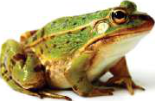
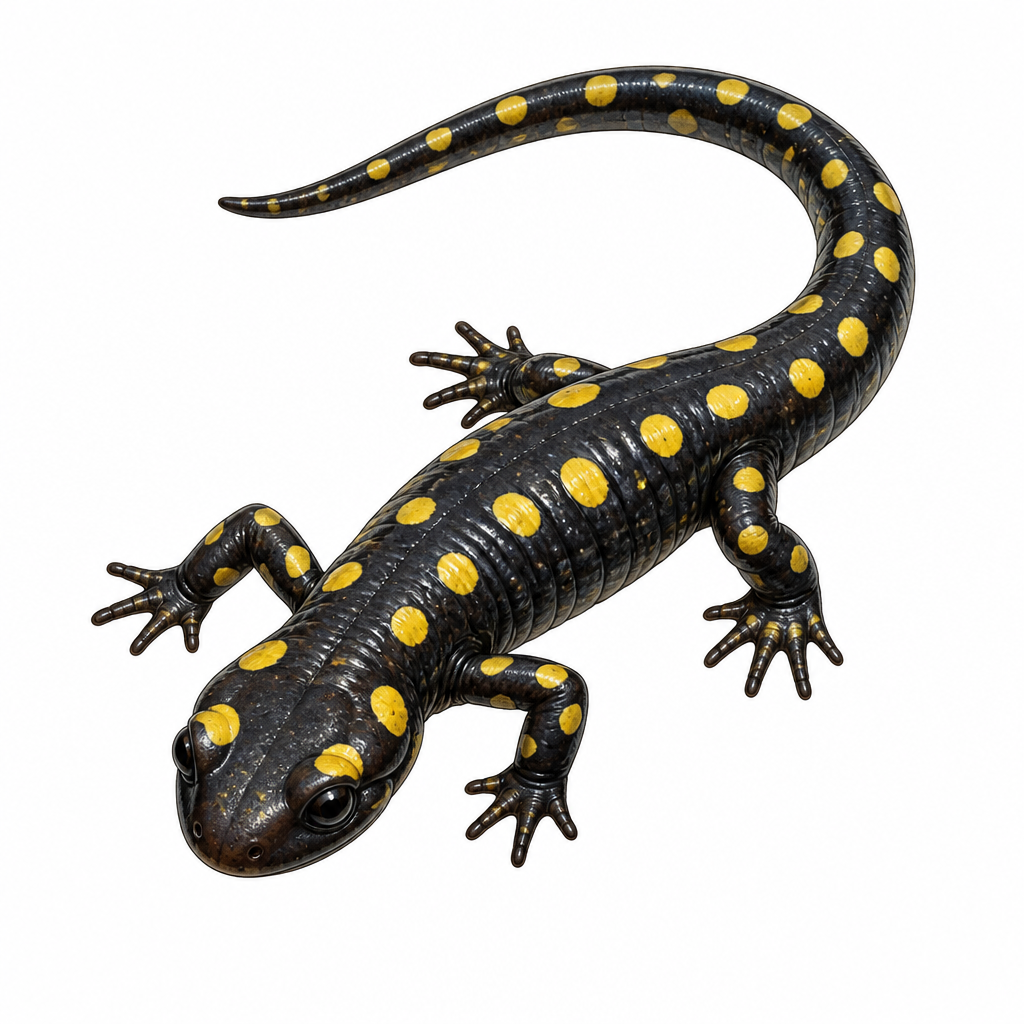
The name comes from two Greek words: amphi, meaning both, and bios, meaning life. An amphibian lives a double life. A frog begins as a tadpole swimming in a pond. It grows into an adult that hops about on land, but it goes back to water to keep its skin wet and to lay its eggs. Frogs, toads and salamanders are the common amphibians.
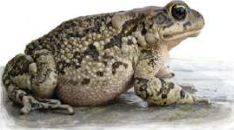
Skin, Body and Limbs of Amphibians
The body of an amphibian is covered by moist skin, with no scales. The skin is soft and slippery. Keeping it moist matters a great deal, because an adult amphibian also breathes through its skin, and gases pass easily only through a wet surface. If its skin dries out, it struggles to breathe, which is why a frog stays in damp places or close to water.
The body of an amphibian is divided into head and trunk. As in fish, there is no clear neck. A tail is found in some amphibians: a salamander keeps its tail all its life, while adult frogs and toads have none.
Where a fish has fins, an amphibian has two pairs of limbs. A frog's front legs are short and prop up its body when it sits. Its hind legs are long and powerful for jumping, and the toes of the hind feet are joined by a web of skin that works like a paddle when it swims.
Amphibians are poikilothermic too. When winter grows very cold, frogs bury themselves in mud or hide in holes and stay inactive until warm weather returns. That is why frogs are rarely seen in winter.
When you observe a live frog, hold it gently with wet hands so its skin is not harmed. Return it to the place where it was found afterwards, and wash your hands well with soap and water.
From Tadpole to Adult: Breathing and Heart in Amphibians
Tadpole: the young one of an amphibian, which lives in water, has a tail and respires through gills.
A tadpole that hatches from a frog's egg looks more like a tiny fish than a frog. It has a long tail and no legs, and like a fish it takes in dissolved oxygen from water through gills. As it grows, the hind legs appear first and then the front legs. In a frog the tail shrinks until it disappears, and lungs take the place of the gills.
Adult amphibians respire through lungs and moist skin. On land a frog breathes air mainly with its lungs; when it stays under water, its skin takes in oxygen from the water. This change in the way of breathing within one animal's life is the mark of an amphibian.
Amphibians have a three-chambered heart, one chamber more than the heart of a fish.
Do not write that an adult frog breathes through gills. Gills belong to the tadpole; the adult uses lungs and moist skin. Also keep the hearts apart: a fish heart has two chambers and an amphibian heart has three.
Reproduction in Amphibians
Amphibians are unisexual: male and female are separate. They are oviparous and lay their eggs in water. A female frog lays a mass of eggs coated in jelly in a pond or a flooded paddy field, and the male releases sperm over them. So fertilization in amphibians is external.
Amphibian eggs have no hard shell. Laid on dry land, they would dry up in the sun and die, and the sperm also needs water to swim to the eggs. So amphibians need water for reproduction. Even a toad that spends most of its life on land returns to water in the rainy season to breed. The loud croaking from paddy fields during the monsoon is male frogs calling females to the water.
Pisces and Amphibia Side by Side
| Feature | Pisces | Amphibia |
| Habitat | Water only | Both water and land |
| Body covering | Scales | Moist skin without scales |
| Body parts | Head, trunk and tail; no neck | Head and trunk; tail in some |
| Organs of locomotion | Paired and unpaired fins | Two pairs of limbs |
| Respiration | Gills | Tadpole: gills; adult: lungs and moist skin |
| Heart | Two-chambered | Three-chambered |
| Body temperature | Poikilothermic | Poikilothermic |
| Sexes | Unisexual | Unisexual |
| Birth | Mostly oviparous, a few viviparous | Oviparous; eggs laid in water |
| Fertilization | Mostly external; internal in sharks | External |
| Examples | Fish, sea horse, shark | Frog, toad, salamander |
A fish spends its whole life in water. An amphibian starts life in water and grows into an adult that can live on land, but it must go back to water to breed.
The full lesson is waiting for you
The notes are free to read in full. A free account opens the rest of the practice, and tracks your progress and confidence score for every subject. Presentations and videos need approval from Learn Yeti.