Living Things That Belong to This Land
On a map Nepal looks small, yet inside it there is a tiger walking the hot grasslands of the Terai, a small brown bird called the spiny babbler that is found nowhere else on Earth, rhododendron trees that flower only on the high mountain slopes, and sal forest spread across the Chure hills. Each of these lives where it does because the soil, the water, the temperature and the other living things around it suit it. If those conditions are spoiled, the living thing cannot simply move somewhere else and carry on, so its numbers fall. Understanding why biodiversity is being lost begins with that fact.
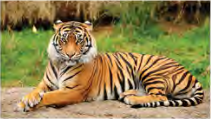
The tiger, the bird, the flower and the forest in these four pictures all depend on one thing, their habitat. A habitat is the area where a living thing finds its food, its water, its shelter and a place to raise its young. As you read the causes below, watch how each one damages somebody's habitat.
Starting at the Grazing Hillside
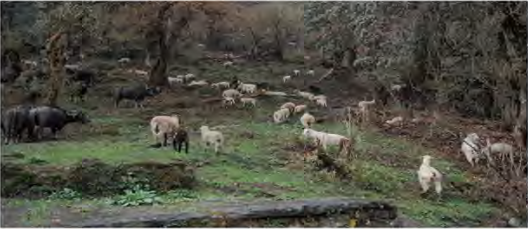
Picture one hillside inside a forest where cattle, sheep and goats are let out to feed all year round. The animals first eat the soft grass. When the grass is finished they eat the tips of the seedlings that have just come up, so those seedlings never get to become trees. The fruits and seeds that fall from the older trees are eaten too, or crushed under hooves, so very few new plants are produced. The old trees keep falling with age, nothing grows up to take their place, and the forest slowly thins away.
Wild animals feel this as well. Deer, hares and other plant eaters find little left once the household animals have taken the grass and the leaves. When the shrub layer disappears, small birds and insects lose the cover where they nest and hide. Many hooves also press the soil hard, so rain water runs off the surface instead of soaking in, and the running water carries the topsoil away with it. This is why heavy grazing counts as one of the main causes of biodiversity loss.
Grazing: letting animals feed freely on the grass, leaves and young shoots of an open forest or hillside. When more animals feed on an area, for longer, than the land can grow back, it is called overgrazing, and that is what damages the forest.
What Loss of Biodiversity Means
Natural disasters and human activities together are destroying the world's biodiversity. Urbanisation, industrialisation, the digging of mines and the activities of the farming sector keep increasing deforestation, soil erosion and desertification, while climate change acts directly on wild animals. Because of all this, many of the world's living things are disappearing and some have already been lost for good.
Loss of biodiversity: when different activities disturb the life cycle of wild animals and plants so that their numbers keep falling, that fall is what we call the loss of biodiversity.
Two examples from Nepal make this clear. The snow leopard of the high mountains is now in an endangered state, which means its numbers have fallen so far that it could vanish from the country if it is not protected. The pygmy hog, on the other hand, has already been lost from Nepal. The difference between the two states matters, because an endangered animal can still be saved, while an animal that is gone cannot be brought back.
Endangered and extinct do not mean the same thing. Endangered means the numbers have dropped so low that the species is in danger of disappearing, as with the snow leopard. Extinct means it is already gone, as with the pygmy hog in Nepal. Swapping these two words is the mistake students make most often in the exam.
Pressure on Forest and Land
In many households the cooking fire runs on firewood and the cattle shed runs on grass cut from the forest. When a settlement leans heavily on grass and firewood for fuel, branches are cut and trees are felled faster than the forest can grow them back, and deforestation follows. That also has a negative effect on the watershed, because it is the trees and their roots that send rain water down into the ground and keep the springs alive. Once the forest shrinks, springs dry up, streams carry water only in the rains, and the fish, frogs and insects that live in that water grow fewer too.
Watershed: the whole stretch of land whose rain water collects and drains into one stream or river. The forest on that land is what soaks the water in and keeps the springs flowing.
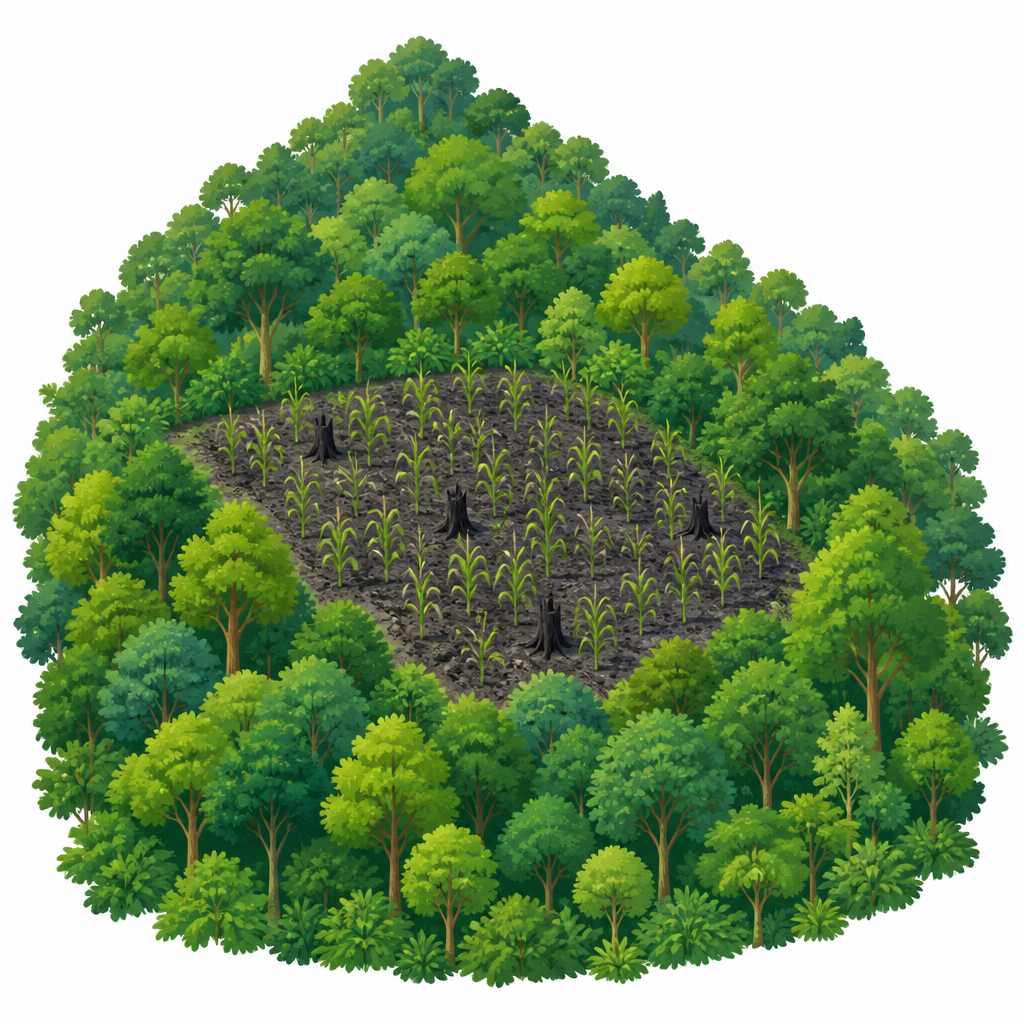
As the population grows, more land is wanted for crops, so clearing forest for farming keeps spreading. The khoriya farming practised on some hill slopes of Nepal, a form of shifting cultivation, is one example of this. A patch of forest is cut and burnt, crops are grown for two or three years in the soil that the ash has enriched, and when the fertility runs out the farmer clears a fresh patch. Every fresh patch means another set of trees and shrubs destroyed and another set of animals turned out of their home.
Shifting cultivation, known in Nepal as khoriya farming: a system in which a patch of forest is cut and burnt, cropped for a few years, and then abandoned for a freshly cleared patch once the soil is exhausted.
Development, Construction and Digging
Industrialisation increases pollution, and pollution works against biodiversity. Smoke from factories spoils the air, waste water let into a river kills fish and other water life, and the noise of machines drives the birds and animals of the area away. In polluted air and water the most sensitive plants and insects go first, and the animals that fed on them follow soon after.
Digging mines brings landslides and noise pollution, and both destroy the animals and plants of that area. Once a hillside has been cut open the soil is loose, and a heavy monsoon can take the whole slope down. In the same way, building roads, bridges, dams and other infrastructure inside forest areas without any plan spoils the habitat of wildlife. A road that splits one forest into two leaves the animals shut inside a smaller piece, with less room to find food and mates, and a dam closes the route that fish use to swim upstream.
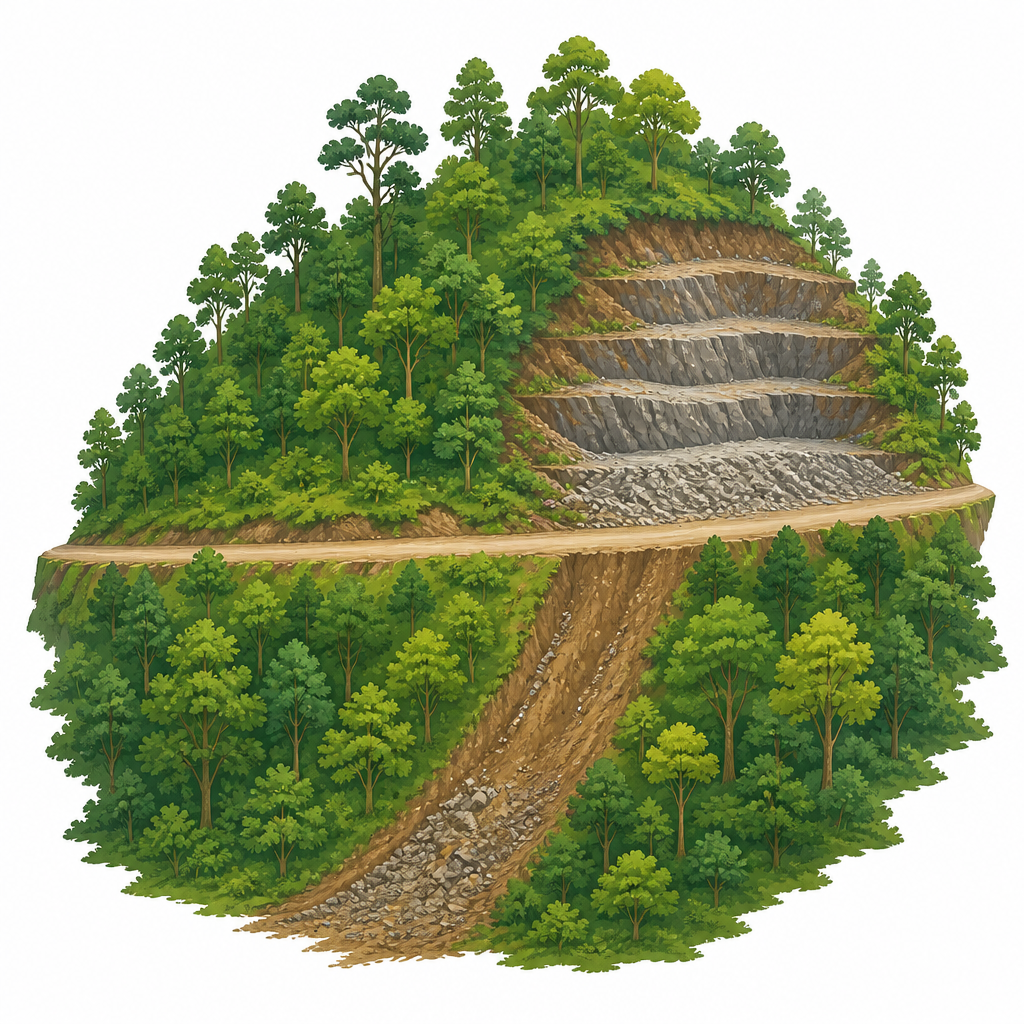
Taking stones, gravel and sand out of rivers and streams without any control destroys the forest along them as well, so it hits biodiversity directly. The trees on the bank are cut, the bank caves in once the bed has been dug deep, and the fish, snails and insects that lay their eggs on the river bed lose the ground they need.
Fire, Flood and a Changing Climate
When a fire runs through a forest, many plants and many wild animals die in it. In the dry months the fallen leaves and dry grass on the floor catch quickly and the fire spreads fast. Chicks in their nests, eggs, insects and slow moving animals cannot get away, seedlings and seeds are burnt, and the rich top layer of soil that took years to form is destroyed with them.
Forest fire: a fire that catches in the dry leaves, grass and undergrowth of a forest in the dry season and spreads through it.
Never set light to dry leaves, grass or rubbish near a forest, and never leave a fire you have lit until it is fully out. If you see a forest fire, do not try to put it out yourself. Tell adults, the forest office or the police at once.
Floods and landslides destroy many animals and plants. A flood uproots the trees on the bank, buries the homes of worms and insects and sweeps animals away. A landslide carries off the whole soil cover of a slope along with the plants growing in it, and where a slide has passed, the forest cannot come back for years. New soil takes a long time to form, so one landslide leaves a long mark.
Climate change has been raising the temperature of the Earth, and that acts directly on biodiversity. Plants and animals that can live only in cold conditions are pushed further up the slopes as the warmth increases, and when there is no higher ground left to move to, their numbers fall. Shifts in when and how much it rains also upset the time of flowering, of fruiting and of the migration of birds, so the life cycle of many living things is thrown out of step.
Direct Blows on Living Things
Poaching and the illegal trade in wildlife keep pulling the numbers of wild animals down. Skins, bones, horns, tusks and musk fetch high prices, so animals are killed against the law for them. The damage does not stop with the animal that is killed. When big animals such as tigers grow few, the plant eating animals multiply beyond what the forest can feed, and they strip the vegetation, so one poached animal can unsettle the balance of a whole forest.
Poaching: killing or catching wild animals in secret, when the law forbids it.
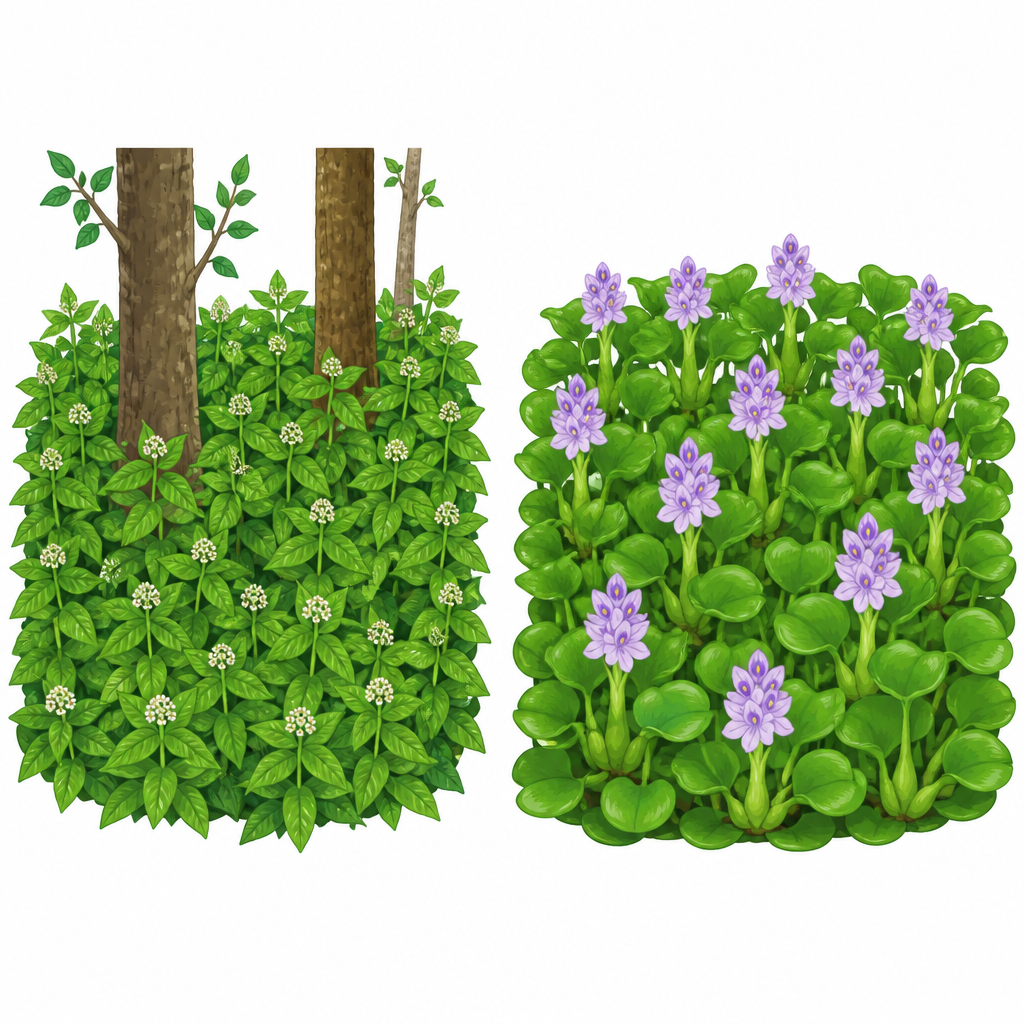
Some invasive plants and animals spoil the habitat of other living things. Such species usually arrive from somewhere else, and because the animals and diseases that would keep them in check are not here, they spread very fast and leave the local plants no sunlight, no water and no soil. In Nepal the weed called banmara, whose name means forest killer, and jalakumbhi, the water hyacinth, have made it hard for other plants to grow in forest and watershed areas. Water hyacinth covers a pond or a lake so completely that sunlight cannot reach below the surface, and the creatures living in that water are left short of oxygen as well.
Invasive species: a plant or animal that is new to a place, spreads there very fast, and takes over the habitat of the plants and animals that already belonged to it.
Cause and Effect at a Glance
| Cause | Effect on biodiversity |
| Overgrazing | Seedlings are destroyed, fruits and seeds are lost, fewer new plants are produced and the forest slowly thins away |
| Industrialisation | Pollution increases and biodiversity is affected badly |
| Mining | Landslides and noise pollution follow, and the animals and plants of that area are destroyed |
| Unplanned infrastructure | Roads, bridges and dams spoil wildlife habitat and break it into pieces |
| Heavy dependence on grass and firewood | Deforestation follows and the watershed is affected badly |
| Clearing forest for crops, as in khoriya farming | Trees and shrubs are destroyed and habitat shrinks |
| Forest fire | Many plants and many wild animals die |
| Flood and landslide | Many animals and plants are destroyed |
| Climate change | The temperature of the Earth rises and biodiversity is directly affected |
| Poaching and illegal trade | The numbers of wild animals keep falling |
| Invasive species | The habitat of other living things is affected and local plants struggle to grow |
| Uncontrolled removal of stones, gravel and sand from rivers | Forest is destroyed along with them, so biodiversity is hit directly |
These Causes Feed One Another
It is not enough to look at these causes one at a time, because each one invites the next. Overgrazing stops new seedlings from coming up, no seedlings means no roots to hold the soil, a slope without roots slides in the monsoon, the slide takes that part of the forest with it, and the living things there lose their home for good. In the same way, a road cut through forest gives poachers a way deep inside, and the seeds of invasive weeds travel to new ground on the wheels of the vehicles using it.
Most of these causes come from what people do, which also means that a change in what people do can slow the loss of biodiversity down.
The full lesson is waiting for you
The notes are free to read in full. A free account opens the rest of the practice, and tracks your progress and confidence score for every subject. Presentations and videos need approval from Learn Yeti.