Living Things and the Places They Live
Many kinds of animals and plants are found all over the world. Every animal and every plant has features of its own. They are different from one another, yet they are also connected to one another. The differences in body structure, in the place where a living thing lives and in the way it carries out its life processes are what make nature varied. Every living thing meets its needs from natural resources and from the surroundings it lives in.
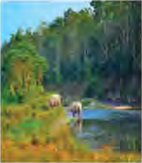
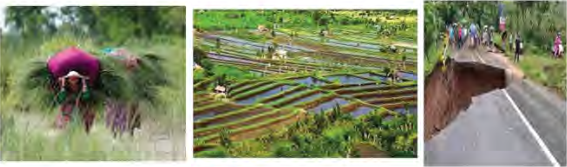
Everything that people and other living things take from their surroundings comes to them as a service of the ecological system. From a forest a person gets grass, firewood, leaf litter, fruit, timber, food, sources of water and the oxygen that keeps us alive. When a resource is taken far beyond what nature can replace, the resource itself is destroyed and it can no longer last. So the living environment and natural resources have to be used sensibly and protected, because only then do the surroundings stay balanced.
What Biodiversity Is
The earth carries living things of many different natures, qualities, habits and habitats. Different species have different features, and this difference among living things is exactly what biodiversity is. A creature that lives in water, one that lives in a dry desert, one that lives where the ground is cold and snowy and one that flies through the air do not share the same body structure or the same biological qualities. A fish has gills that let it breathe in water, while a bird has light bones and broad wings. The place a living thing belongs to shapes the very body it has.
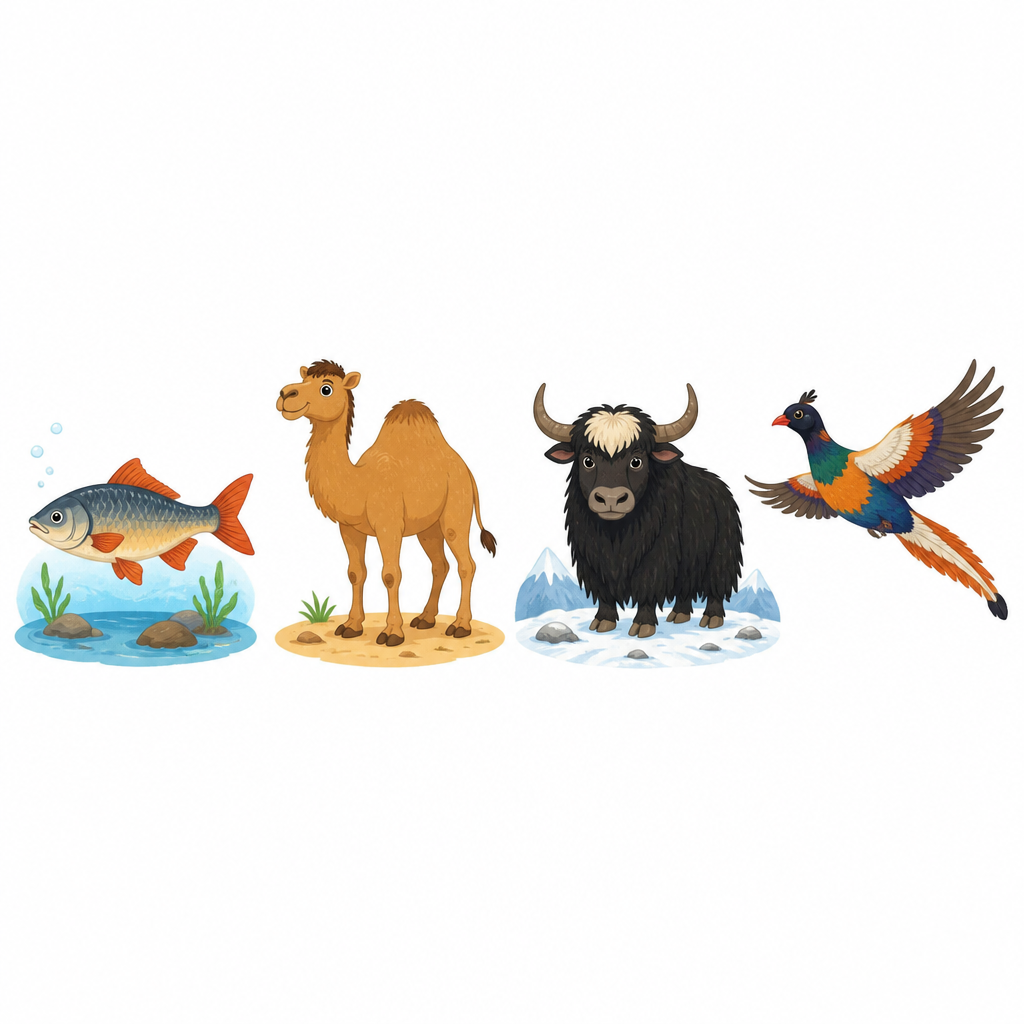
Biodiversity: the fact that species of living things exist in nature in different forms, differing from one another in body structure, kind, nutrition, special features and habitat.
Habit and habitat sound alike but they do not mean the same thing. A habit is the way a creature behaves: what it eats, when it is active, how it moves and rests. A habitat is the natural place where it lives. Saying that a tiger hunts at night describes its habit. Saying that a tiger lives in tall grassland and forest describes its habitat.
One Group, Many Different Monkeys
When someone says monkey, one picture comes to mind, but there are many species of monkey and their qualities are not the same. One has reddish hair and another is black. One has a long tail and another a short one. One carries bright colour on its face. They all belong to one large group, yet each is a separate species, and they are not all found in one place. Some live in thick rainforest and others in cooler hill forest. Once the species is different, the food, the habits and the habitat are different too.


Living things that look alike turn out to be different once you look carefully. Learning to notice those differences is where understanding biodiversity begins.
Differences Inside One Species
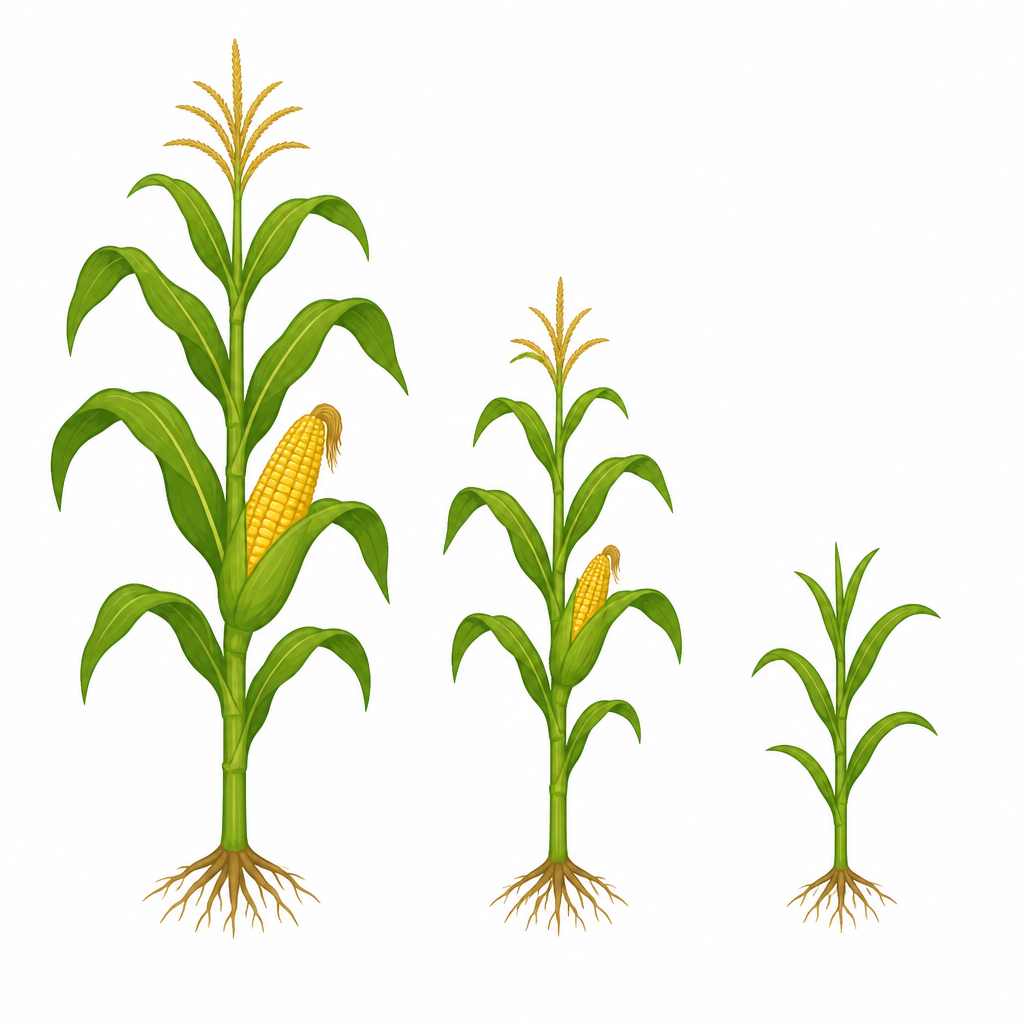
Even animals and plants of one and the same species carry different features. Maize plants growing in one field do not all have the same height, the same leaves, the same cobs or the same flowers. Sown on the same day, in the same soil, from the same lot of seed, one plant grows tall and another stays short, one carries a large cob and another a small one. Some difference is always there. The same is true of people. Classmates of one age do not share one height, one kind of hair or one voice. This difference inside a single species is a part of biodiversity as well.
How Rich Is Nature in Species?
Biodiversity tells us how rich nature is in species. The more kinds of living things a place holds, the richer that place is. In one stretch of wet grassland you may see a rhinoceros grazing, a tiger walking through the grass and a herd of deer resting. Their size, their food and their habits are all different, yet they live together inside one natural area. It is estimated that the earth holds up to 3 million species of living things, while about 1.5 million species have been identified so far. More than half of all species are still unknown to us.
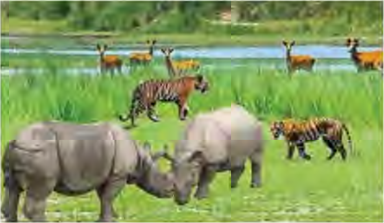
Species richness: how many different kinds of species are found in a given area.
Two Agreed Definitions
Biodiversity is a concern for the whole world, so international meetings have agreed on how it should be defined. In 1992 the Earth Summit was held in Rio de Janeiro in Brazil, and that meeting set out one definition. A second definition comes from the Convention on Biological Diversity. Both say the same thing in different words, and both are worth learning by heart.
Earth Summit, Rio de Janeiro, 1992: biodiversity is the variation within the same species, between different species and among ecological systems, shown by the living things present inside a particular natural area.
Convention on Biological Diversity (CBD): biodiversity is the variation among the living things present in land environments and water environments.
Measuring the Biodiversity of the School Ground
Biodiversity is not something that exists only in a distant forest. Plenty of plants and small animals are living in the school ground itself. You cannot count a whole field, so scientists mark out one small square and count everything inside it. That method is called quadrat sampling, and the purpose here is to study the biodiversity of the school ground.
What you need:
- a measuring tape
- pegs
- thread or string
- plastic bags
- scissors
Follow the method in this order:
- Step 1: In the school ground, measure out a square of one metre on each side with the measuring tape and drive a peg into the ground at each of its four corners.
- Step 2: Tie thread or string around the pegs so that the boundary of the square is clearly fixed.
- Step 3: The square quadrat for sampling the ground is now ready.
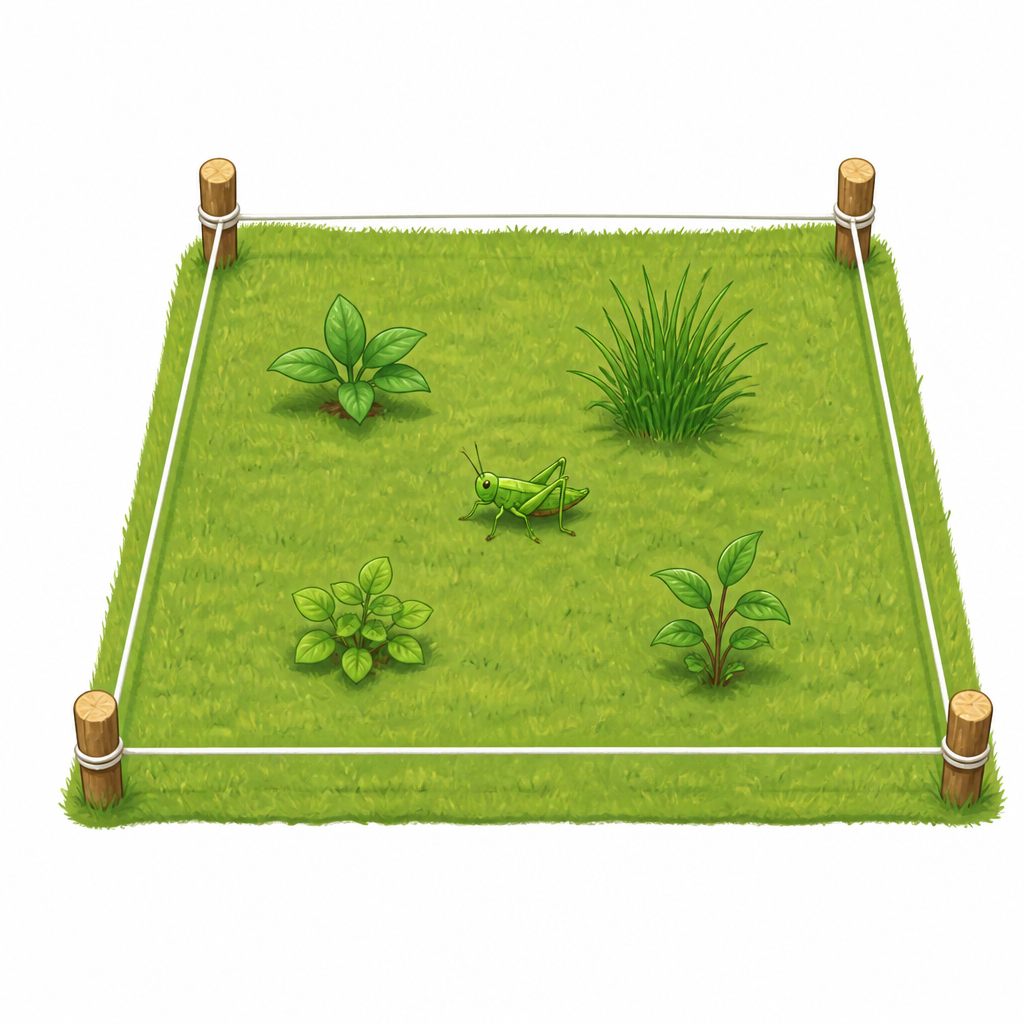
Quadrat sampling: a method in which a square of a fixed size is marked out inside a larger area, and the plants and animals inside that square are counted and studied.
Do not pick up an unknown plant or insect with bare hands. Some plants carry thorns or stinging hairs, and some insects bite or sting. Never put any plant or animal into your mouth. Keep the cutting edge of the scissors turned away from yourself, and once the counting is over, release the living animals back where you found them.
Reading What the Square Tells You
Collect the plants and the animals found inside the square and keep them in separate plastic bags. Write the name and the number of each one in a table, work out which living thing was found in the largest number, and write the report in your practical notebook to show your teacher.
| Name of plant | Number | Name of animal | Number |
| Doob grass | 12 | Grasshopper | 4 |
| ... | ... | ... | ... |
| ... | ... | ... | ... |
When the table is full, look at two things. First, how many different kinds of living things you found. That number is the species richness of your square. Second, which living thing was present in the largest number. Now compare your result with the square marked by another group. A square in the shade of a tree and a square out in the open sun will not give the same result. In this way you find out by your own counting that biodiversity changes from one spot to another, even inside a single school ground.
Counting inside one small square is real science. A number you measured says far more than a guess ever can.
The full lesson is waiting for you
The notes are free to read in full. A free account opens the rest of the practice, and tracks your progress and confidence score for every subject. Presentations and videos need approval from Learn Yeti.