Floral Diversity and Faunal Diversity
Living things include plants as well as animals, so biodiversity has room for both. The variety of different plants growing in one fixed area is called floral diversity. The variety of animals living in one fixed natural area is called faunal diversity. When you look at any place, you can always look at it twice: once for its plants and once for its animals.
Floral diversity: the variety of different plants available in one fixed area.
Faunal diversity: the variety of animals living in one fixed natural area.
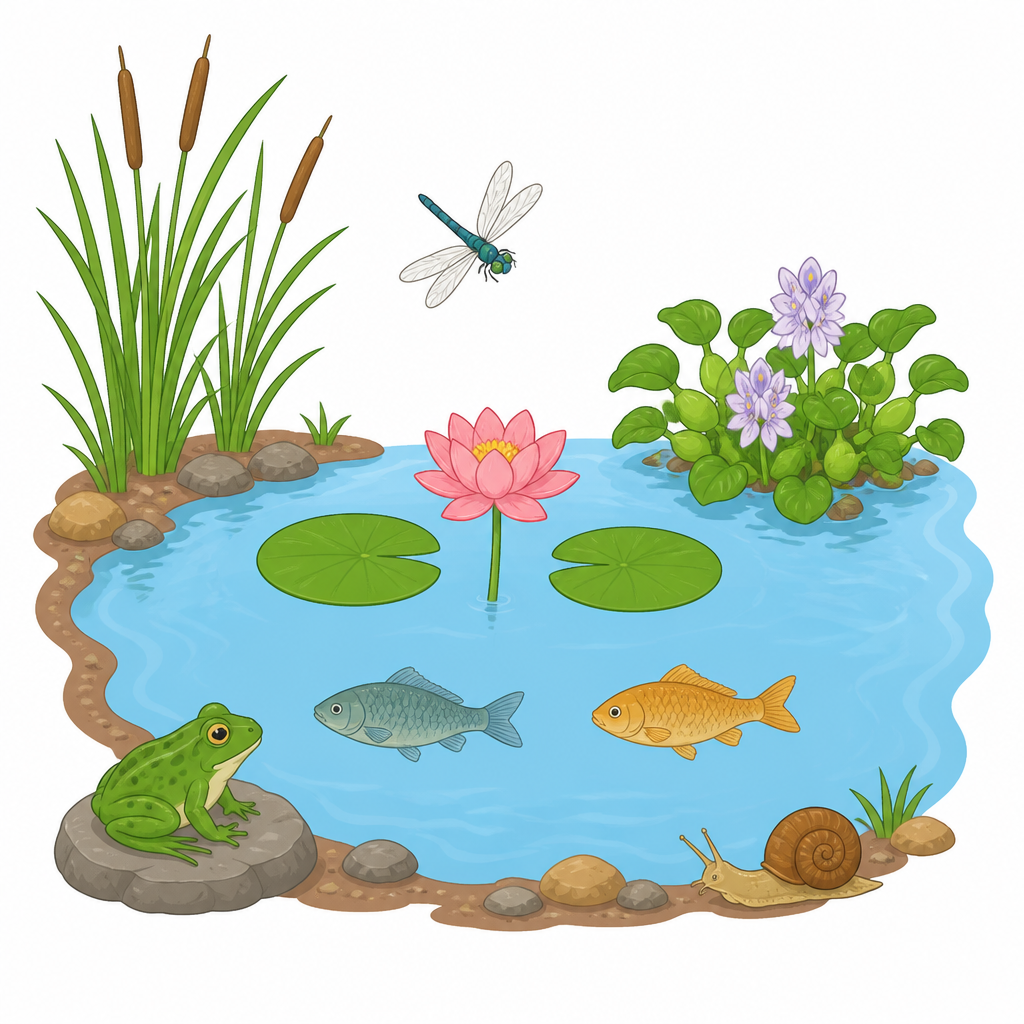
Think of a small pond in a village. The lotus growing in the water, the water hyacinth floating on it, the reeds and grasses on the bank all make up the floral diversity of that pond. The fish, the frogs, the snails and the dragonflies flying above the water make up its faunal diversity. It is one pond, but it gives you two different pictures depending on which group you are counting.
Three Types of Biodiversity
On the basis of the naturally occurring differences between living things, biodiversity is divided into three types.
- (a) Genetic diversity
- (b) Species diversity
- (c) Ecosystem diversity
The three types are three different levels of looking. The level of genes, then the level of species, then the level of whole ecosystems. Each level looks at a wider piece of nature than the one before it.
(a) Genetic Diversity
Genetic diversity is the difference that comes from genes, either within one species or between one species and another. Between two species the difference is easy to see. What surprises many students is that inside a single species there is even more variation than they expect, and that variation is also genetic.
Genetic diversity: the difference caused by genes, seen within one species or between different species.
In human beings, differences in genes give differences in hair colour. A change in the structure of a chromosome changes the qualities carried by the members of a species. Every human being belongs to one species, Homo sapiens, and yet skin colour, hair colour and the shape of the face vary from person to person. The grains on one maize cob differing in colour from the grains on the next cob is the same idea in a plant.
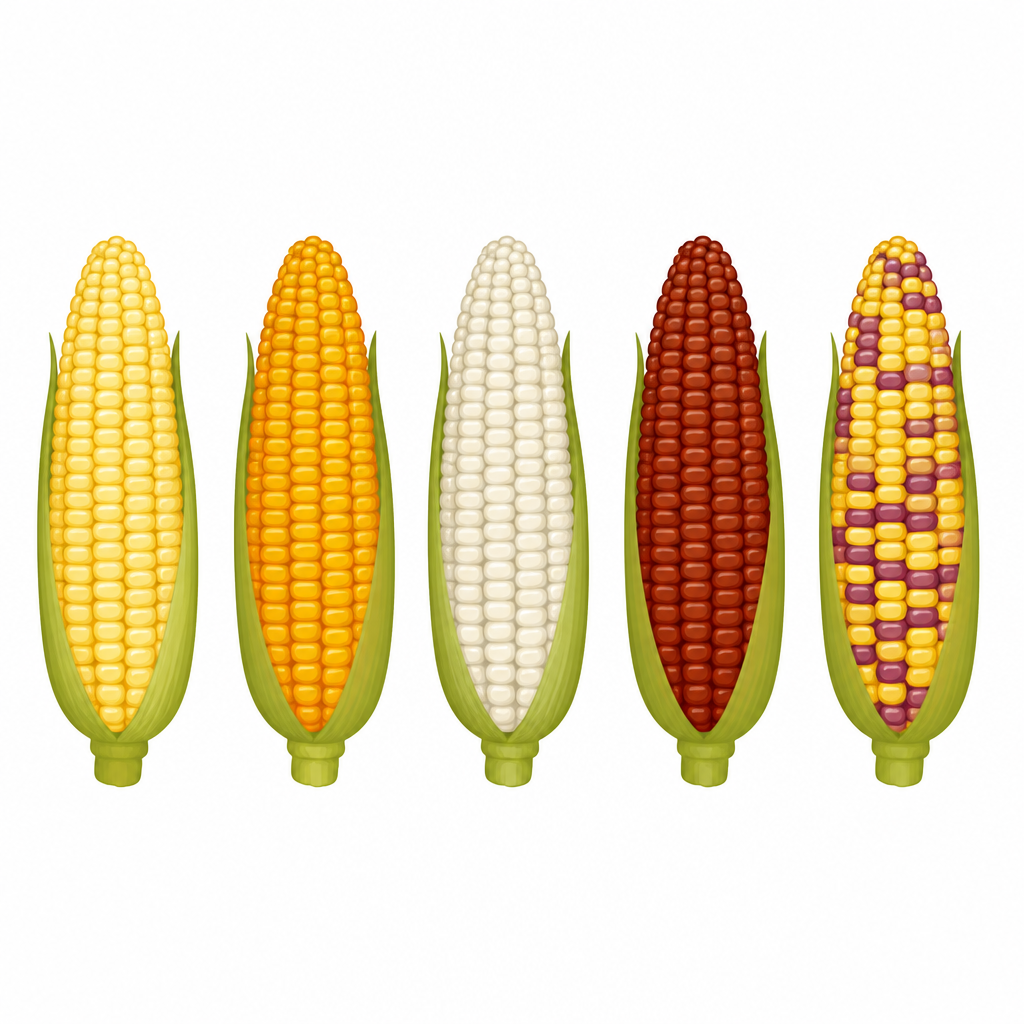
This variation does a real job. If every member of a species were exactly alike, one disease or one drought could finish all of them together. Because the members differ, some survive what kills the rest, and the species carries on.
(b) Species Diversity
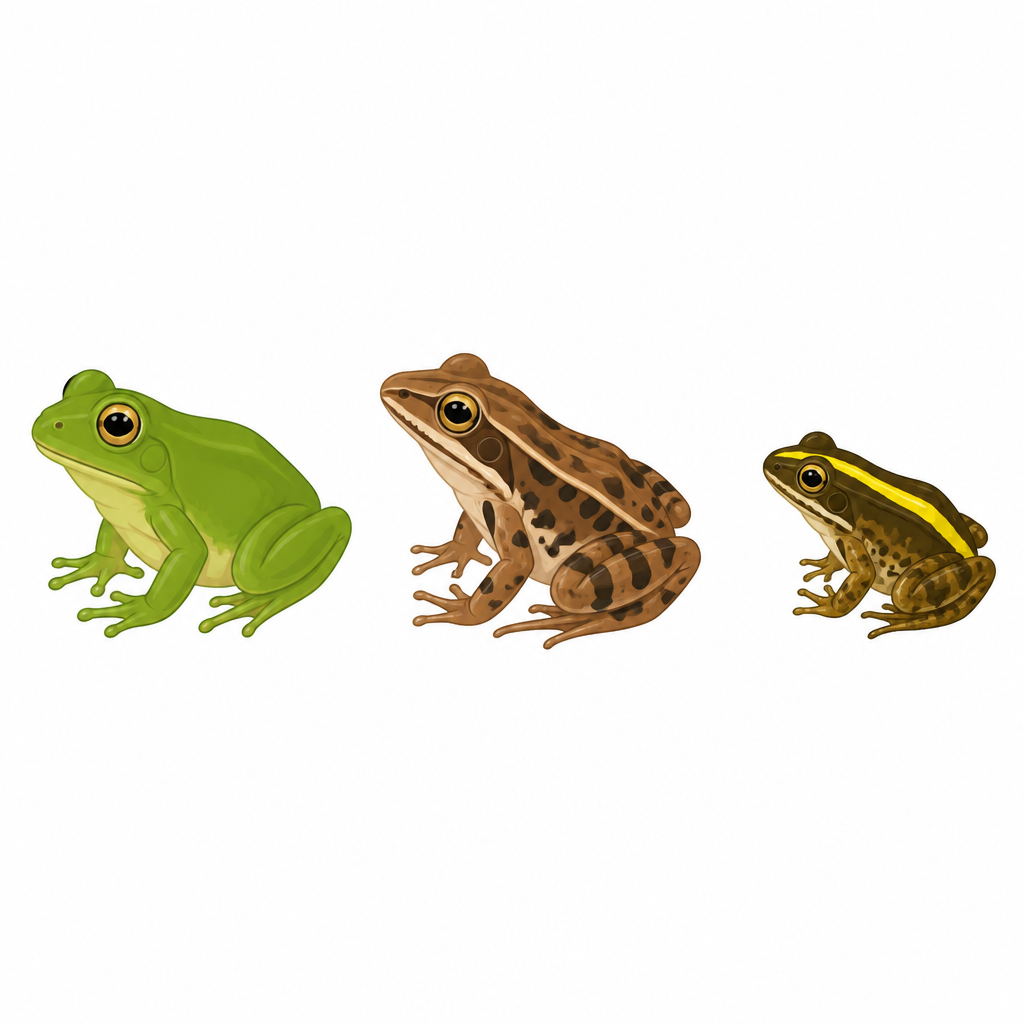
The number of species available in a natural community is called species diversity. It tells you the count of the different species living in one area. Frogs are the easy example. They all fall under the genus Rana, and yet there are more than 10 species of them, each with features of its own.
Species diversity: the number of species available in a natural community.
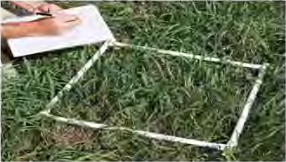
You cannot count a whole forest or a whole grassland species by species. So a small square frame is placed on the ground and only what falls inside it is counted. This way of counting is called quadrat sampling, and it goes step by step.
- Place the square frame on a chosen patch of grassland or forest floor.
- Sort out the plants and animals inside the frame species by species.
- Write down the name of each species and how many of it there are.
- Repeat this at several other patches, add up the results and estimate the whole area from them.
Seeing a great many animals in one place does not by itself mean high species diversity. What is counted here is the number of species, not the number of individuals. A pond with ten frogs belonging to ten species has higher species diversity than a pond with a hundred frogs that all belong to one species.
(c) Ecosystem Diversity
Every ecosystem carries its own animals and plants with their own special features. When you look at one natural area and count the animals and plants of the different ecosystems inside it, along with the different features they carry, that is ecosystem diversity.
Ecosystem diversity: the number of animals and plants, along with their differing features, available in the ecosystems that lie inside one natural area.
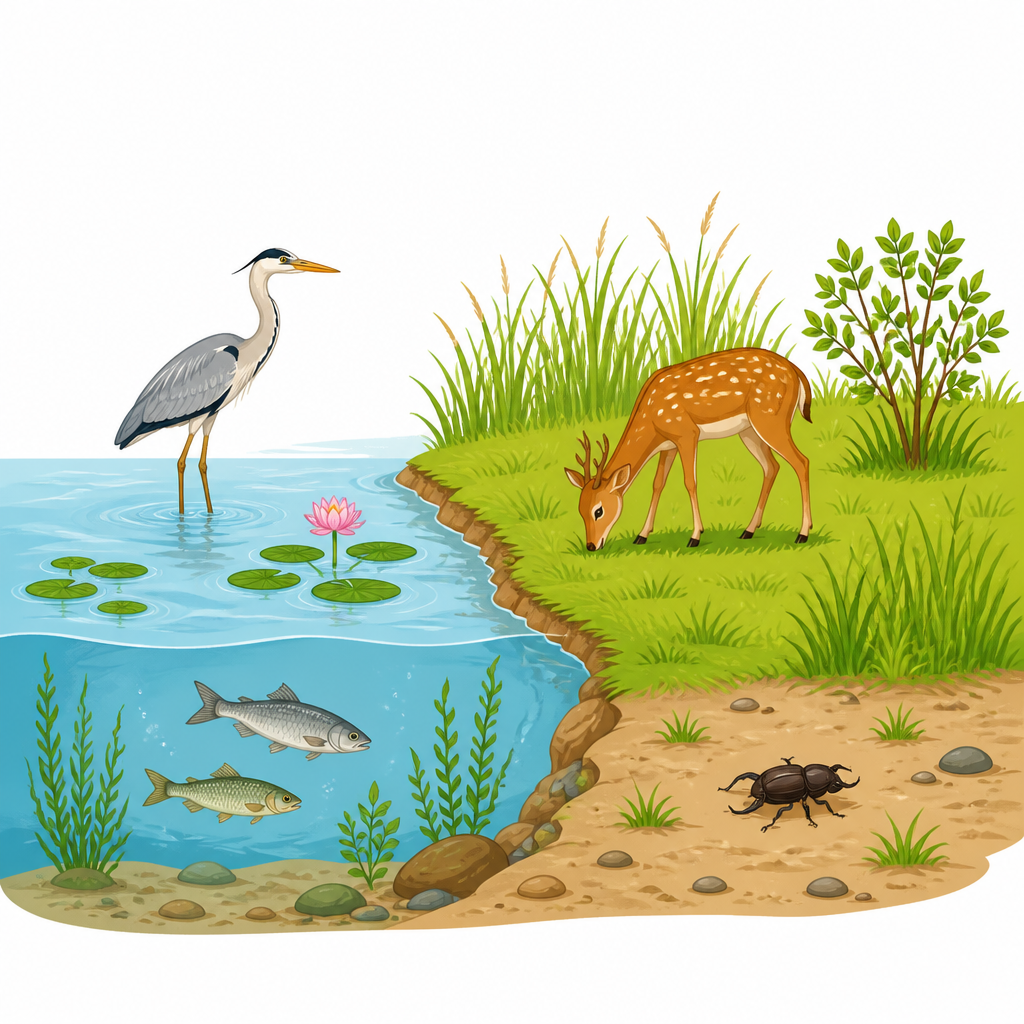
Take a river bank. The animals and plants living in the water and the animals and plants living on the land next to it keep interacting with one another, and yet the two groups carry quite different qualities. Among them some are producers, some are consumers and some are decomposers. A marsh, the grassland on its bank and the forest above it may all sit inside one area, but each of them is home to a different set of living things.
Telling the Three Types Apart
Questions in this topic usually give you an example and ask which of the three it shows. One question sorts it out every time: what is actually being compared here?
| Type | What is counted or compared | Example |
| Genetic diversity | Differences between members of the same species | All people are Homo sapiens, yet hair colour differs |
| Species diversity | The number of species present in an area | More than 10 species of frog under the genus Rana |
| Ecosystem diversity | Differences between the ecosystems inside one area | River, marsh, grassland and forest within one area |
Why Biodiversity Matters
In a natural area holding many species the environment stays steady and lasting. In such a balanced environment living things are more independent and more self reliant, and they meet their needs easily from one another. Biological needs such as habitat, nutrition and reproduction are readily available in an area rich in species. That is the plainest proof of why biodiversity matters.
Species richness: the condition of an area in which many different kinds of species are available.
- (a) Biodiversity secures food security, nutrition and livelihood.
- (b) Biodiversity helps keep the natural balance and raises the productivity of the ecosystem.
- (c) Biodiversity supports the sustainable use of biological resources.
- (d) Biodiversity supports environmental conservation and sustainable development.
- (e) Biodiversity promotes ecotourism.
- (f) Biodiversity helps living things adapt to the effects that come with climate change.
Food Security, Natural Balance and Ecotourism
Food security means having enough good food available all the time. Where many kinds of crops, fruits, fish and farm animals are grown, a disease in one crop or a drought that ruins one crop still leaves other food on the plate. A place that grows only one crop has no such cushion. Keeping local varieties of rice, millet, buckwheat and beans alive is therefore work done for food security.
The natural balance itself rests on biodiversity. Green plants make food, plant eating animals feed on them, flesh eating animals keep the numbers of the plant eaters in check, and decomposers return dead bodies to the soil. Bees and butterflies carry pollen, and birds eat the insects that would otherwise strip a field. The more of these links a place keeps, the more productive its ecosystem becomes.
Ecotourism: travel undertaken to see and understand the natural environment, wildlife and plants, carried out in a way that does not damage nature.
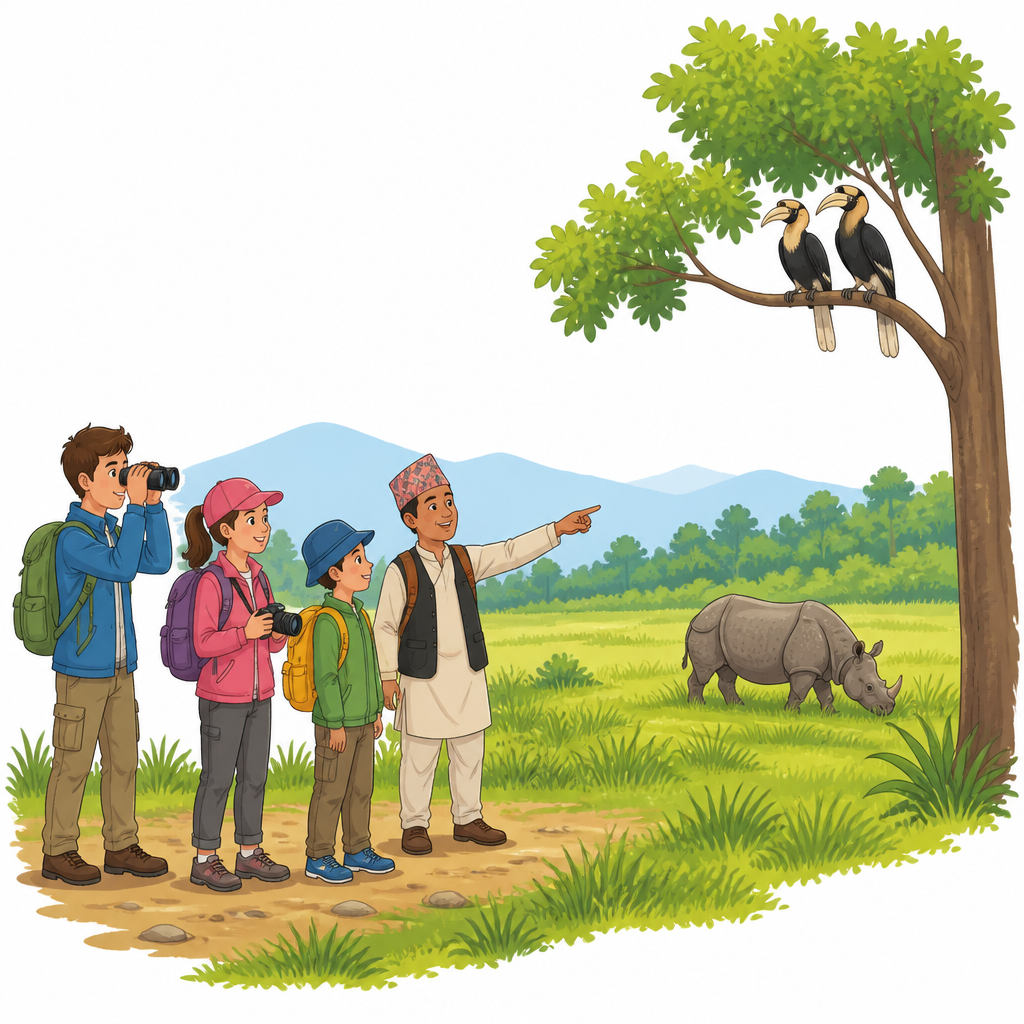
The biodiversity of Nepal is itself a great attraction. Visitors come to watch the one horned rhinoceros in Chitwan, to watch birds at Koshi Tappu, and to see rhododendron forests and rare wildlife in the mountain districts. Local people earn from guiding, from homestays, from transport and from selling what they make. Because that income lasts only as long as nature does, ecotourism gives conservation a push of its own.
Sustainable Use and Adapting to Climate Change
We use biological resources every day: forests, medicinal herbs, fish and timber. Where diversity is high the whole load does not fall on one resource, so each one gets time to grow back. That is what sustainable use means, and it serves both environmental conservation and sustainable development.
Climate change keeps shifting temperature, rainfall and the timing of the seasons. Where genetic and species diversity are high, some variety or some species is usually able to cope with the new conditions, so the area as a whole can adapt. Where diversity has been lost, that option is simply not there any more.
Biodiversity is not there only to make a place beautiful. Our food, our medicines, the fertility of the soil and a good part of our income all stand on it.
The full lesson is waiting for you
The notes are free to read in full. A free account opens the rest of the practice, and tracks your progress and confidence score for every subject. Presentations and videos need approval from Learn Yeti.