The Three Sides Sustainable Development Stands On
Development lasts only when three sides move forward together: the environmental side, the social side and the economic side. Strength on one side alone never makes development last. A factory that raises profit while spoiling the air and the water stops itself within a few years. Sustainable development is the point where those three sides overlap and hold one another up.
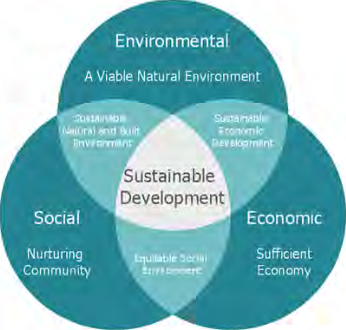
Why Development Needs Principles
A community that wants to grow and still be well off tomorrow must follow the principles of sustainable development in every kind of building and planning it does. A principle is a rule that is settled before the work starts, not after. If a hillside slips only after the road has been cut, the thinking has come too late. When it is decided in advance how the work will be done, who will take part in it and how much load nature will be asked to carry, the benefit of the construction lasts for many years. Sustainable development rests on the three principles below.
- (a) The principle of ecosystem and biodiversity conservation
- (b) The principle of population control and human resource management
- (c) The principle of culture conservation and community participation
Aspects and principles are not the same thing. Environmental, social and economic are the three aspects, the three directions from which development is judged. The three listed above are the principles, the rules to be obeyed while the work is done. Writing the principles where the aspects are asked for makes the answer wrong.
Principle of Ecosystem and Biodiversity Conservation
The principle of ecosystem and biodiversity conservation is the rule that development work must keep natural resources, the ecosystem and biodiversity in balance, while paying attention to the load bearing capacity of the earth.
The store of water, land, forest, minerals and living things on the earth is limited. If more is taken out than that store can bear, nature cannot fill it again. That limit is what is meant by the load bearing capacity of the earth. This principle puts weight on conserving natural resources, using renewable energy, searching for alternative energy, controlling pollution and conserving biodiversity. When one species disappears, the species that depend on it fall into danger too, so protecting biodiversity means protecting the whole ecosystem.
- Conservation of natural resources
- Use of renewable energy
- Search for alternative energy
- Control of pollution
- Conservation of biodiversity
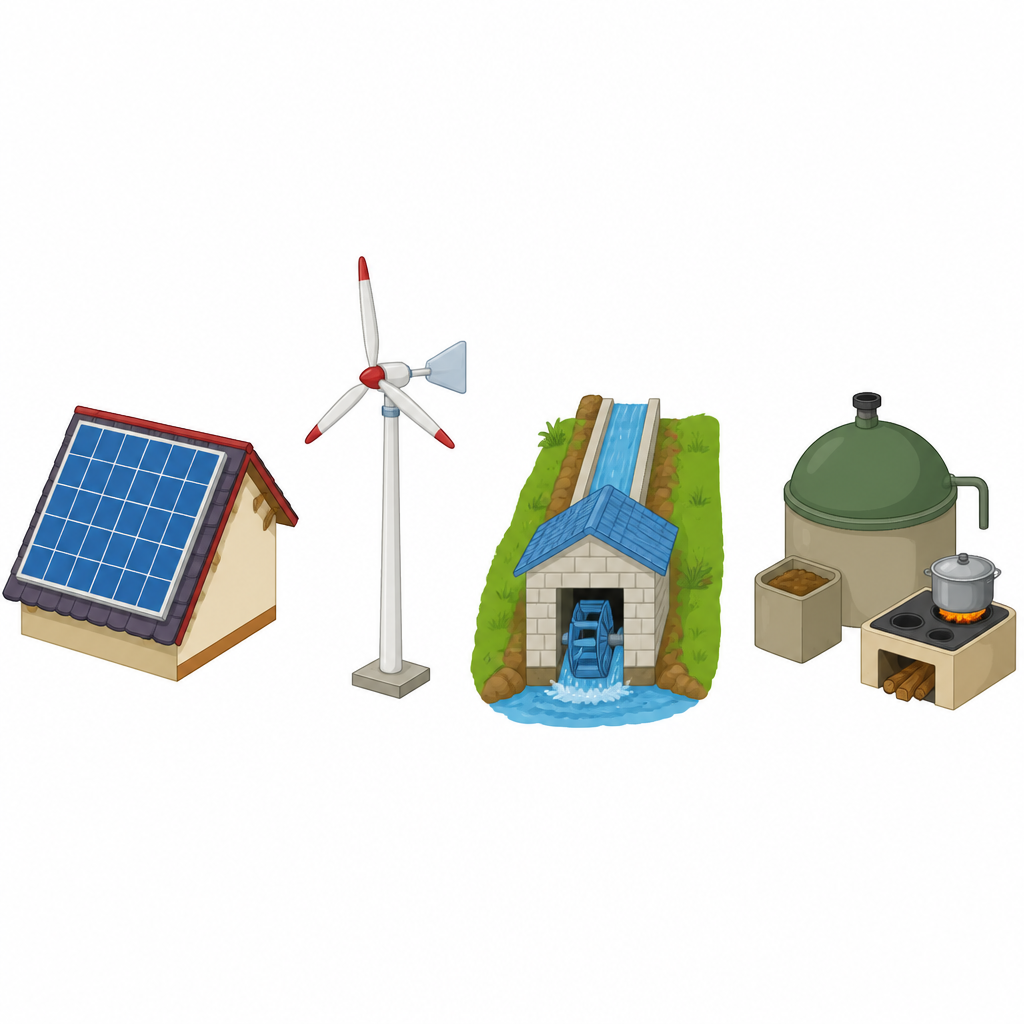
Picture a village that stops clearing forest for cooking fuel and turns to solar lamps and biogas instead. The forest is saved, the smoke in the kitchen drops, and the birds and animals that live in that forest keep their home. The energy is still there and so is the nature around it. That is exactly the way of working this principle asks for.
Conservation does not mean stopping development. This principle does not say that roads, bridges or power projects must not be built. It says they must be built without upsetting the balance of nature. Writing that development and conservation are enemies of each other is wrong.
Principle of Population Control and Human Resource Management
The principle of population control and human resource management is the rule that population must be kept to a certain size, so that human knowledge and skill can be used to consume natural resources properly for environmental balance and for economic and social development.
Resources are limited but human needs keep growing. The larger the population, the more the same fields, the same water and the same forest are asked to supply. This principle explains the duty of aware citizens to meet those growing needs from limited resources. For that, weight is put on producing capable citizens through civic education, awareness, responsibility and accountability. What matters here is not the number of people alone but their skill as well. Educated and skilled citizens get far more out of a small resource, so a population can itself become the greatest human resource a country has.
In a village where twenty households draw water from one tap, doubling the households does not double the tap. The water each family gets is simply halved. If two young people from that same village are trained in repair and water management, leaks are stopped, a broken tap is mended at once, and the same water goes much further. Resources stretch far enough only when control of numbers and building of skills happen together.
Principle of Culture Conservation and Community Participation
The principle of culture conservation and community participation is the rule that all citizens of a society must take part both in doing the development work and in enjoying its fruits, and that all social values, norms and culture must be respected.
This principle puts weight on social justice and peace in development. A construction that tramples on a community's language, festival, tradition or place of worship breeds protest, and work that breeds protest does not last. People look after only what they feel is theirs. So every group, every caste and both women and men have to be part of the discussion from the day the plan is first drawn.
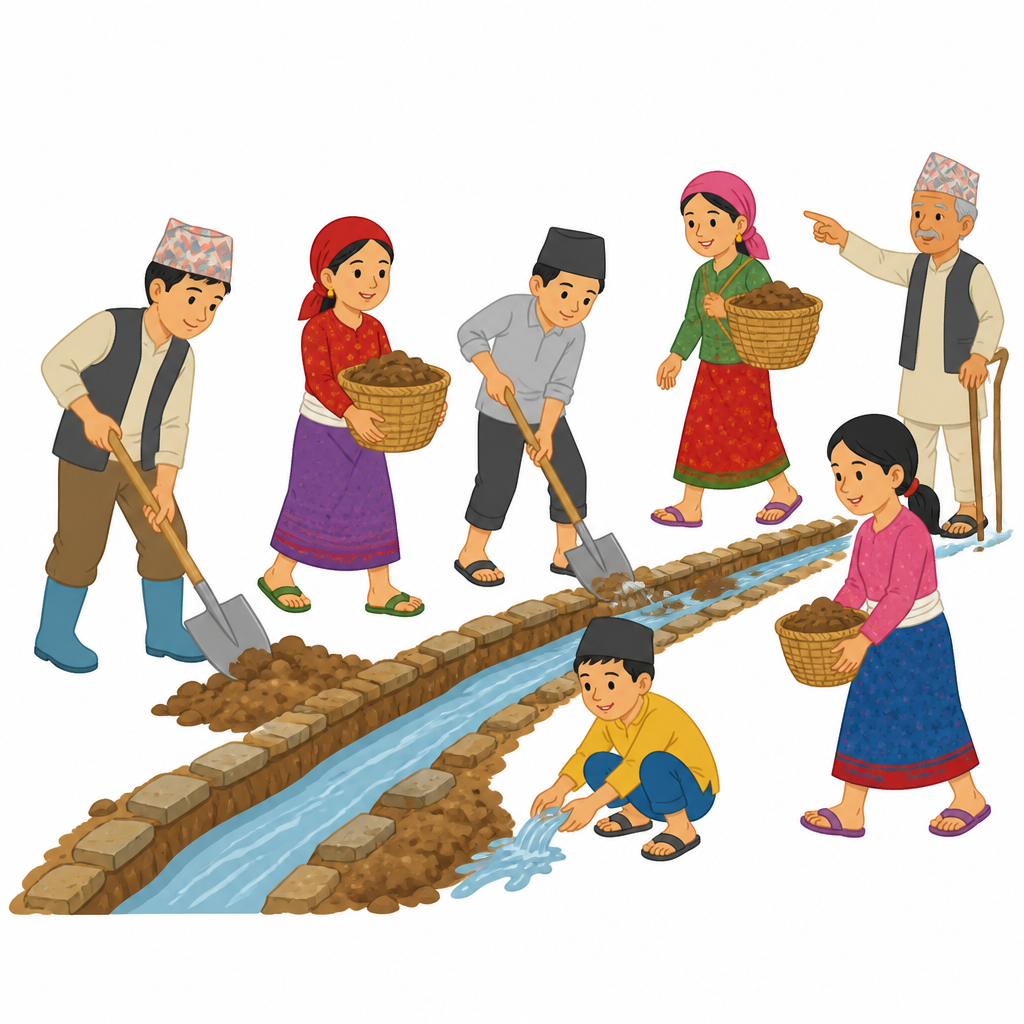
When a canal is dug in a place with every member of the community taking part, and built in a way that lets everyone draw benefit from it, a sense of ownership grows and the canal lasts. If it breaks, nobody has to wait for help, because the villagers repair it themselves. Had the same canal been built by a few outsiders to water only a few houses, there would have been nobody to take charge of it once it broke.
The Three Principles Side by Side
| Principle | Main concern | What it means in practice |
| Ecosystem and biodiversity conservation | The earth's load bearing capacity and the balance of nature | Conserving resources, using renewable and alternative energy, controlling pollution |
| Population control and human resource management | The match between limited resources and growing needs | Keeping population to a certain size, building capable citizens through civic education and skills |
| Culture conservation and community participation | Participation by all, respect for culture, social justice | Including every citizen both in the work and in its benefits |
All three principles fit into one sentence. Give nature only the load it can bear, balance both the number of people and their skills, and let everyone share the work as well as its benefits.
Importance of Sustainable Development
Development that is carried out in a balanced way, taking every side along with it, is sustainable development. It both mobilises and conserves natural resources. It makes the habitat of animals and plants secure. It pays attention to social justice for all the people of a society. It puts weight on building a civilised society. That is why the need for sustainable development is taken so seriously in the world today.
- (a) Sustainable development is needed to keep the environment in balance and to control pollution.
- (b) Proper use of natural resources, along with their conservation, is achieved through sustainable development.
- (c) Infrastructure that gives benefit over the long term is built according to the idea of sustainable development.
- (d) Sustainable development removes inequality and poverty, and so keeps social justice and peace.
- (e) It puts weight on the proportional distribution of economic resources in society.
All of these hang together. When pollution falls, health improves. When health improves, people can work better. When they can work better, poverty drops. And when poverty drops, people no longer have to strip nature bare to survive. Sustainable development is therefore not the name of one project. It is a way of thinking about how all development should be done.
The full lesson is waiting for you
The notes are free to read in full. A free account opens the rest of the practice, and tracks your progress and confidence score for every subject. Presentations and videos need approval from Learn Yeti.