From Scientific Discovery to Invented Technology
As science developed, people kept searching for ways to do their work more easily and more quickly. Taking the conclusions of scientific study as their base, different people invented instruments that could do real work. Instruments and methods built out of scientific conclusions in this way are what we call technology. That heat turns water into steam is a plain conclusion of science, but turning the push of that steam into a force that spins wheels is the work of technology.
James Watt developed the steam engine. It runs on the push of steam made by boiling water over burning coal. Its invention brought an unimaginable transformation to transport technology. Railways began to run, journeys that had taken months could be finished in days, and distant cities came close enough for trade and for meeting people.
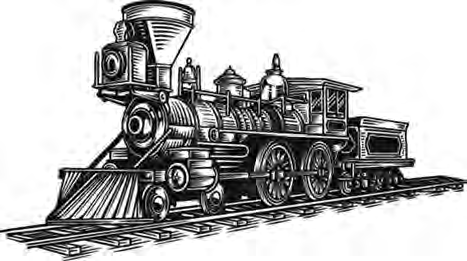
Science supplies the conclusion; technology turns that conclusion into a tool that works.
Electricity from Steam
Producing electricity from the steam of water is another important invention. In a nuclear power plant, the intense heat given off by nuclear fuel boils water into steam. That steam turns a turbine joined to a generator, and as the turbine spins, the generator produces electricity. Because a small amount of fuel releases a very large amount of energy, many countries of the world generate electricity this way.
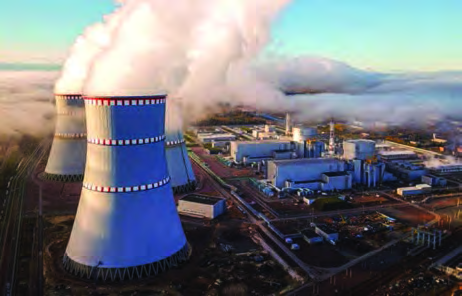
Nuclear power plant: a plant in which heat from nuclear fuel boils water into steam, and that steam spins a turbine joined to a generator to produce electricity.
Radiation: Treatment and Threat
Marie Curie is the scientist who carried the science of radiation forward. On the foundation of her research, X-ray examination and the treatment of cancer using radiation were developed. Yet years of working in contact with that same radiation slowly damaged her own health. Radiation in the right dose diagnoses and treats disease, while too high a dose destroys the cells of the body and can bring on the very cancer it is used to treat. One power can both protect and harm; what makes the difference is the dose and the management.
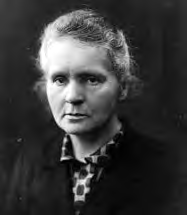
The Challenge Joined to Every Achievement
With the development of technology, its proper management becomes necessary as well. The coal burnt to heat water in the steam engine caused air pollution on an enormous scale. The very invention that transformed transport filled the air of cities with smoke. In the same way, managing the by-products of a nuclear power plant and keeping the plant safe are seriously challenging tasks, because those substances keep giving off harmful radiation for many years.
By-product: a second substance that forms alongside the main product of a process, such as the radioactive waste that forms alongside electricity in a nuclear power plant.
Japan has given the world an example of what happens when management fails. In 2011 an earthquake struck Fukushima in Japan, a nuclear power plant was wrecked, and destructive radiation scattered into the environment. Thousands of people living nearby had to leave their homes. So the achievements of science and technology come with challenges joined to them.
Disasters History Keeps Reminding Us Of
In 1986 a nuclear power plant exploded at Chernobyl in Ukraine. The radiation scattered by the explosion caused great loss of life and property in Ukraine and in the surrounding countries as well. The accident happened in one place, but the radiation crossed borders with the wind.
In 1984 poisonous gas leaked from a factory at Bhopal in India, and about 2300 people lost their lives. These events teach one lesson: the chemicals and technologies science gives us are exactly as useful as careless management of them is costly.

Do not write Chernobyl and Fukushima as if they were the same event. At Chernobyl (Ukraine, 1986) the plant itself exploded, while at Fukushima (Japan, 2011) an earthquake wrecked the plant. Bhopal (India, 1984) was not a nuclear accident at all; it was a gas leak from a factory.
Field by Field: What We Gained and What It Costs
Science and technology have touched every field of life, and in every field a challenge stands right beside the achievement. The table below shows both sides across six main fields.
| Field | Achievements | Challenges |
| Health | Easier diagnosis, effective treatment methods, diseases such as malaria eliminated in many places, organ transplantation, testing technologies such as X-ray, CT scan and ultrasound | Too high a dose of radiation destroys cells and raises the chance of cancer |
| Transport | Access to water, land and air transport | Air pollution from vehicle smoke, noise pollution |
| Agriculture | Pesticides, fertiliser, scientific farming systems, improved seeds, higher production, less hunger | Indigenous methods and seeds dying out, growing dependence on outside seed and produce, degradation of the soil, harm to human health |
| Education | ICT, distance education, research, wider access to information | Health problems from overuse of ICT, loneliness, a habit of living in the virtual world rather than the real one, disturbed socialisation |
| Industry | Access to consumer goods, use of very modern equipment | Chemical pollution, environmental decline, global warming |
| AI (Artificial Intelligence) | Development of automated technology, easier daily life | Breach of personal privacy, rising unemployment |
The newest of these fields is AI, Artificial Intelligence. The development of automated technology means many jobs no longer need a person, and daily life has become easier. But as machines gain access to people's data, personal privacy is breached, and as machines take over work, unemployment rises. The challenges arrived with the achievement.
A challenge is not a reason to stop science. Using every achievement with proper management is the right answer to its challenge.
The full lesson is waiting for you
The notes are free to read in full. A free account opens the rest of the practice, and tracks your progress and confidence score for every subject. Presentations and videos need approval from Learn Yeti.