Watching steam become drops of water
When tea is being made, white steam keeps rushing out of the kettle's spout. Hold a cold metal plate above that steam. Within moments, tiny drops of water start collecting on the underside of the plate, and they fall into the dish kept below. Hot steam strikes the cold surface, cools down, and turns back into water. Water turning into vapour on heating is called evaporation, and vapour cooling back into water is called condensation. Inside this small everyday kitchen scene hides a complete lesson in science.
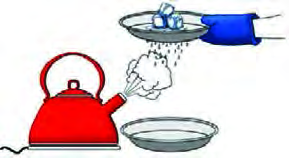
Now remove that cold plate and hold a plate of hot water in the same place. Drop formation suddenly falls. A very cold plate collects many drops, while a hot plate collects only a few, because steam striking a hot surface never gets the chance to cool. Same steam, same kettle, yet changing only the surface changed the result. This comparison hands us a conclusion we can trust.
The temperature of the surface that steam strikes plays a role in how drops form. The colder the surface, the more drops appear.
The same event in the sky: the water cycle
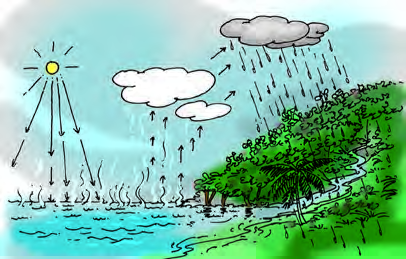
The very event seen in the kitchen also keeps happening in the sky, on a far larger scale. The Sun's heat turns the water of rivers, lakes and seas into vapour, which rises. As it climbs, the air grows colder, the vapour cools into tiny droplets, and clouds form. When the droplets grow large and heavy, they fall back to the ground as rain. In this cloud making and rain making too, the temperature of the air plays the deciding role. That is why the weather forecasting office collects data on how temperature falls as height above the Earth's surface increases, and by analysing that data it forecasts how much rain will fall. Observation, data and analysis are what let anyone say whether it will rain tomorrow.
Science: an organised way of building knowledge
With one kettle and two plates we reached a conclusion of our own. Science works in exactly this way. Science is not a ready made heap of knowledge; it is a process of building knowledge.
Science is taken as a process of building knowledge. It is an organised method used to explain natural events on the basis of evidence.
The evidence needed to build knowledge comes through our sense organs, such as the eyes, ears and skin, and through various instruments. The eye sees the drops forming, a thermometer measures temperature, a rain gauge measures how much rain fell. Nothing becomes science just because somebody said it, or because it sounds likely. A statement turns into knowledge only after evidence confirms it.
The stages of scientific learning
Scientific learning does not happen in one leap. It moves forward in order, stage by stage, and each stage stands on the work of the one before it.
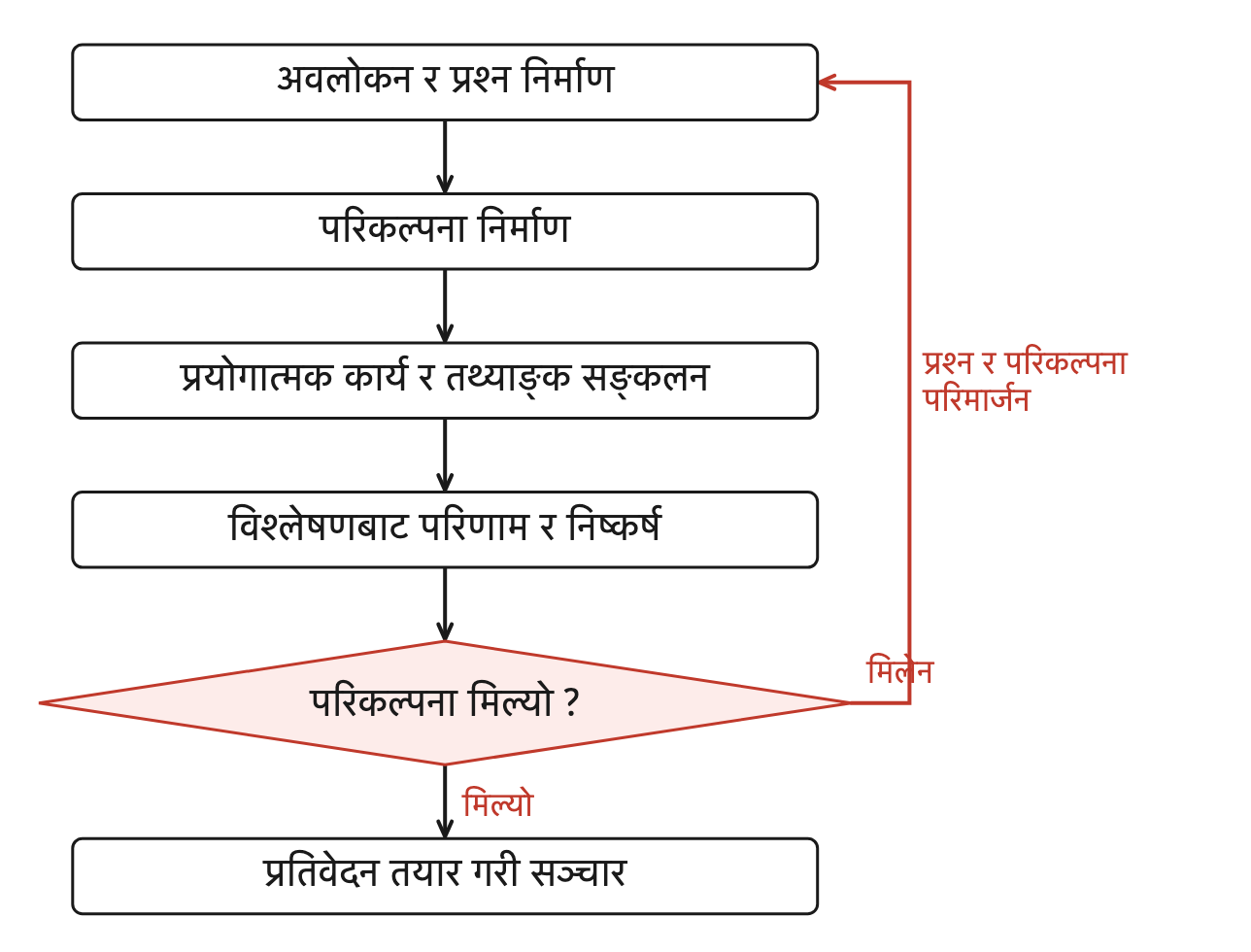
| Stage | What is done |
| First | Observe an event or a problem, raise curiosity, and form a question for the search |
| Second | Build a hypothesis |
| Third | Do experimental work and collect data |
| Fourth | Analyse the collected data to draw out results and a conclusion |
| Fifth | Test, on the basis of the conclusion, whether the hypothesis matched |
| Final | If the hypothesis matched, prepare the research report and communicate it |
A hypothesis is a probable answer to the study's question, an answer that can be checked by experiment.
If the fifth stage's test shows the hypothesis matched, a research report is prepared and communicated, and this is the final stage of a scientific study. Communicating matters because a discovery that never reaches other people stops right there. If the hypothesis does not match, the study's question and hypothesis are revised and every stage is repeated again. So scientific learning is not only a straight line; when needed, it is a cycle that turns back and walks the road again.
A hypothesis that fails to match does not mean the study failed. Even a failed hypothesis gives solid knowledge that this road was not the one, and revising it and starting again is a regular part of the scientific method.
Practising the stages: paper aeroplanes
The best way to understand these stages is to run one small investigation yourself. Fold paper into two aeroplanes of different designs: model A and model B. Their wings differ in shape and width, so there is no reason to assume both will fly the same way.
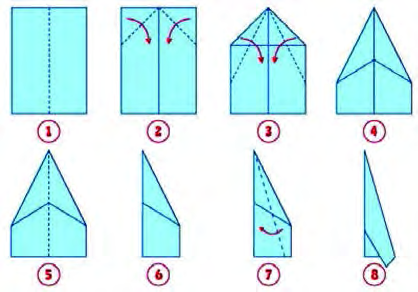
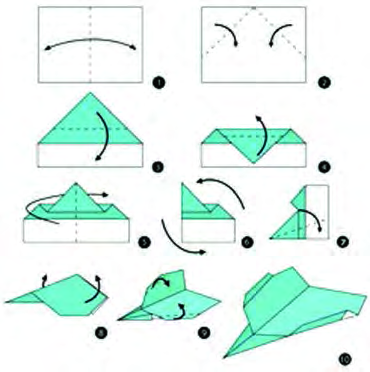
- Observation and question: the two models differ in wing and build. Which model flies farther?
- Hypothesis: write your probable answer, for example that the model with wider wings flies farther.
- Experiment and data collection: throw both models from the same spot, with the same force, five times each in turn, and record the distance of every flight in a table.
- Analysis, result and conclusion: compare the distances of the two models and conclude which one really flew farther.
- Testing: check whether the conclusion matched your hypothesis.
- Report or revise: if it matched, write a report of your investigation and present it to the class; if it did not, revise the question and hypothesis and repeat every stage.
The corona vaccine: the scientific method at work
The same method that ran the paper aeroplane test also gave the world its vaccine against the corona virus. To develop the vaccine, the first step was observing the effect of that virus on mice. Then the data needed to study the effect seen in the mice were collected and analysed. On that basis a sample vaccine was developed.
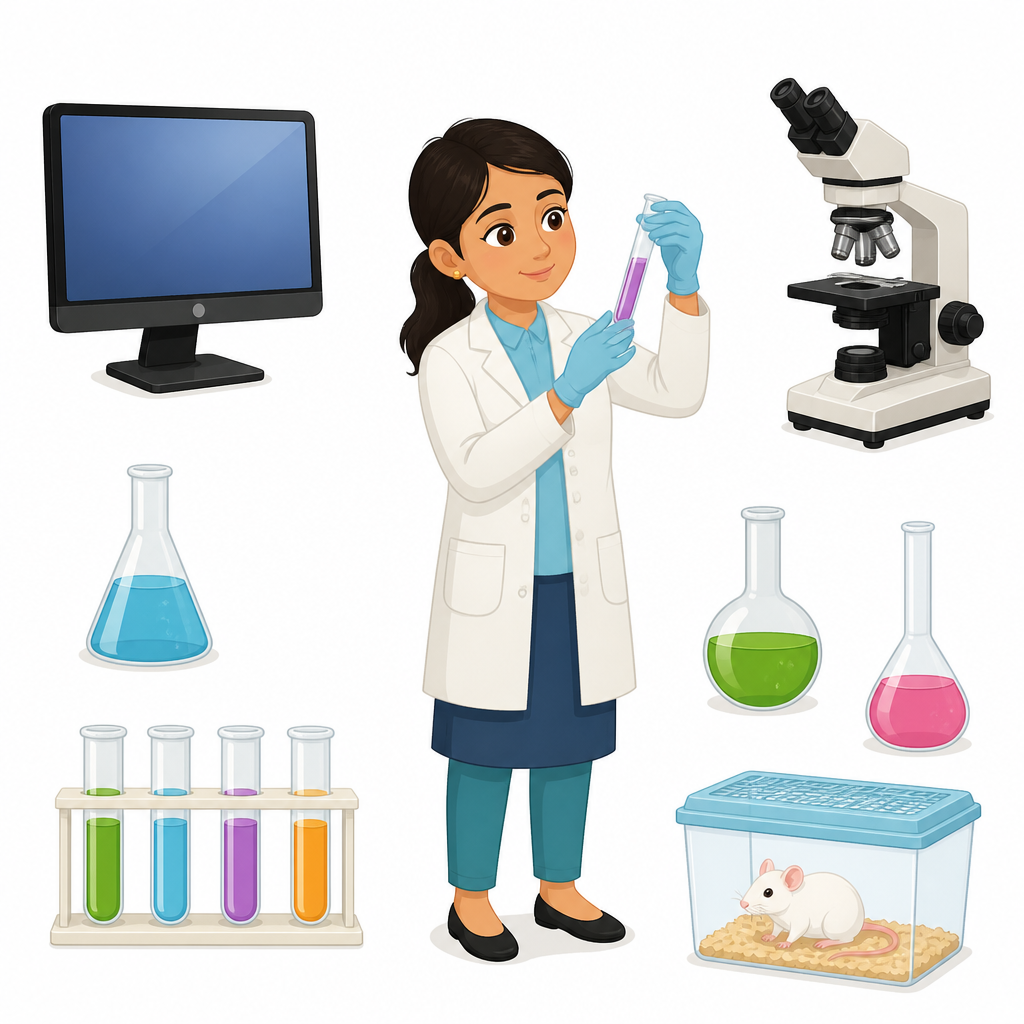
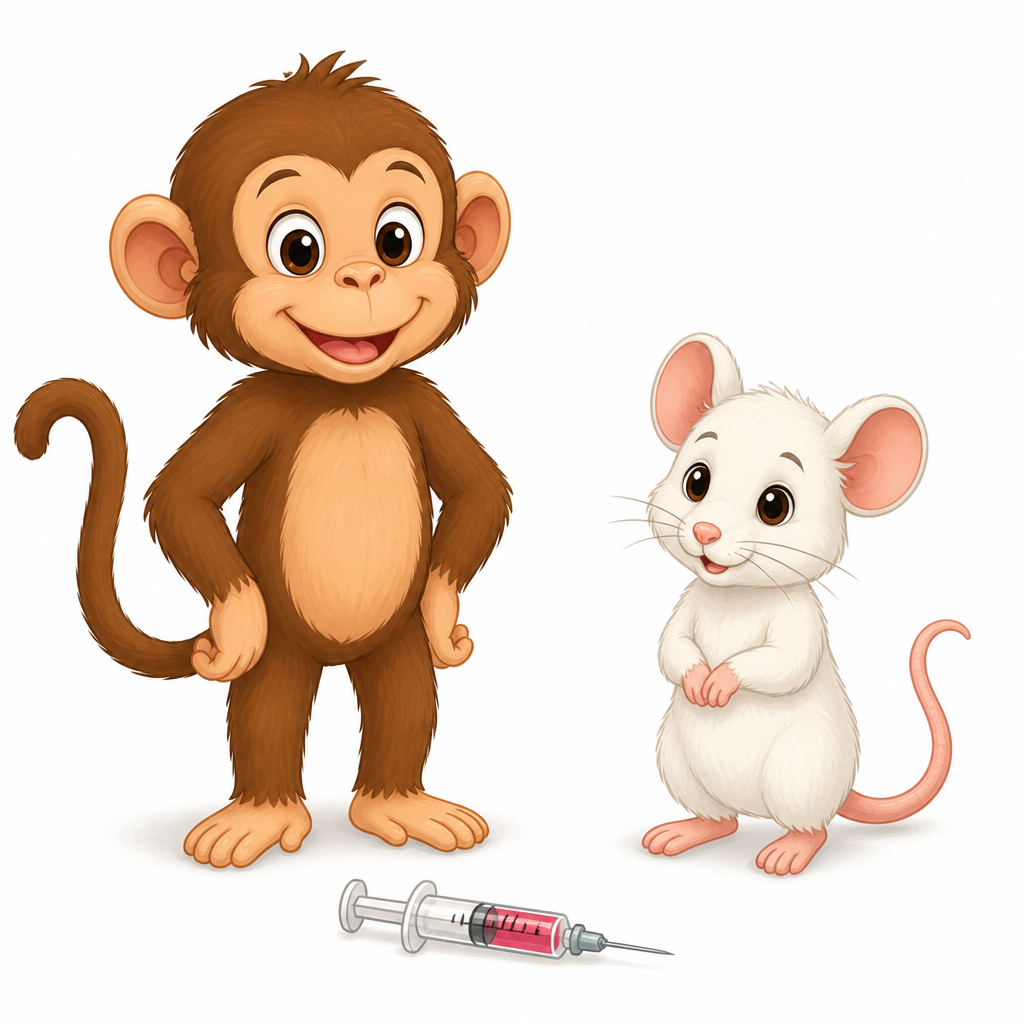
To test whether the results matched what the researchers had predicted, that sample vaccine was first given to selected animals. Only after full success in the animals was it tested on selected humans. And only after the vaccine succeeded overall was permission given to administer it to other people. At every footstep here there is a question, a prediction, experimental work and analysis of data, and each new stage was entered only after the previous one succeeded.
From conclusions to laws and theories
Laws and theories are propounded on the basis of the conclusions that scientific learning provides. Following these same stages, scientists have systematically studied many fields of nature, including force, energy, matter, the origin of living beings, the structure of the Earth, and space, and from the conclusions of those studies they have propounded laws and theories. For example, Sir Isaac Newton propounded the law about the gravitational force produced between any two bodies. That law too arrived by walking the same road of observation, hypothesis, data and testing.
Every great law and theory began as somebody's small curiosity that walked through all the stages of scientific learning.
The full lesson is waiting for you
The notes are free to read in full. A free account opens the rest of the practice, and tracks your progress and confidence score for every subject. Presentations and videos need approval from Learn Yeti.