The Same Measurement Never Comes Out Exactly the Same
After measuring something we feel sure the number we wrote down is right. But measure the same thing in the same way several times and the number is almost never exactly the same twice. Drop a small stone from the same height three times and the time it takes to reach the ground can come out slightly different on all three drops. The watch is the same, the stone is the same, the height is the same, and still the readings differ. So which reading should we trust? The average answers that question.
This is not a problem that only careless students face. Scientists meet the same variation every time they measure. That is why, in science, no measurement is taken once and left there. The measurement is repeated a second and a third time, and the average of all the readings is worked out. That average is the measurement that can be trusted.
What the Falling Marble Shows
You can test this for yourself. Fix a tin sheet on the floor and drop a marble or a small stone from 2 metres above it, so that it lands on the sheet. Start a stopwatch the moment the marble leaves your hand and stop it at the clang of the strike, then write the time down. Now repeat exactly the same drop a second and a third time.
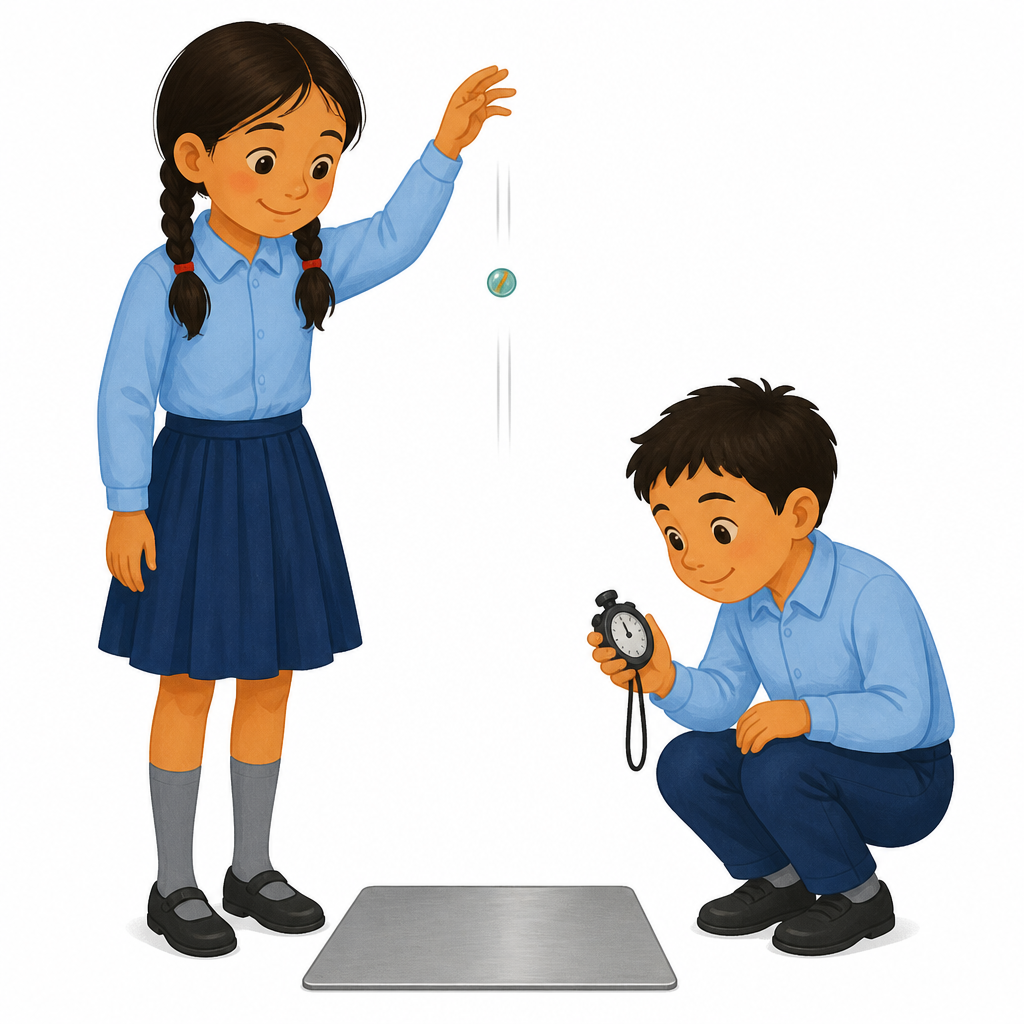
Look at the three times. They almost always differ, for example 1.2 seconds, 1.4 seconds and 1.3 seconds. Why? The hand releasing the marble does not open at exactly the same instant every time. The finger pressing the stopwatch does not move at the exact instant of the clang either, because a person needs a small fraction of a second to react to what they see or hear. Even a difference that small shows up in the reading. Measured once, a time like this simply cannot be trusted to be right.
Readings that differ do not mean the experiment has failed. Variation is a natural part of measuring, and the cure for it is to repeat the measurement two or three times and take the average.
How the Average Is Calculated
The average measurement is the sum of all the repeated readings divided by the number of times the reading was taken.
\[ \text{Average} = \frac{\text{sum of all readings}}{\text{number of readings}} \]
Suppose the marble took 1.2 seconds on the first drop, 1.4 seconds on the second and 1.3 seconds on the third. The average time is worked out like this.
Step 1: Adding all three readings:
\[ 1.2 + 1.4 + 1.3 = 3.9 \]
Step 2: Dividing by the number of readings taken. Here the reading was taken three times:
\[ 3.9 \div 3 = 1.3 \]
Step 3: Writing the unit with the answer. The average time for the marble to strike the sheet is 1.3 seconds (s).
Divide by exactly the number of readings you took. Add three readings and divide by 2 and the answer itself is wrong. Equally, an average written without its unit is an unfinished measurement. Write 1.3 alone and nobody can tell whether it means seconds or minutes.
The Same Problem in the Laboratory
This is not only about marbles and stopwatches. The instruments in a science laboratory repeat the same story. On an ammeter, which measures electric current, and on a voltmeter, which measures voltage, a needle swings and settles against a mark on a scale. On a measuring cylinder, which measures the volume of a liquid, your eye has to read which line the liquid surface sits on. Every instrument has a minimum measure it can take, and it simply cannot show a difference smaller than that.
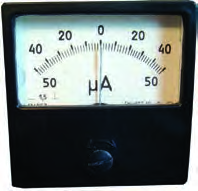
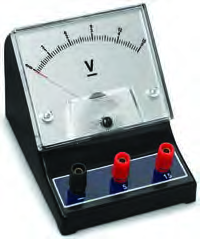
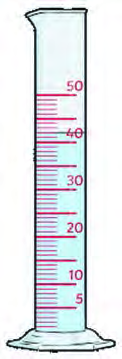
If the needle stops between two marks, one student reads the lower mark and another reads the upper one. If the eye is a little above or below the liquid surface, the volume itself reads differently. So in the laboratory too, the same reading is taken several times and averaged. Wherever measuring goes, the rule travels with it.
A Precise Measurement
When a measurement is repeated and the same kind of result comes back each time, that measurement is called precise.
If the marble's times come out as 1.2 seconds, 1.4 seconds and 1.3 seconds, the three readings sit close to one another. Readings like these are precise, and their average can be trusted. But if the readings come out scattered, say 0.8 seconds, 1.9 seconds and 1.3 seconds, they are not precise. Scattered readings are a signal that something in the method or the instrument is going wrong. Then the job is not to average them and move on, but to measure again more carefully.
Why Averaging Matters in Scientific Study
Scientific study runs into trouble exactly where quantities are small. Measuring a fraction of a second, a difference of a millimetre or a small amount of liquid, even a tiny error can change the whole result. That is why, to obtain the correct quantity, the measurement is repeated a second and a third time and the average is taken, and the average gives the correct measurement. A slip in one reading shrinks inside the average, because some readings come out a little high, some a little low, and those differences cancel one another.
- The average shrinks the effect of any single wrong reading.
- The average protects the small measurements where errors hurt most.
- Looking at how close the repeated readings sit tells you whether the measurement is precise.
So from now on, whenever an experiment asks you for a measurement, do not stop at one number. Measure two or three times, write every reading down, work out the average and give the answer with its unit. That habit is the scientific habit.
The full lesson is waiting for you
The notes are free to read in full. A free account opens the rest of the practice, and tracks your progress and confidence score for every subject. Presentations and videos need approval from Learn Yeti.