Air Can Be Squeezed Into a Small Space
You have surely seen a pump being used to fill a football with air. The tubes of a bicycle and a motorcycle are filled in the same way, and an oxygen cylinder in a hospital holds a great deal of air inside a small steel body. All of this tells us one thing about air. Air can be pressed so that it fits into a much smaller space than it normally occupies. The volume of the air is reduced with the help of a compressor, and that squeezed air is then packed into a ball, a tube or a cylinder.
Compressed air is air that is being held at a pressure higher than atmospheric pressure.
When air is compressed, heat is produced and the pressure of the air rises. That is why the barrel of a pump feels warm after you have worked it for a while. The tighter a ball becomes, the harder the air inside is pushing on its walls.
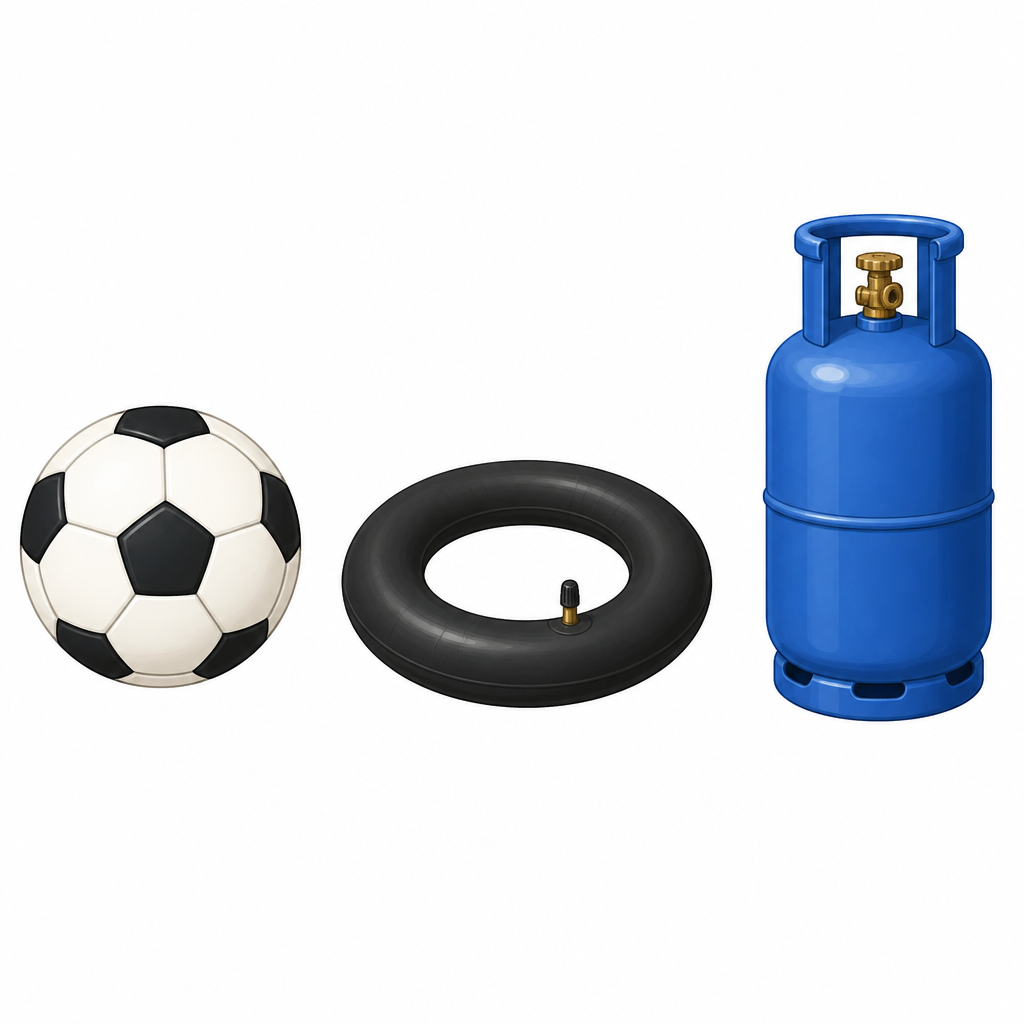
What Compressed Air Is Used For
Compressed air is treated as an important way of carrying energy from one place to another in industry. Even where an electric cable cannot easily be taken, a hose carrying compressed air can drive a machine. Some of its uses are given below.
- To run power tools such as an air hammer, a drill and a wrench.
- To operate automatic air cylinders and to drive vehicles.
- To work the brakes that stop a large railway train safely, using the force applied by compressed air.
- To provide the air brakes fitted to large vehicles on the highway.
- To fire an air rifle and to carry out high level cleaning work.
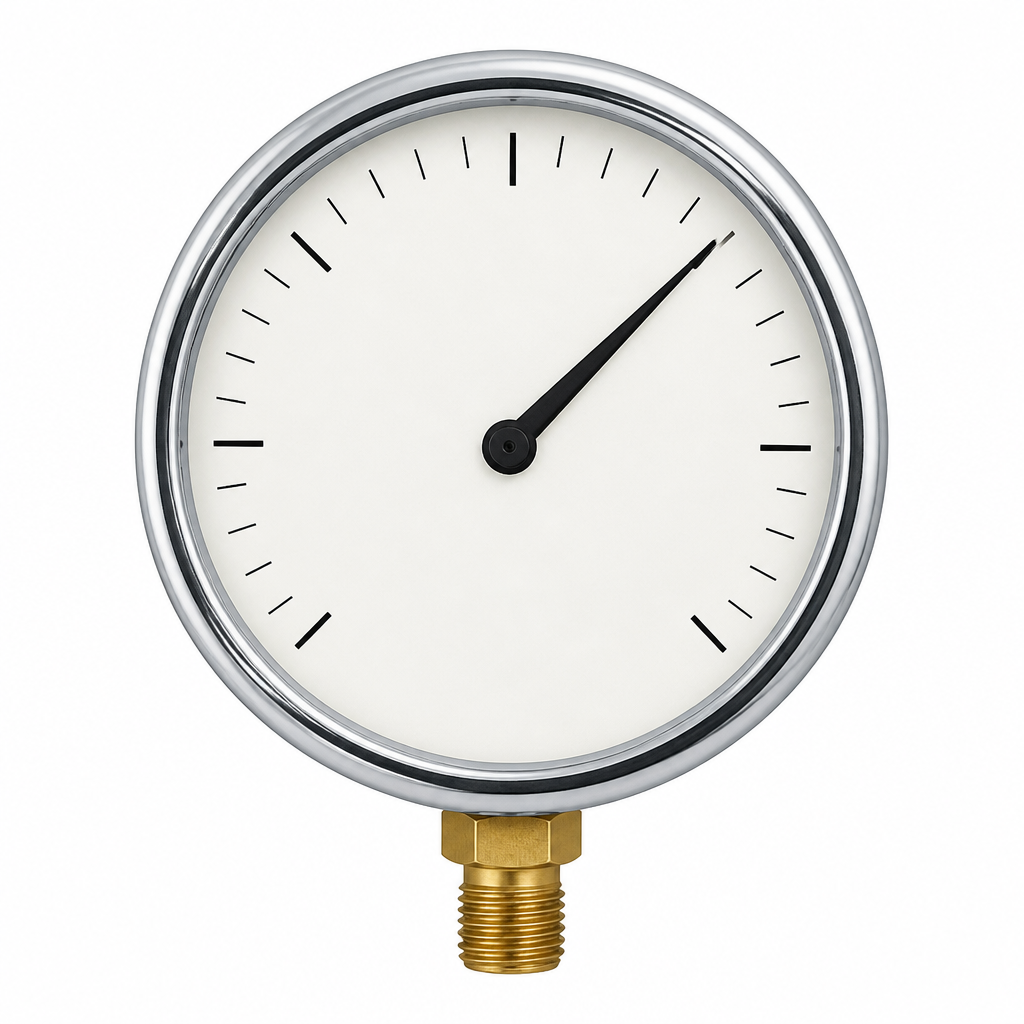
The pressure of compressed air is measured with the help of an air pressure gauge. Its unit is the Milibar, and the same pressure can also be measured in mmHg, which is the unit of standard atmospheric pressure. The higher the reading the needle points to, the greater the pressure of the air held inside.
Water Held in an Upturned Glass
You can see for yourself that air pushes, using one easy experiment. All you need is a glass, some water and a piece of card board or thick paper.
- Fill a glass right to the top with water.
- Cover the mouth of the glass neatly with the card board so that no air can get in.
- Hold the bottom of the glass with one hand and press the card down on the mouth with the other hand.
- Turn the glass slowly upside down.
- Slowly take away the hand that was pressing the card, and watch what happens.
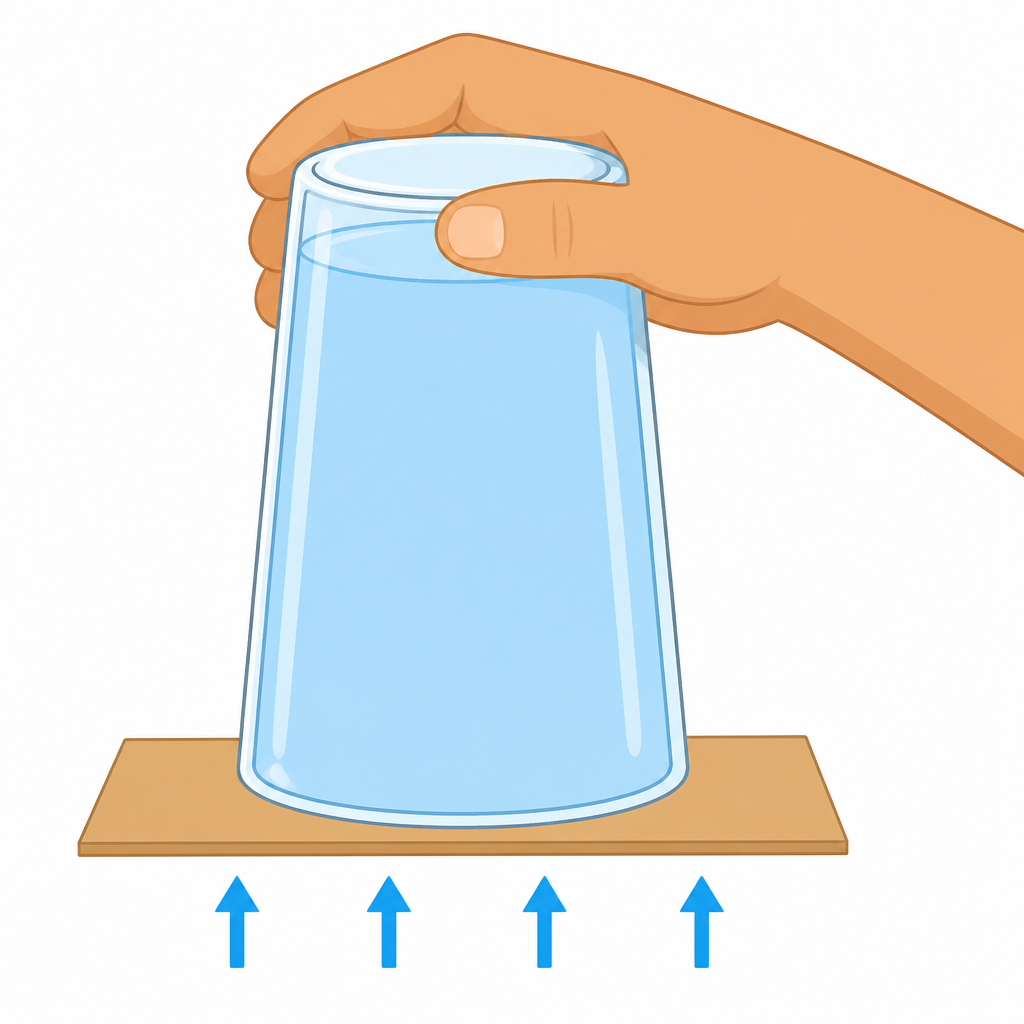
The card at the mouth of the glass does not fall even after the hand is removed, and the water does not come down either. This happens because the air below is pushing upward on the card all the time. It is the pressure of that air that lets the card stay in place and keeps the water from falling.
Why a Tin Can Crushes Itself
Another experiment shows just how strong the push of air can be. For this you need a tin can that can be closed with a small cap.
- Open the cap of the tin can and put a little water inside it.
- Heat the can with the cap left off.
- Once the water inside boils and steam starts coming out, close the cap tightly so that no air can get in.
- Stop heating the can and set it aside.
- Pour cold water over the outside of the can, and watch what happens.
In this activity you must not hold the hot tin can with your bare hand, and you must not touch the hot steam with your hand.
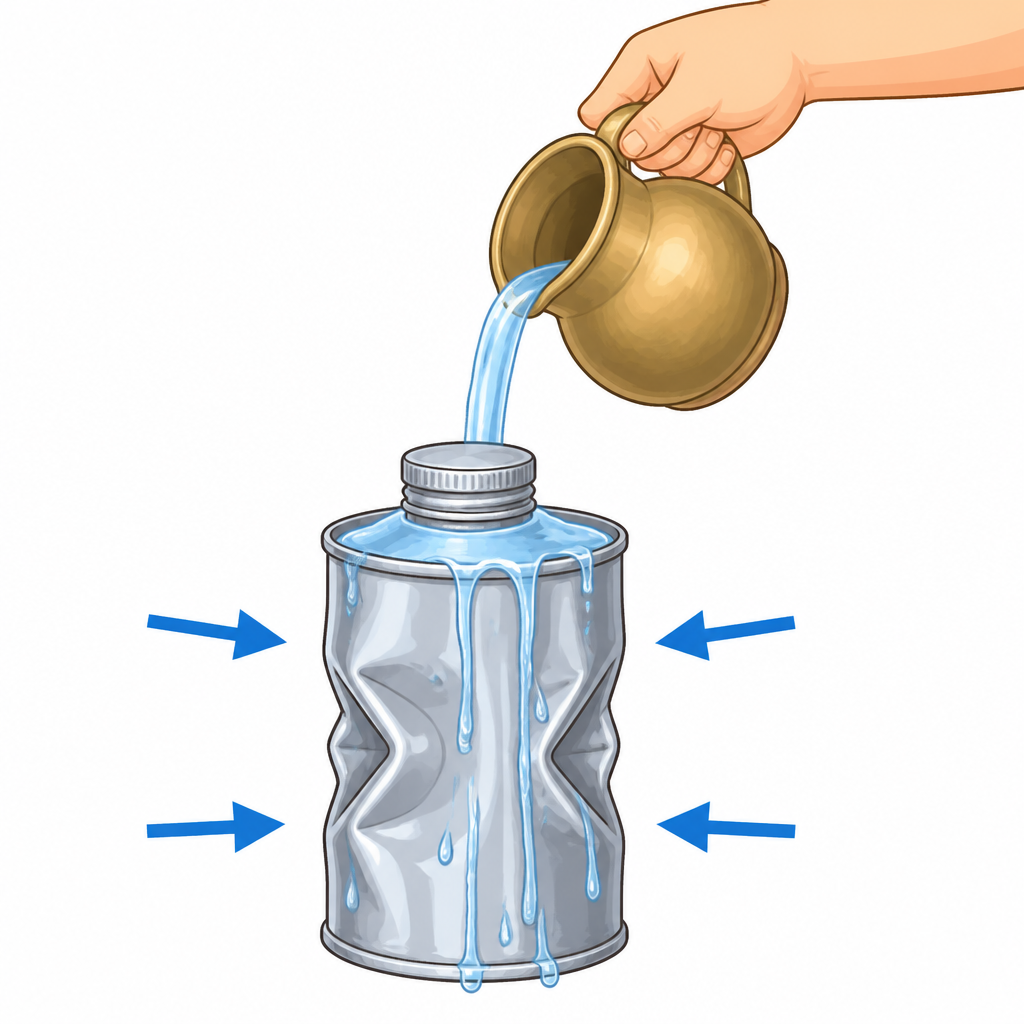
Before the can is heated, the pressure inside it and the pressure outside it are equal, so nothing happens to the can. When water is put in and the can is heated, the steam that forms pushes the air out, so very little air is left inside. After the cap is closed and cold water is poured on the can, the steam inside turns back into water and the pressure inside the can falls. The pressure of the air outside is now greater than the pressure inside, and as the outside air pushes to get in, the can is squeezed out of shape.
What Atmospheric Pressure Is
The Earth is wrapped all around by air. The region of air that covers the Earth is called the atmosphere. Air also has weight, and because of its weight it presses down towards the ground. This press of the air is called atmospheric pressure.
The atmosphere is the layer of air that covers the Earth all around.
Atmospheric pressure is the pressure that the air exerts on unit area of the Earth's surface.
The pressure of the air is greater at the surface of the Earth, and the higher you go above the surface, the more the atmospheric pressure falls. When you stand at the surface there is a thick layer of air above your head, but on a hilltop there is less air above you, so the pressure there is less as well.
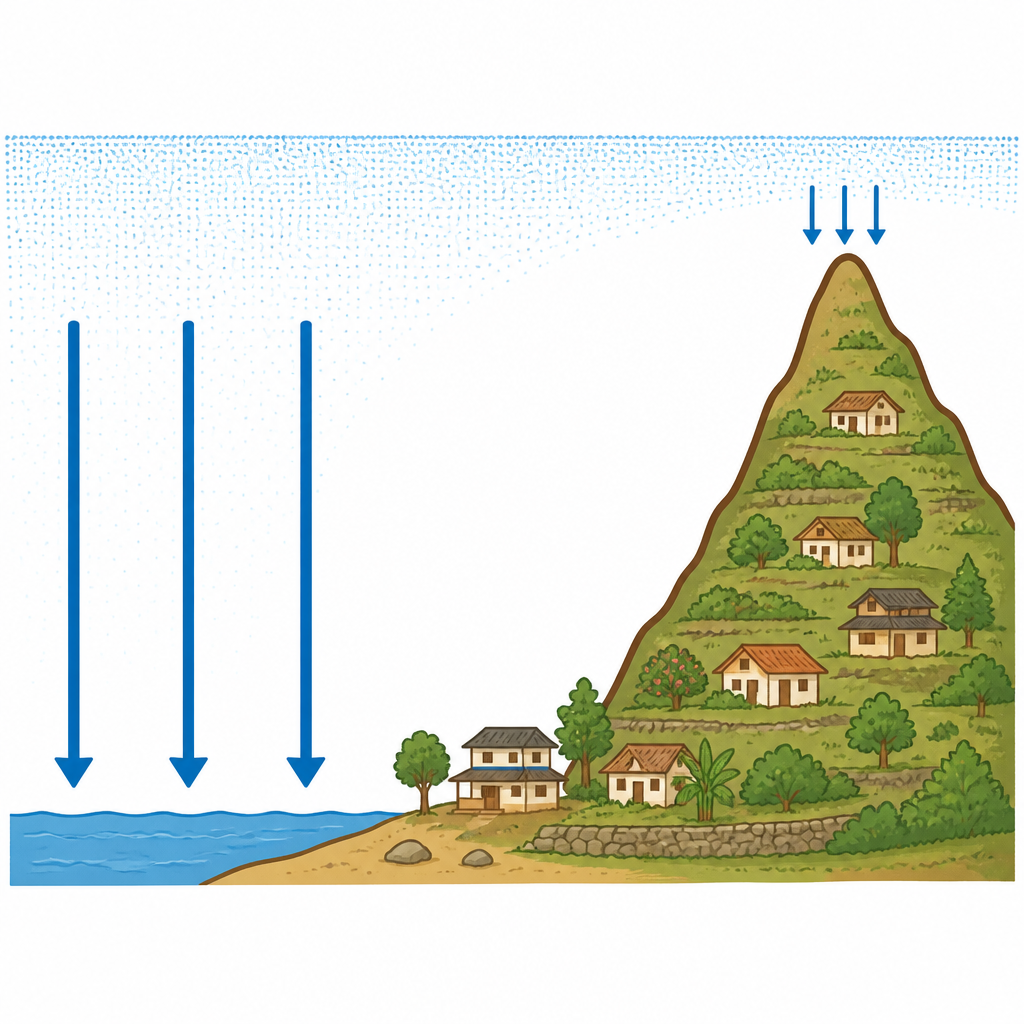
At sea level the atmospheric pressure is about \( 10^5 \) Pa, that is 760 mmHg. This amount is also called one atmospheric pressure. The unit mmHg means the height, in millimetres, of the column of mercury that such a pressure can hold up. Atmospheric pressure is measured with a barometer.
\[ 1 \text{ atm} = 760 \text{ mmHg} \approx 10^5 \text{ Pa} \]
At sea level the atmospheric pressure is 760 mmHg, and it keeps falling as you go higher.
Because atmospheric pressure changes from place to place over the Earth's surface, air blows from one place to another. Aeroplanes fly at great heights, and the air pressure inside them is controlled. Because of this the pressure of the air inside the aeroplane stays at a level that suits the body, and the passengers can breathe comfortably. Atmospheric pressure acts on every object on the surface of the Earth, and on living things as well.
The Manometer, an Instrument for Measuring Pressure
An instrument used to measure the pressure of a liquid or a gas is called a manometer, or a pressure gauge.
There are several kinds of manometer. Among them the U tube manometer is a simple device used for measuring pressure. It is filled with a liquid, usually mercury. In a U shaped manometer the level of the liquid in the two arms stands equal, and that equal level indicates atmospheric pressure. When a liquid or a gas presses on one of the two arms, the surface of the liquid in the other arm rises. The difference between the levels of the liquid shows the pressure. The greater the difference in height between the two surfaces, the greater the pressure being measured.
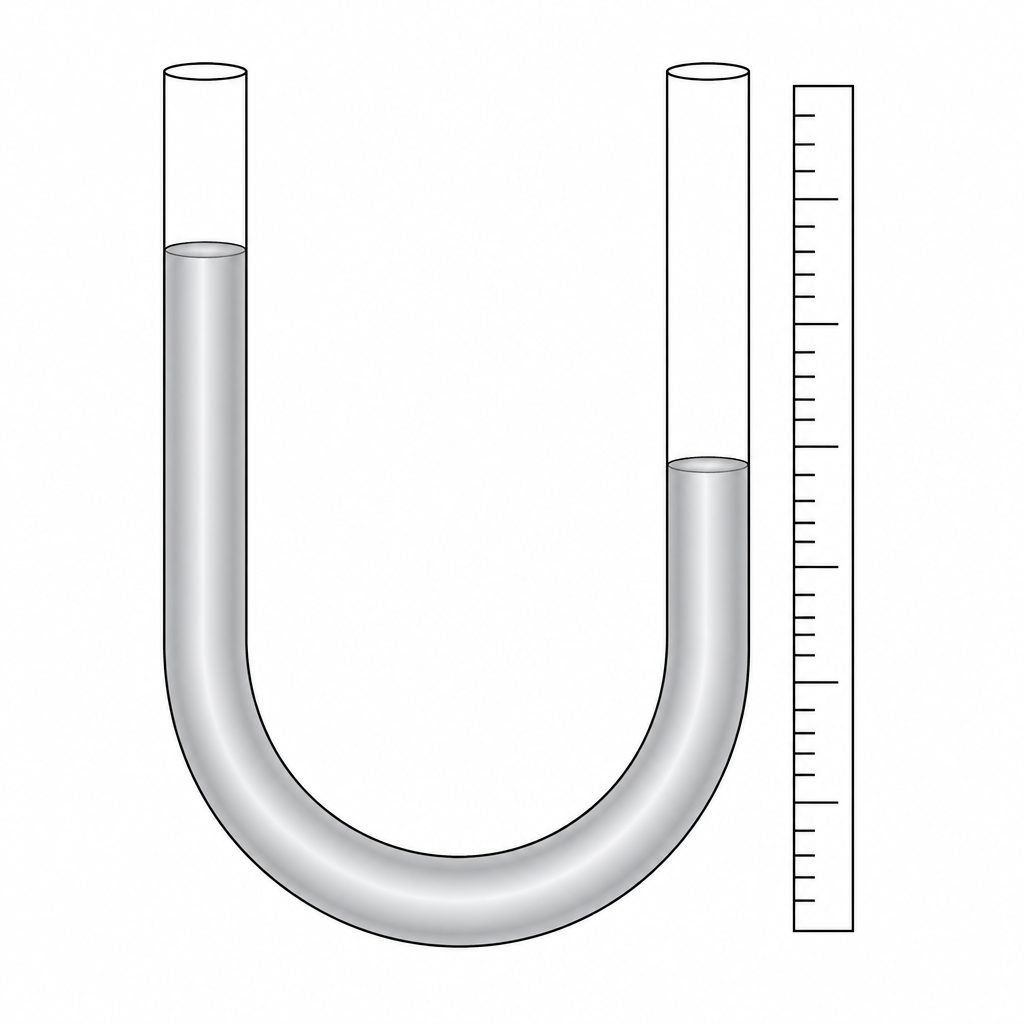
If your school has a manometer, you can use it with your teacher's help to measure the pressure of the air that different students produce with their lungs. Each of you blows into the same tube in turn, and by comparing how high the liquid rises you can tell whose lungs give the greater pressure.
Making a Simple Manometer
With a funnel, a balloon, a level pipe, a sheet of ply or a wooden plank, a scale and a few small nails or some glue, you can build a simple manometer yourself.
- Join the narrow end of the funnel to one end of the level pipe.
- Stretch the balloon over the wide mouth of the funnel and cover it.
- Bend the other end of the level pipe into a U shape and fix it to the ply or the wooden plank with small nails or glue.
- Fill the lower part of the U shaped pipe with water and mix some colour into the water.
- Fix a scale or a measuring tape on the right hand side of the U shaped pipe, parallel to the column of water.
- Now push the funnel, with its mouth covered by the balloon, down into a pot filled with some liquid.
- Watch whether the coloured water in the pipe rises or not.
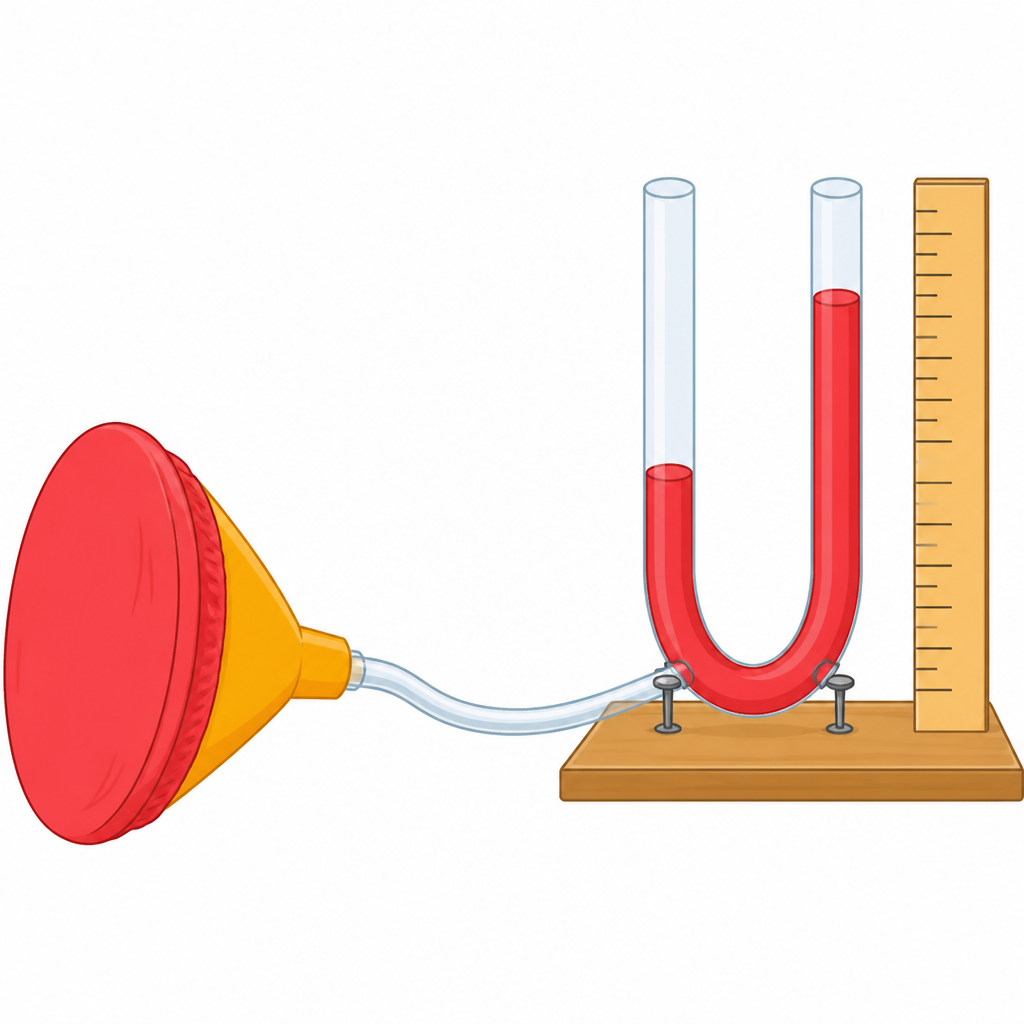
The deeper the funnel is pushed, the harder the liquid presses on the balloon. That press is carried by the air inside the pipe to the coloured water, and the surface of the water rises. In this way even a small device made at home can show a difference in pressure.
Devices That Work on Atmospheric Pressure
It is because of atmospheric pressure that many useful devices can work at all. Filling ink into a pen, drawing medicine into a syringe and working the pump that puts air into a bicycle tyre are examples. All of these devices depend on atmospheric pressure. In each of them, when the piston is pulled outward the pressure inside falls, and the atmospheric pressure outside then pushes the liquid or the air in. If there were no atmospheric pressure, none of these devices could be used. That is why atmospheric pressure matters so much.
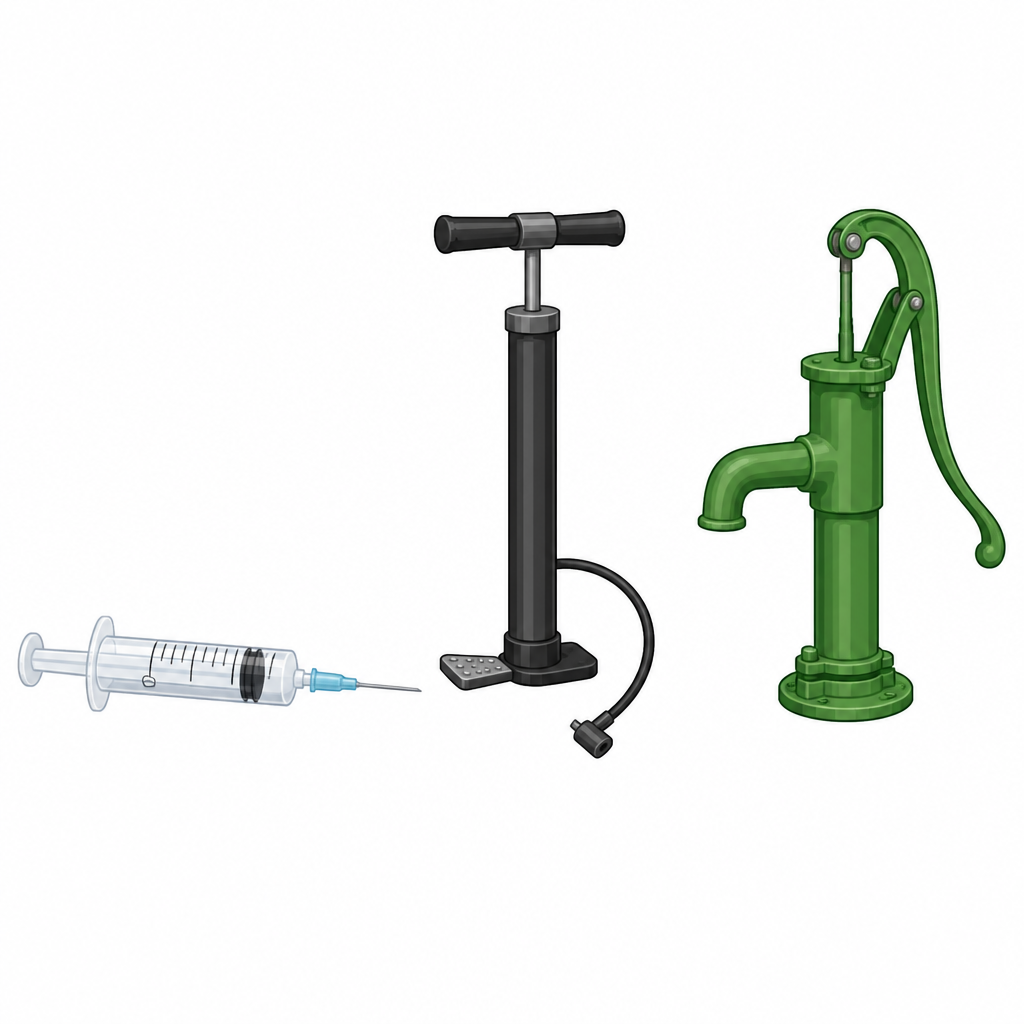
Do not think that a syringe pulls the medicine in by itself. When the piston is pulled, the pressure inside falls, and the atmospheric pressure outside pushes the medicine in. The pushing is done by the air outside.
A hand water pump, a drinking straw and the dropper of a pen work on the same principle. Look around your home and your neighbourhood for other devices that run on atmospheric pressure, make a list of them, and write down what each one does.
The full lesson is waiting for you
The notes are free to read in full. A free account opens the rest of the practice, and tracks your progress and confidence score for every subject. Presentations and videos need approval from Learn Yeti.