New Plants from a Plant's Own Parts
A plant carries on vegetative propagation at different stages of its life cycle. Nobody has to start it off, because it happens in nature by itself. A potato forgotten in the corner of a kitchen grows pale sprouts after a few days, and no one planted anything in it. A new banana shoot rises at the foot of the parent plant, and no one sowed a seed there. Reproduction that happens in nature from a plant's own vegetative parts is called natural vegetative propagation.
Natural vegetative propagation: the process in which new plants are produced by nature itself from a plant's vegetative parts, that is from the root, the stem or the leaf.
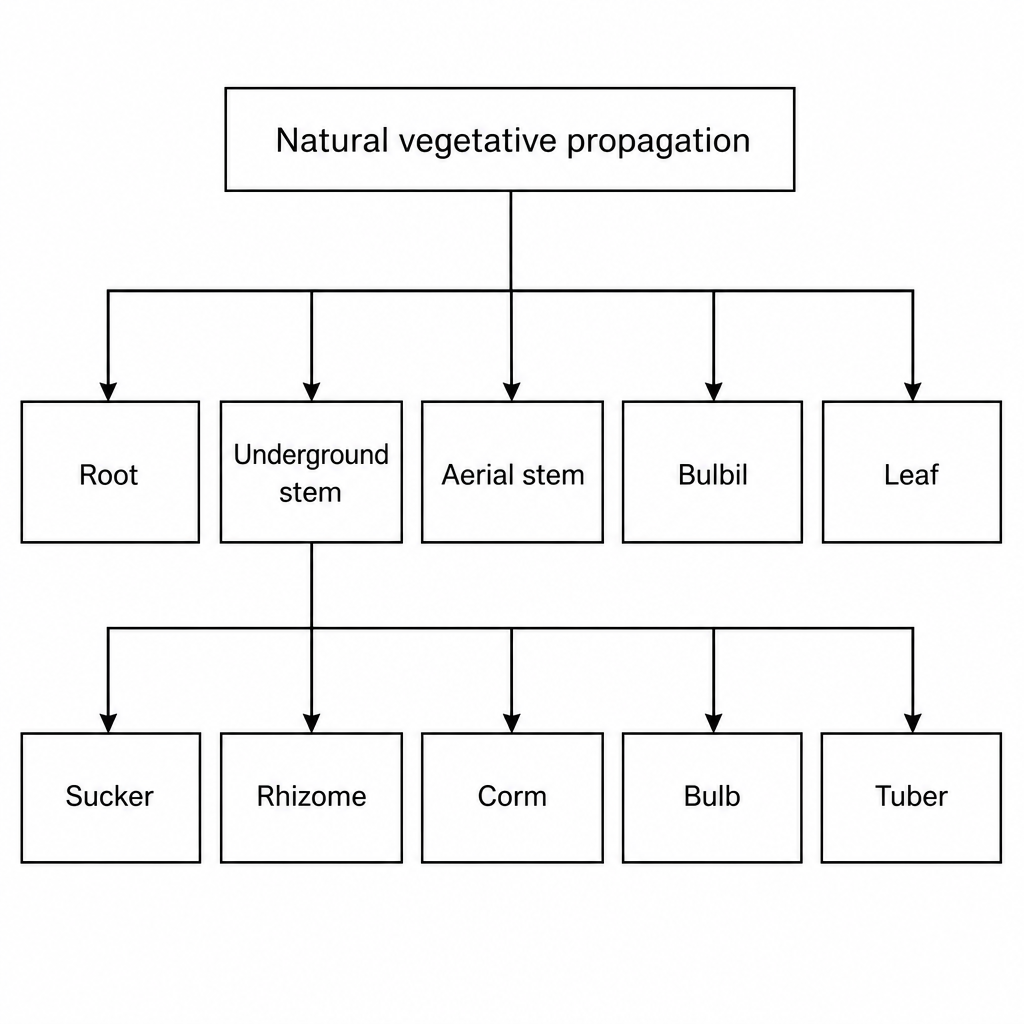
Natural vegetative propagation is of many kinds. It is found mostly in perennial plants, because a plant that lives on for years gets time to store plenty of food in its parts. Which part grows the new plant is not the same everywhere. It changes with the kind of plant and with its nature. Five parts do this work, and they are listed below.
- (a) Root
- (b) Underground stem
- (c) Aerial stem
- (d) Bulbil
- (e) Leaf
Propagation from the Root
A root does not only pull in water and minerals. In plants such as rose, sissoo and guava, small buds sit on the roots themselves. If those roots get separated from the stem for some reason, the buds go on growing and develop a stem. In this way even a piece of root that has been carried away from the parent plant can become a whole new plant.
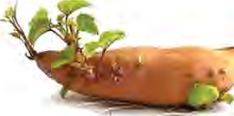
In plants such as asparagus, sweet potato and dahlia, the roots have stored a good amount of water and food. These roots develop a stem together with leaves. Roots then grow out from the base of that new stem, and it turns into a separate plant. The stored food is the new plant's own supply for its first days, which is why a sweet potato lying in soil can push out its first leaves without asking anything from outside.
Propagation from Underground Stems
Modified stems that lie under the ground are more capable of vegetative propagation. Being under the soil, they keep their stored food, they are safe from drying and from cold, and their buds stay protected. Such stems are of several kinds, namely the sucker, the rhizome, the corm, the bulb and the tuber.
Sucker: a rooted stem that comes out from the base of the aerial stem and becomes a new plant after separating from the parent.
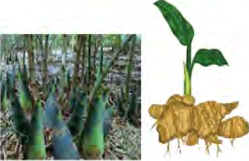
In mint, water lettuce, banana, bamboo and ground raspberry, a rooted sucker comes out from the base of the aerial stem. These separate from the parent and become new plants. The young bamboo shoots seen pushing up in a bamboo clump are suckers of this kind.
Rhizome: a modified stem that lies horizontally under the soil and has a good store of food in it.
The rhizome is a modified stem. It is found in ginger, turmeric, sweet flag and fern. A rhizome has a good store of food in it. A slender bud grows on it and a new plant is built up. If you look closely at a knob of ginger you can see small eye like buds, and it is exactly those buds that send up a green shoot once the ginger is put into soil.
Corm: a short, swollen modified stem under the soil, with knobs from which buds come out.
The modified stem found in taro and gladiolus is called a corm. Buds come out from its knobs, and those buds make new plants. Around one taro corm there are usually several smaller corms, and each of them can give a plant of its own.
Bulb: a round stem wrapped about with fleshy leaf scales that carry stored food.
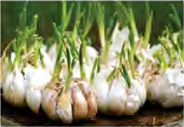
A bulb is a round stem. It is found in plants such as garlic, onion and tulip. Many new plants develop from a single bulb. If you break one head of garlic apart, you find many cloves inside it, and each clove gives a separate plant.
Tuber: a thick underground stem that carries eyes, and new plants sprout from those eyes.
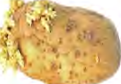
The underground stems of potato and yam are called tubers. They have eyes on them, and new plants sprout from those eyes. That is why a farmer planting potatoes chooses pieces that carry eyes. A piece with no eye gives no plant at all, however large it may be.
Propagation from the Aerial Stem
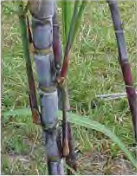
On the aerial stem of a plant there are slender buds at the nodes. In plants such as sugarcane and Bermuda grass, when a stem gets separated from the parent plant, the buds at the nodes go on growing, roots come out from the base of the bud, and it takes the form of a new plant. This is the reason sugarcane is planted by burying a piece of stem with nodes on it, laid flat in the soil, rather than by planting a whole plant.
Bulbils
In some plants a group of special buds forms at a node, at the edge of a leaf, or at the tip of the stem. Such a group is called a bulbil. Bulbils also form near the flower or above the fruit. Roots and shoots grow from a bulbil and a new plant is made. Pineapple, agave, sisal, lily, onion and garlic reproduce through bulbils. When a bulbil drops from the parent plant onto the soil, it takes root there and a new plant grows up.

Bulb and bulbil sound alike but they are not the same thing. A bulb is a round stem under the soil, like a head of garlic or an onion. A bulbil is a cluster of buds formed above the ground, at a node, at the edge of a leaf or at the tip of a stem. Swapping these two words is the commonest mistake made in this topic.
Propagation from Leaves
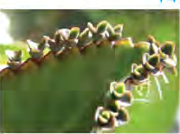
In plants such as bryophyllum and begonia, once the leaf is mature, slender buds begin to sprout from the lamina, from the veins and from the notches along the edge of the leaf. Those buds grow on and build a stem with roots and leaves, making a new plant. When that leaf falls onto the soil, a good number of new plants start growing from it independently. Since a single leaf can give a dozen plants, bryophyllum spreads quickly.
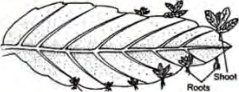
All five ways share one thing. Whichever part the new plant comes from, there must first be a bud on it, and that bud must put out roots of its own. Where there is no bud, there is no new plant.
Making a Collection of Propagating Parts
Making your own collection of propagating parts is the surest way to learn what each part really looks like. For this you need a knife, plastic bags, cardboard paper and gum.
- Collect samples from different plants that show vegetative propagation from root, stem and leaf.
- Keep the collected samples in a room for a few days and let them dry.
- Press the dried samples, put them into small plastic bags and close the bags so that no air gets in.
- Paste the bags with the samples in them onto the cardboard paper in neat rows. The collection is ready.
When cutting a sample, always keep the edge of the knife turned away from you and keep your fingers out of its path. Do the cutting only when your teacher is present.
Show the finished cardboard sheet in class, talk about what each sample shows, and then keep it safely in the laboratory.
All Five Ways at a Glance
| Part | How the new plant starts | Examples |
| Root | Buds on the root, or a food storing root, develop a stem | Rose, sissoo, guava, sweet potato, dahlia |
| Sucker | A rooted side shoot comes from the base of the stem | Banana, bamboo, mint, ground raspberry |
| Rhizome | A slender bud grows from the horizontal underground stem | Ginger, turmeric, sweet flag, fern |
| Corm | Buds push out of the knobs and make new plants | Taro, gladiolus |
| Bulb | Many plants grow up from one round stem | Garlic, onion, tulip |
| Tuber | Shoots sprout from the eyes | Potato, yam |
| Aerial stem | Buds at the nodes grow and root from their base | Sugarcane, Bermuda grass |
| Bulbil | A cluster of buds drops and puts out roots and a shoot | Pineapple, agave, sisal, lily, onion, garlic |
| Leaf | Buds sprout at the notches and form a stem with roots | Bryophyllum, begonia |
None of these ways involves the joining of sex cells, so the new plant turns out just like the parent. That is why every plant spread from one knob of ginger tastes the same.
The full lesson is waiting for you
The notes are free to read in full. A free account opens the rest of the practice, and tracks your progress and confidence score for every subject. Presentations and videos need approval from Learn Yeti.