Two Routes to New Offspring
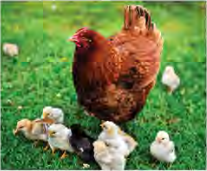
Every living thing brings new living things of its own kind into the world. A hen hatches chicks, a maize plant carries a cob, and the grains on that cob grow into fresh maize plants. In well developed organisms the male and the female carry separate reproductive organs. Those organs make male and female sex cells, and a new life begins only after the two cells join. Reproduction of this kind needs two parents.

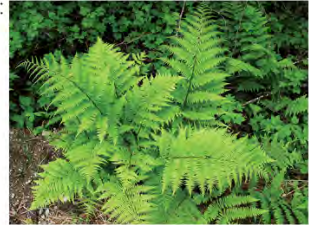
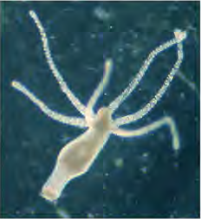
Not every organism follows that route. A fern carries no flower and no seed, yet new ferns keep appearing around an old one. In the pond animal called hydra a small bulge grows out from the side of the body, and within days that bulge separates and swims off as another hydra. No male cell and no female cell take part. In such organisms a specialised part of the body itself breaks away, sprouts, or makes special reproductive units, and a new organism develops from it.
What Asexual Reproduction Means
Asexual reproduction is reproduction in which no sex cells are made and none are joined. A new organism grows from specific reproductive units of one parent body.
This kind of reproduction is found in almost all living things, animals and plants alike. It is quick, because one parent is enough and many offspring can appear at the same time. Since the offspring grow out of the parent's own body, their build, colour and other features stay the same as the parent's. Asexual reproduction happens in several different ways.
One parent is enough, and the offspring turns out to be almost an exact copy of that parent.
The Six Methods
- Fission: a single cell divides and the pieces become new organisms.
- Budding: a bud grows out from the side of the body and separates.
- Fragmentation: the body breaks into pieces and every piece grows.
- Regeneration: a broken off part grows back into a complete organism.
- Sporulation: spores are produced and each one grows into a new plant.
- Parthenogenesis: a new organism forms from an egg that was never fertilised.
Fission
Fission is the process in which the body of an organism splits and the parts become new organisms. It takes place in single celled prokaryotes and in protists.
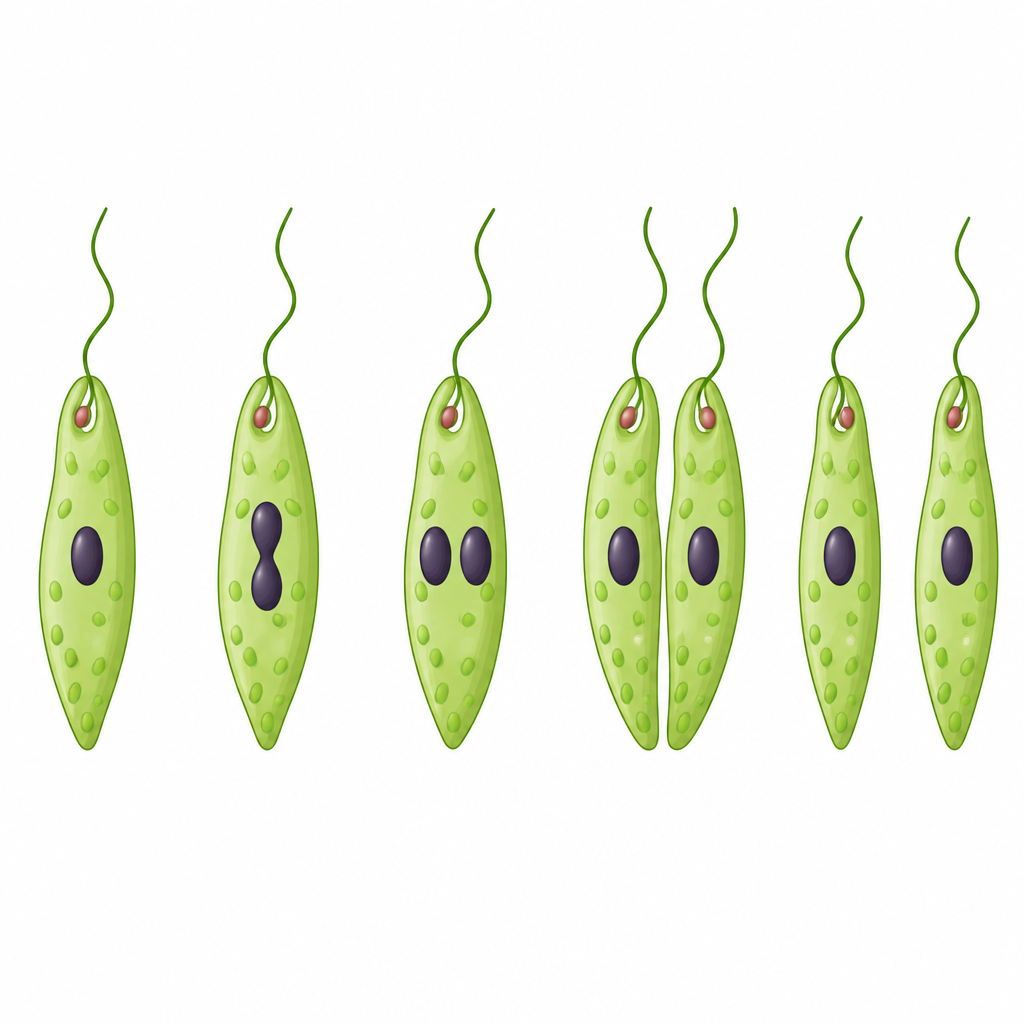
Fission happens in two ways, binary fission and multiple fission. When the cell of a single celled organism divides into two equal parts and each part becomes a new organism, that is binary fission. The nucleus of the cell divides first, the cytoplasm divides next, and at the end two separate organisms are ready.
In binary fission the body splits either along its long axis or across it. A split along the long axis is called longitudinal binary fission, and a split across the body is called transverse binary fission. Amoeba, euglena and paramecium are animals that divide by binary fission, and the same process goes on in single celled plants such as bacteria, chlorella and anabaena.
In multiple fission the body, which is a single cell, divides into more than two parts, and every part grows into a new organism. This is seen mostly in protists and algae. Plasmodium, chlamydomonas and vorticella reproduce in this way. Because many offspring appear at once, it is a fast way of increasing numbers.
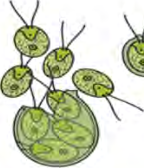
Laboratories keep permanent slides of these organisms. Looking at them through a microscope lets you pick out the stages of fission for yourself.
- Collect permanent slides of binary and multiple fission in amoeba, paramecium, euglena, plasmodium and chlamydomonas.
- Place each slide on the microscope and observe it.
- Draw what you see, show the drawings to your teacher, and discuss the asexual reproduction going on in those organisms.
Budding
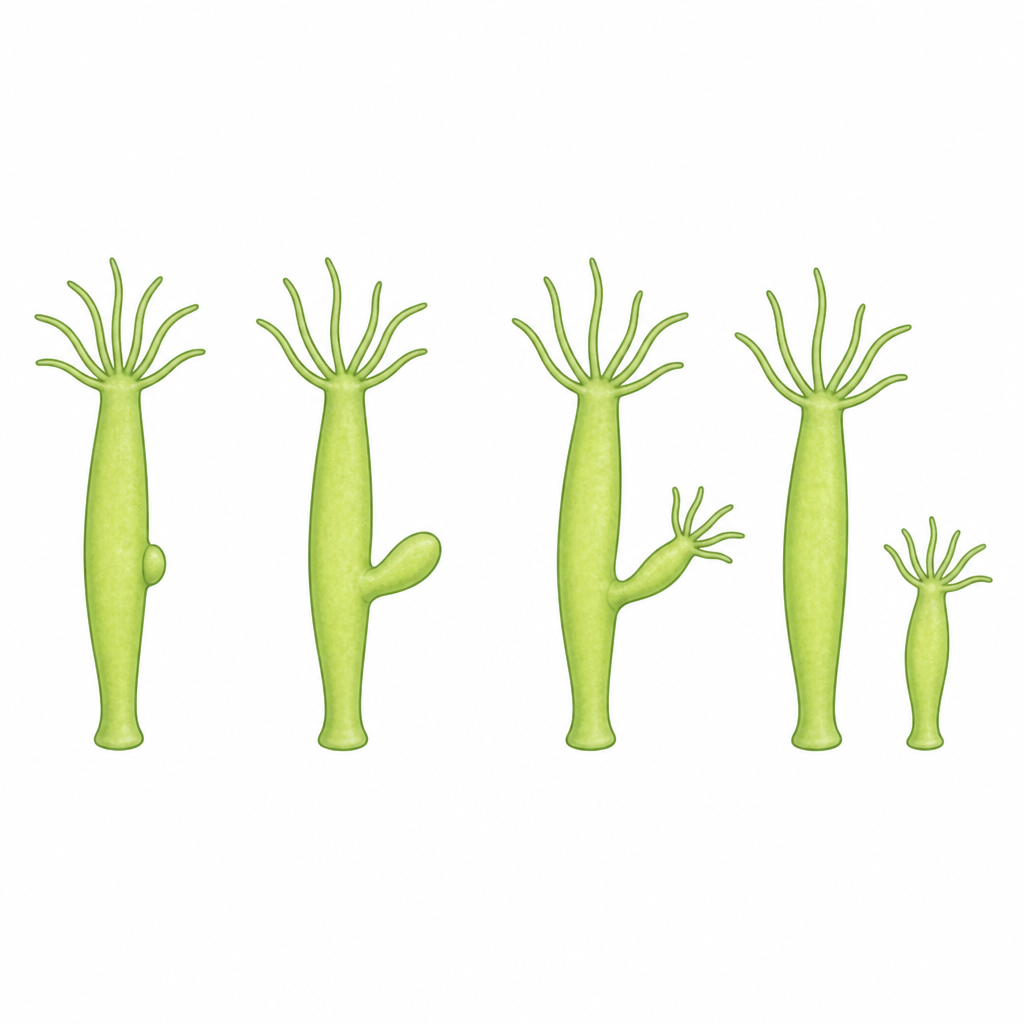
Budding is the process in which a small outgrowth called a bud appears on the side of the body, grows larger, separates from the parent and becomes a new organism.
Yeast, hydra, taenia, coral and jellyfish reproduce by budding. A small swelling first appears on the wall of the parent's body. That swelling keeps growing and slowly takes the shape of the parent. In hydra a tiny mouth and tentacles even appear on the bud itself. In the end the bud breaks away from the parent and starts living as an organism of its own. Sometimes the bud stays attached instead of breaking off, and that is how large colonies of animals like coral are built up.
Fragmentation
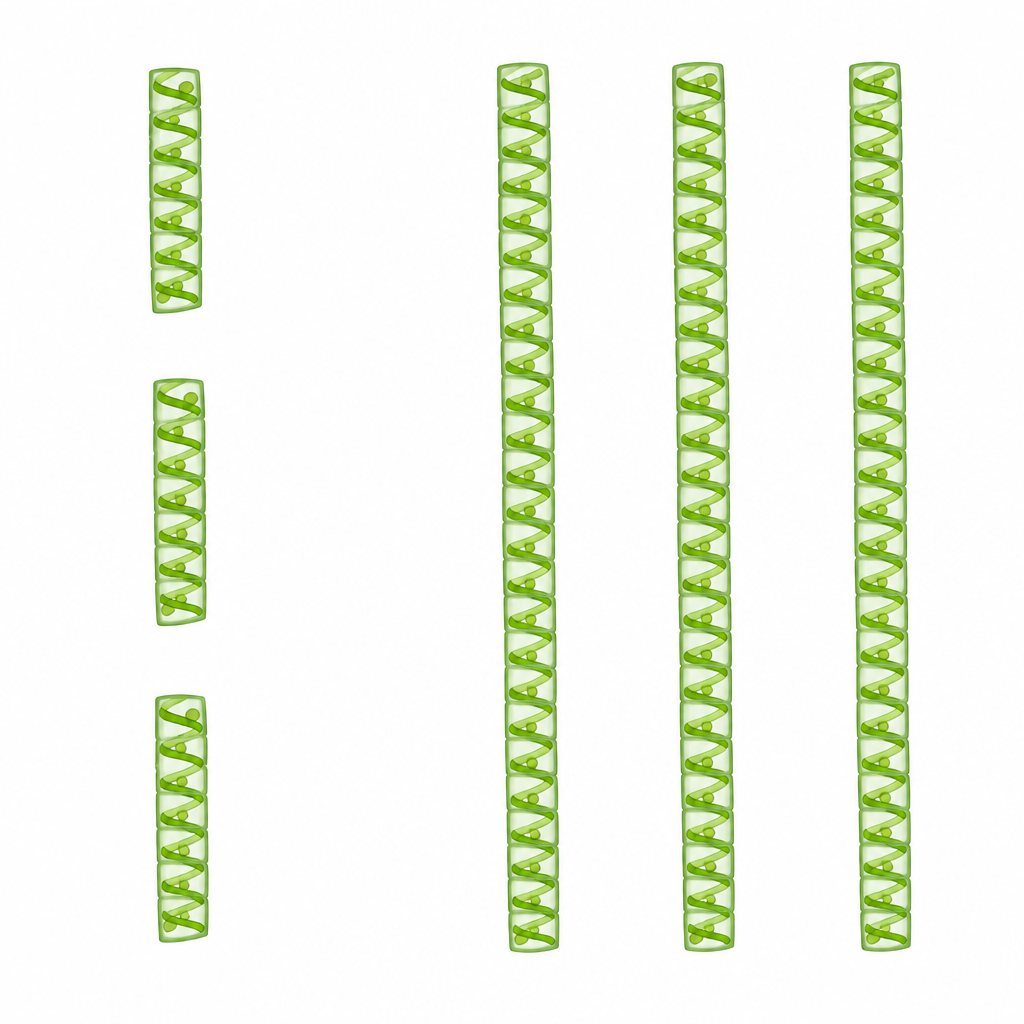
Fragmentation is the process in which the body of an organism breaks straight into pieces because of wind, water, human activity or the movement of animals, and each piece grows and develops into a new organism.
It happens mostly in plants, for example in spirogyra, marchantia, ferns, lichens and mucor. The green thread of spirogyra that floats in a pond is broken easily by moving water or by animals brushing past it. If one thread breaks into three pieces, all three keep growing longer, and within a few days there are three separate spirogyra threads. The parent makes no special preparation here. The breaking itself is the start of reproduction.
Regeneration
Regeneration is the process in which a part that has broken off an organism grows and becomes a complete organism.
It is found mostly in animals, for example in hydra, tapeworm, planaria, starfish, earthworm and leech. The part that has broken away from the parent starts growing again and takes the shape of a new organism. If a planarian is cut across the middle, the front piece grows a new tail and the back piece grows a new head, so two planarians are formed. If a starfish loses one arm, that arm can grow the rest of the body and become a whole starfish.
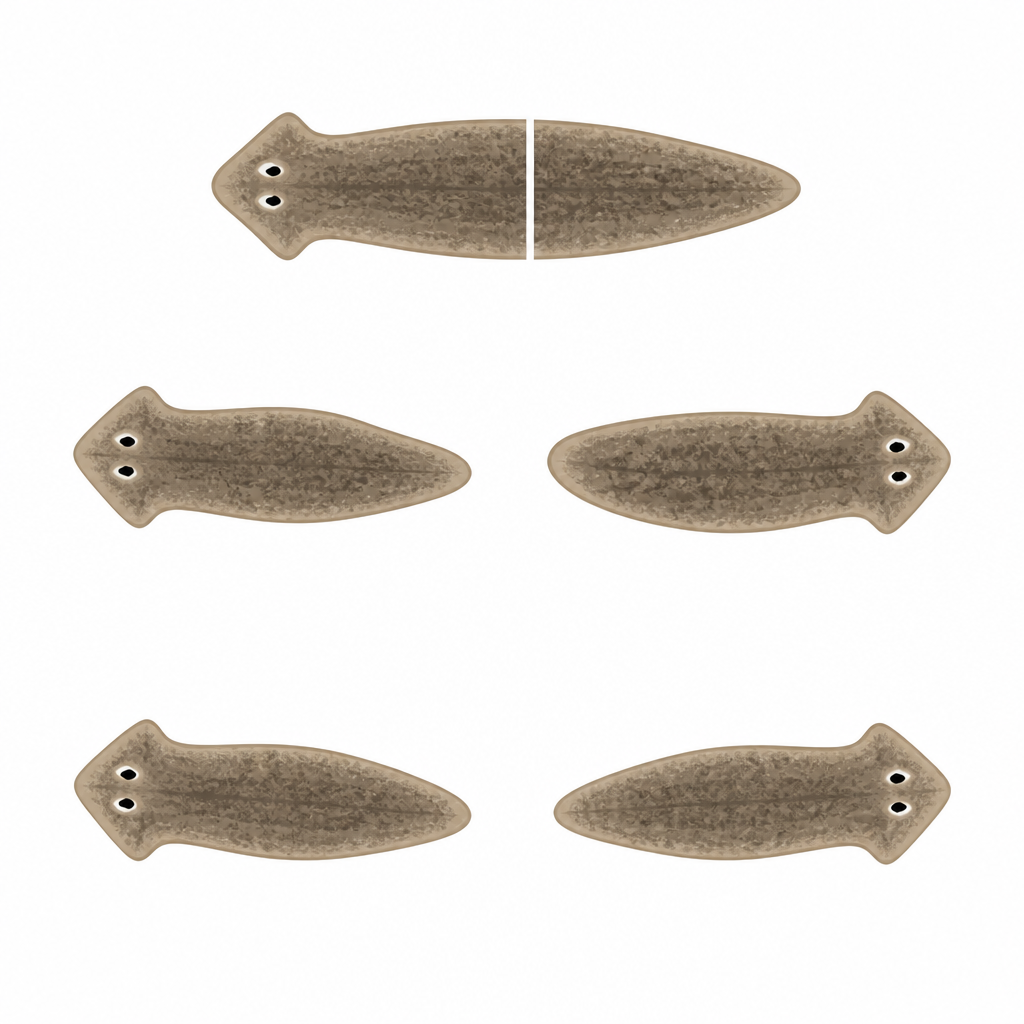
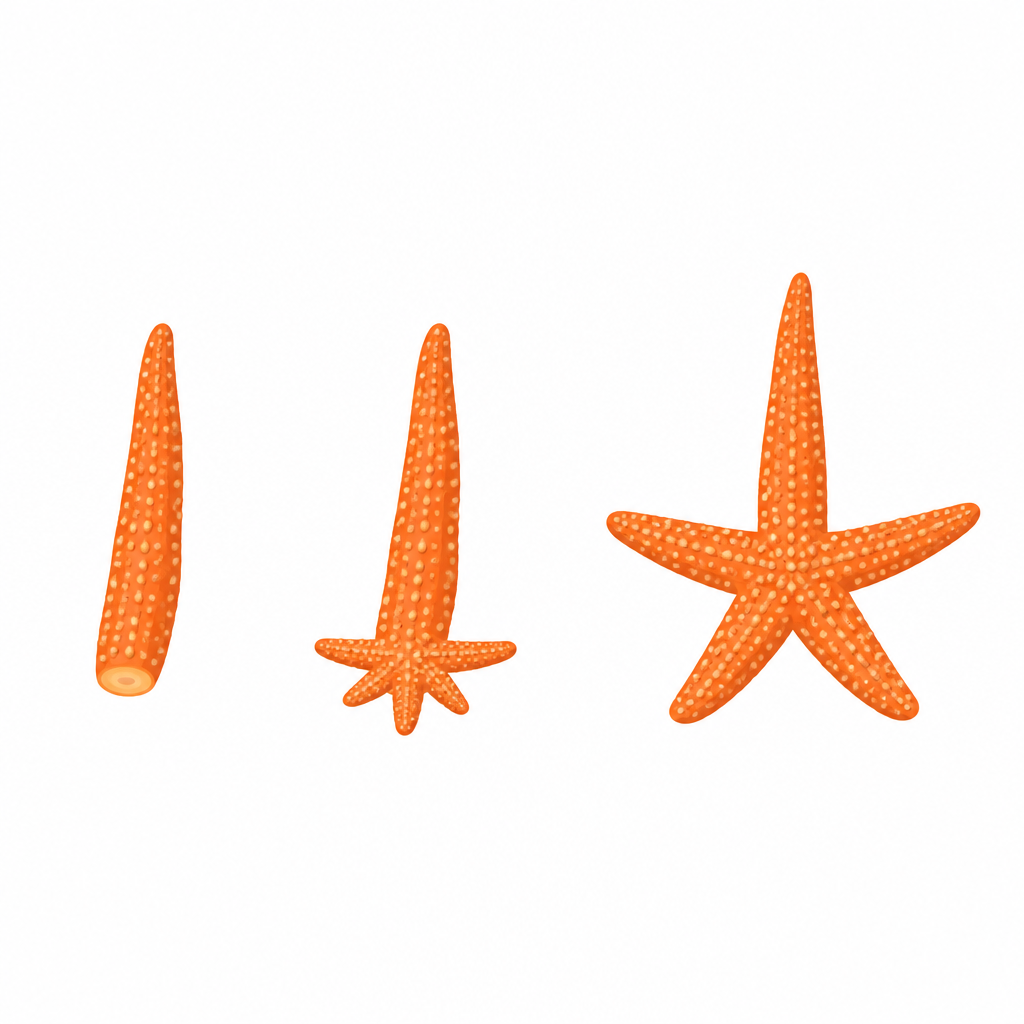
Fragmentation and regeneration look alike but they are not the same. In fragmentation the breaking of the body is itself the ordinary way of reproducing, and every piece is of the same kind. In regeneration the separated part has to grow back the missing organs before it becomes a complete organism.
Sporulation
Ferns, mushrooms, mucor and marchantia reproduce asexually by producing spores. On the underside of a fern leaf you can see black, brown or yellow dots. Each dot is a cluster called a sorus, and the spore making parts lie inside it. For a plant that never bears a flower, this is the reproductive part.
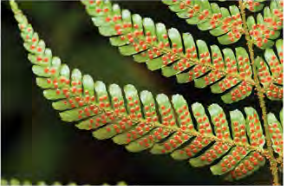
A spore is a special kind of reproductive unit. It is made of a single cell, and a new plant grows from this one unit.
A sporangium is the bag like part inside which spores are produced.
Sporogenesis is the name given to the process by which spores are produced.
When the spores are ripe the sporangium bursts and the spores scatter into the air. A spore carried by the air germinates and grows into a new plant if it lands on a damp place. Since thousands of spores leave a single leaf, ferns and mushrooms spread quickly wherever the ground stays wet. Reproduction that takes place through the production of spores is called sporulation.
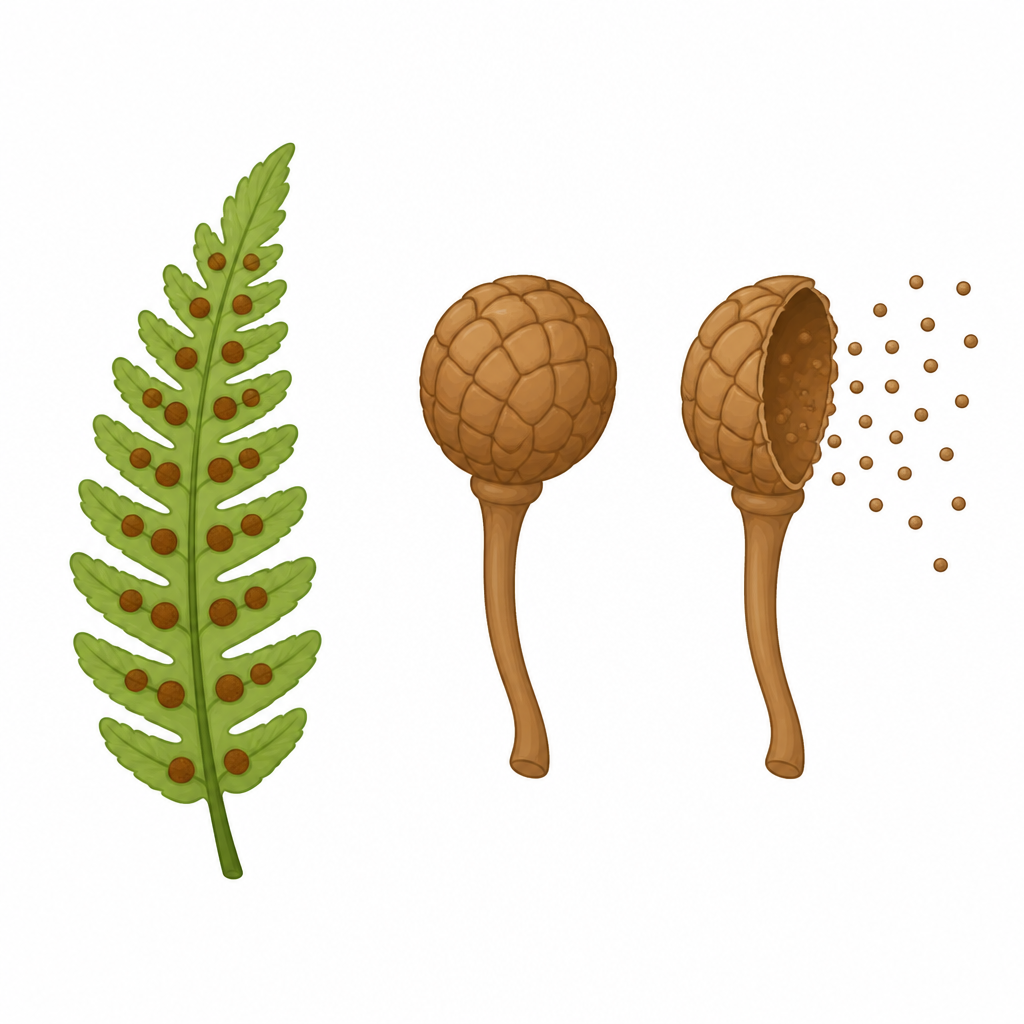
A spore and a seed are not the same thing. A seed forms after fertilisation and carries an embryo inside it, while a spore is a single celled reproductive unit that forms without any fertilisation. So the correct statement is that a fern does not produce seeds.
Studying Fern Spores Under a Microscope
Aim: to study the spores of a fern. Materials needed: a fern leaf carrying spores, a simple microscope, a slide and a brush.
- Collect a fern leaf that has black, brown or yellow dots of sori on its underside.
- Using the brush, shake the spores from those dots down onto the slide.
- Put the slide under the simple microscope and look at the shape and build of the spores.
- Discuss the build and the features of the spores you have seen with your friends, draw them, and present the drawings in class.
The slide is thin glass, so hold it only by its edges and set it down gently. Never turn the microscope mirror straight at the sun and then look into the eyepiece.
Parthenogenesis
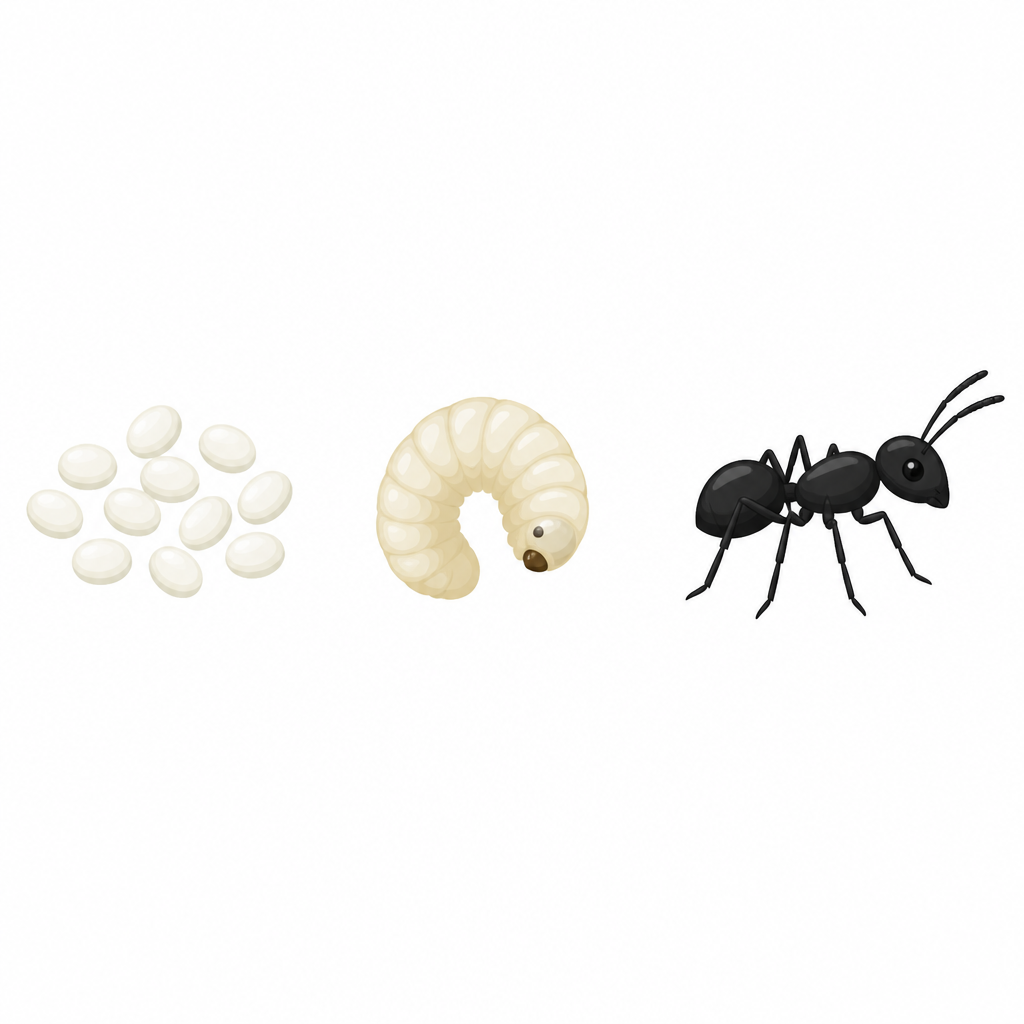
Parthenogenesis is the process in which a new organism develops from an egg that has not been fertilised.
It is found both in animals and in plants. In plants such as apple, pineapple and cucumber the ovary and the ovule change directly into fruit and seed. In ants, termites and grasshoppers the young develop from eggs without any fertilisation. In other words the egg does not wait for a male cell. It simply begins to develop on its own.
The Six Methods at a Glance
| Method | What happens to the body | Examples |
| Fission | The cell divides into two or more parts | Amoeba, euglena, paramecium, bacteria |
| Budding | A bud grows at the side and separates | Yeast, hydra, taenia, coral |
| Fragmentation | The body breaks straight into pieces | Spirogyra, marchantia, fern, mucor |
| Regeneration | A broken part grows back into a whole organism | Planaria, starfish, earthworm, hydra |
| Sporulation | Spores are formed inside a sporangium | Fern, mushroom, mucor, marchantia |
| Parthenogenesis | An unfertilised egg develops by itself | Ants, termites, grasshoppers |
Characteristics of Asexual Reproduction
- No sex cells are produced, and none are joined.
- There is no idea of male and female in it.
- It can take place from almost any part of the organism's body.
- Specialised reproductive units are produced in it.
- The offspring produced in this way show hardly any hereditary variation.
These features show both the strength and the weakness of asexual reproduction. No partner has to be found and numbers rise quickly, so such organisms spread fast when conditions suit them. But because every offspring is alike, a change in the surroundings or a new disease can put the whole group in danger at once.
The full lesson is waiting for you
The notes are free to read in full. A free account opens the rest of the practice, and tracks your progress and confidence score for every subject. Presentations and videos need approval from Learn Yeti.