How a Seed Is Formed
An animal keeps its kind going by producing young ones. A plant does the same work in its own way, and the special unit it builds for that job is the seed. After fertilisation takes place in the flower, a zygote is formed inside the ovule. That zygote grows, develops and begins to divide until it reaches the embryo stage. Once the embryo is fully developed, the ovule itself changes into a unit with a special structure that is able to build a whole new plant. This unit is what we call a seed.
Seed: a seed is the part of a plant's life cycle that develops after fertilisation and carries within it the ability to produce a new plant.
A seed holds the same place in a flowering plant that a young one holds in an animal's reproduction cycle. But not every plant has seeds. Ferns and mosses never bear flowers, so they never build seeds either. They start new plants from spores instead.
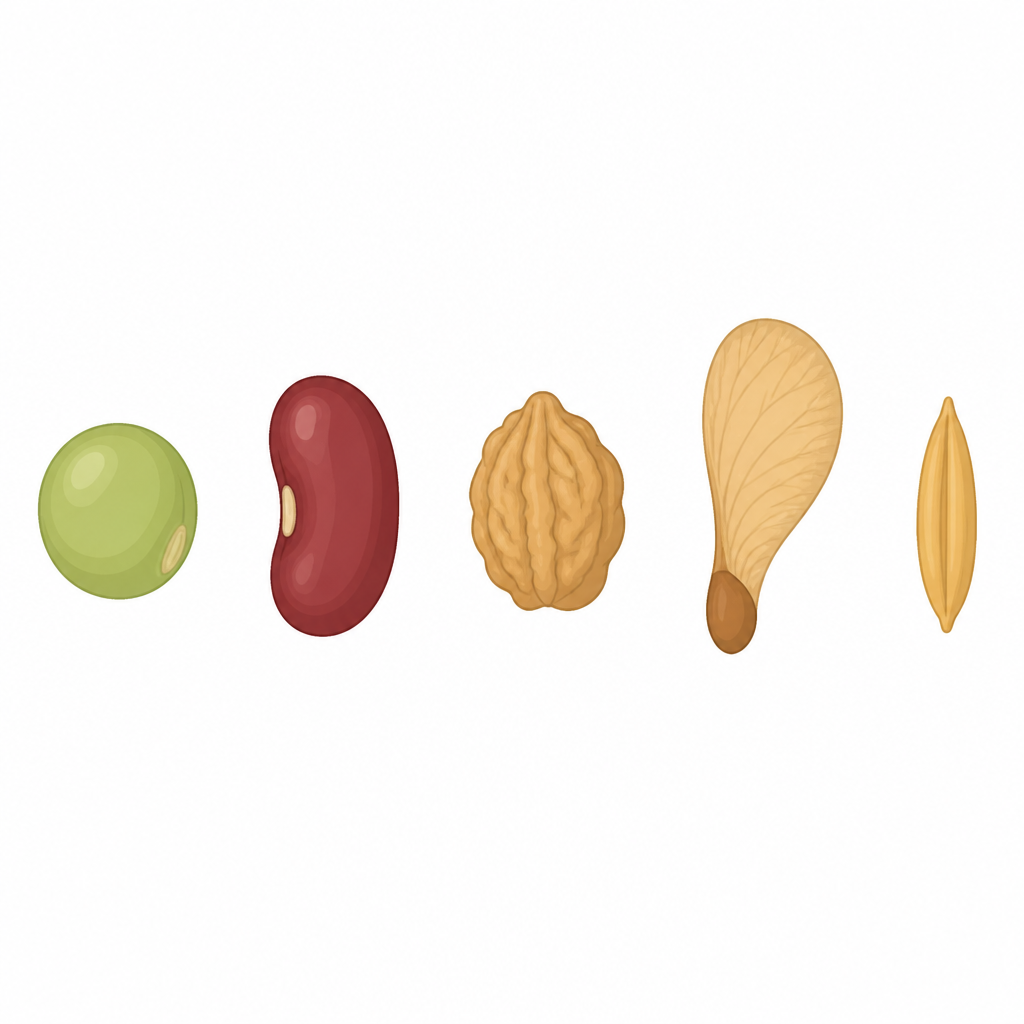
Seeds run from the extremely small to the very large. An orchid seed is little more than a speck of dust, while a coconut seed has to be carried in both hands. Their shapes differ just as much. Seeds may be round, oval, wrinkled, wing-like or long and narrow.
What Dispersal of Seed Means
Seeds are held inside fruits. Some fruits carry only one seed, while others carry a great many. As the fruit ripens the seeds ripen with it, and then they fall away from the parent plant and scatter. The seeds of some plants travel a long distance with the help of a carrier.
Dispersal of seed: the process in which a seed scatters from the parent plant and is carried from one place to another, so that it can germinate and grow into a new plant, is called dispersal of seed.
Dispersal is also a feature of a plant's adaptation. The seeds reach a new environment, germinate there, and grow into plants that suit the conditions they land in.
The Five Ways Seeds Travel
In general, the dispersal of seed takes place through the following processes:
- (a) dispersal by wind
- (b) dispersal by water
- (c) dispersal by animal
- (d) dispersal by gravity
- (e) dispersal by explosion
Dispersal by Wind
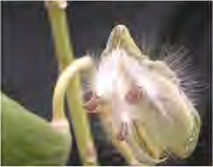
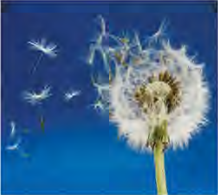
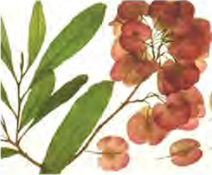
The seeds of plants that produce small and light seeds are lifted by the wind and carried far away. Such seeds have a feather-like structure, wings, or air sacs, and these help them to stay up in the air. Once the fruit ripens, the seeds scatter into the air and begin to fly, and in this way a seed is dispersed to another place. The seeds of the silk cotton tree, calotropis, kans grass, ordinary grasses, cotton and maple are all dispersed by wind.
When the fruit of the calotropis splits open, seeds with silky hairs come out, and even a light gust of wind is enough to lift them. A maple seed carries a flat wing, so as it falls it spins like a tiny propeller and lands well away from the tree.
Dispersal by Water
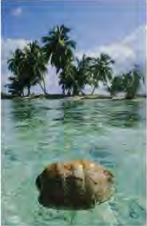
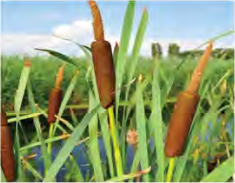
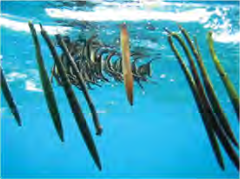
The seeds of hydrophytes and of plants found along the banks of water bodies and in wetlands are dispersed by water. These seeds are water proof, light, and of a floating nature. When the fruit ripens the seeds drop into the water, and the current carries them a long way off. The seeds of lotus, lily, mangrove, palm and cattail are dispersed through water.
A coconut has a thick, fibrous husk with air trapped inside it. That trapped air keeps the coconut afloat for months at sea, so it can reach a far shore and sprout there.
Dispersal by Animals
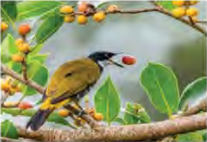
Edible fruits are eaten by living beings such as monkeys, deer, squirrels, rats, rabbits, birds and bats. These animals digest the soft part of the fruit, but the hard covering keeps the seed from being digested, and it is passed out with the droppings at some other place. Human beings take part in this kind of dispersal too, carrying seeds to many places. Today the seeds of food crops have been spread by people all over the world.
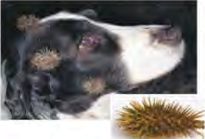
The seeds of burr plants, whose fruits are covered with tiny hooks, catch in the hair on an animal's body and travel far along with it. The seeds of Java plum, Terminalia chebula, Terminalia bellerica, Emlica, guava, pears, Myrica and Himalayan raspberry are all dispersed by animals.
Dispersal by Gravity
This is the ordinary natural process by which seeds are dispersed. When the fruit ripens, gravity brings it down to the ground, and the seed is dispersed. On the surface of the ground the fruit rots and the seed comes out of it, though in some plants the fruit splits open and lets the seed out. Seeds with a hard body and a higher density are dispersed by this method. The seeds of mango, apple and coconut are dispersed in this way.
One plant's seed can be dispersed by more than one method. A coconut is floated away by water, and the same coconut also falls to the ground by gravity once it ripens. So do not tie a plant to a single method when you answer.
Dispersal by Explosion
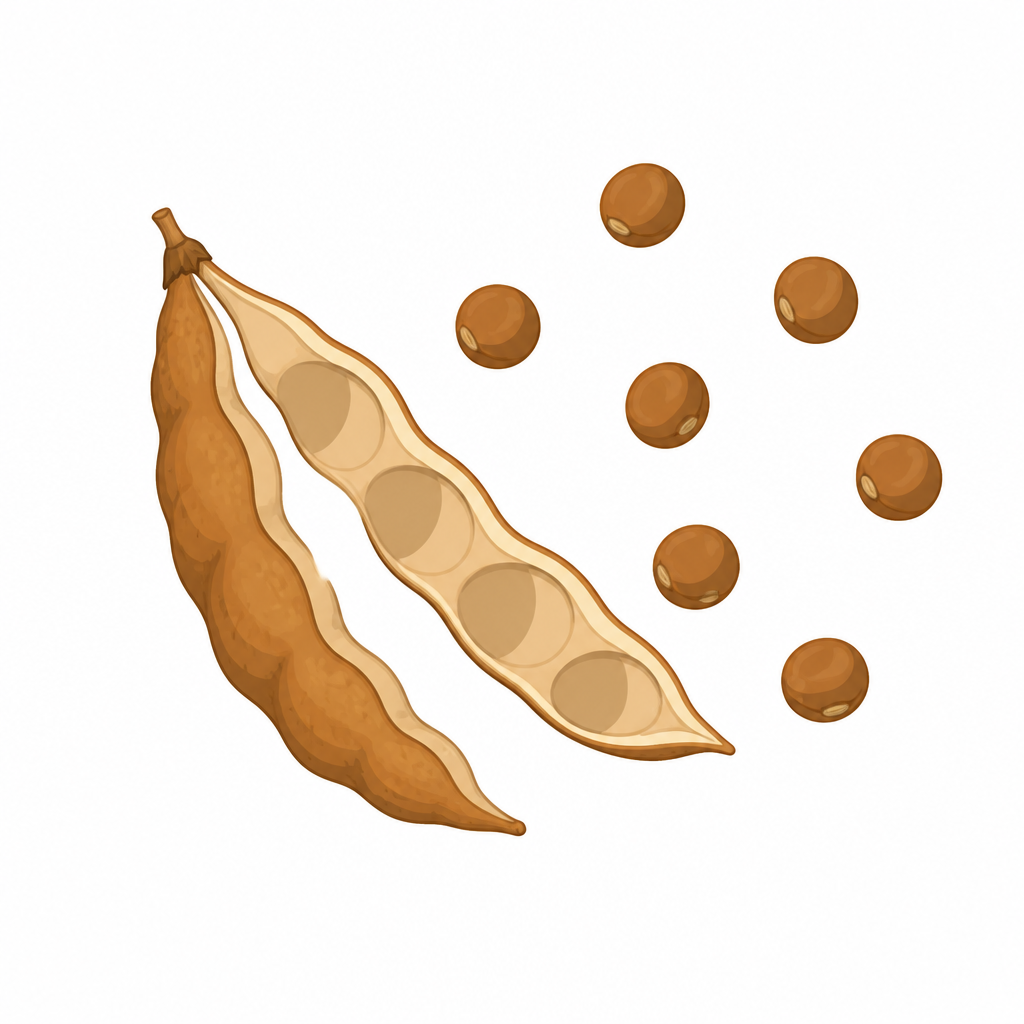
After the fruit ripens, sunshine, water, plant hormones and the change that takes place in the cells inside the fruit, known as turgor change, build up a pressure that pushes outward from the fruit until the fruit bursts. As it bursts the seeds are flung out with a sound. The seeds of mustard, okra, bean, pea, ipil and chestnut are dispersed by explosion.
Turgor change: the change that comes about inside a fruit's cells as the amount of water in them rises or falls, which builds up pressure inside the fruit and finally splits it open.
The Five Methods Side by Side
| Method | What the seed is like | Examples |
| By wind | Small, light, with feathery hairs or wings | Silk cotton, calotropis, kans grass, cotton, maple |
| By water | Water proof, light, able to float | Lotus, lily, mangrove, palm, cattail |
| By animals | Inside an edible fruit, or hooked so it sticks | Java plum, Terminalia chebula, Terminalia bellerica, guava, Himalayan raspberry, burrs |
| By gravity | Hard-bodied and of higher density | Mango, apple, coconut |
| By explosion | Held in a pod that bursts as pressure builds | Mustard, okra, bean, pea, ipil, chestnut |
Looking at Seeds Yourself
Collect ten different kinds of seeds from around you. Look at each one closely, and from its shape, its weight and its structure work out how it is likely to travel. Then fill in a table like this one.
| Name of the seed | Method of dispersal | Estimated distance of dispersal |
| Cotton | By wind | Very far |
| Coconut | By water | Very far |
| Mango | By gravity | Close to the foot of the tree |
| Burr | By animals | As far as the animal goes |
Never put a seed in your mouth and never try to taste one. Some seeds, such as those of thorn apple and crab's eye, are poisonous. Wash your hands with soap and water once the work is over.
The full lesson is waiting for you
The notes are free to read in full. A free account opens the rest of the practice, and tracks your progress and confidence score for every subject. Presentations and videos need approval from Learn Yeti.