What Germination of a Seed Means
A ripe seed looks dry and lifeless, but a tiny living embryo is resting inside it. When the right conditions arrive, that embryo wakes up and the first root system and the first shoot system of a new plant begin to develop out of the seed. This process is called germination of the seed. Paddy seed sprouting four or five days after it is sown, or soaked black gram splitting open in two days, are both germination.
Germination of seed: the process in which the first root system and the first shoot system of a new plant develop out of a seed.
Not every seed has the same power to sprout. Some seeds come up within days of sowing, some take much longer, and some lose the power quite quickly. What is remarkable is that a well dried seed can keep its germination capacity even after being stored for years. That is why a farmer can save this year's seed and sow it next year.
Germination capacity: the power a seed holds to sprout, which differs from one kind of seed to another.
Dormancy: The Seed's Resting State
A seed lying in a store looks as though nothing is happening to it. Inside, its metabolism is running extremely slowly, the embryo is at rest, and the seed is simply waiting. This inactive state, in which the seed keeps both its life and its power to sprout for a long time, is called dormancy. It is not a weakness of the seed, it is a way of surviving. A seedling that came up in the cold of winter or in the middle of a drought would die. Dormancy lets the seed stay asleep through that time and sprout only when enough water and a suitable temperature arrive.
Dormancy: the inactive state of a seed in which it keeps its life and its germination capacity for a long time.
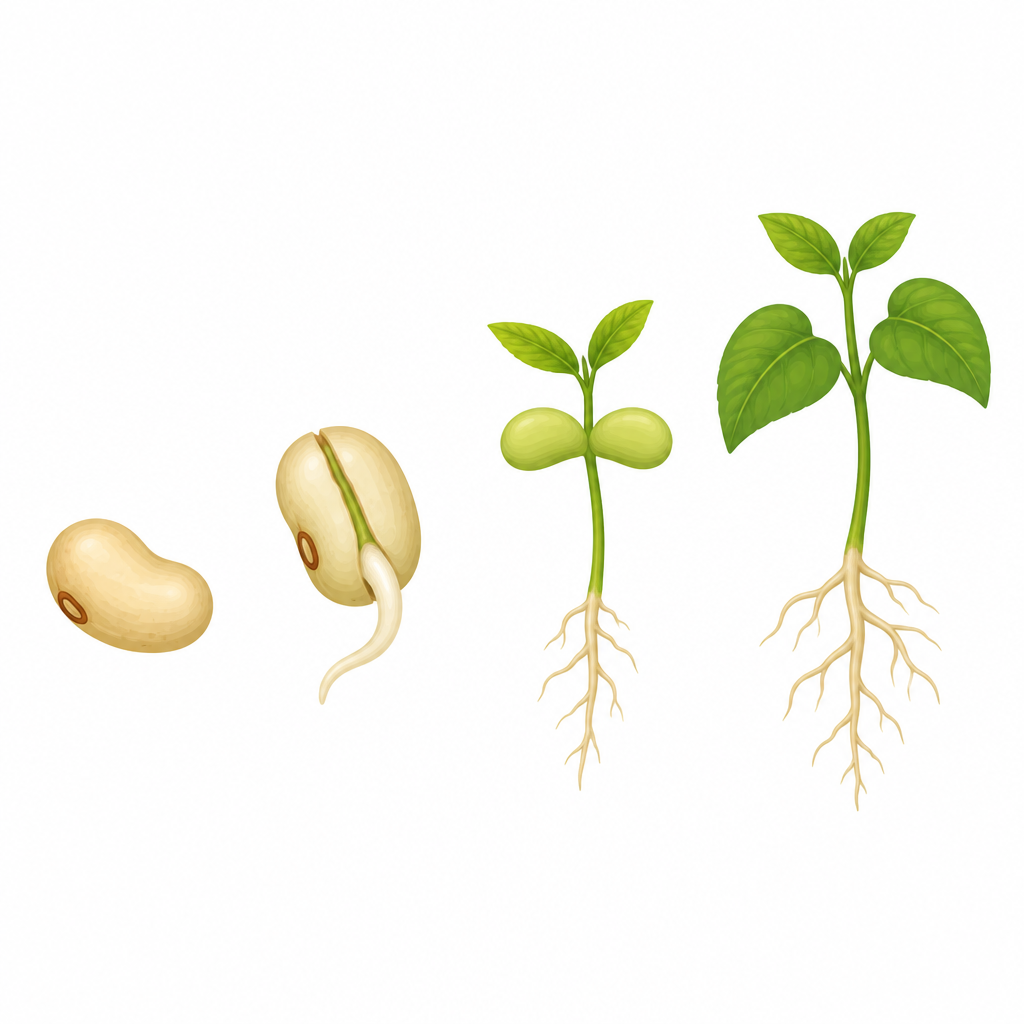
Inside the Seed: How Germination Begins
Germination does not happen in one jump. Once the seed has taken in the water, the oxygen and the warmth it needs, these changes follow one after another inside it.
- The seed soaks up water from the soil or wet cotton around it and takes in oxygen from the air.
- Having taken in water the seed swells, its coat softens, stretches and then splits.
- Biochemical reactions start in the embryo, and the cells of the radicle and the plumule become active.
- Metabolism runs inside those cells, changing the stored food into a form the growing parts can use.
- A new root system develops from the radicle, comes out through the seed coat and grows downward into the soil.
- A new shoot system develops from the plumule, comes out and grows upward. This stage is what is called seed germination.
- After that the young plant, the seedling, is formed, and it grows on into a new plant.
The root goes down from the radicle and the shoot goes up from the plumule. In germination the root is always the first part to come out.
Do not swap the radicle and the plumule. The radicle is the beginning of the root and the plumule is the beginning of the shoot. Writing these two the wrong way round is the mistake students make most often.
Germination in Dicot and Monocot Seeds
A dicot seed such as a bean or a soybean has two cotyledons. After it takes in water the coat splits, the root grows down from the radicle, and the part of the stem below the cotyledons, the hypocotyl, arches up out of the soil. The cotyledons feed the young plant during its first days. The part above the cotyledons is the epicotyl, and the foliage leaves come out of it and turn green.
A monocot seed such as maize or wheat has only one cotyledon. Here the young shoot is covered by a sheath called the coleoptile. That sheath pushes up through the soil without letting the delicate shoot be damaged, and only then do the foliage leaves come out of it. A bunch of fibrous roots grows from the radicle.
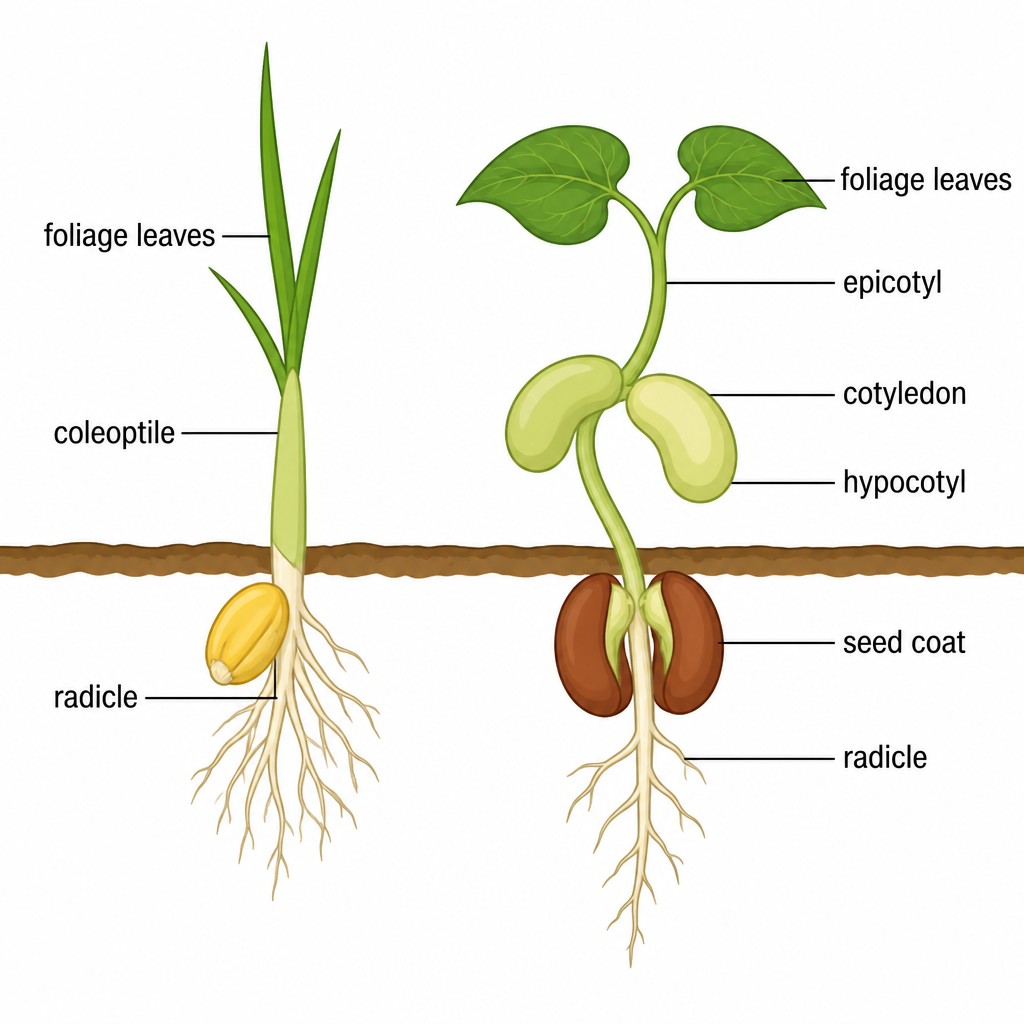
| Dicot seed (bean) | Monocot seed (maize) |
| It has two cotyledons | It has only one cotyledon |
| The hypocotyl arches up out of the soil | The coleoptile covers the young shoot and pushes through the soil |
| Foliage leaves come out of the epicotyl | Foliage leaves break out through the coleoptile |
The Food a Germinating Seed Makes
While a seed is germinating, plenty of nutrients such as protein, starch, salts and minerals are built up so that the new plant can grow and develop. The food stored in the seed is changed at this time into a form that is easy to digest. So when seeds are sprouted and then eaten, the human body gets those nutrients in good amounts. Soaking black gram, chickpeas or peas until they sprout and cooking the mixture is a familiar example of this.
Studying Germination in a Petri Dish
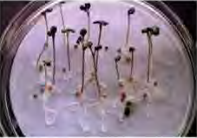
Here is a simple way to watch the stages of germination with your own eyes, day after day. You need seeds, a petri dish, cotton wool or filter paper, water and a beaker.
- Put water in the beaker and leave the seeds to soak in it for one day.
- Place wet cotton wool or filter paper in the petri dish and lay the soaked seeds on it.
- Leave the seeds for a few days and observe them every day.
Write down the change you see each day. On the first day the seed has swollen, then the coat splits and a white root comes out, and later the shoot grows upward. Discuss what you have recorded and draw your conclusion from it.
Factors Affecting on Seed Germination
Several things decide whether a seed will sprout. Some of them are internal factors inside the seed itself and some are external factors of the environment around it. Among the external ones, water, air, temperature and light play the important parts.
Water
Seeds are usually dry. In a dry seed no metabolism goes on inside, so the seed does not sprout. When a seed is put in water it soaks up enough water and swells. The water inside its cells sets off biochemical reactions, and the metabolism of the stored nutrients begins, which brings about germination. This is exactly why farmers store seed in a dry place and soak it in water before sowing.
Do not store seed in a damp or wet place. Moisture gives the seed water and germination can begin right there in the store, after which the seed is of no use for sowing. Seed must always be dried well and kept in a dry place.
Air
Oxygen gas is very necessary for a seed to germinate. Oxygen makes respiration go on inside the seed and this produces the energy germination needs. With that energy the metabolism of the seed runs and the seed sprouts. This is why a seed lying fully under water at the bottom of a jar will not sprout even after many days, because no oxygen reaches it.
Temperature
Seeds do not sprout in a place that is very cold or very hot. Generally a seed germinates well at a temperature of 16–24°C. Temperature frees the seed from dormancy and helps the root and the shoot to develop. When a sown seed is covered with soil, it is the warmth of the ground that brings about germination.
Light
Light is needed for a germinated seed to put out its root and shoot. During germination light makes photosynthesis go on and nutrients are built up. On the floor of a dense forest light does not reach the ground, and seeds that fall there may lie for many years without germinating. Once a seed has germinated, light is also needed for the root and shoot to develop well, that is, for the plant to become a proper seedling.
| Factor | What it does in germination |
| Water | Softens the seed coat and starts biochemical reactions inside the cells |
| Air (oxygen) | Makes respiration go on and produces the energy germination needs |
| Temperature | Frees the seed from dormancy; germination is good at 16–24°C |
| Light | Makes photosynthesis possible and helps the root and shoot develop |
Showing the Effect of Water on Germination
This experiment shows in one go how much water a seed needs and when there is too much of it. You need seeds, a beaker, a glass rod, thread and water.
- Tie one seed at each end of a glass rod and one at its middle, holding each in place with thread.
- Fill the beaker with water and stand the rod in it at a slant, so that one seed is above the water, one is at the water surface and one is completely under the water.
- Leave the beaker with its seeds in the laboratory for two or three days.
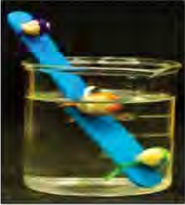
After two or three days observe all three seeds. The seed above the water does not sprout, because it got no water. The seed fully under the water does not sprout either, because although it got water it got no oxygen. The seed at the water surface gets both water and air, and that is the one that germinates well. The conclusion is that a seed needs water and air together in order to germinate.
Importance of Seed Germination
- When a seed germinates and becomes a new plant, it carries the line of that plant forward from one generation to the next.
- When seed germinates well in the field, the production of grain and fruit rises, and that benefits the farmer.
- A germinated seed holds nutrients in large amounts, so eating such seeds is good for human health.
- When seeds sprout well in forests and grasslands, plants keep growing there and biodiversity is conserved.
The full lesson is waiting for you
The notes are free to read in full. A free account opens the rest of the practice, and tracks your progress and confidence score for every subject. Presentations and videos need approval from Learn Yeti.