When the Forces on an Object Balance
To keep a swing going, you must push it again and again. When you finally let it be, the swing does not stop at once either; it takes some time to come to rest. An electric fan behaves the same way. The moment you switch it on, it does not spin at full speed, and the moment you switch it off, it does not stop; it keeps turning for a while. Both of these events show the same thing. An object does not change its state instantly.
When the forces acting on an object are balanced, there is no change in the state of the object, that is, in its motion or its direction. To change the state of an object, or to move it, an unbalanced force must act on it. Even then, the object resists the change that the force tries to make. If the unbalanced force is very small, an object at rest cannot be set moving in an instant, and a moving object cannot be brought to rest in an instant. This is why both the swing and the fan need time to change their state.
What Inertia Is
An object at rest tries to stay at rest. An object in motion tries to keep moving at the same speed in the same direction. A stone lying on the ground does not shift by itself, and a ball rolling on level ground does not suddenly stop by itself. Science gives this habit of objects a name.
Inertia is the property of an object by which it resists any change in its state and tries to remain as it is.
Inertia is not a force. It is a property of the object. A force tries to change the state of an object, while inertia resists that change.
The swing and the fan now make sense. A swing at rest tries to stay at rest, so you must keep pushing to set it going, and a swing already in motion tries to stay in motion, so it does not stop at once. The blades of the fan behave the same way: at rest they try to remain at rest, and once spinning they try to keep spinning.
Relation Between Mass and Inertia
Hang two identical bottles from a support on strings of equal length, one filled with water and the other empty. Pull both aside through the same distance and release them together, and both begin to swing back and forth. Watch them for a while. The empty bottle comes to rest quickly, while the bottle full of water keeps swinging much longer. If you try to stop the two swinging bottles with your hand, the full one is also harder to stop.
Both the lighter object and the heavier object try to remain as they are. Therefore every object has inertia. How much inertia an object has depends on its mass.
When the mass of an object increases, its inertia increases, and when the mass decreases, its inertia decreases.
This is why an empty cart is easy both to set moving and to stop, while a cart loaded with goods is hard to start and hard to stop. A football flies off easily when you kick it, but kicking a stone of the same size hurts your foot, because the stone has much more mass and therefore much more inertia.
The Two Types of Inertia
Depending on whether the object is at rest or in motion to begin with, inertia is of two types. The first is inertia of rest and the second is inertia of motion.
Inertia of Rest
Inertia of rest is the property of an object at rest by which it tries to remain at rest.
Place a card on top of a glass tumbler and a coin on top of the card. When the card is pulled away suddenly, the coin does not travel with the card. It drops straight down into the glass. The coin at rest resists being set into motion all at once. Because the card moves suddenly, it slides out from under the coin before the coin can start moving, and the unsupported coin is pulled down into the glass by gravity.
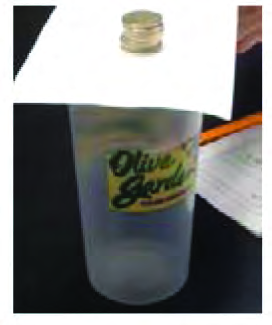
Inertia of rest shows up all around us. In each of the examples below, one part is set into motion while another part tries to stay at rest.
- When a carpet in use is hung up and beaten, the dust in it falls out. The carpet is set moving, but the dust particles try to remain at rest.
- When the branch of a tree bearing mangoes is shaken, the mangoes fall. The branch moves, but each mango tries to remain at rest, so it breaks free of the branch and drops.
- In carrom, when the striker hits a stack of pieces hard, only the bottom piece shoots out and the rest of the stack settles down without toppling. The upper pieces try to stay at rest.
- When a bus starts suddenly, the upper part of a passenger's body tries to remain at rest, while the lower part, which is in contact with the bus, moves forward with it. As a result the passengers jerk backward.
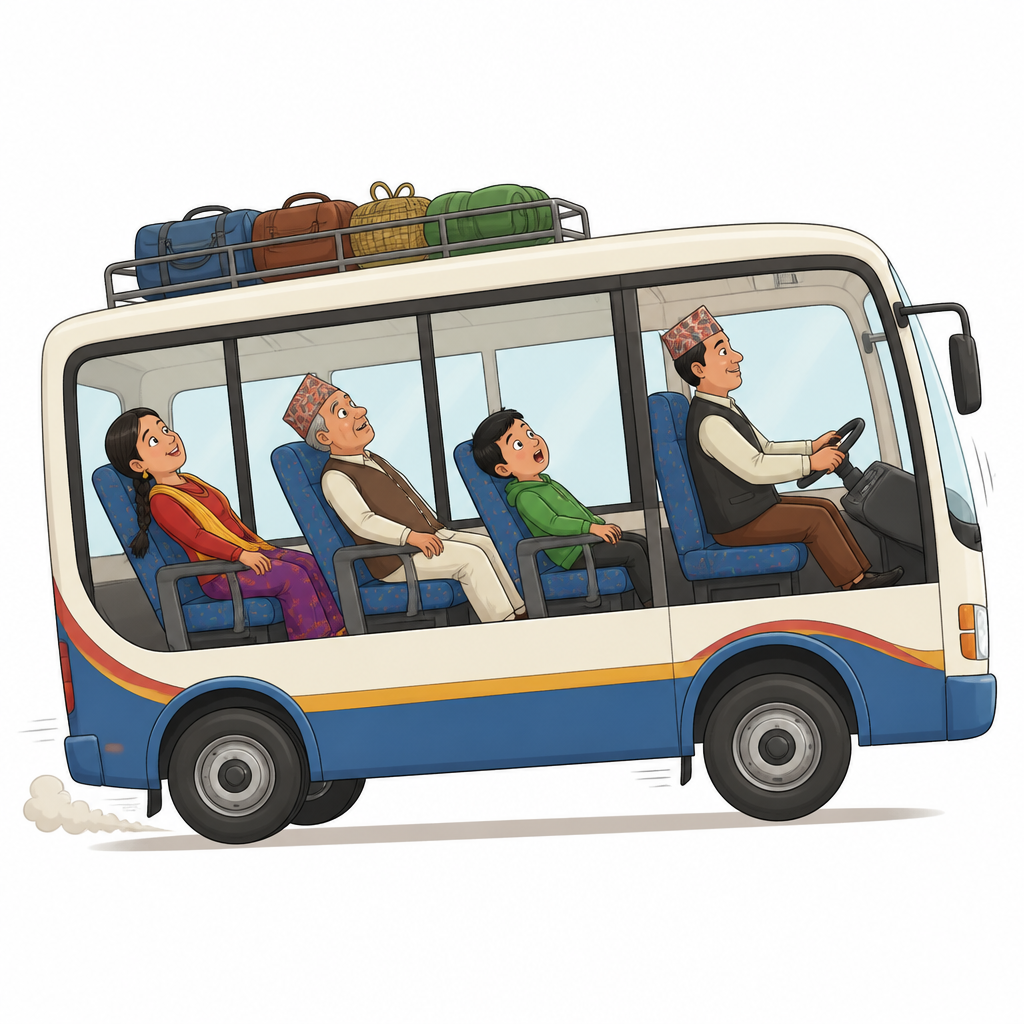
Inertia of Motion
When a moving bicycle strikes a stone, the stone stops the bicycle's motion and the bicycle comes toward rest. The rider's body, however, tries to keep going forward at its earlier speed. Because of this, the rider is thrown forward and can be dashed to the ground.
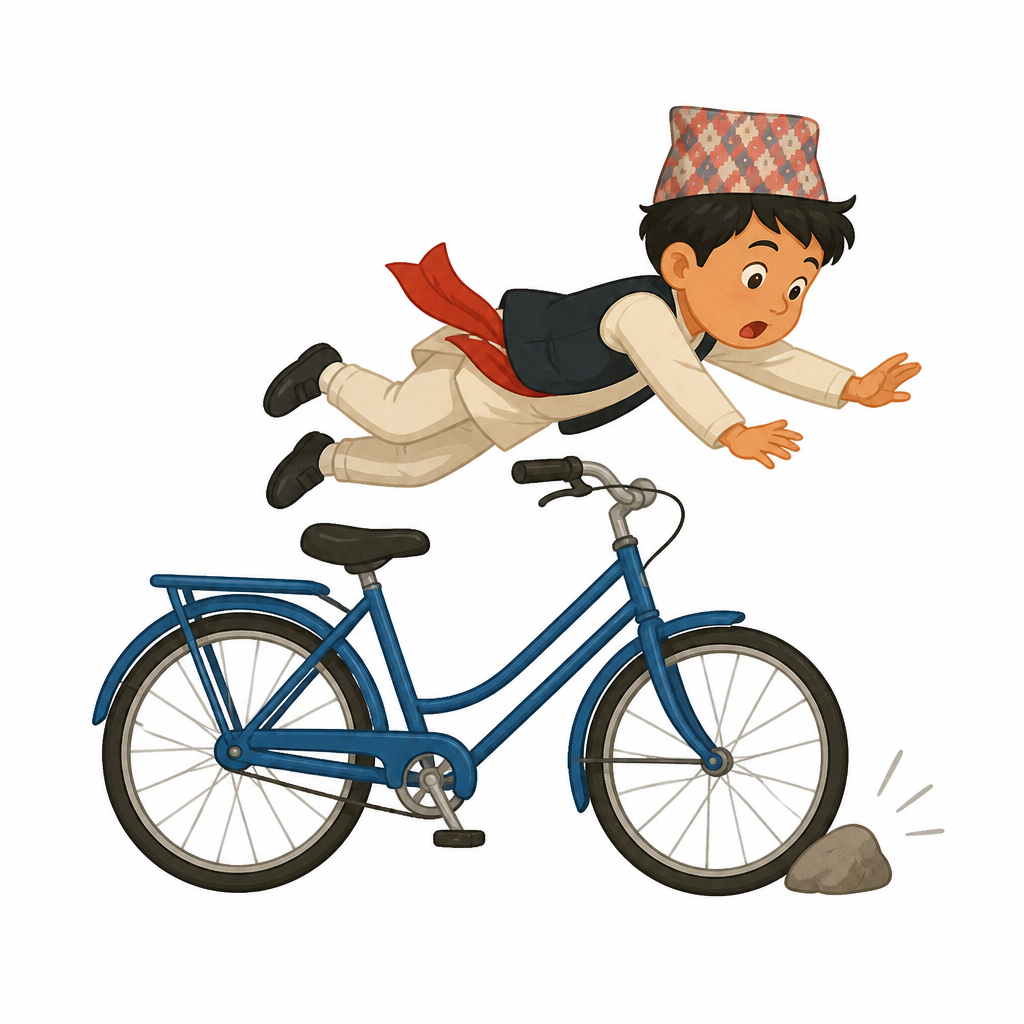
Inertia of motion is the property of a moving object by which it tries to keep moving at the same speed in the same direction.
More examples of inertia of motion are given below. In each one, some part stops or changes direction while another part tries to keep its earlier motion.
- Even when the rider stops pressing the pedals, a moving bicycle keeps rolling for some time.
- When the brakes of a moving vehicle such as a bus are applied suddenly, the passengers' bodies lurch forward.
- When the driver turns the bus suddenly at a bend, the passengers' bodies lean toward the side opposite to the turn.
- A passenger who steps off a moving bus is likely to be thrown to the ground, because the feet stop but the body tries to keep moving at the speed of the bus.
- Long jump athletes run some distance before they leap. The inertia of motion gained while running helps carry the body forward during the jump.
Never get off or jump from a moving vehicle. Step down only after the vehicle has fully stopped, and hold the handrail while the bus is starting or stopping.
Telling the Two Types Apart
| Point | Inertia of rest | Inertia of motion |
| State of the object at first | The object is at rest | The object is moving at the same speed in the same direction |
| What it resists | Being set into motion from rest | Being stopped or turned from its motion |
| Example | The coin dropping into the glass when the card is pulled | Passengers lurching forward when the brakes are applied |
To recognise inertia in any event, ask three questions. Which object or part had its state changed by a force? Which object or part tried to remain in its own state? Was that part at rest or in motion to begin with? If it was at rest, you are seeing inertia of rest; if it was in motion, you are seeing inertia of motion. With these three questions you can explain any example, from buses and bicycles to a carrom board or the kitchen.
The full lesson is waiting for you
The notes are free to read in full. A free account opens the rest of the practice, and tracks your progress and confidence score for every subject. Presentations and videos need approval from Learn Yeti.