How Electricity Reaches a House
A fan turns, a bulb lights up, an iron gets hot and a phone charges. Every one of these needs electrical energy. The growing use of electrical devices has made many daily jobs easy, but none of those devices works until electrical energy has actually reached the house. Electricity is produced in a power house, and it is carried from there to people's homes along transmission lines. This whole process of bringing electricity from the power house into house after house is called household electrification.
Household electrification: the process of carrying the electrical energy produced in a power house along transmission lines and delivering it to people's houses.
Electricity leaves the power house at a very high voltage, because high voltage travels long distances more easily. Electricity at that voltage cannot be brought straight into a house. A transformer is used to bring the voltage down, and only after it has been changed to the required voltage of 220 V does the supply reach house after house. The switchboards, sockets and bulbs in our homes all work on this 220 V supply.
Wiring and the Domestic Circuit
Once the supply has reached the house, conducting wires carry it on to the different rooms and places inside. The process of joining conducting wires and electrical devices together in a house or in any other area is called wiring. Without wiring, no electrical device can be run. While the wiring is being done, a domestic circuit is built according to what the house needs. Inside that circuit the different devices are joined in series, in parallel and in mixed connection.
Wiring: the process of joining conducting wires and electrical devices together in a house or any other area so that the devices can be run.
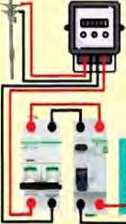
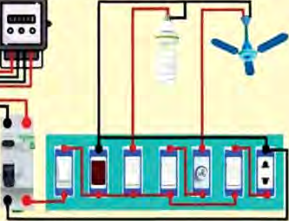
Devices Used in the Domestic Circuit
A house circuit is not just a web of wires. Devices such as the main switch, the electric meter, the distribution board, the MCB, the fuse, switches, plugs and sockets and bulbs are fitted into it in a fixed order. One device controls the supply, another measures it, another shares it out and another protects the house from accidents. Each of them has its own separate job.
The Main Switch
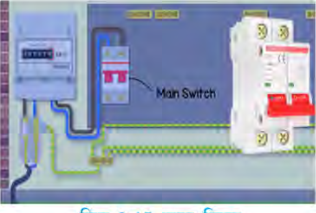
In a domestic circuit the main switch is placed close to the distribution board and the main meter. The supply coming from the transmission line passes through the main switch and then goes from the distribution board out to the household appliances. The main switch controls the electricity entering the circuit and normally passes on the 15 A or 30 A that a household needs. For this reason it is also called the master switch. It is connected in series, so turning the main switch off cuts the supply to the whole house at once.
The Electric Meter
The instrument that measures the amount of electrical energy used up by the devices in a house is called an electric meter. It is kept inside a metal or plastic box known as the meter box, and it is fitted close to the main switch in a series connection. The needle or the digital digits on it give the reading, which is the amount of electricity consumed over a fixed period of time.
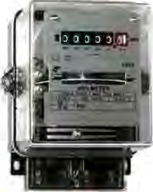
Electrical consumption is measured in kilowatt hours (kWh), also called units. Running one device of one thousand watts for one hour consumes one unit of electricity. From the meter reading the monthly consumption of a house can be found, and from that the total bill can be worked out. For example, if the meter shows a consumption of 40 units in one month and the electricity authority charges Rs 8 for each unit, then Rs 320 has to be paid for the electricity used.
Working Out the Electricity Bill
To work out how much electricity has been consumed, three things are needed: the power of the device, how many such devices there are, and how long they run. These quantities are written with the symbols below.
| Quantity | Symbol | Unit |
| Energy consumed | E.C. | kWh, also called unit |
| Power of the device | P | kW |
| Number of devices | N | a plain number |
| Time | t | hr |
The consumption is found by multiplying these three values together. The formula is:
\[ E.C. = P \times N \times t \]
In this formula the power must be put in kilowatts, not in watts. Putting 60 W straight into it makes the answer one thousand times too big. Divide by 1000 first to change watts into kilowatts, and only then multiply.
Once the consumption is known, the total bill is found by multiplying it by the rate charged for one unit, written as R:
\[ E.C. \times R \]
The Distribution Board
The distribution board sends the electricity arriving from the transmission line out into the different domestic circuits. The main switch, the meter and the MCB or main fuse are held in it. From this board the main supply is distributed through the wiring to the electrical devices of the house. Because all the controls sit together in one place, a single faulty circuit can be switched off on its own while the rest of the house stays on.
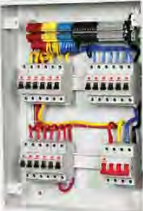
The Miniature Circuit Breaker
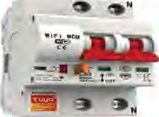
The MCB is fitted in the distribution board, near the electric meter, and is kept inside a small box. It is also called the main fuse. When more current than the circuit needs comes in from the transmission line, the MCB switches itself off and stops the current from flowing. It also trips when appliances of a heavier load than the circuit can carry are run, and in this way it protects the house from accidents caused by a short circuit.
The Fuse
The fuse used in a domestic circuit is a safety device. It is a thin wire made from a mixture of tin and lead, kept inside a small holder. The fuse wire has a high resistance and a low melting point. It is connected in series in the household circuit. When a current larger than the circuit is rated for flows through it, the fuse wire burns out and is destroyed, and by breaking the circuit in this way it saves the electrical appliances from damage. For household purposes, fuses of 5 amperes to 30 amperes are normally used.

A fuse and an MCB both protect a circuit from too much current, but they do it in different ways. The fuse wire melts and is destroyed, so a fresh fuse wire has to be fitted after it blows. An MCB only switches itself off, and once the fault has been put right it can simply be switched back on.
The Switch
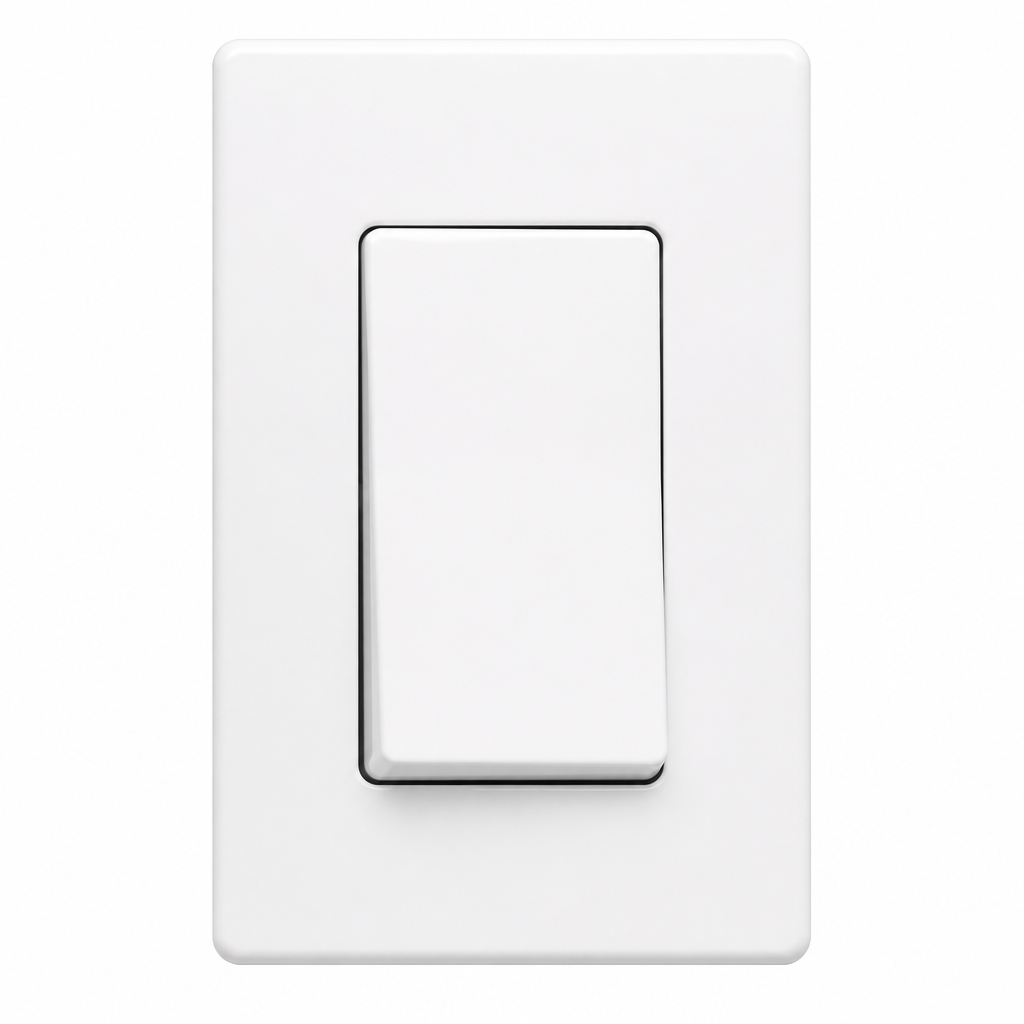
A switch is the device that stops or starts the flow of current in a circuit. It is fitted in front of the electrical device it controls. Turning a switch on and off is how household devices are run and stopped. Separate switches are used to run separate devices, although one switch can also be made to run several devices together. A switch is connected in series with the device it controls.
Switch: the device that stops or starts the flow of current in an electric circuit.
Plug and Socket
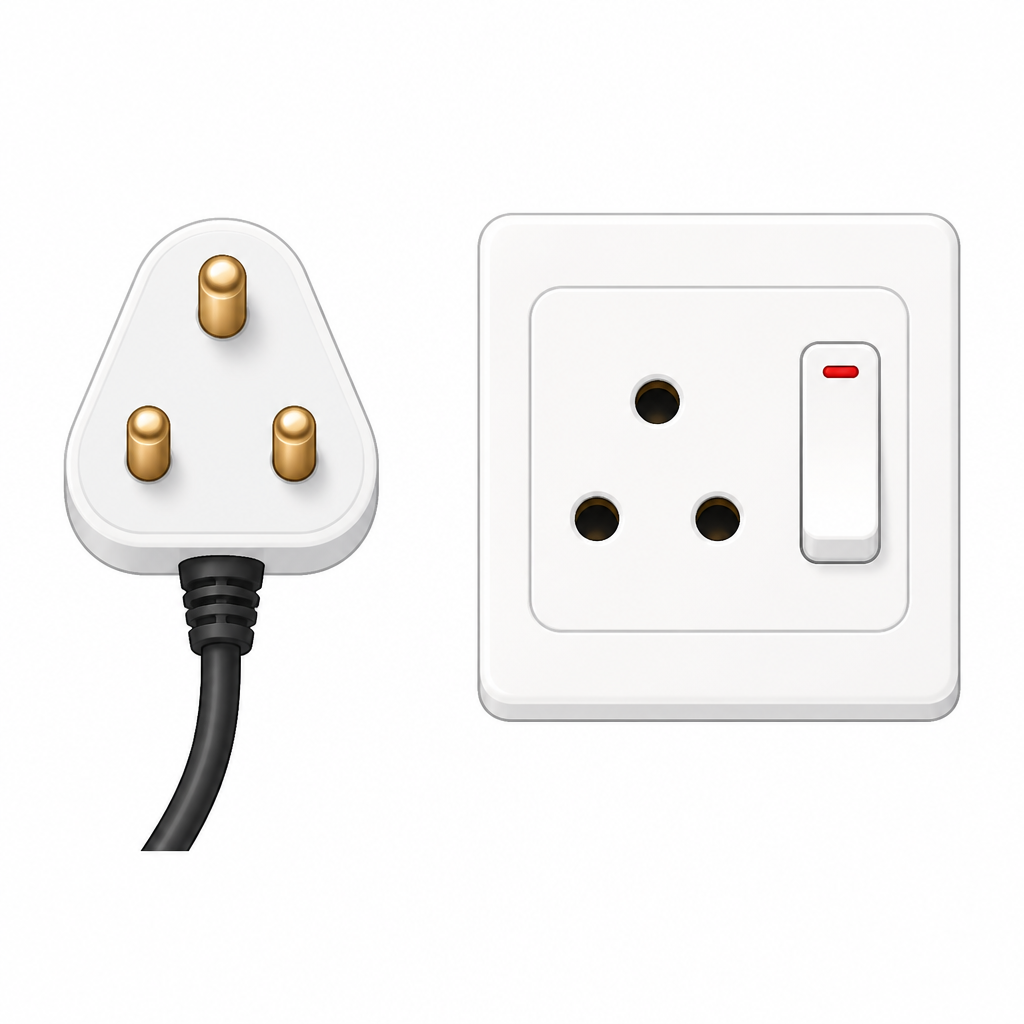
Plugs and sockets are used in a domestic circuit when the supply has to be extended from one place to another or when an extra device is to be joined in. The socket is fixed on the wall, and the plug of the appliance is pushed into it so that the supply reaches that appliance. Some sockets take only one plug while others take several. Plugs and sockets are made either with two pins or with three pins. Together they extend the supply safely and keep the user from getting an electric shock.
The Bulb
A bulb is the device that changes electrical energy into light energy. In a domestic circuit bulbs are connected in parallel, although in disco lights the bulbs are connected in series. A bulb is made of transparent glass, and inside the glass there is a thin wire that turns the electrical energy into light. Bulbs are of several kinds, and the two main electrical bulbs are the LED, which stands for light emitting diode, and the fluorescent bulb.
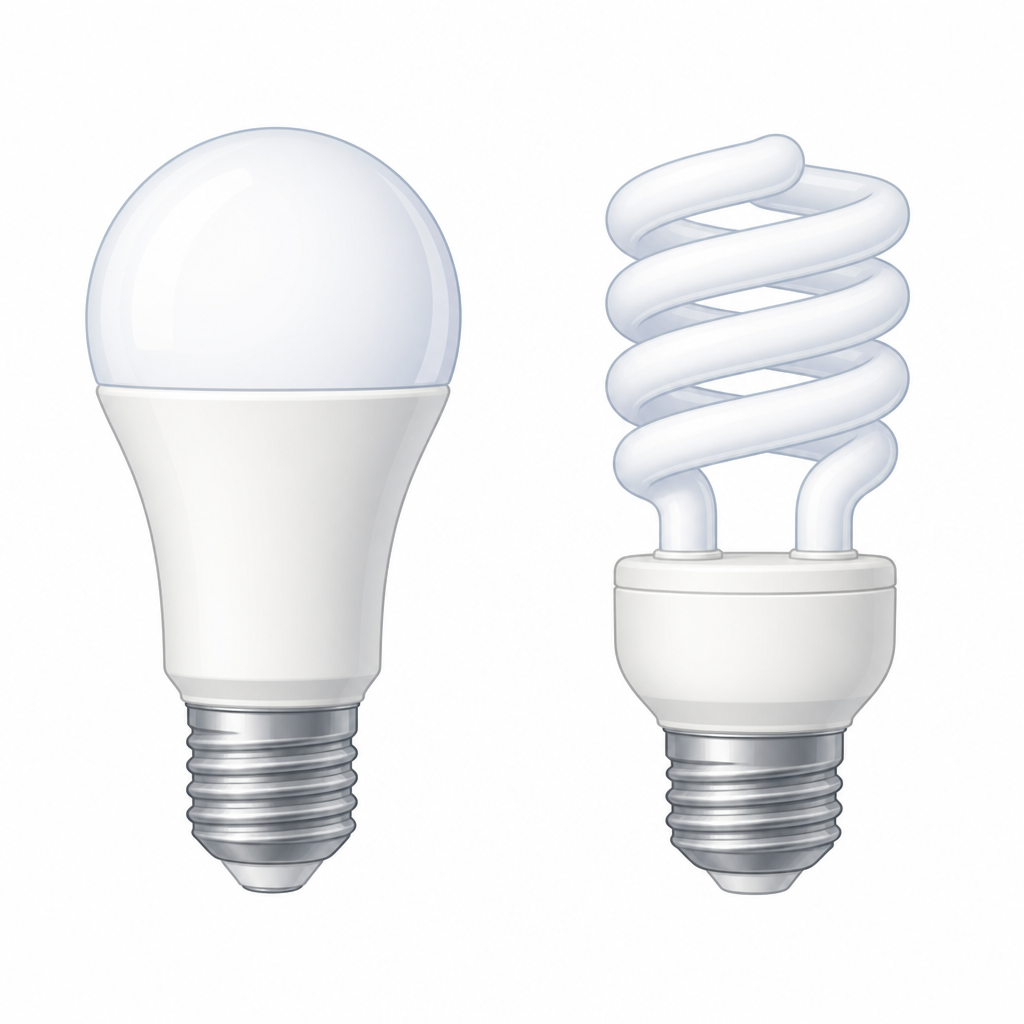
Take care when throwing away a broken bulb. The pieces of glass from a broken bulb are sharp, and the poisonous chemicals inside the bulb are bad for health as well.
Which Device Does What
| Device | What it does |
| Main switch | Controls the supply entering the house |
| Electric meter | Measures the electrical energy consumed |
| Distribution board | Shares the supply out among the different circuits |
| MCB | Trips off by itself when too much current comes in |
| Fuse | Melts and breaks the circuit when the current is too large |
| Switch | Turns a device on and off |
| Plug and socket | Extends the supply across to another place |
| Bulb | Changes electrical energy into light energy |
The main switch, the meter, the fuse and the ordinary switch are all connected in series, because each of them has to sit in the path of the current. Bulbs are connected in parallel, so that the rest keep glowing when one of them fails. Disco lights are the exception, where the bulbs are connected in series.
The full lesson is waiting for you
The notes are free to read in full. A free account opens the rest of the practice, and tracks your progress and confidence score for every subject. Presentations and videos need approval from Learn Yeti.