The Job of Wires in a House Circuit
Electricity comes into a house as far as the meter, and no further on its own. Conducting wires are the road that carries it to the bulbs, the fans and the sockets in every room. Without wires there is no circuit at all, because current can only flow along the path the wires make. A household circuit uses three kinds of wire: the live wire, the neutral wire and the earthing wire.
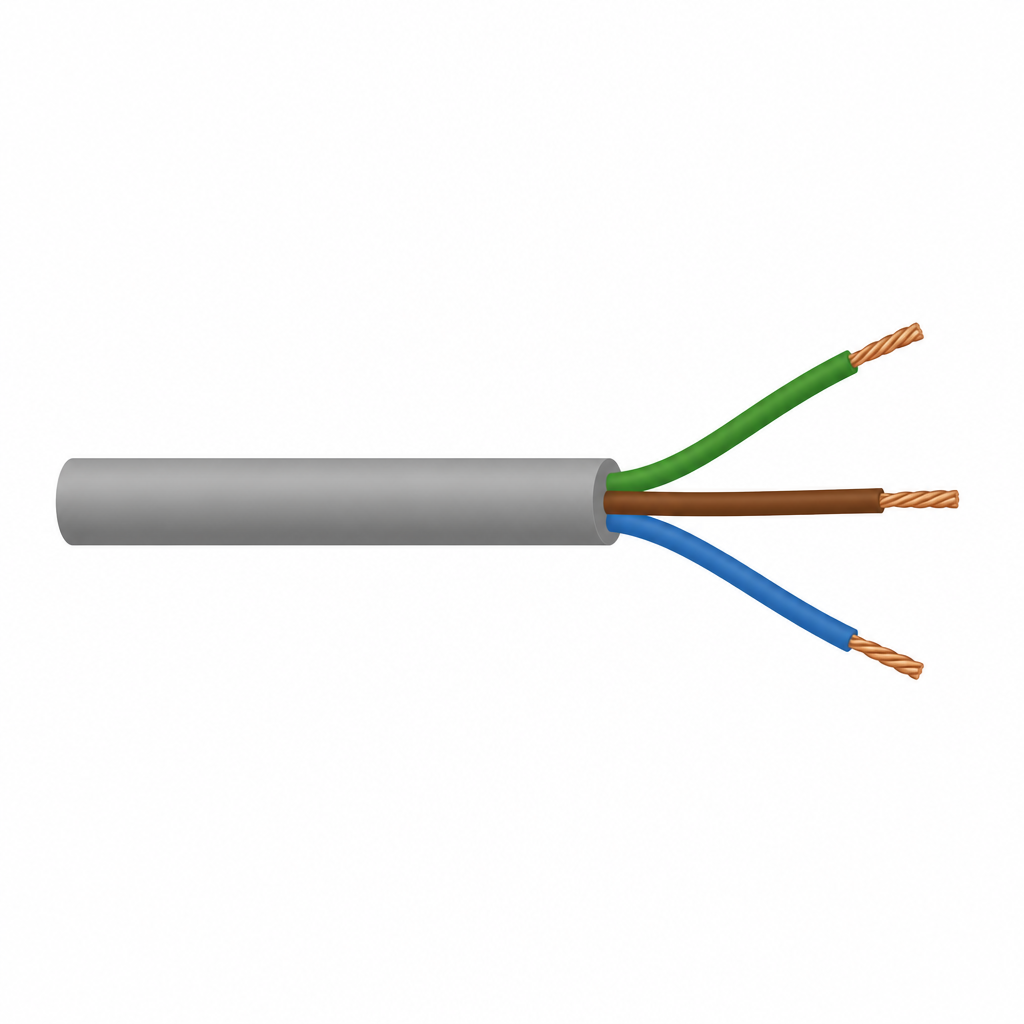
Each of the three has a different job, and each one is given a different colour of insulation so that anyone working on the circuit can tell them apart by sight. When wires are being fitted inside a plug or a socket, telling them apart is the very first task, so each of the three is worth looking at on its own.
The Live Wire
Live wire: the wire that carries a high electrical potential. It is also called the phase wire.
A person standing on the ground and touching this wire completes a path to earth. The potential difference between the wire and the body is large, so current begins to flow through the body. That is why touching a live wire gives an electric shock. In a house circuit, switches and fuses are always joined into the live wire. Because of that, the moment the switch is turned off no high potential current can reach the appliance at all. The live wire is usually red or brown.

Never touch a live wire with a bare hand. Whether a wire is carrying electricity is checked with a line tester, never with a finger.
The Neutral Wire
Neutral wire: the wire that stays at zero electrical potential.
After an appliance has used up electrical energy, the current returns along this wire. For that reason the neutral wire can be thought of as the return road. The live wire brings current to the appliance and the neutral wire takes it back, and only then is the circuit complete. Because its potential is zero, it is not as dangerous as the live wire. A neutral wire is usually black or blue.
Saying that the neutral wire is less dangerous does not mean it may be handled. If something is wrong anywhere in the circuit, electricity can appear on this wire too, so the neutral wire is not to be touched either.
The Earthing Wire
In a household circuit every appliance is wired with an earthing wire, and that wire is carried through the distribution box and the meter and buried in the ground. In a three pin socket, the terminal for the earth wire is the one standing alone at the top.
Earthing: the process of wiring an appliance with an earthing wire and burying that wire in the ground.
If electricity leaks onto the outer body of an appliance, or if a lightning strike pushes extra volts into the circuit, the earthing sends that excess straight into the ground. Because of it, touching the metal body of an appliance does not give a shock, and an electrical fire is prevented. An earth wire is usually green.
Using a different colour for the phase, neutral and earth wires means that when something goes wrong in a house circuit, the person repairing it can find the damaged wire and the exact spot quickly.
The Three Wires at a Glance
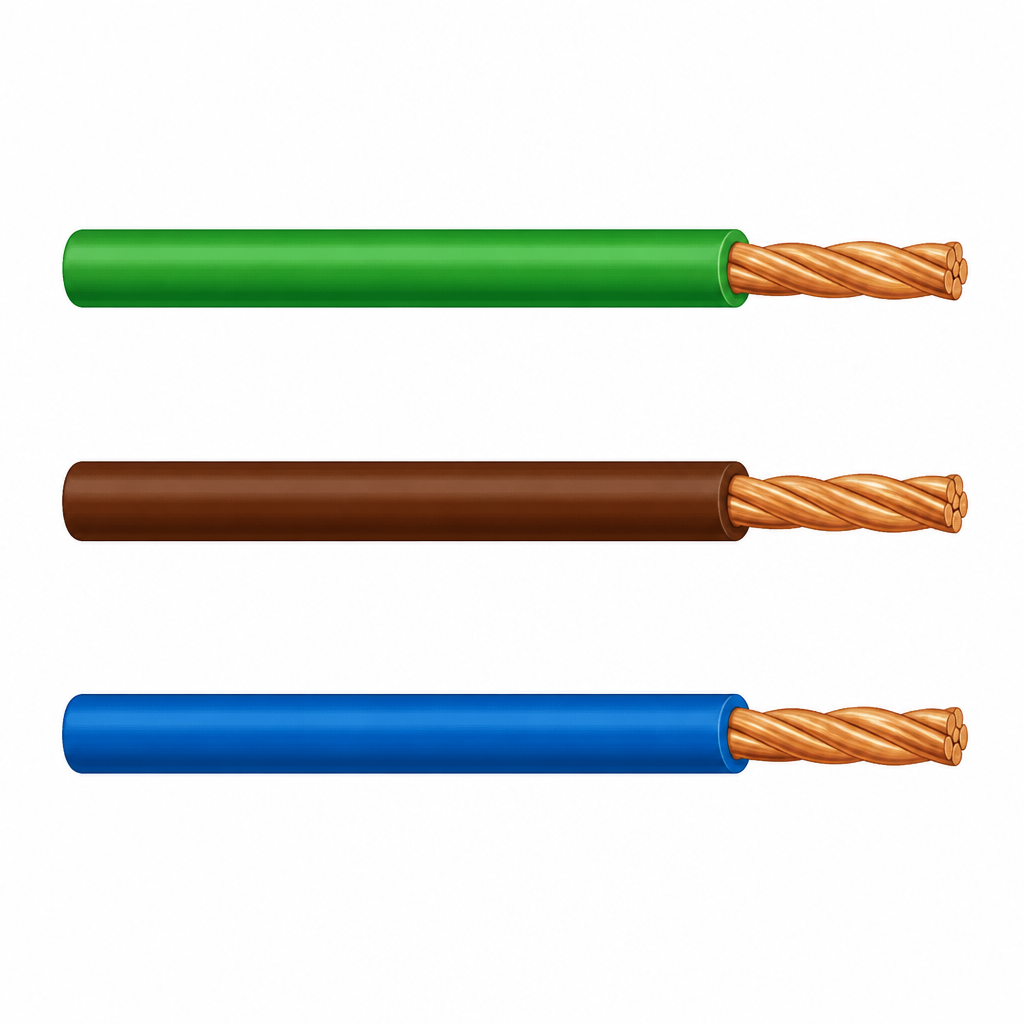
| Wire | Usual colour | Potential | Job |
| Live (phase) | Red or brown | High | Brings current to the appliance. Switch and fuse are joined into it. |
| Neutral | Black or blue | Zero | Gives the used current its return path. |
| Earthing | Green | Joined to the ground | Sends leaked or excess electricity into the ground. |
The Three Pins Inside a Plug
Plugs and sockets are the most used fittings in a house circuit. Now and then a wire inside one works loose and has to be repaired, and a new plug or socket has to be wired up before it can be used. So the first thing to know is which pin belongs to which wire. The pin standing alone at the top is the earthing pin. The pin on the right is the live pin, and the fuse is usually fitted on this one. The pin on the left is the neutral pin.
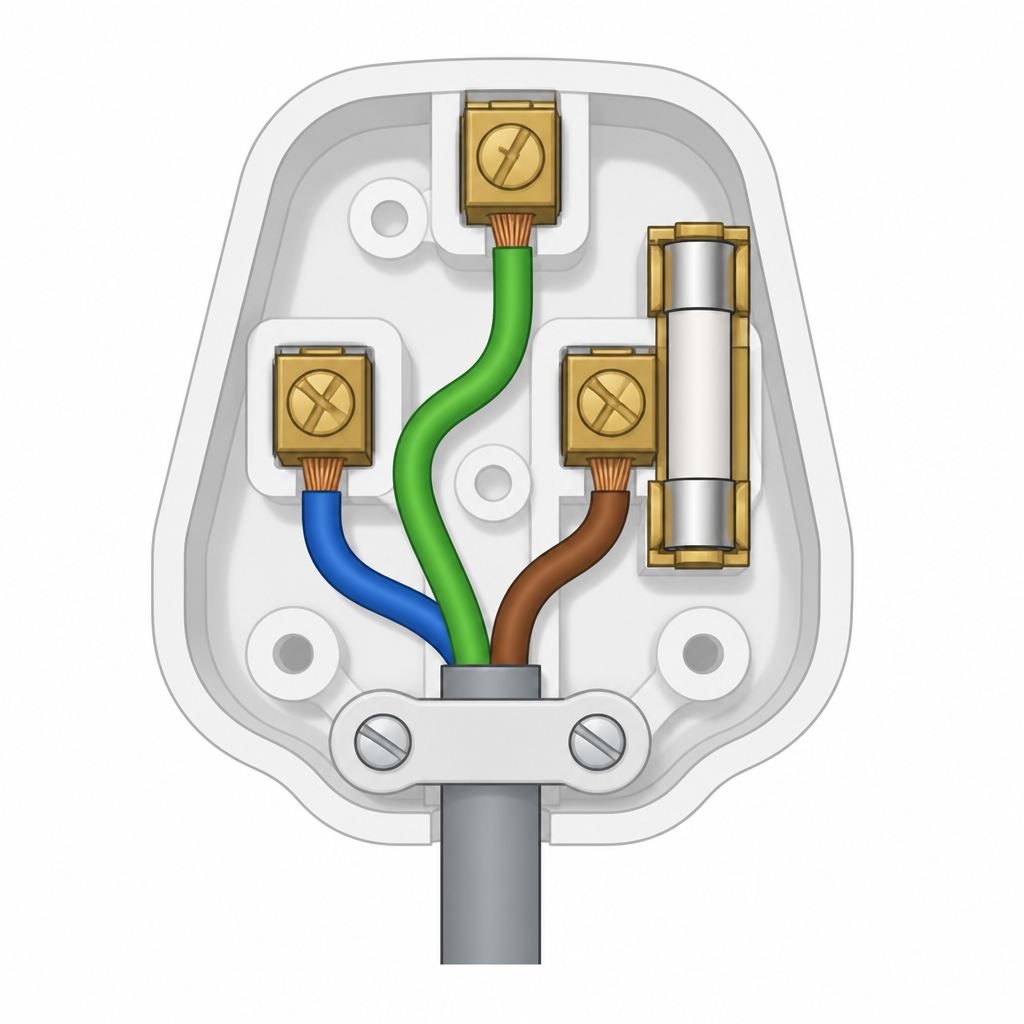
Each terminal has a hole and a screw. The bare end of a wire goes into that hole and the screw is tightened down on it, which grips the wire firmly. At the bottom of the plug there is a cord gripper, which clamps the power cord in place.
Connecting the Wires in a Plug
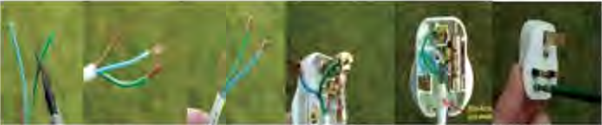
Wiring a plug is done in the order given below. Working out of order leaves wires loose, or puts a wire on the wrong terminal.
- Open the plug case with a screwdriver.
- With a knife or a pair of pliers, cut away about 1.5 inches of the outer cover from the end of the power cord and bring the coloured insulated wires inside it out.
- Identify the live, neutral and earthing wires by their colours and strip the insulation off the end of each of them.
- Twist the bare strands of each wire together and bend the twisted end into a hook.
- Loosen the screw on the right hand terminal with the screwdriver, push the bare end of the live wire into the hole and tighten the screw. This is the terminal that usually carries the fuse.
- The top terminal is the earthing one. Open its screw, put the end of the earth wire into the hole and tighten the screw.
- Open the screw of the left hand terminal, put the end of the neutral wire into the hole and tighten the screw.
- Set the cord straight, clamp it under the cord gripper and tighten that screw, so that a light pull on the power cord does not drag it out of the plug.
- Finally put the cover back on the plug case and close it by tightening the screw.
An electric shock can cost a person their life, so the main switch must be turned off first, and any work with electricity is done only in the presence of a parent or a teacher.
Wiring a Socket
A socket is wired in exactly the same order. It too has three terminals, and the earth terminal is the one standing alone at the top. There again the screw is loosened, the bare end of the wire is pushed in, and the screw is tightened down. When the work is finished, the socket is checked with a line tester before any plug is pushed into it.
Do It Yourself: Wiring a Plug
Aim: to connect the wires in a plug. Materials needed: a screwdriver, a line tester, a pair of pliers, a knife and wire.
- Take a plug and open its screw with a screwdriver.
- Take one metre each of live, neutral and earth wire.
- Cut away about 1 cm of the outer plastic from one end of each wire with the pliers or the knife.
- Twist the bare wire with the pliers and bend it into a hook.
- Find the live, neutral and earth terminals inside the opened plug and join each wire to its own terminal.
- Tighten the plug screw again to close the case, check the socket with the tester, and then plug it in.
Observation and conclusion: after the plug is in the socket, switch the appliance on and off, watch whether the plug works as it should, and write down what you conclude.
Looking at the Wiring in Your Own Rooms
Look at the wires running through each room of your house or your school and pick out the live, neutral and earthing wires. Note whether the right colours have been used, whether earthing has been done, and which appliances or points are earthed. Put all of this into a short report and show it to your teacher.
The full lesson is waiting for you
The notes are free to read in full. A free account opens the rest of the practice, and tracks your progress and confidence score for every subject. Presentations and videos need approval from Learn Yeti.