Where Magnets Come From
A small iron nail that has fallen on the floor is hard to pick up with your fingers, but hold a magnet near it and the nail jumps up on its own. This power of pulling iron, nickel and cobalt is called magnetism, and a body that carries it is a magnet. The question worth asking next is where magnets come from. Some come straight out of rock under the ground, and nobody has done anything to them. Others are made by people in a factory or a laboratory, in whatever shape and strength the job needs. On this basis magnets are put into two groups: natural magnets and artificial magnets.
A magnet that already has magnetism when it is found is natural. A magnet whose magnetism has been put into it by people is artificial.
Natural Magnets
A body that has magnetism in it naturally, with nobody having made it magnetic, is called a natural magnet.
Natural magnets are found in the crust of the Earth. Their best known example is lodestone. Lodestone is a mineral of iron called magnetite, which means it is an iron bearing rock that is already in a magnetic state when it is dug out of the ground. Nobody has to rub it, heat it or connect it to electricity. Long ago sailors hung a piece of this rock from a thread to find their way, because a piece of lodestone left free to swing settles pointing north and south.
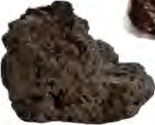
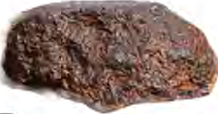
What Lodestone Is Like
Three things stand out about lodestone, and all three are what separate a natural magnet from a made one.
- It is magnetic in nature itself, so nobody has to turn it into a magnet.
- Its poles are already fixed, which means which end is the north pole and which end is the south pole was settled before anyone picked it up.
- Its strength cannot be changed. It can neither be raised nor lowered.
For this reason lodestone is not much use where a strong magnet is needed. Its shape is irregular, its pull is weak, and that pull cannot be tuned to what we want. The magnets we actually put to work are the ones we make ourselves.
Sorting the Things Around You With a Magnet
Which things a magnet pulls is learnt better by testing than by reading. Collect different metals and non metals that you find around the house and the classroom, and work through it like this.
- Put everything you have collected together on a table.
- Take a magnet in your hand and bring it slowly near each object in turn.
- Put the objects the magnet pulls on one side and the objects it does not pull on the other.
- Write the names of the objects that are attracted and those that are not attracted in a table on chart paper.
- Display your finished table in the classroom and compare it with the tables your friends have made.
Artificial Magnets
A magnet made by producing magnetism in a magnetic material, as and when it is needed, is called an artificial magnet.
Magnetism can be produced in magnetic materials such as iron and steel. Magnets made this way are of two natures, temporary and permanent. A temporary magnet shows magnetism only while it is being worked, and loses it afterwards, while a permanent magnet keeps its magnetism for a long time. The great convenience of an artificial magnet is that its strength can be increased or decreased as needed, and its shape can be chosen for the job, whether a straight bar, a horseshoe or a flat ring. Artificial magnets are made by using electrical power or by other methods.
Shapes Artificial Magnets Come In
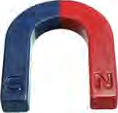
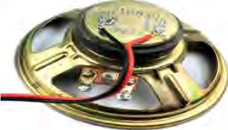
Three shapes of artificial magnet turn up again and again, in the laboratory and inside household machines. A straight piece is a bar magnet, with one pole at each end. A magnet bent in the middle into a U shape brings both poles round to face the same way, so the pull gathers at one place and it grips harder than a bar of the same size. Inside a radio or a loudspeaker sits a flat round magnet, which works together with a coil of wire to make sound.

The Electromagnet
A magnet made by using electric power is called an electromagnet.
Wind enamelled copper wire round an iron nail and send current through it from a cell, and that nail becomes a magnet and starts picking up pins. Switch the current off and the nail is an ordinary nail again. This is why an electromagnet is the clearest example of a temporary artificial magnet. Its strength is in our hands too, because more turns of wire or a stronger battery gives a stronger magnet. A permanent magnet cannot offer that, which is why industry uses electromagnets for lifting heavy iron and then letting it go.
Building an Electromagnet
This piece of work has one aim, to build an electromagnet, and it can be done in the classroom. What you need is a 1.5 Volt cell or battery, enamelled copper wire, a switch, a pair of pliers, iron nails and pins. The method is as follows.
- Cut 50 centimetres of enamelled copper wire with the help of the pliers.
- Wind the cut length of enamelled copper wire turn by turn around the iron nail so that it makes a coil like a spring.
- Connect the wire through the switch as well, joining one end of the wire to one terminal of the battery and the other end to the other terminal.
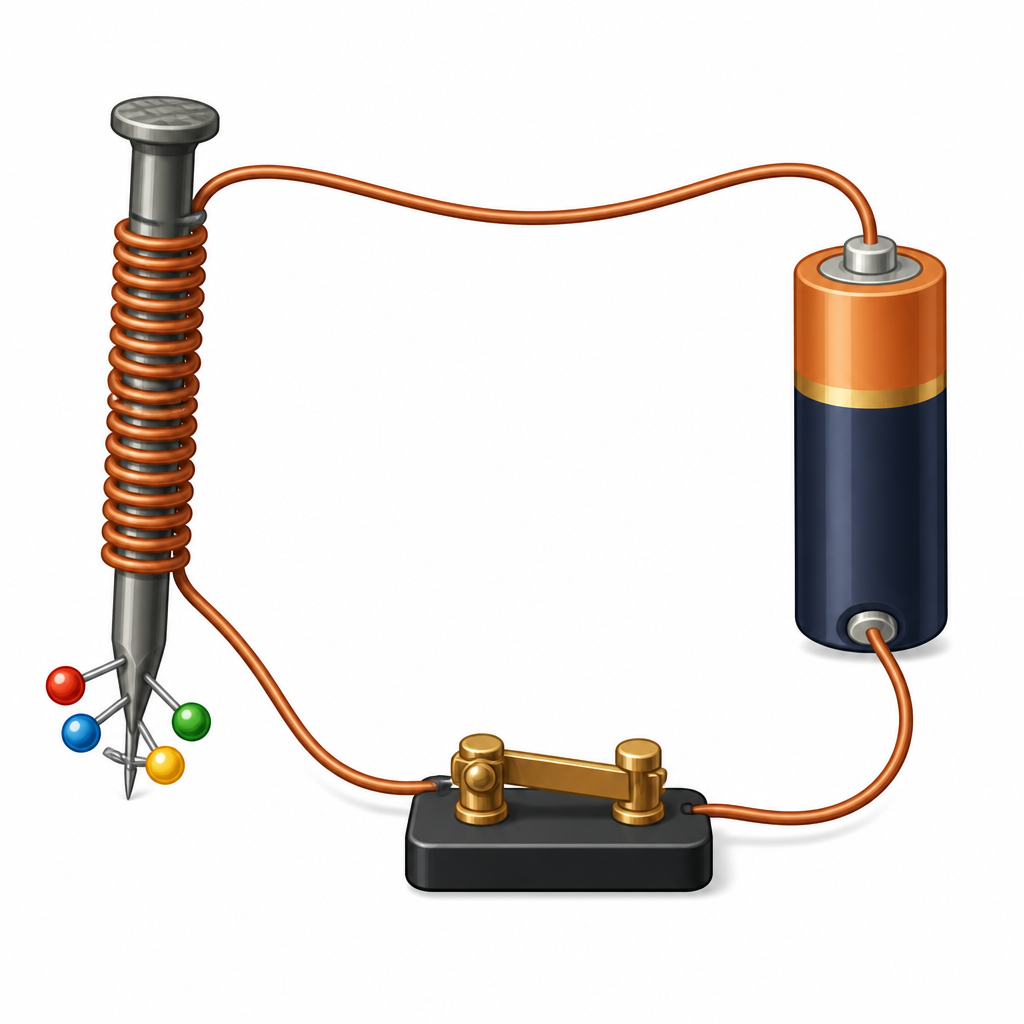
Bring pins near the iron nail of the finished electromagnet, and watch what the nail does as you switch the current on and off. With the switch on the nail holds the pins; with the switch off the pins drop away. That single observation is what shows that electric current and magnetism are tied to each other.
Switch the current off as soon as you have finished watching. If the current is left flowing for long, both the wire and the cell get hot. Never leave a wire joined straight across both terminals of the cell, and never do this work from the mains supply of the house.
While the switch is on the nail is a magnet; once the switch is off it is only an ordinary iron nail. That is what a temporary magnet means.
Natural and Artificial Magnets Compared
| Point of comparison | Natural magnet | Artificial magnet |
| Where it comes from | Found on its own in the crust of the Earth | Made by people, by producing magnetism in a material |
| Example | Lodestone | Bar magnet, U shaped magnet, electromagnet |
| Shape | Irregular, like a rock | A definite shape chosen for the work |
| Poles | Already fixed | Decided at the time of making |
| Strength | Cannot be changed | Can be increased or decreased |
| Lasting | Stays magnetic always | Can be either permanent or temporary |
Because an electromagnet is made with electricity, many students file it under natural magnets. It is artificial, since its magnetism was put into it by people. A natural magnet means only something like lodestone, which comes out of the ground already magnetic.
Where Magnets Are Used
A magnet is not only a piece of laboratory equipment. Many machines used every day have a magnet hidden inside them, and a few large jobs would not be possible at all without one. These are the main uses.
- Magnets are used in electrical appliances such as the radio, the television, the fan, the refrigerator, the induction stove, the electric bell, the generator and the dynamo.
- They are also used in computers, sensors, drives, head phones, hard disks and tape recorders.
- Magnets are used in medical equipment, including imaging machines known as Magnetic Resonance Imagers, or MRI.
- In industry and at ports, electromagnets are used to load and unload large iron sheets and rods.
- Direction can be found by using a magnetic compass.
- These days magnets are fitted in the leaves of windows and doors so that they latch shut.

In all these uses the job decides which magnet is chosen. A bell, a speaker or a door latch needs a pull that never stops, so a permanent magnet is fitted there. Separating iron from scrap, or lifting a rod and dropping it somewhere else, needs a magnet that pulls when we want and lets go when we want, and only an electromagnet can do that.
The full lesson is waiting for you
The notes are free to read in full. A free account opens the rest of the practice, and tracks your progress and confidence score for every subject. Presentations and videos need approval from Learn Yeti.