Looking closely at a cell
The body of a living thing is built from very small units called cells. These cells sit side by side in layers, packed close together. One cell is so small that it cannot be seen with bare eyes, so a microscope is needed to look at its parts. Under a microscope, three things can be told apart in every cell: the boundary around the outside, the semi fluid material that fills it, and the tiny bodies floating in that material. Each of these three has its own name and its own job.
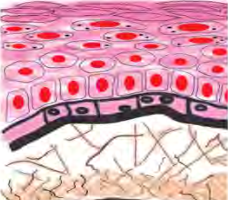

The covering of the cell
The outermost layer of a cell is its covering. A cell has two kinds of covering: the cell wall and the cell membrane.
Cell wall: the hard, non-living covering that lies outermost on a cell. It is found only in plant cells, in bacterial cells and in the cells of fungi.
Cell membrane: the elastic, living covering around a cell. It is the outer covering of an animal cell, and in cells that have a cell wall it lies inside the wall.
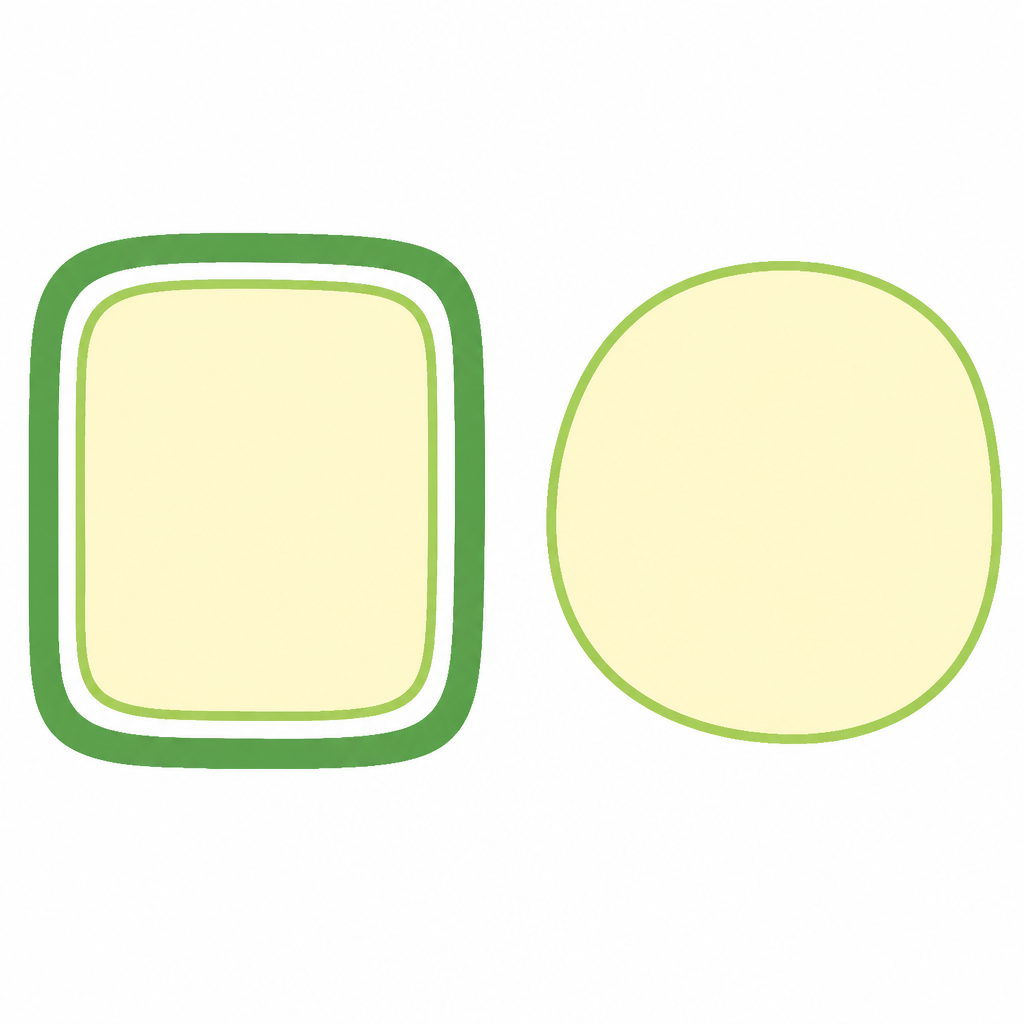
The cell wall is hard, semi-elastic to some extent, and non-living in nature. Its surface is rough. The cell membrane, on the other hand, is stretchable, smooth and living in nature. The cell membrane is semi-permeable, which means it lets some substances pass through it and holds others back.
Do not treat the cell wall and the cell membrane as the same thing. The wall is non-living, hard and rough, and it is not present in every cell. The membrane is living, stretchable and smooth, and it is present in every cell.
What the covering does
- The cell wall gives the cell a definite shape and provides it with mechanical support.
- The cell wall protects the inner parts of the cell, and the cell itself, from attack by bacteria and viruses.
- In a root hair, the cell wall helps the plant absorb water and salts from the soil.
- Because the cell membrane is semi-permeable, it controls the movement of substances into and out of the cell.
- In single celled organisms such as amoeba, the cell membrane helps in excretion, protects the cell, brings it into movement and catches food.
Cytoplasm
Cytoplasm: the thick, semi-fluid material that lies between the cell membrane and the nucleus.
Cytoplasm is made of water, salts, minerals, protein, vitamins and similar substances mixed together. Components such as ribosomes, chloroplasts, mitochondria, Golgi bodies, enzymes and vacuoles lie inside this material. So cytoplasm is the place where the work of the cell is actually carried out.
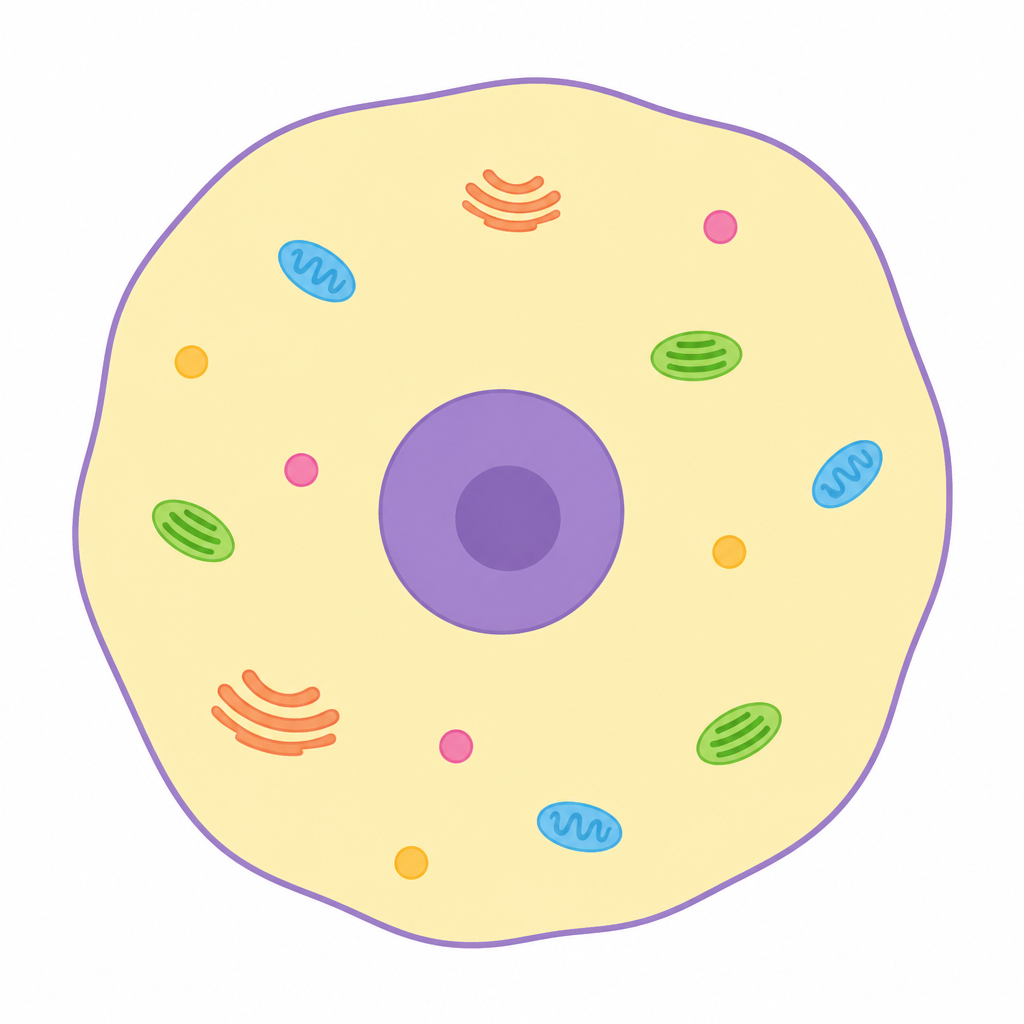
- The biochemical reactions needed for life processes, together called metabolism, take place in the cytoplasm.
- It helps keep the amount of water and salts in a living body balanced.
- It gives shelter to the components of the cell.
The components of a cell
The things that lie inside a cell are its components. A cell has two kinds of component: cell organelles and cell inclusions.
Cell organelles: the components that are living in nature and that run the life processes and the biochemical reactions of the cell.
Cell inclusions: the non-living components that serve as raw material for the biochemical reactions of the cell.
Ribosomes, chloroplasts, mitochondria and Golgi bodies are examples of cell organelles. Water, salts, enzymes, minerals, protein, vitamins and hormones are cell inclusions. These are also sources for the production of energy.
Mitochondria
Mitochondria are a major organelle found in the cytoplasm. A mitochondrion is long and thread like, rod shaped or cylindrical. A single cell holds many of them. It is covered by a membrane of two layers. Inside it, the chemical reactions of cellular respiration take place and energy is produced.

- Here glucose is broken down by respiration and energy is produced, which is stored in the energy carrying molecule ATP, that is Adenosine triphosphate.
- Because DNA, that is Deoxyribonucleic acid, is found in it, it also passes on hereditary characters.
Because mitochondria make the energy a cell needs, they are also called the power house of the cell.
Plastids
A plastid is covered by a membrane of two layers and is found in the cytoplasm. It is present in all plant cells, in some single celled organisms such as Euglena among the protozoans, and in some bacteria, but it is not present in animal cells or in fungi. Plastids are of three kinds: chloroplast, chromoplast and leucoplast.
Plastids are not found in animal cells. Showing a chloroplast in a drawing of an animal cell is wrong.
Chloroplast
This is the green coloured plastid. It is spherical or oval, but in Spirogyra it is ribbon shaped. It is covered from outside by two thin layers of membrane. The green pigment chlorophyll is found inside it.
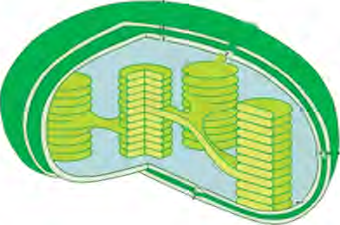
- In photosynthesis, the chloroplast uses solar energy to make carbon dioxide and water react together, and builds carbohydrate from them.
- It builds fatty acid and amino acid in the green leaves.
- Because DNA is found in it, it passes on hereditary characters.
- The chlorophyll inside it is what makes a plant green.
Chromoplast
This is the coloured plastid other than green. It is found mainly in flowers, in ripe fruits and in other coloured parts of a plant. It is flat in shape. It holds coloured pigments, and these give colour to the different parts of the plant.
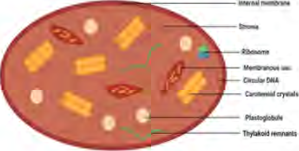
- The chromoplast makes flowers colourful, which attracts insects and so helps in pollination.
- It gives ripening fruits their various colours, which helps in the spreading of fruits and seeds.
Leucoplast
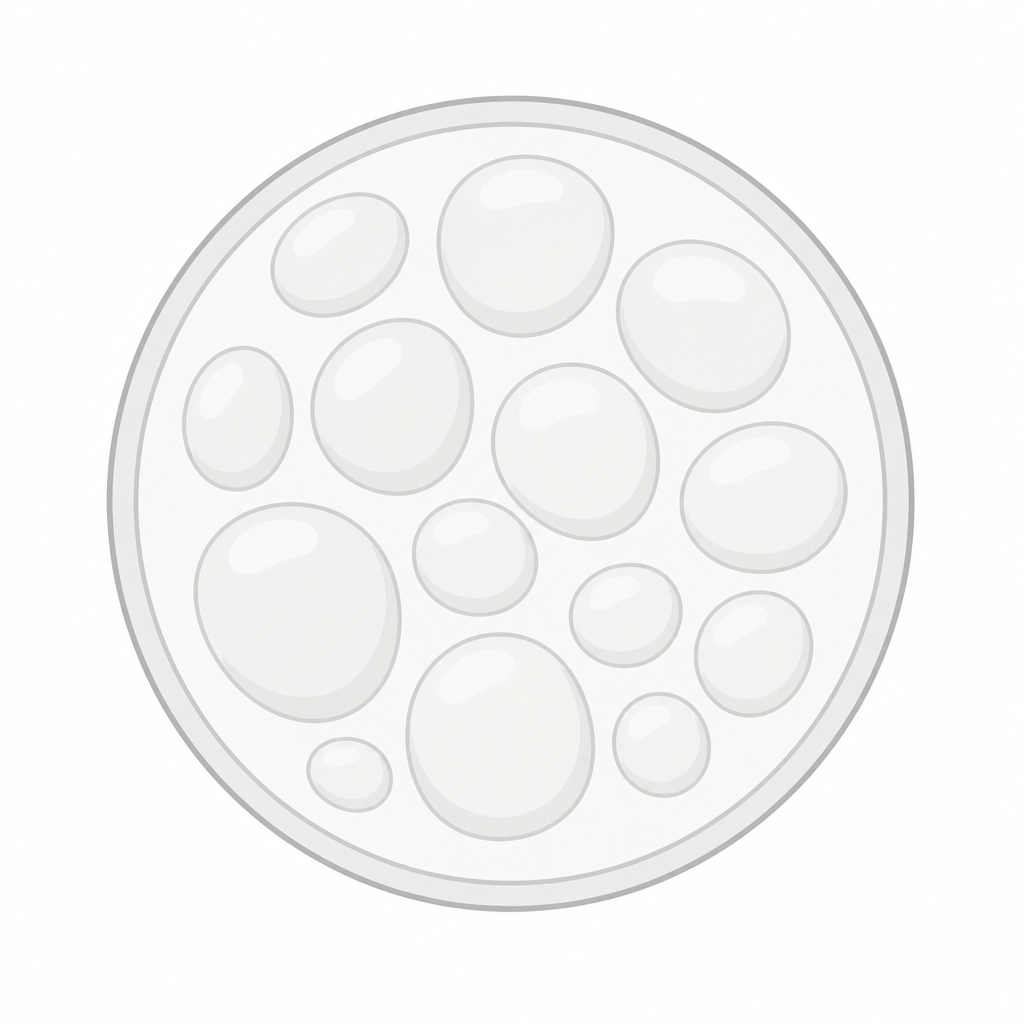
This one is found in roots, fruits, seeds and the colourless parts of a plant. It is spherical in shape. Its main work is to store nutrients such as starch, protein and fat.
Ribosome
Ribosomes are found mainly lying free in the cytoplasm, but some are found inside mitochondria and chloroplasts as well. Like other organelles of the cell, ribosomes also sit stuck to the surface of the endoplasmic reticulum. They have no covering of their own.
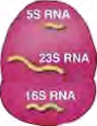
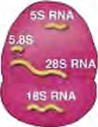
- It carries out protein synthesis and builds protein. For this reason it is also called the factory of protein.
- It takes part in gene expression, the control of hereditary characters.
Endoplasmic reticulum (ER)
This is a long, much branched structure that spreads like a net through the cytoplasm, reaching from the cell membrane all the way to the nucleus. It is called ER for short. Its inner part is hollow, while its outer surface is granular because ribosomes sit stuck on it. On some endoplasmic reticulum, however, no ribosomes are found on the surface.
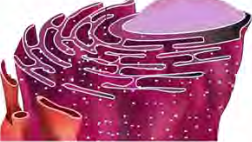
- It gives the cell a structural framework and supports it. For this reason it is also called the endoskeleton of the cell.
- Because various kinds of enzyme are found in it, it helps in metabolism.
- During cell division it helps to build the nuclear membrane and to form the Golgi body.
- It takes part in the transport system of the cell.
Golgi body
This organelle is named after the Italian scientist Camillo Golgi, who discovered it in 1898. It is made of parts stacked together like a bunch of bananas.
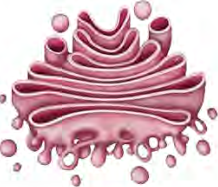
- The Golgi body helps in the release of gum, mucus, sweat, tears and saliva.
- During cell division it helps to build the cell plate and the cell membrane.
- It also takes part in storing and transporting substances inside the cell.
Lysosome
This is a very tiny, spherical organelle with a covering of one single layer. It is found mostly in the cells of an animal's liver, kidney, spleen and pancreas, and it is also found in the meristematic cells of some plants. Digestive enzymes are held inside it.
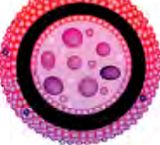
- The lysosome digests nutrients such as protein, fat and glycogen inside the cell and provides energy.
- It breaks down the fragments of old cells and foreign particles and helps produce energy from them. But the lysosomal enzyme it makes can turn on the lysosome itself, so it goes through autodigestion and is destroyed. For this reason it is also called the suicidal bag.
- It provides nutrients when a seed germinates.
Vacuole
This component is found in the cytoplasm. It is irregular in shape. It is held inside a covering of one single layer, and that covering is called the tonoplast. Inside the vacuole there is water, salt, mineral and enzyme, and this fluid is called cell sap. The vacuole is small in an animal cell but somewhat larger in a plant cell.
Tonoplast: the single layered covering that surrounds a vacuole.
Cell sap: the fluid inside a vacuole, made of water, salt, mineral and enzyme mixed together.
Vacuoles are of different kinds. A gas vacuole is found in bacteria that live in water, and it helps them float. A food vacuole, found in micro organisms such as amoeba, stores and digests food, while a contractile vacuole carries out cellular transport and excretion.
- It keeps the amount of water and salt in the cell balanced.
- It helps throw out the substances the cell has no use for.
Every part and its job at a glance
| Part | Main job |
| Cell wall | Gives shape and mechanical support |
| Cell membrane | Controls what goes in and out |
| Cytoplasm | The place where metabolism happens |
| Mitochondria | Produces energy |
| Chloroplast | Carries out photosynthesis |
| Chromoplast | Gives colour to flowers and ripe fruits |
| Leucoplast | Stores nutrients |
| Ribosome | Builds protein |
| Endoplasmic reticulum | Gives a framework and carries materials |
| Golgi body | Helps in secretion and storage |
| Lysosome | Digests nutrients and breaks foreign particles |
| Vacuole | Balances water and salt |
Some components are known by a second name taken from the work they do. These names come up often, so these four pairs are worth holding in memory.
- Power house of the cell: mitochondria
- Factory of protein: ribosome
- Endoskeleton of the cell: endoplasmic reticulum
- Suicidal bag: lysosome
The full lesson is waiting for you
The notes are free to read in full. A free account opens the rest of the practice, and tracks your progress and confidence score for every subject. Presentations and videos need approval from Learn Yeti.