How the Human Body Is Built
The human body is a complex structure. Inside it, many jobs run at the same time: breathing, digesting food, moving blood and pushing waste out. For all of these to run, the cell, the tissue, the organ and the organ system each play an important part. If you think of the body as a large house, cells are its bricks. A heap of bricks is not a house. Bricks join to make a wall, walls make a room, rooms make a floor, and the floors together make the whole house. The body is built up in exactly this step by step way.
Many different kinds of cell are found in the human body. Cells of the same kind, or sometimes of different kinds, join together and form a tissue. Several kinds of tissue join and build an organ, and each organ carries out one special sort of work. A group of organs joins to form a system that does one definite job. The different systems together build the body, and the life processes run in it. So there are five levels running from the cell up to the body, and every level is made by the level just below it.
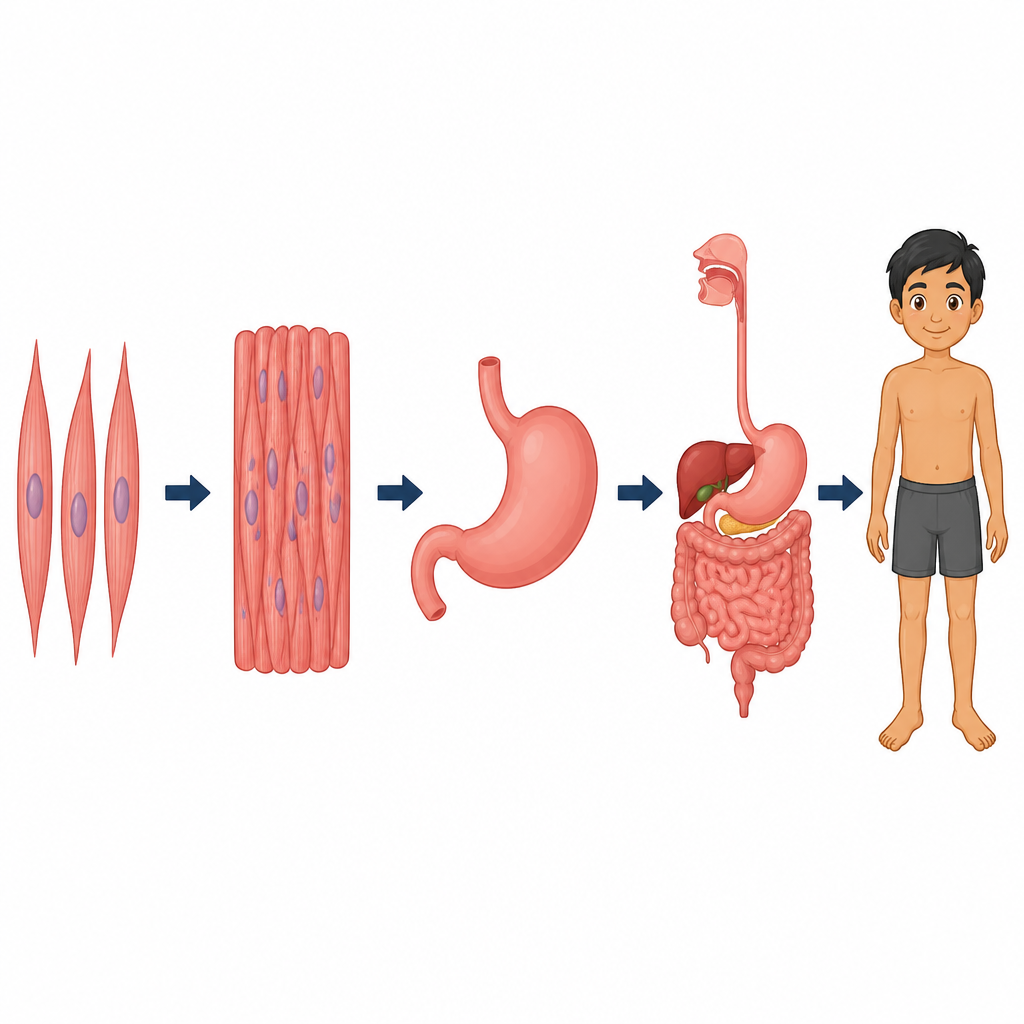
| Level | Made of | Example in the human body |
| Cell | The smallest unit of life | A muscle fibre cell |
| Tissue | A group of similar or different cells | Muscle tissue |
| Organ | Several kinds of tissue | The intestine |
| Organ system | A group of organs working together | The digestive system |
| Body | All the systems together | The whole human body |
The Cell: The Smallest Unit of the Body
A cell is so small that the eye cannot see it. Only a microscope shows it. Small as it is, life begins right there. Making digestive juice, releasing energy and making new cells all happen inside cells. That is why the cell is treated as the basis of life. Where there is no cell, no life process can run at all.
Cell: the smallest unit of structure and of work in a living thing. It can run life processes on its own, and cells join together to make tissue.

Not all the cells in the body have the same shape. A muscle fibre cell is long and thread like, because its work is to stretch and shorten. A red blood cell is small and shaped like a saucer, because it must carry oxygen and travel through narrow tubes. A nerve cell has a long tail, because it must carry a message a long way. A cell's shape is built to suit the work it does. This is exactly what makes it possible for different tissues to do different jobs.
The Control Room Inside the Cell
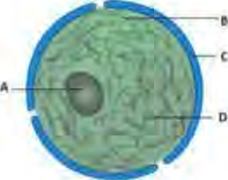
A cell does not run its own work by itself. The nucleus sitting inside it controls everything the cell does, which is why the nucleus is called the brain of the cell. Around the nucleus lies the nuclear membrane, and small pores are set in it through which material passes between the nucleus and the cytoplasm. The fluid inside is called nucleoplasm, and a dark round nucleolus sits near the centre. Without a nucleus a cell cannot divide, no new cells are formed, and growth and development stop.
Tissue: A Group of Cells Working Together
What one cell alone can do is small. A single muscle fibre cell cannot push food along. But when thousands of such cells lie side by side, their joined pull is strong. A group formed by cells of the same kind, and sometimes of different kinds, working in this way is called a tissue. All the cells of one tissue do the same sort of work, so their effort matches and their strength adds up.
Tissue: a group of similar, or sometimes dissimilar, cells that lie together and carry out one same kind of work.
Muscle fibre cells join to form muscle tissue. This tissue shortens and stretches, and so it brings movement to parts of the body. In the same way nerve cells form nerve tissue, which carries messages, and gland cells form gland tissue, which makes juices. The cell provides the base on which a tissue is built, and it provides the base on which the work is carried out as well.
Organs and Organ Systems
One kind of tissue alone cannot finish a whole job. Look at the intestine. It needs muscle tissue to push the food, gland tissue to make enzymes, a lining tissue to soak up the digested food, and nerve tissue to receive messages. Several kinds of tissue joined in this way make one organ, and that organ carries out one special sort of work. Organs are not enough on their own either, so a group of them together makes a system.
Organ: a structure built from several kinds of tissue to carry out one particular job. The heart, the lungs and the intestine are organs.
Organ system: a group of organs that work together to complete one definite task, such as the digestive system or the respiratory system.
- Digestive system: the mouth, food pipe, stomach, intestine and liver together digest food.
- Respiratory system: the nose, windpipe and lungs together bring oxygen in.
- Transport system: the heart and the blood vessels together carry blood all over the body.
- Excretory system: the kidneys and the bladder together send waste out.
Do not treat an organ and a system as the same thing. The stomach is an organ, not the digestive system. The digestive system is the whole group: the mouth, the food pipe, the stomach, the intestine and the liver. If a question asks you to name a system and you name a single organ, the answer is wrong.
The Interrelationship Seen in Digestion
Watching food being digested shows clearly how cell, tissue and organ work together. Among the organs of the digestive system, the intestine has muscle tissue in the layer of its wall. Once food reaches the intestine, the work goes on like this.
- The muscle fibre cells in the wall of the intestine shorten and then loosen again.
- The muscle tissue made of those cells begins to move.
- The movement made by the muscle tissue pushes the food from the front towards the back.
- The glands in the intestine produce enzymes.
- A chemical reaction takes place between the enzyme and the food, and the food is digested.
- The digested food is soaked up by the inner lining of the intestine and passed into the blood.
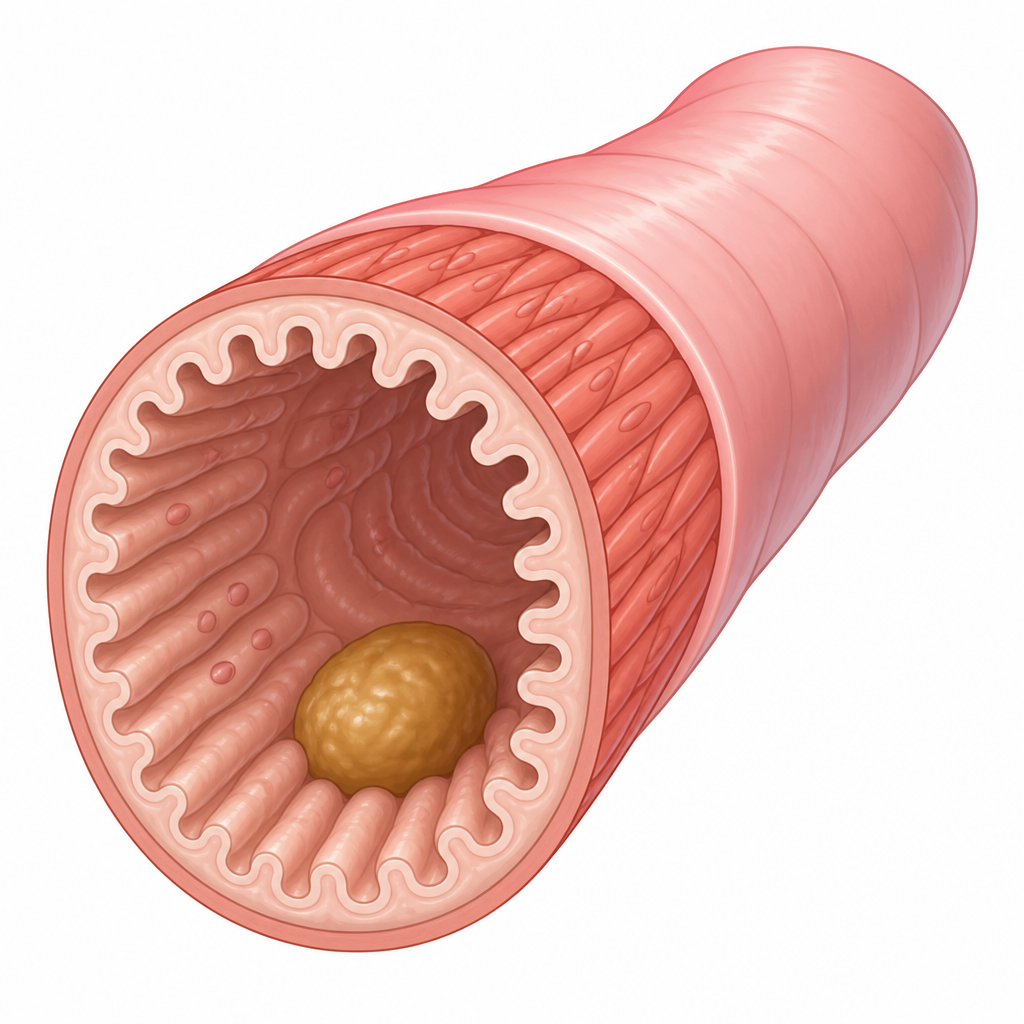
Seen this way, the muscle fibre cells and the muscle tissue found in the intestine give direct help to the work the intestine does in digesting food. The cell supplies the movement, the tissue turns that movement into force, and the organ puts that force to use. If any one of these stops, the food is not digested. If the cells stop working the tissue cannot move, and if the tissue does not move the organ cannot send the food forward.
Life Processes Begin in the Cell
The life processes that run in the human body, such as nutrition, respiration, reproduction, transport, metabolism and excretion, all begin in the cell. When we breathe, the lungs pull air in, but the place where oxygen actually does its work is inside the cell. There the food is broken down and energy is released in an oxidation reaction, and the energy produced is stored in the form of ATP. The movement of gases, salts and water within the cell is called cellular transport. So however large the job a system does, its root lies in the cell.
If the biochemical reactions in a living cell stop, no energy is produced. With no energy the cell stops working, the tissue goes idle, the organ cannot do its job, and in the end the life processes of the whole body come to a halt.
Joined Both in Structure and in Work
Cell, tissue and organ are interrelated in two ways. First, in structure: cells build tissue and tissue builds the organ, so the body of the organ is itself made of cells. Second, in work: the cell supplies energy and movement, the tissue turns that into a joint effort, and the organ completes the whole task. If one level fails, every level above it is affected. This is why biological processes can only run when cell, tissue and organ act in coordination.
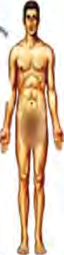
Cells make tissue, tissue makes an organ, organs make a system and systems make the body. It is one chain, and every link of it rests on the link before it.
The full lesson is waiting for you
The notes are free to read in full. A free account opens the rest of the practice, and tracks your progress and confidence score for every subject. Presentations and videos need approval from Learn Yeti.