Why food goes bad, and what holds it back
At home, paddy and wheat are dried well before they are put into storage. When lemon pickle is made, the lemons are held under salt and oil. Gundruk, which is leafy mustard or radish greens left to ferment, is dried before it goes into a jar. From the outside these three jobs look unrelated. One dries, one soaks in salt, one dries again. Underneath, all three are doing the same single job.
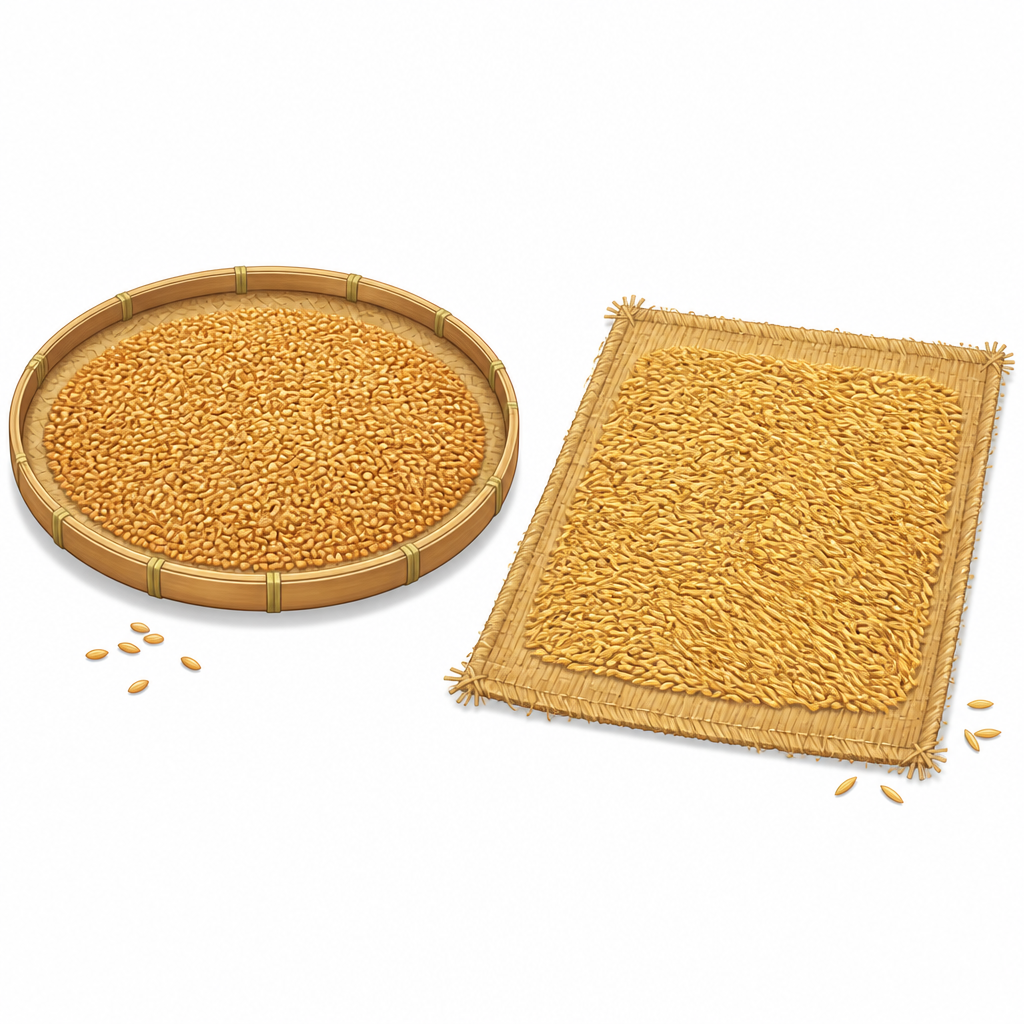
Food does not go bad on its own. Vegetables wilt and smell, cooked rice turns sour and bread grows a green fur because bacteria and fungi are multiplying in it. Those microorganisms need three things in order to multiply: water, a warm temperature, and the nourishment that is in the food itself. The nourishment cannot be taken away, because that is the very reason we are keeping the food. So we work on the other two. Take the water down, shut off the path by which air and water reach the food, or bring the temperature down. Any one of these stops the microorganisms from multiplying, and the food stays fit to eat for a long time.
What food preservation means
Fruit, vegetables, fish and meat, grain and pulses are all foods we use every day, and all of them can be held back for a long time by one method or another. But holding food back has two conditions. The first is that the nourishment in the food must not be destroyed. The second is that the food must be protected from infection by microorganisms. Work that meets both conditions is what we call food preservation.
Food preservation: keeping a food usable for a long time in a way that does not destroy its nourishment and that protects it from infection by microorganisms.
Preserved food can still be used long after it was made. That is why a fruit that ripens once a year can be eaten out of season, and why greens that grow only in one season reach the kitchen all year round as gundruk.
There are three main ways of preserving food: dry preservation, wet preservation and cold preservation. All three have the same aim, but each blocks the microorganisms by a different road.
1. Dry preservation
Dry preservation: preservation carried out by applying a set temperature so that only the required amount of moisture is left in the food.
This is the simplest of the three. Only a set percentage of water is allowed to remain in the food. Once the water is down to that level, microorganisms cannot attack it, so dried food can be stored for a long time at ordinary room temperature. Fish and meat, fruit and vegetables can all be preserved this way.
The drying is done like this:
- Clean the food, cut or slice it, and spread it out so that it lies in a thin layer.
- Keep it at a temperature of 20 °C to 30 °C, in mild sun, in an oven or in an electric drier.
- Dry it for a few hours each day, and keep doing this for several days.
- Once it has dried properly, pack it safely and put it into storage.
Drying harder is not drying better. Left in fierce sun far too long, dried greens and dried meat lose their taste and their food value as well. The aim is to bring the moisture down to a set percentage, not to bake out the last drop of water.
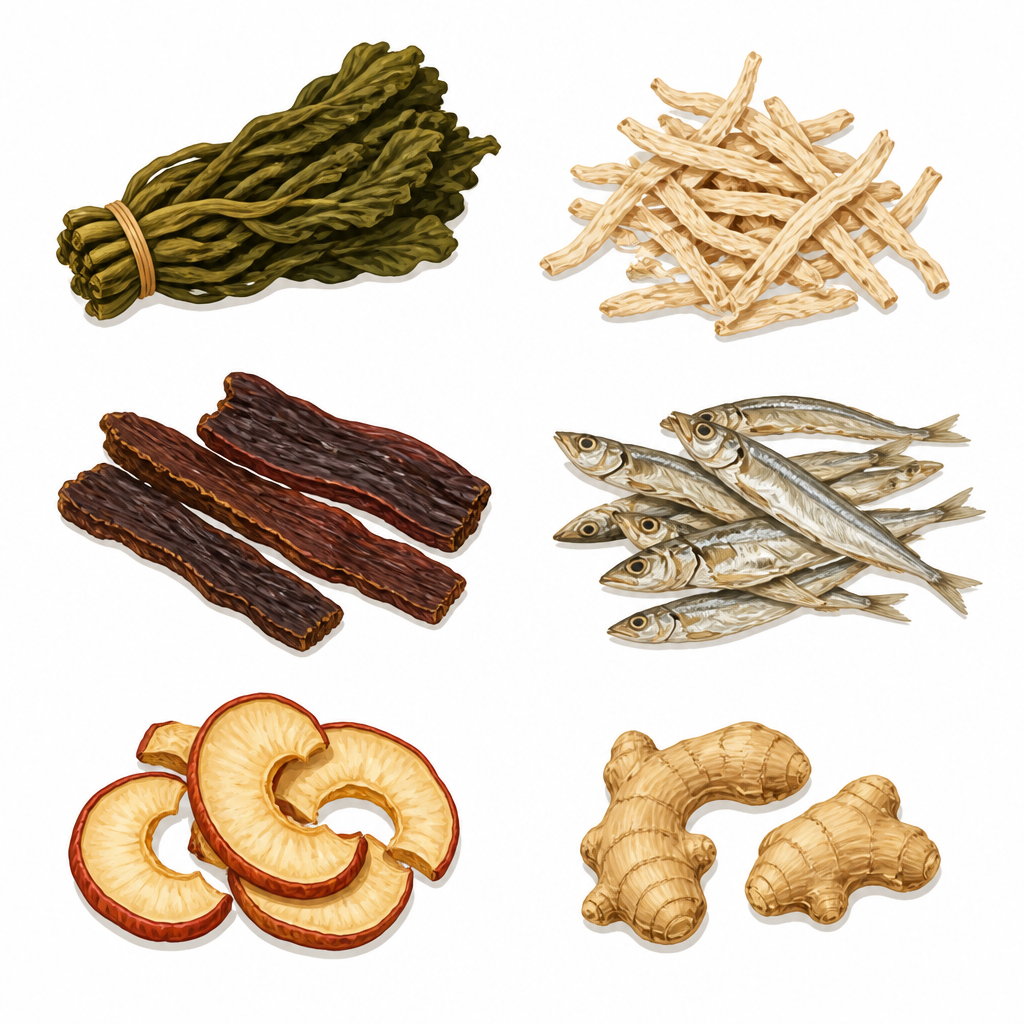
In Nepal this is the traditional way many foods are preserved:
- Grain
- Dried strips of meat, called sukuti
- Small dried fish, called sidra
- Dried fruit
- Dried leafy greens
- Tama, which is fermented bamboo shoot
- Gundruk, leafy greens fermented and then dried
- Sinki, fermented and dried radish
- Sutho, which is dried ginger
2. Wet preservation
Wet preservation: preservation carried out by keeping the food soaked in a liquid.
This too is a traditional method. Fruit and the vegetables used for spicing can be preserved this way. Here the water is not taken out at all. Instead the food is covered completely by a liquid and the path by which air could reach it is shut.
Wet preservation is done like this:
- Boil the food, or clean it thoroughly.
- Put it into a safe jar or container.
- Pour in a solution of a set thickness, or citric acid or vinegar, or olive oil or mustard oil.
- Press the lid on so tightly that no air can get in.
Done this way, the microorganisms find no gap through which to enter the jar, and the food does not rot. In Nepal this is the traditional way pickles are made and kept: pickles of lemon, chilli, ginger, garlic, fenugreek, radish and bamboo shoot.
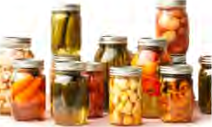
Never dip a wet or used spoon into a jar of pickle. The water and air that go in with it are exactly what mould needs. Keep the pickle covered by its oil or liquid at all times, and press the lid back on after every use.
3. Cold preservation
Cold preservation: preservation carried out by keeping the food at a low temperature.
This method can hold food for a short while or for a long stretch. Keeping food in the kitchen fridge is the short kind. Keeping potato, tomato and other vegetables and fruit for months in a cold storage centre is the long kind. At a low temperature microorganisms are not active, so the food can be stored.
In Nepal the traditional form of this is a pit dug in the ground, in which potato, ginger and turmeric are kept. The temperature under the soil is lower than the air above and stays steady through the day, so the job gets done with no electricity at all.
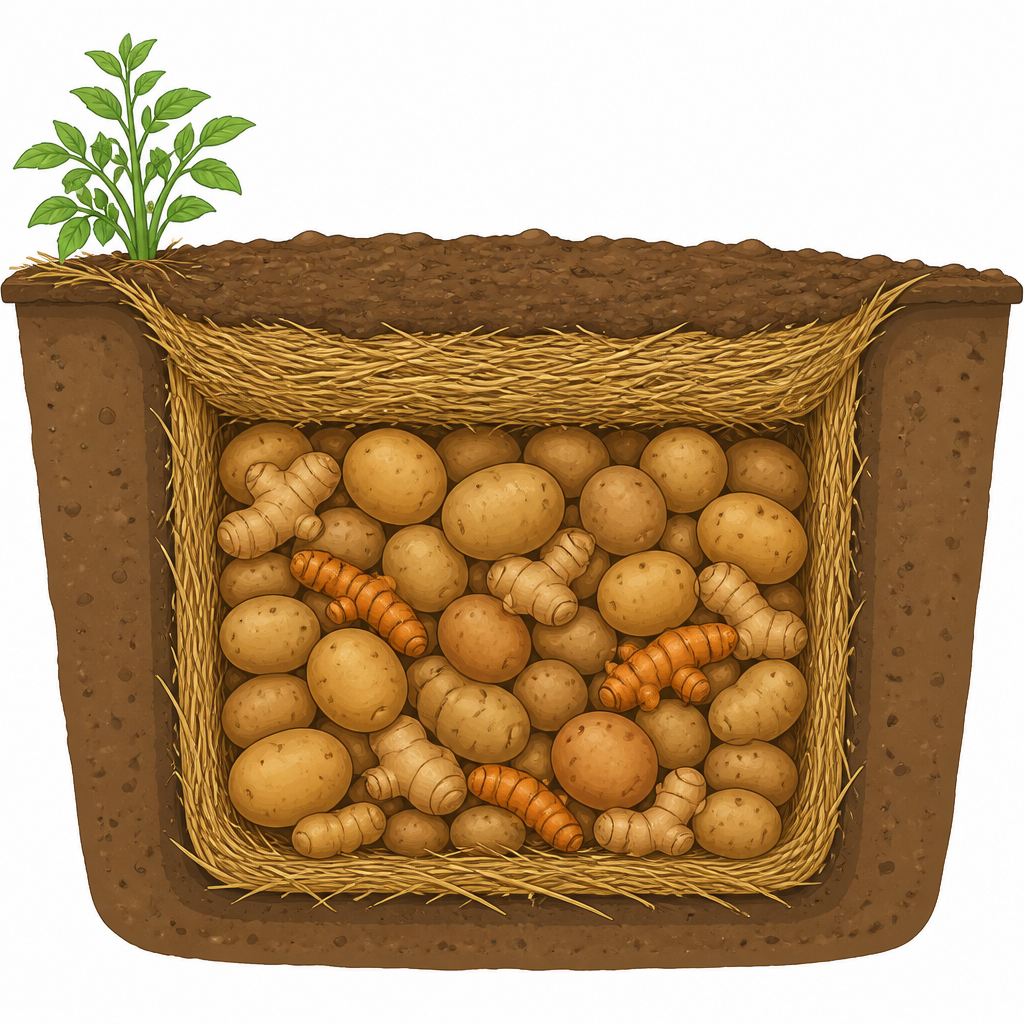
Cold does not kill microorganisms. It only slows them down. That is why food taken out of the fridge starts to spoil quickly once it stands in a warm room.
The three methods side by side
All three methods stop microorganisms from multiplying, but each takes a different road to it. One takes the water away, one shuts the door on air and microorganisms, and the third brings the temperature down.
| Method | What is done | Why microorganisms cannot multiply | Examples |
| Dry preservation | Moisture is brought down to a set percentage | Without enough water, bacteria and fungi cannot grow | Dried greens, dried meat, dried fish, dried ginger |
| Wet preservation | The food is covered by a solution, an acid or oil, and sealed against air | With no way in, microorganisms never reach the food | Pickles of lemon, radish, garlic and bamboo shoot |
| Cold preservation | The food is kept at a low temperature | In the cold, microorganisms are not active | Vegetables in a fridge, potatoes in a cold storage centre, ginger in a pit |
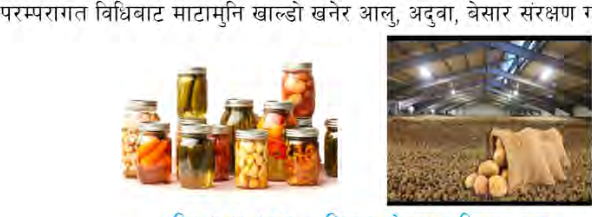
Why preserving food matters
Preserving food is not only about saving food. It is about a family and a community having enough to eat all year. A vegetable that crops heavily in one season lasts well beyond it, produce bought cheaply when the market is full does not go to waste, and there are vegetables in the kitchen even in a dry month. It also means nobody is left with rotten food as their only choice, so the illnesses that microorganisms cause are avoided as well.
- Food is saved from being wasted.
- What one season produces can be used in the next.
- Because the nourishment is not destroyed, the food value stays.
- The risk of having to eat infected or rotten food goes down.
- A farmer can hold a crop back until the price is fair.
The full lesson is waiting for you
The notes are free to read in full. A free account opens the rest of the practice, and tracks your progress and confidence score for every subject. Presentations and videos need approval from Learn Yeti.