The Central Part of the Cell
A cell is not an empty bag. Many small parts sit inside it, and each of them does a job of its own. All those parts need something to keep them in order, and that something is the nucleus. The nucleus is the central part of the cell. It is round in shape, and a covering made of two layers wraps around it. When a cell is looked at under a microscope, the dark round body lying near the middle is the nucleus.
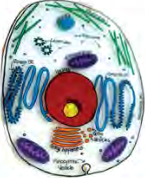
A nucleus is found in almost every kind of cell. In prokaryotic cells such as bacteria, however, it is not fully developed. Those cells have no covering around the nucleus, so their hereditary material lies scattered in the fluid of the cell itself. Such a nucleus is called an undeveloped nucleus without a covering.
Nucleus: the round part at the centre of a cell, enclosed by a covering of two layers, which controls and runs all the activities of the cell.
The brain gives orders to every organ of our body, and in the same way the nucleus gives orders to every part of the cell. When food is to be broken down, how much protein is to be made, when waste is to be pushed out, all of this is settled by the nucleus. For this reason the nucleus is also called the brain of the cell.
If the nucleus is taken out, a cell cannot live for long, because the part that gives the orders is gone.
The Four Parts of the Nucleus
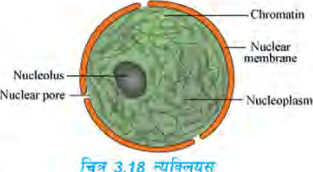
The nucleus is a small world of its own. From outside it looks like one round lump, but four parts are found inside it. They are:
- Nuclear membrane
- Nucleolus
- Nucleoplasm
- Chromatin fibre
The Nuclear Membrane
The nuclear membrane is the outer covering of the nucleus. It has two layers made of lipid and protein. Fine holes called nuclear pores are found in these layers. The membrane is elastic in nature, so it does not tear when the nucleus swells a little or shrinks a little.
Nuclear membrane: the outer covering of the nucleus, made of two layers of lipid and protein, carrying fine pores and elastic in nature.
The membrane protects the nucleus, carries materials into and out of the nucleus, and takes part in the synthesis of enzymes and antibiotics. Because it has pores, the raw materials the nucleus needs can enter, and the messages made inside can leave for the cytoplasm. So the nuclear membrane is not a closed wall. It is a wall with doors in it.
The Nucleolus
The nucleolus is found inside the nucleus. It has no covering, it is round, and it is dense and dark. As there is no covering, its edge is not sharply drawn, but because it is thicker than the fluid around it, it shows up under a microscope as a dark spot. It is made of protein and RNA.
At the time of cell division the nucleolus disappears, and later it appears again. During the division it helps in forming the spindle fibre. The spindle fibre is the thread that pulls the chromosomes towards the two ends of the dividing cell.
Nucleolus: the round, dense and dark body inside the nucleus which has no covering of its own and is made of protein and RNA.
The Nucleoplasm
The fluid inside the nucleus is the nucleoplasm. Water, protein, minerals, nucleic acid and enzymes are found in it. The nucleolus and the chromatin fibre lie scattered in this fluid, which means the other two parts of the nucleus float in it.
The nucleoplasm balances the amount of water in the nucleus, takes part in the synthesis of DNA and RNA, and makes enzymes available. If the amount of water is not right, the chemical work going on inside stops, so keeping that balance is no small job.
Nucleoplasm: the fluid inside the nucleus, containing water, protein, minerals, nucleic acid and enzymes.
The nucleolus and the nucleoplasm have similar sounding names but they are different things. The nucleolus is the dark, solid looking round body. The nucleoplasm is the fluid in which that body floats. Swapping their functions is the mistake made most often in tests.
The Chromatin Fibre
The fine, invisible threads that spread inside the nucleus like a net are the chromatin fibres. When the cell is not dividing, these threads are so thin that they cannot be told apart under an ordinary microscope.
At the time of cell division these threads become short and thick, so they turn into something that can be seen, and then they are also called chromosomes. Their number is fixed according to the species, for example 23 pairs of chromosomes are found in human beings. Because DNA is present in them, they pass hereditary characters on to the offspring.
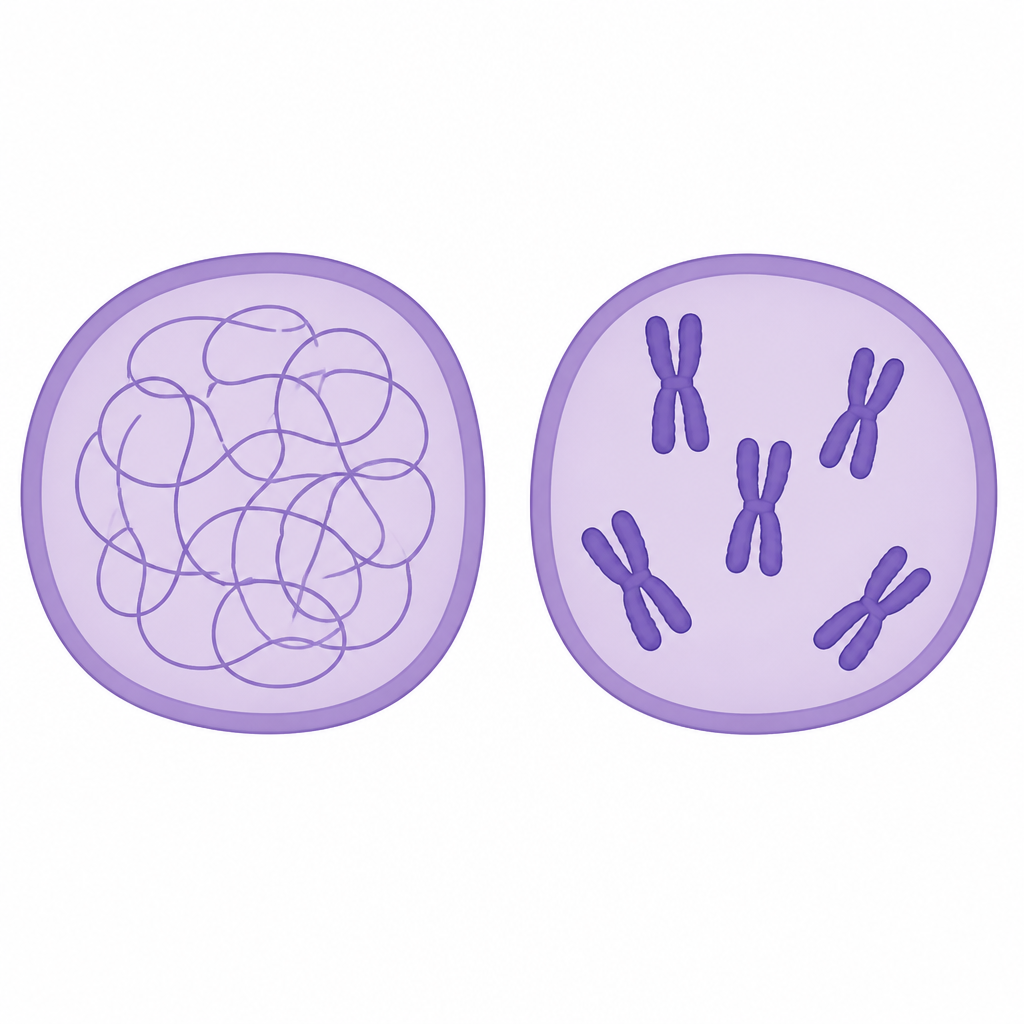
Chromosome: a chromatin fibre that has become short and thick during cell division and so can be seen, carrying DNA inside it.
The Four Parts at a Glance
| Part | What it is | Main work |
| Nuclear membrane | Outer covering of two lipid and protein layers with pores | Protects the nucleus and carries materials in and out |
| Nucleolus | Round, dense, dark body with no covering | Holds protein and RNA, helps form the spindle fibre |
| Nucleoplasm | The fluid inside the nucleus | Balances water, helps make DNA and RNA, supplies enzymes |
| Chromatin fibre | Fine threads spread like a net | Carries DNA and passes hereditary characters to offspring |
What the Nucleus Does
The four parts above each do their own work, and together they carry out these main duties of the nucleus:
- It runs and controls every activity of the cell, including metabolism, the throwing out of waste and the movement of materials.
- Through the DNA it holds, hereditary characters are passed on to the offspring.
- It takes part in cell division itself and so builds new cells.
- In the reproduction of single celled organisms the nucleus takes a direct part.
A cell growing, a new cell taking the place of an old one, and a child carrying the qualities of its parents all have their root in the nucleus.
Looking at the Nucleus under a Microscope
The nucleus is not something to be known only by reading. It can be seen with your own eyes. Take a permanent slide from the laboratory that shows cells and the different parts of the nucleus, and study it in this way:
- Place the permanent slide on the stage of the microscope and hold it in place with the clips.
- Adjust the mirror or the lamp so that plenty of light falls on the slide.
- Use the low power lens first and bring the cells into view.
- Then turn the high power lens into place and sharpen the picture with the fine adjustment screw.
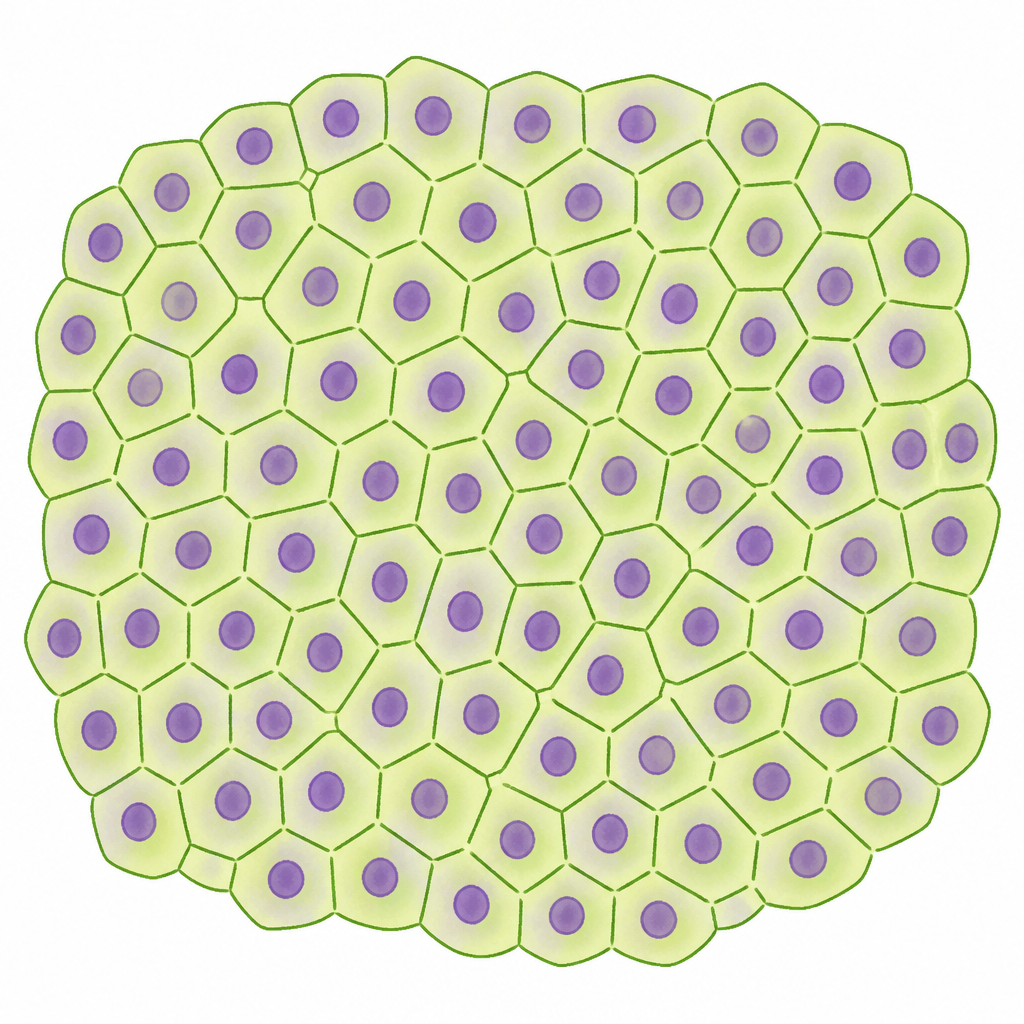
- Pick out the dark round body inside each cell, because that is the nucleus.
- Draw a clean picture of what you see, label the parts and show it to your teacher.
A slide is made of glass. Hold it by the edges and do not let it fall, because broken glass cuts the hand. Never lower the lens so far that it strikes the slide.
The full lesson is waiting for you
The notes are free to read in full. A free account opens the rest of the practice, and tracks your progress and confidence score for every subject. Presentations and videos need approval from Learn Yeti.