Two kinds of magnetic field
You have already met two kinds of magnetic field. The first belongs to a magnet. Its magnetic lines of force leave the north pole, curve through the space around the magnet and enter the south pole. The second is made by an electric current. Whenever current flows along a wire, magnetic lines of force form closed circles around the wire, and the circles vanish the moment the current stops. When the wire is bent into a loop, the circles from every part of the loop crowd through its middle, and the loop begins to behave like a small flat magnet.
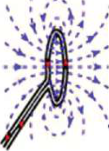
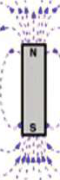
So, for as long as current flows, a wire is a weak magnet in its own right. Now place that wire inside the field of a strong magnet. There are two magnetic fields in the same space, and magnetic fields push and pull on each other just as magnets do. The big, heavy magnet stays where it is, but the light, loose wire moves. That movement is the reason a fan spins.
A wire that moves by itself
The effect is easy to see for yourself. A powerful U-shaped magnet stands with its two poles facing each other across a narrow gap. A piece of flexible conducting wire is tied to a thread and hung so that part of it passes down through the gap, free to swing. The two ends of the wire are joined through a switch to a 6 V d.c. supply or a 9 V battery.
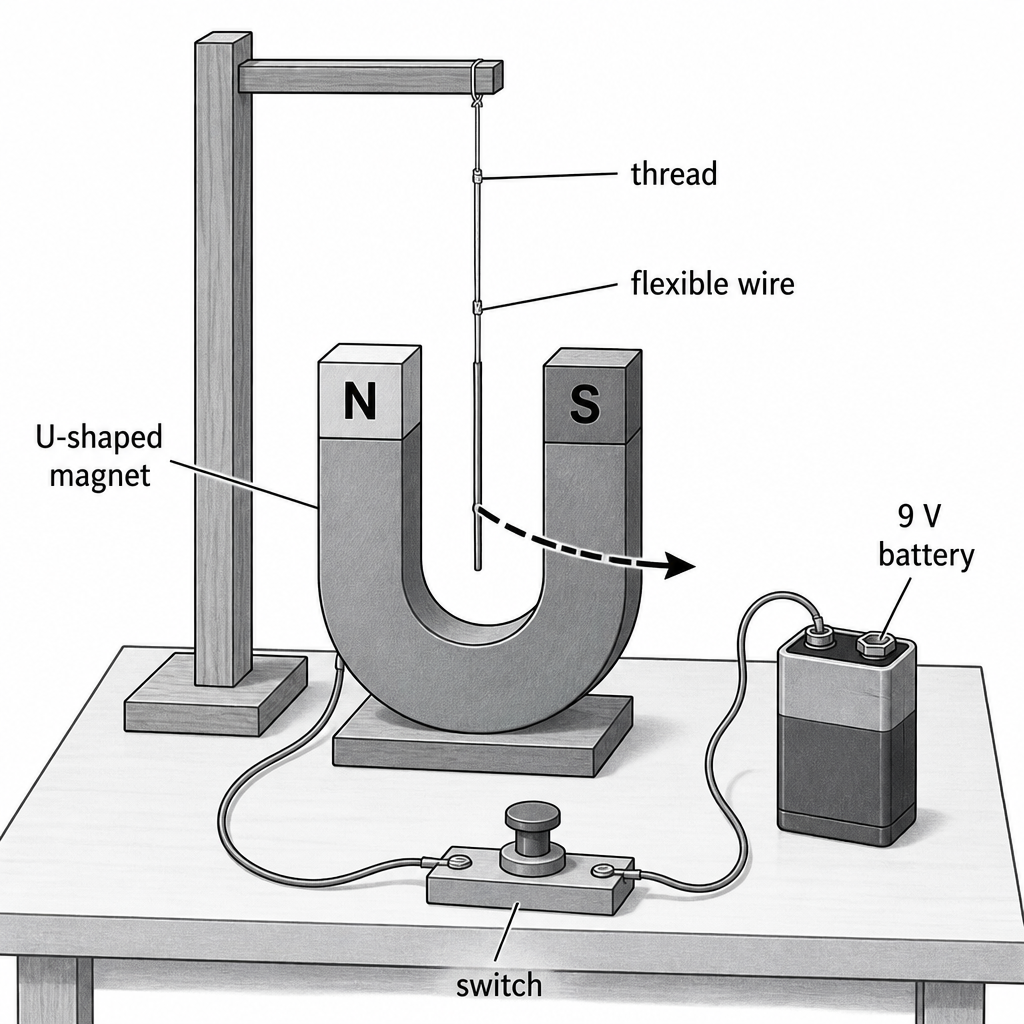
While the switch is off, the wire hangs still. Press the switch for a moment and the wire jerks sideways, either out through the open side of the gap or further in. Release the switch and it swings back to where it hung. Now change the poles of the battery, so that the end of the wire that went to the positive terminal goes to the negative one, and the other end to the positive one. Press the switch again. This time the wire jumps the opposite way.
Press the switch only for a moment. A bare wire joined straight across a battery carries a large current. It heats up quickly, can burn your fingers, and drains the battery within minutes.
The experiment shows three things:
- The wire moves only while current flows in it. No current, no movement.
- The wire is not pulled towards either pole. It moves across the magnet's lines of force, at right angles to them.
- The direction of movement depends on the direction of the current. Reverse the current and the wire moves the opposite way. Turning the magnet round, so that its poles change places, reverses the movement too.
What the motor effect is
Motor effect: The production of motion in a wire placed in a magnetic field when current is passed through it is called the motor effect.
In the motor effect, electrical energy from a battery or the mains becomes mechanical energy, the energy of movement. One jumping wire does little useful work. But wind many turns of wire into a coil, place it between strong magnetic poles and fix it on a shaft, and the push becomes a steady turning. That arrangement is an electric motor.
Electric motor: A device that uses the motor effect to change electrical energy into the turning motion of a shaft.
Every machine below has an electric motor inside it, and every one works because of the motor effect:
- Fan: the motor turns the blades that push the air.
- Water pump: the motor spins a wheel that lifts water up to the tank on the roof.
- Mixer grinder: the motor spins the sharp blades that grind spices and blend food.
- Washing machine: the motor turns the drum full of clothes.
- Electric toy car: a tiny motor turns the wheels.
Why the wire moves
Look again at the wire hanging between the poles. Two fields meet there. The magnet's lines of force run straight across the gap from the N pole to the S pole. The current's lines of force run in circles around the wire. Close to the wire these two fields overlap, and they do not point the same way everywhere.
On one side of the wire, the circles point the same way as the magnet's lines. There the two fields add, the lines of force crowd together and the field is strong. On the other side, the circles point against the magnet's lines. There the two fields partly cancel, the lines spread out and the field is weak. Lines of force behave rather like stretched rubber bands that push their neighbours apart, so the crowded lines on the strong side push the wire towards the weak side. This force of attraction and repulsion between the two magnetic fields is what produces the motion of the wire.
The direction of the push depends on two things: the direction of the current and the direction of the magnet's field. Reverse either one and the strong side and the weak side swap places, so the wire moves the other way. Reverse both together and the wire moves the same way as before.
How the coil of a motor rotates
Coil of a motor: An insulated wire wound around a core, with many turns lying side by side.
The wire has to be insulated. Its turns lie pressed against each other, and bare turns touching would let the current take a short cut instead of flowing round every turn. The coil is placed between two opposite poles of a permanent magnet, N on one side and S on the other. When current is passed through the coil, a magnetic field develops around it. Many turns wound together give a field shaped very like that of a bar magnet, with a north face at one end and a south face at the other.
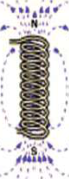
Now the coil is a magnet sitting inside another magnet's field. Its north face is pulled towards the S pole of the permanent magnet and pushed away from the N pole, and its south face is pulled the other way. The coil is fixed on a shaft, so it cannot slide towards the poles. The only thing it can do is turn. Looked at another way, current flows along one long side of the coil in one direction and comes back along the other side in the opposite direction, so one side is pushed up while the other is pushed down. Two opposite pushes on opposite sides of a shaft make it turn.
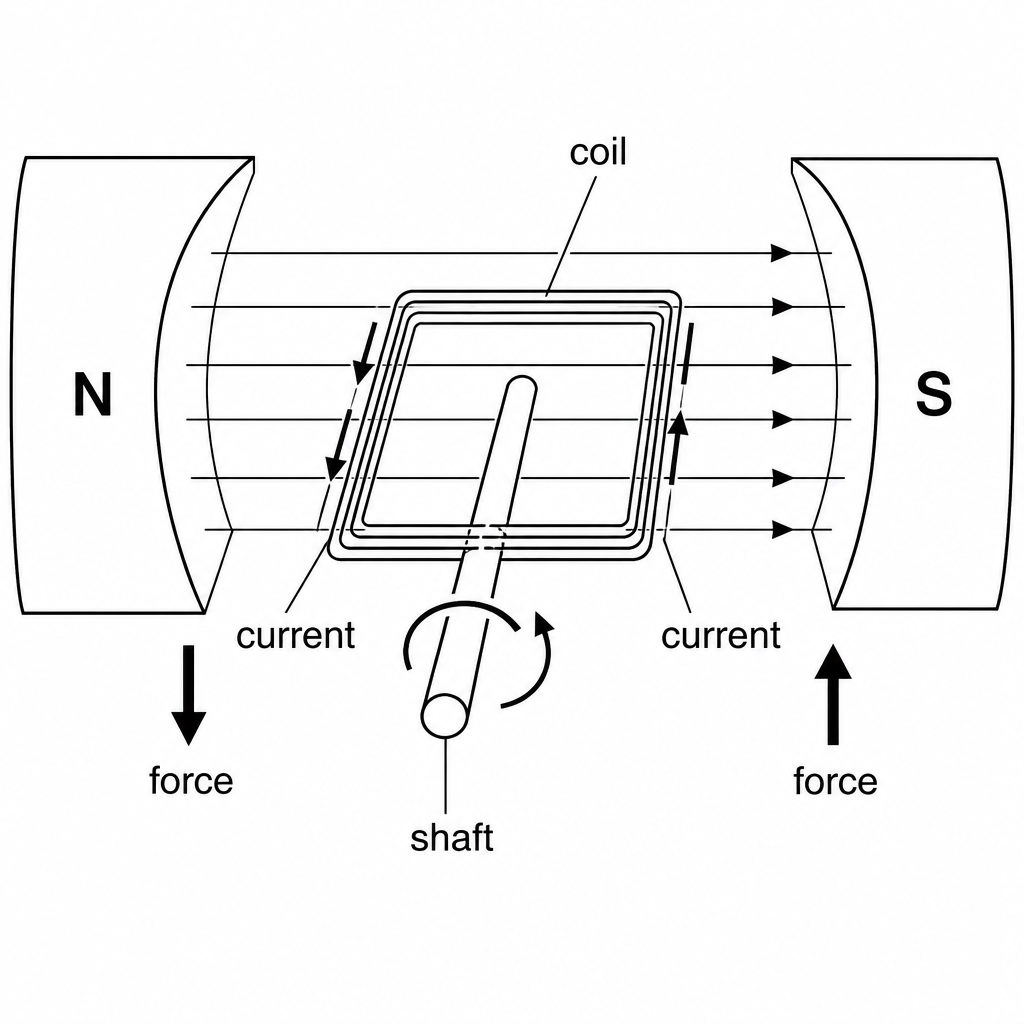
If the current kept flowing the same way, the coil would turn only until its north face pointed at the S pole. There the pull would hold it, and it would rock a little and stop, like a compass needle settling. To keep it turning, the direction of the coil's field has to change just as it arrives. This is done by passing alternating current (a.c.) through the coil. Because of the alternating current, the direction of the magnetic field in the coil changes continuously. The attraction that was pulling a face in becomes a repulsion that pushes it on, and the coil keeps going round. So the coil rotates because of the interaction between the magnetic field of the permanent magnet and the changing field developed in the coil. The shaft turns with the coil, and it turns whatever is attached to it: the blades of a fan, the wheel of a pump, the blade of a grinder.
Alternating current (a.c.): Electric current whose direction reverses again and again, many times every second.
A small motor run from a battery, which gives current in one direction only, reverses the current in its coil another way. A split metal ring on the shaft swaps the coil's connections every half turn, so the coil's field still changes direction at the right moment.
Making a motor turn faster
A motor turns faster when the push on its coil is larger. There are four ways to make that push larger:
| Measure | Why it helps |
| Increase the number of turns in the coil | Every turn carries the current and feels the push. More turns give a stronger coil field and a bigger turning force. |
| Increase the surface area of the coil | A larger coil takes in more of the magnet's lines of force, so more magnetic flux passes through it and the interaction is stronger. |
| Use a more powerful magnet | A stronger magnet has denser lines of force between its poles, so the coil is pushed harder. |
| Use a soft iron core | Soft iron becomes a strong magnet while current flows and follows every change in the current, so it makes the coil's field many times stronger. |
Each measure strengthens one of the two fields that meet inside a motor, either the coil's own field or the magnet's field. Strengthen either one and the attraction and repulsion between them grows, so the coil spins faster. Makers of fans and pumps use all four measures together.
The core must be soft iron. Soft iron gains magnetism quickly and loses it quickly, so it can follow a current that keeps changing direction. Steel keeps its magnetism after the current stops, and a steel core would fight the reversals instead of helping them. In an answer, write soft iron, not just iron and never steel.
The full lesson is waiting for you
The notes are free to read in full. A free account opens the rest of the practice, and tracks your progress and confidence score for every subject. Presentations and videos need approval from Learn Yeti.