Reflection of Sound
Throw a ball at a wall and it comes straight back to you. Sound behaves in the same way. A sound wave produced at a source spreads out in every direction through a medium such as air. While it is travelling, the wave may strike a hard surface, perhaps a cliff, a tall wall or the side of a large building. The surface does not swallow the wave. It turns the wave around and sends it back the way it came.
A sound wave that strikes a hard surface while travelling and bounces back is called reflected sound.
Stand in front of a tall wall or a cliff and shout loudly. A moment later you hear your own voice again, a little fainter, coming back from the wall. That returning voice is an echo, and an echo is a reflected sound. The gap between your shout and the echo is the time the sound needed to travel to the wall and back, and that one simple fact is the seed of every machine described in this topic.
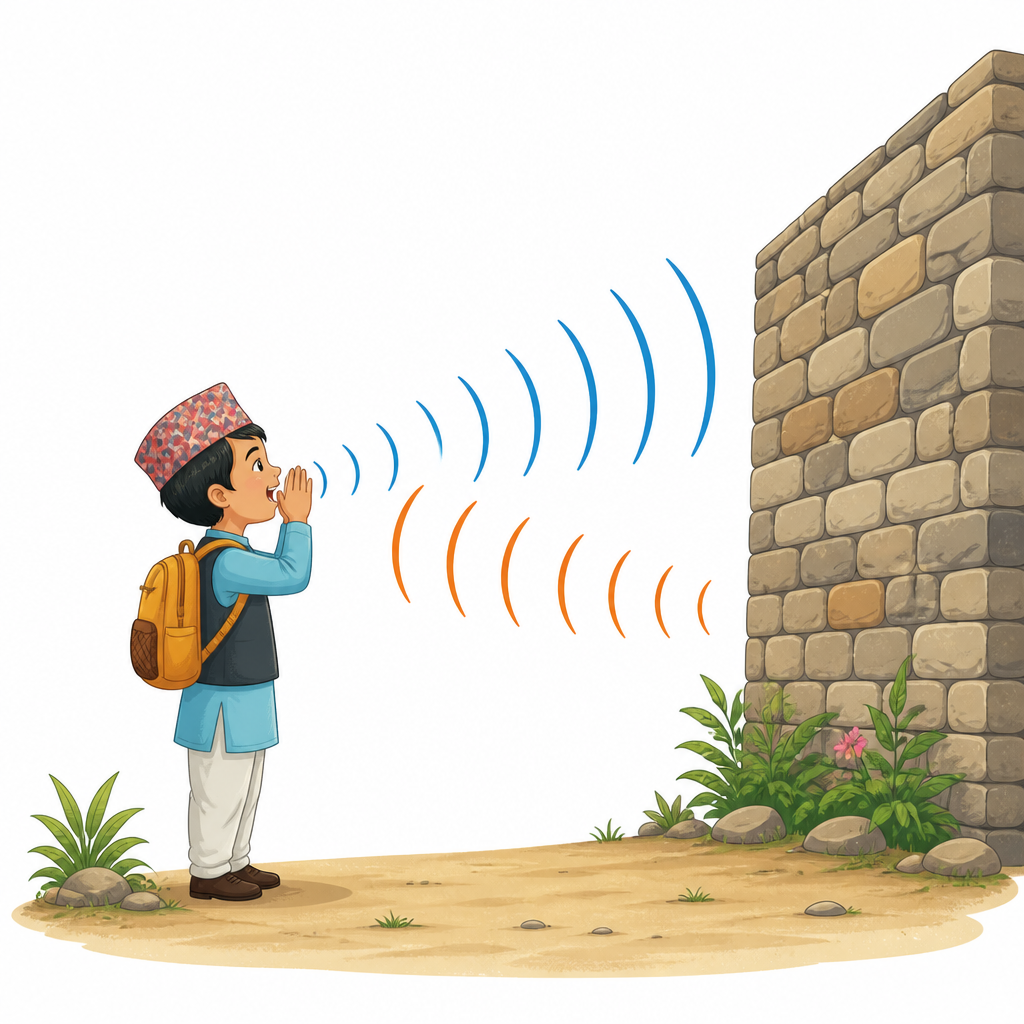
Every use of reflected sound rests on one idea. Sound comes back from a hard surface, and the time it takes to come back tells us how far away that surface is.
Ultrasound
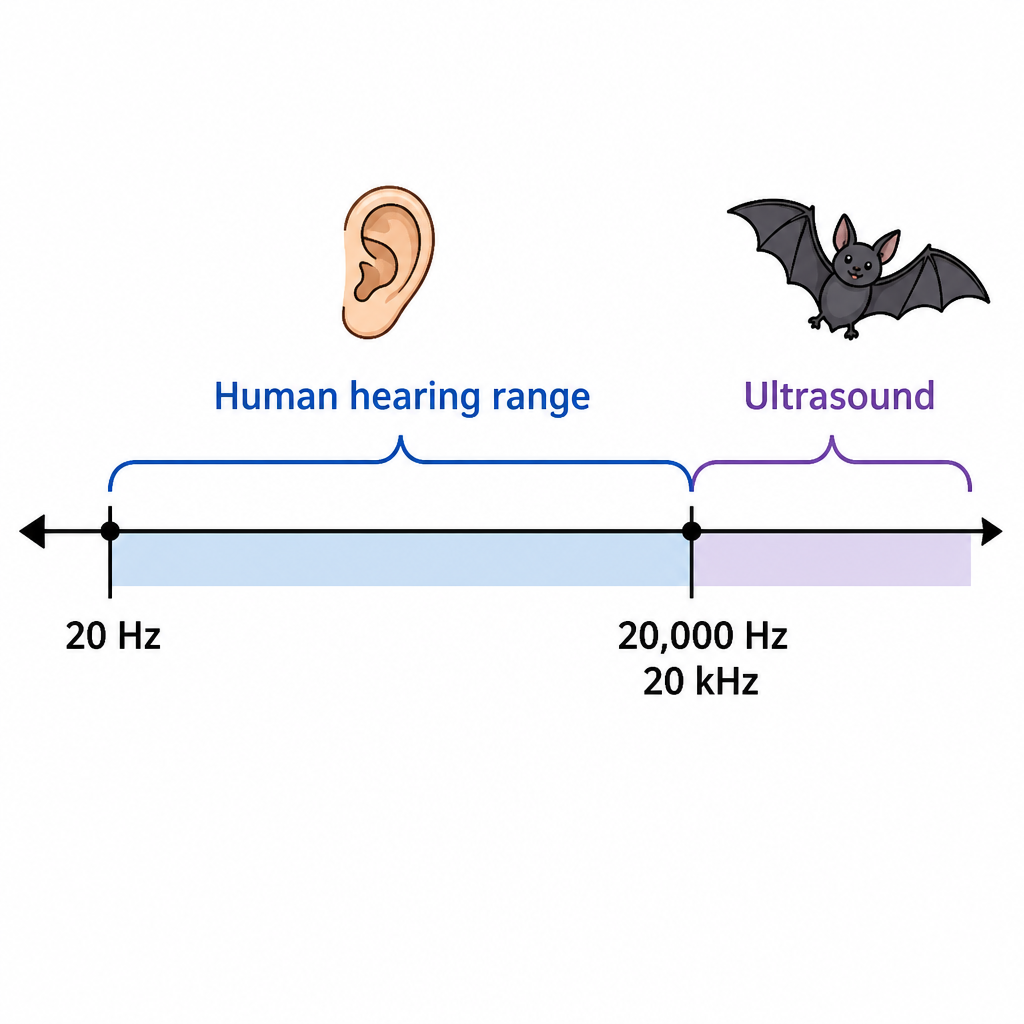
The most useful reflected sound of all is one we cannot hear. Human ears can hear only sounds whose frequency lies between about 20 Hz and 20,000 Hz. Machines and many animals, however, can produce sound whose frequency is higher than that limit.
Sound with a frequency higher than 20,000 Hz, that is 20 kHz, is called ultrasound. Our ears cannot hear it at all.
Because its frequency is higher, ultrasound carries more energy than audible sound. That extra energy is what lets a narrow beam of ultrasound travel out, strike an obstacle and return still strong enough for a device to detect. This is why the measuring and scanning devices in this topic use ultrasound rather than ordinary audible sound.
Ultrasound is not loud sound. Loudness and frequency are different things. Ultrasound has a very high frequency, and that is why our ears cannot hear it. Ultrasound can be faint or strong, and either way we hear nothing.
Echolocation
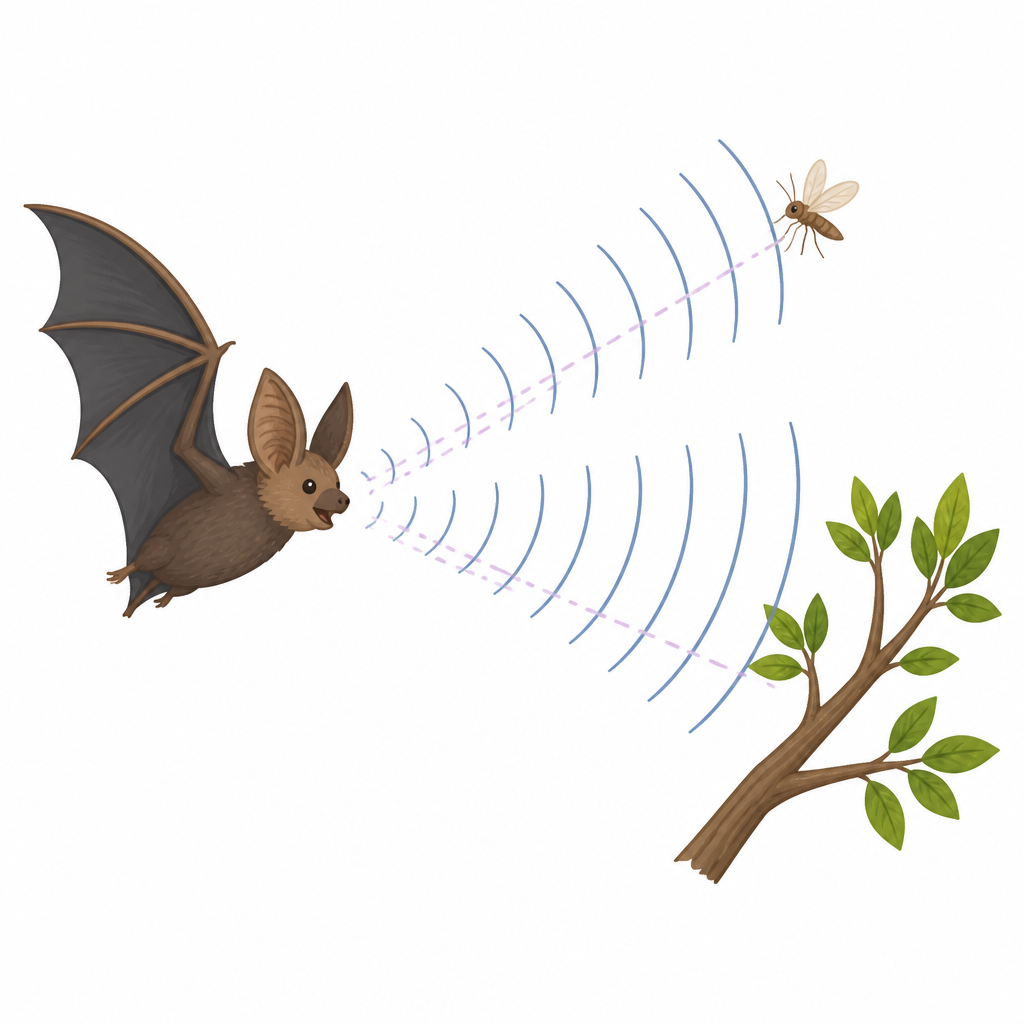
Animals were using reflected sound long before engineers thought of it. A bat flying in complete darkness produces ultrasound as it flies. The waves spread out ahead of it and strike whatever is there, a branch, a wire or a flying insect, and then return to the bat's large ears. From these returning waves the bat works out where the obstacles are and exactly where its food, the insects, is flying.
Finding the position of things by means of echoes is called echolocation.
Dolphins do the same thing underwater. Water is often muddy or dark, and there the eyes are of little use. A dolphin sends out sounds and reads the returning echoes, and through this echolocation it gathers information about places in the water its eyes cannot see.
The Ultrasonic Ruler
Ultrasound can also be produced artificially, and once we can make it, we can use it to calculate distance. An ultrasonic ruler is a device that measures the distance to a solid obstacle without stretching out any tape at all. Its work runs in this order.
- The sender of the device sends ultrasound toward the solid obstacle.
- The wave strikes the obstacle and is reflected back.
- After a short interval the receiver of the device receives the reflected sound.
- From the time interval between sending and receiving, the device calculates the distance.
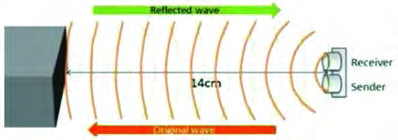
The calculation itself is easy to picture. The speed of sound is already known. The device multiplies that speed by the time it measured, which gives the total path the sound travelled. Since that path went to the obstacle and back again, the distance to the obstacle is half of the total path.
SONAR and the Fathometer
The same trick works on a far larger scale. The technique of sending ultrasound from a device toward a solid surface, counting the time until the reflected ultrasound arrives, and calculating the distance from that time is called SONAR, short for Sound navigation and ranging.
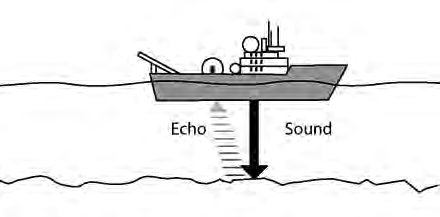
Ships use this to measure the depth of the sea. A device called a fathometer is fitted to the ship. Sound is sent straight down from the bottom of the ship, the seabed reflects it, and the echo returns to the ship. The time taken for the round trip tells the depth of the water at that point.
Hospitals apply the same principle to the human body. In ultrasonography, reflected ultrasound is used to examine the internal organs. The waves pass into the body, reflect from the organs, and the returning waves are turned into a picture that a doctor can read.
Security Alarms
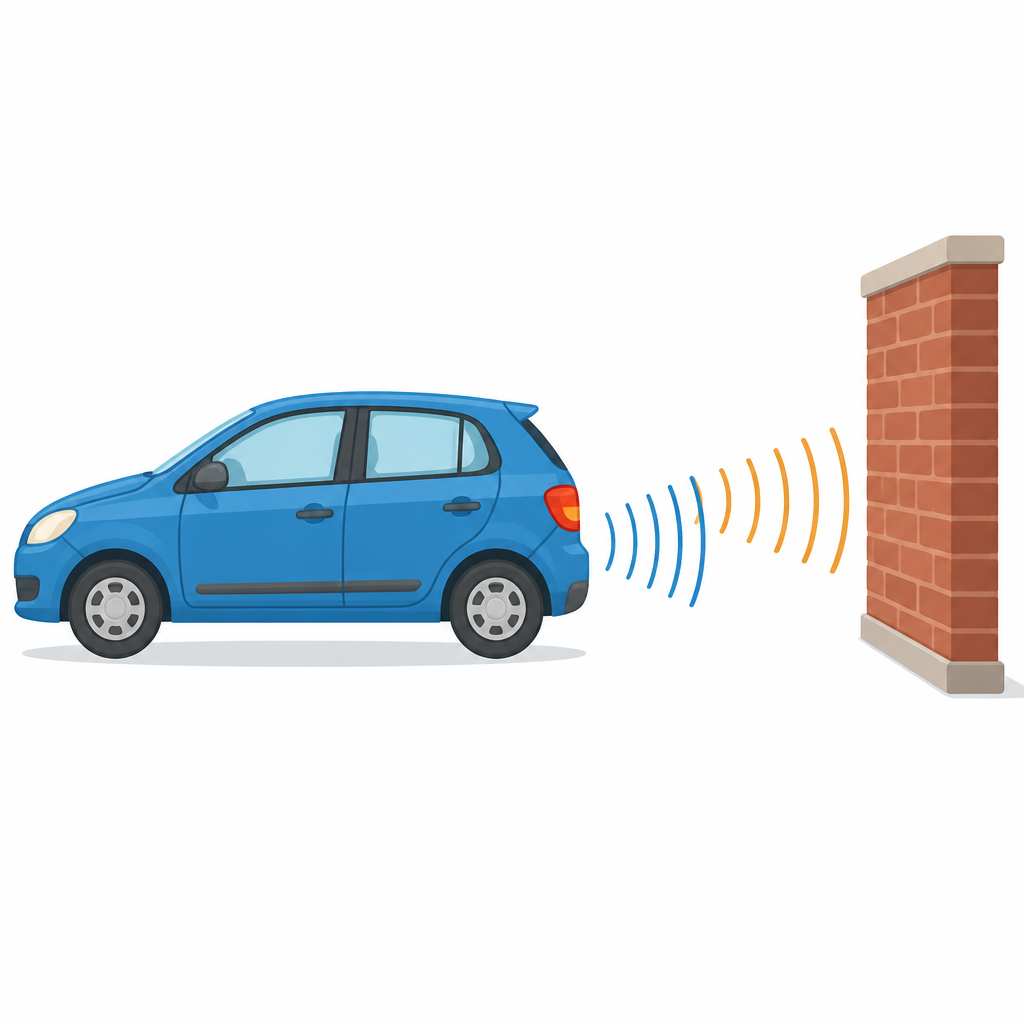
A security alarm can be built on reflected ultrasound. Such a device keeps sending out ultrasound and keeps listening to the reflection coming back from the room or the doorway. When a person moves into that space, the reflection changes, and that change sets off the alarm. The burglar alarm used on house doors works this way. The ultrasonic sensor fitted to cars for parking is another example. As the car backs toward a wall, the sensor times the returning echoes and warns the driver with faster and faster beeps as the gap closes.
Acoustic Protection
Reflection is not always welcome. Inside a room, sound reflects again and again from the walls, the floor and the ceiling, and all those reflections pile on top of the original sound. This is why reflection inside a room makes sound unclear. Reflection from smooth surfaced walls is much greater than reflection from soft and rough surfaces.
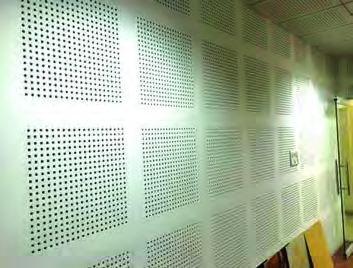
Acoustic protection is the technique of absorbing unwanted sound waves by means of soft and porous surfaces.
Acoustic protection is used to control sound reflection in rooms, assembly halls and sound recording studios. The walls may be made rough, or foam may be stuck onto them. The walls of recording studios and halls carry acoustic panels pierced with many fine holes. Sound enters the holes and is soaked up instead of bouncing back, so the voice recorded inside stays clean.
Uses of Reflected Sound at a Glance
| Technique or animal | What it does |
| Bats and dolphins | Find obstacles and food from echoes (echolocation) |
| Ultrasonic ruler | Measures the distance to a solid obstacle from the echo time |
| SONAR and the fathometer | Measure the depth of the sea from a ship |
| Ultrasonography | Examines the internal organs with reflected ultrasound |
| Burglar alarm and parking sensor | Detect a person or an obstacle from the change in the reflection |
The full lesson is waiting for you
The notes are free to read in full. A free account opens the rest of the practice, and tracks your progress and confidence score for every subject. Presentations and videos need approval from Learn Yeti.