One Family of Waves: The Electromagnetic Spectrum
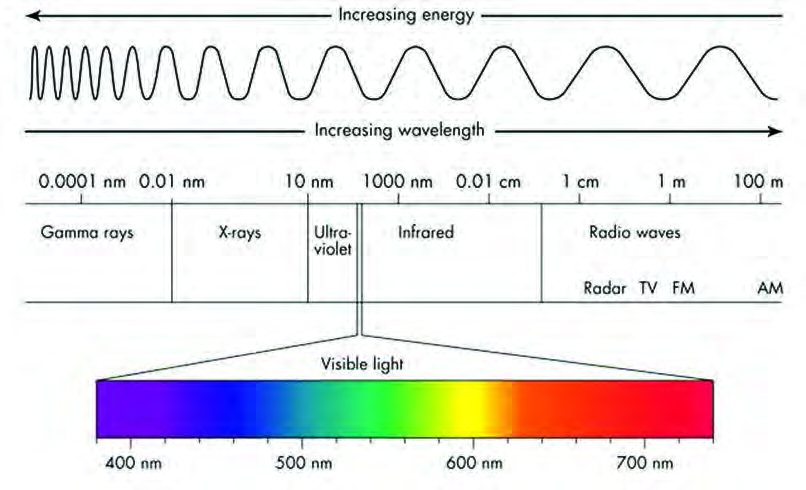
There are seven kinds of electromagnetic wave: radio waves, microwaves, infrared, light, ultraviolet, X-rays and gamma rays. Arranged in order of wavelength they form one continuous family called the electromagnetic spectrum. At one end sit radio waves, which can be hundreds of kilometres long. At the other end sit gamma rays, shorter than an atom. In between lies the narrow band of light that our eyes can actually see.
As the wavelength gets shorter, the energy a wave carries gets larger. That is why the long radio waves are safe for the body, while the short X-rays and gamma rays are handled only with care. Which wave does which job is decided by exactly this pairing of wavelength and energy.
The shorter the wavelength, the greater the energy. This one rule explains the uses of all seven waves.
Radio Waves
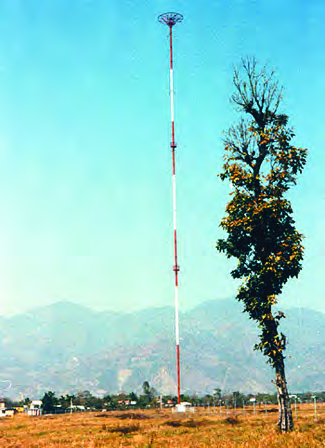
The wavelength of radio waves runs from hundreds of kilometres down to 1 m, which makes them the longest waves of the spectrum. They do not affect the cells of living bodies, so they are safe to use. Radio signals stream around us day and night, and they do us no harm at all. Radio waves are used for the following work:
- A transmitter produces radio waves and broadcasts the signals of radio, television and other communication. A signal sent from a tall tower reaches towns and villages far away.
- A radio telescope receives radio waves arriving from outer space, and from them scientists study the universe.
Microwaves
The wavelength of microwaves runs from 1 mm to 30 cm. Being shorter than radio waves they carry a little more energy, and that energy has been put to work everywhere from the kitchen to the airport. Microwaves are used for the following work:
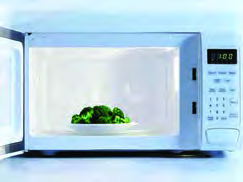
- The microwaves produced inside a microwave oven make the water molecules in food vibrate. As the molecules vibrate they heat up, and the food cooks.
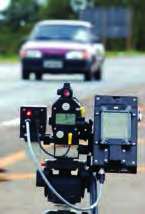
- Radar works on microwaves. Air traffic control uses an airport surveillance radar to follow aircraft, and traffic police use a radar speed gun to measure the speed of vehicles moving on the road.
- Microwaves also carry the signals of modern communication. Satellite links, mobile phones, wifi and bluetooth all establish their connections through microwaves.

Infrared Waves
Infrared means below red. The frequency of these waves is lower than that of red light, and their wavelength is longer than that of red light. When infrared waves of enough intensity fall on the body, we feel warmth. The heat you feel on your face while standing near a fire is exactly this wave at work. Its wavelength runs from \( 10^{-3} \) m to \( 7.5 \times 10^{-7} \) m.
Infrared means below red. An infrared wave has a lower frequency and a longer wavelength than red light. The eye cannot see it, but the skin feels it as warmth.
Infrared waves are used for the following work:
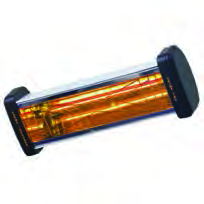
- Infrared heaters and cookers produce heat from infrared waves.
- A radiation thermometer measures body temperature from the intensity of the infrared radiation the body gives off.
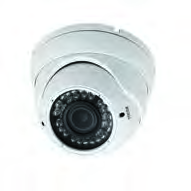
- An infrared CCTV camera keeps watch even at night, using infrared waves that the eye cannot see.
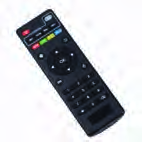
- Remote sensing technology works on infrared waves. To switch a television on or off, to drive a toy car, or to control a drone, the remote sends its signals out as infrared waves.
- Infrared telescopes are used to explore outer space.

Light Waves
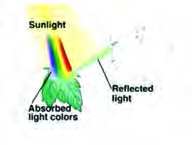
The retina of our eye can detect the waves of the light group, so this small slice of the spectrum is the only part we actually see. Among the visible colours, red light has the longest wavelength at \( 7.5 \times 10^{-7} \) m, and violet light has the shortest at \( 2 \times 10^{-7} \) m. Waves coming from a source of light strike an object and are reflected. When those reflected waves enter our eyes, we see the object.
Light waves are used for the following work:
- We need light waves to see objects at all.
- Plants use the energy they receive from light to carry out photosynthesis.
- The pictures on the display screens of televisions and mobile phones reach our eyes as light waves.
- Communication signals are sent along optical fibres using light waves.
Ultraviolet Waves
The wavelength of ultraviolet waves runs from \( 4 \times 10^{-7} \) m to \( 10^{-9} \) m. The eye cannot see them, yet after long hours in the sun their effect can be seen as darkened, sunburnt skin. The main source of the ultraviolet reaching the Earth is the Sun, and a UV-tube can also produce ultraviolet waves.
Ultraviolet waves falling on the skin in excessive amounts can cause skin cancer. Leaving skin exposed for very long hours in harsh sunshine is harmful.
Ultraviolet waves are used for the following work:
- Inside a fluorescent lamp, the ultraviolet rays produced there make the fluorescent powder coated on the tube glow and give out light.
- Food, clothes and everyday utensils are put out in strong sunshine so that the bacteria on them are destroyed, which protects us from infection.
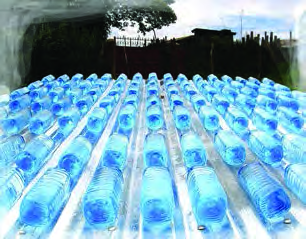
- In the SODIS method, transparent bottles are filled with water and kept in the sun for about 6 hours, which destroys the disease germs the water may carry.
- When we sit in the sun, the ultraviolet rays that arrive with the light make vitamin D form in the skin. This is why babies are put out in the gentle morning sun for a little while each day.
SODIS, short for Solar Disinfection, is a method of purifying water with the Sun's ultraviolet rays. Water is filled into transparent bottles and kept in sunshine for about 6 hours, and the disease causing germs in it are destroyed.
X-rays
The wavelength of X-rays runs from \( 10^{-9} \) m to \( 10^{-12} \) m. X-rays arrive naturally from outer space as far as the Earth's atmosphere, and artificially they are produced by an X-ray machine. Because their wavelength is so short they carry a great deal of energy, and they can pass right through the body or through a bag. X-rays are used for the following work:
- In photography and CT scan techniques, X-rays are used to examine the inner organs of the body and to check whether a bone is cracked or broken.
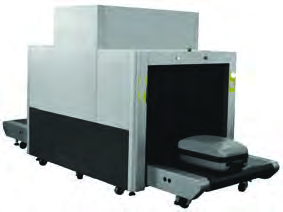
- An X-ray security scanner finds dangerous objects that have been hidden away. At an airport, for example, the bags of passengers are checked by an X-ray security scanner.
- In X-ray therapy, a powerful X-ray beam is aimed at cancer cells to destroy them.
- X-rays serve many kinds of research. They are used to study the crystal structure of substances, and even to investigate the interior of the Earth and to identify minerals.
Gamma Rays
Gamma rays are powerful waves produced by radioactivity, the process in which the nucleus of an atom breaks apart and releases energy. They are the electromagnetic waves of the very highest frequency, and they are extremely dangerous by nature. They destroy living cells and can cause cancer. Used in a controlled way, however, that same power becomes a medicine. Gamma rays are used for the following work:
Radioactivity is the process in which the nucleus of an atom breaks apart and releases energy.
- The controlled use of gamma rays destroys the cancer cells in the body. This method of treatment is called radiotherapy.
- Gamma rays are used to sterilise surgical equipment, the instruments used in operations.
- Gamma rays destroy microorganisms in food, so treated food can be stored for a long time.
- In nuclear medicine, a gamma ray tracer is put into the body and the body is examined by following it.
Radiotherapy is the method of treatment in which the controlled use of gamma rays destroys cancer cells in the body.
Gamma rays are deadly rays that destroy living cells. They are useful only when trained specialists use them in controlled doses.
The Seven Waves at a Glance
| Wave | Wavelength | Main uses |
| Radio waves | Hundreds of km to 1 m | Radio and TV broadcasting, radio telescopes |
| Microwaves | 1 mm to 30 cm | Ovens, radar, speed guns, mobiles, wifi, bluetooth |
| Infrared | \( 10^{-3} \) m to \( 7.5 \times 10^{-7} \) m | Heaters, radiation thermometers, night CCTV, remotes, telescopes |
| Light | \( 7.5 \times 10^{-7} \) m to \( 2 \times 10^{-7} \) m | Seeing, photosynthesis, screens, optical fibres |
| Ultraviolet | \( 4 \times 10^{-7} \) m to \( 10^{-9} \) m | Fluorescent lamps, killing bacteria, SODIS, vitamin D |
| X-rays | \( 10^{-9} \) m to \( 10^{-12} \) m | Bone checks, CT scans, security scanners, therapy, research |
| Gamma rays | Shortest wavelength, highest frequency | Radiotherapy, sterilising instruments, food storage, tracers |
The full lesson is waiting for you
The notes are free to read in full. A free account opens the rest of the practice, and tracks your progress and confidence score for every subject. Presentations and videos need approval from Learn Yeti.