Choosing Gold for Everyday Wear
A mother took her daughter to a goldsmith's shop to have a pair of bangles made. She asked for two tolas of twenty four carat gold. The goldsmith asked her one question. Would the bangles be worn every day, or only at feasts and festivals? The mother said her daughter would wear them every day. The goldsmith then advised twenty two carat gold instead of twenty four carat. He was not trying to sell her less gold. He knew something about the way pure gold behaves.
Twenty four carat gold is pure gold, and pure gold is very soft. Bangles of pure gold that are worn every day soon bend, wear thin and lose their shape. Twenty two carat gold has twenty two parts gold and two parts of another metal such as copper or silver. That small addition makes the gold harder, so the bangles keep their shape for years. For jewellery that is worn daily, gold mixed with another metal is the better choice.
A pure metal is not always the better metal. For many jobs a pure metal is too soft or too weak, and it becomes useful only after another substance is mixed into it.
What a Mixed Metal Is
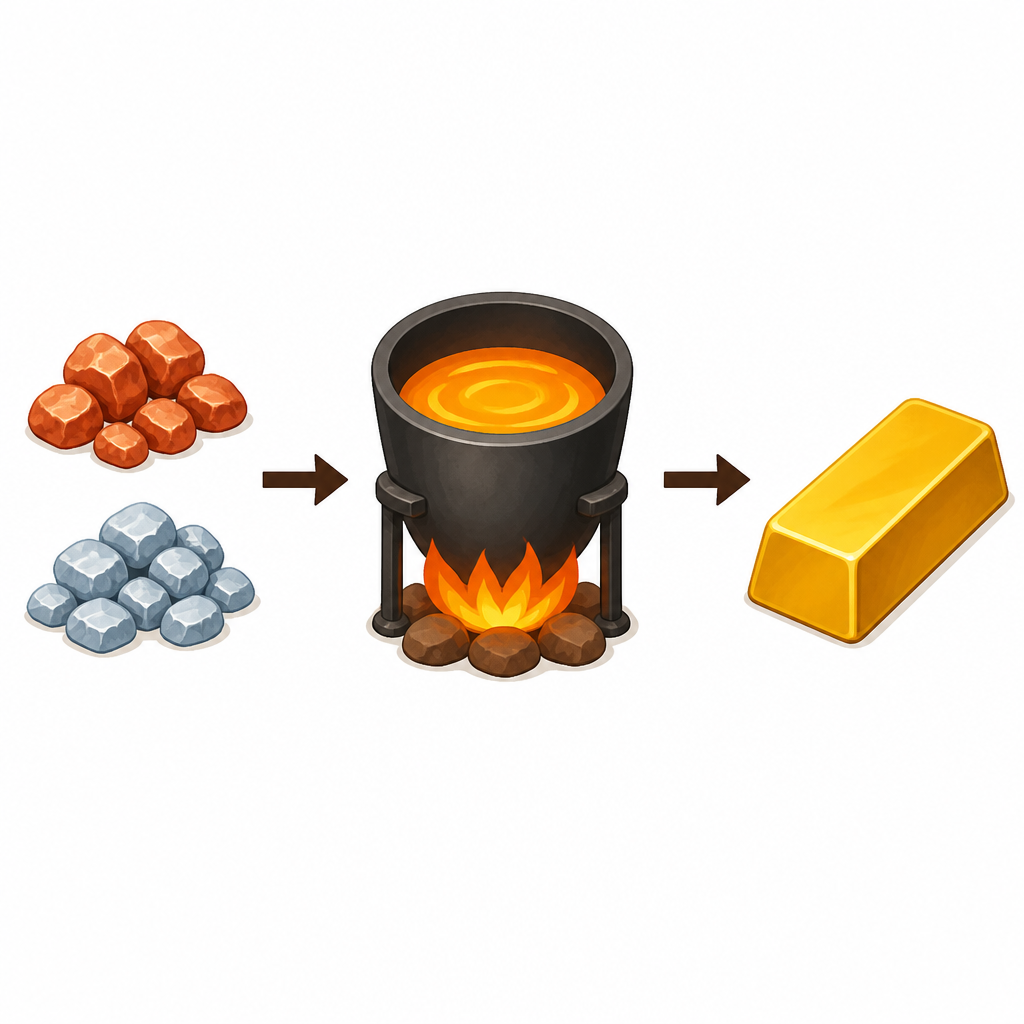
A mixed metal, also called an alloy, is a uniform solid mixture of two or more metals, or of a metal and a non metal.
Three words in that definition need attention. First, two or more. Brass is made from two metals, copper and zinc, while stainless steel is made from three, namely iron, chromium and nickel. Second, a metal and a non metal. The carbon added to iron to make steel is a non metal, and steel is still an alloy. Third, uniform solid mixture. The substances are melted together and then cooled, so whichever piece of the finished bar you cut, the proportion of each metal in it is the same.
Why Alloys Are Made Instead of Using Pure Metals
When an alloy is made from a metal, the properties of that metal improve, and the improved material can be used for more jobs. Aluminium is the clearest example. Aluminium is a light metal, and because it is light it is used for the body of an aeroplane. Being light, however, it is not strong. So copper, manganese and magnesium are mixed into it to make duralumin, which stays light and is strong as well.

For reasons like this we use alloys in place of pure metals in many parts of daily life. One job needs extra hardness, another needs a material that will not rust, another needs a different colour or a different melting point. A pure metal offers the properties it happens to have, while an alloy can be built to offer the combination of properties we actually want.
The Properties of Mixed Metals
The properties of an alloy are always understood by comparing it with the metals it was made from. The five properties below are the ones an alloy shows.
- An alloy is harder than the metals it is made from. That means it is less ductile and less malleable than those metals.
- An alloy does not rust.
- The melting point of an alloy may be lower or higher than the melting points of the metals it is made from.
- The colour of an alloy is different from the colour of the metals it is made from.
- The properties of an alloy are an improvement on the properties of the metals it is made from.
The change of colour is easy to see. Silver and zinc are both white, yet the alloy made from these two metals is pink. In the same way copper is red and zinc is white, but the brass made from them is yellow. This shows that an alloy is not simply two metals placed side by side. It is a new material with properties of its own.
Many students write that the melting point of an alloy is always lower. That is wrong. It may be lower or it may be higher, and a correct answer must say both.
How a Pure Metal and an Alloy Differ
| Basis | Pure metal | Alloy |
| Make up | Made of one element only | Made of two or more substances |
| Hardness | Comparatively soft | Harder |
| Rusting | Many pure metals rust | Does not rust |
| Properties | Are whatever the element has | Are improved |
| Examples | Iron, copper, aluminium | Steel, brass, bronze |
Alloys in Daily Life: Steel
Steel is the alloy made by mixing carbon with iron.
When it is hot, pure iron is very soft, so it is hard to get useful work out of it. A small amount of carbon is mixed into it, and that makes it hard. Pure iron also rusts, while the alloy of iron, chromium and nickel, which is stainless steel, does not rust at all. For both reasons steel and stainless steel are used far more today than plain iron.
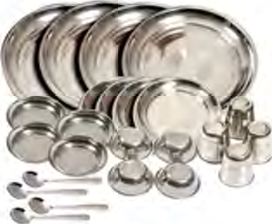
Steel is used for buildings, bridges and railings, while stainless steel is used for kitchen articles and for surgical instruments in hospitals. A rusted instrument could infect a patient, which is why hospitals need stainless steel in particular.
Brass
Brass is the alloy made by mixing copper and zinc.
Brass is used for many things we handle every day, such as worship articles, water pots and statues, and it is also used for nuts, bolts and machine parts. Its yellow shine lasts for a long time, which is why articles kept in a worship room are so often made of brass.
Bronze
Bronze is the alloy made by mixing copper and tin.
Bronze is used for dinner plates, bowls and glasses. It is also used for medals, coins, ships and statues. Bronze is used on ships because it survives salt water without being spoiled.

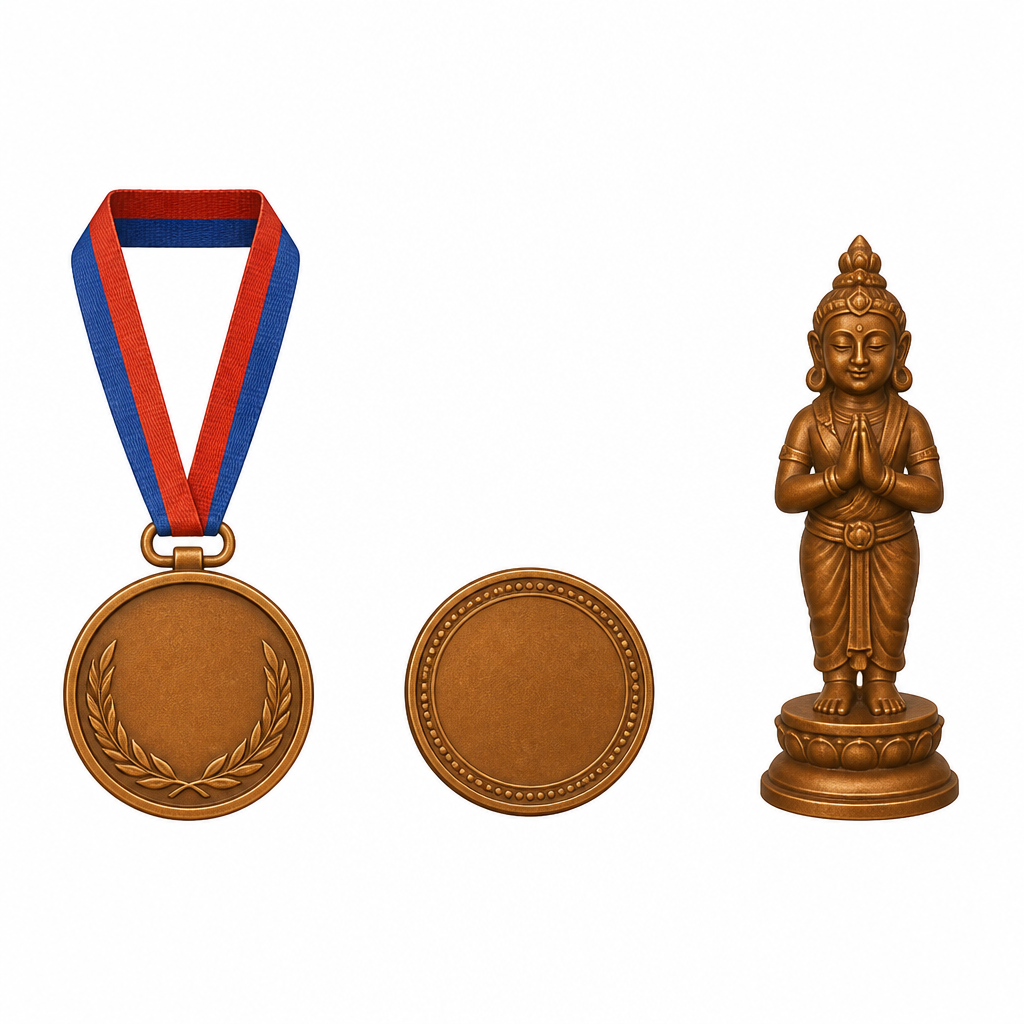
Both brass and bronze contain copper, so the two names are easily swapped in an answer. Brass is copper with zinc. Bronze is copper with tin. Zinc gives brass, tin gives bronze.
Which Metals Make Which Alloy
| Alloy | Made from | Used for |
| Steel | Iron and carbon | Buildings, bridges, railings |
| Stainless steel | Iron, chromium and nickel | Kitchen utensils, surgical instruments |
| Brass | Copper and zinc | Worship articles, water pots, statues, nuts and bolts |
| Bronze | Copper and tin | Plates, bowls, glasses, medals, coins |
| Duralumin | Aluminium, copper, manganese, magnesium | The body of an aeroplane |
Go and look in your own kitchen. You will find articles made of pure metals and articles made of alloys standing side by side. Sorting out which ones are steel, which are brass and which are bronze puts this whole topic into your hands.
The full lesson is waiting for you
The notes are free to read in full. A free account opens the rest of the practice, and tracks your progress and confidence score for every subject. Presentations and videos need approval from Learn Yeti.