The Sour Things Around Us
From the moment we wake up to the moment we sleep, we handle many different materials. The fruit and vegetables we eat, the toothpaste we brush with, the soap, the shampoo, the hand wash and sanitizer, the liquid used to clean a mirror or a bathroom. Every one of these has some acid, some base or some salt mixed into it. Which of them is sour and which is not is something our tongue often tells us straight away.
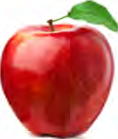
Lemon, orange, lime, tomato, curd, pickle, vinegar and fizzy soda drinks are things we eat and drink often. What they share is sourness, and that sourness comes from the acid inside them. The sour materials around us are acids.
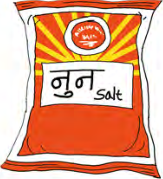
Not everything in the house is sour, though. The salt kept in the kitchen is not sour at all; it is a salt. Soap and toothpaste behave in a basic way instead. So the first skill to build here is telling which material is acidic, which is basic and which is a salt.
What an Acid Is
An acid dissolves in water. Once it has dissolved, it releases hydrogen ions into that water. This hydrogen ion is the real mark of an acid. A sour taste is only the outward hint; the inner reason is the hydrogen ion.
Acid: a substance that dissolves in water and gives hydrogen ions is called an acid.
Not every acid is fit to eat. The acids found in plants and animals are generally edible, while the acids made in a laboratory are not. Lemon juice can be tasted safely, but tasting laboratory hydrochloric acid or sulphuric acid is extremely dangerous.
Never taste any acid in the laboratory and do not let it touch your skin. Even a dilute acid burns the skin. If some falls on you, wash the place at once with plenty of water and tell your teacher.
Two Kinds of Acid, by Where They Come From
Acids can be divided into two kinds according to where they come from. They are organic acids and inorganic acids.
Organic acid: an acid found naturally is called an organic acid. Examples are the acids found in fruit and the acids found in living creatures.
Inorganic acid: an acid made in a laboratory from mineral substances is called an inorganic acid. Hydrochloric acid, sulphuric acid and nitric acid are examples.
| Acid | Where it is found | Kind |
| Formic acid | Stinging nettle leaves, ant stings | Organic |
| Oxalic acid | Tomato | Organic |
| Citric acid | Lemon, orange | Organic |
| Lactic acid | Curd | Organic |
| Acetic acid | Vinegar | Organic |
| Carbonic acid | Fizzy soda drink | Organic |
| Hydrochloric acid | The human stomach | Inorganic |
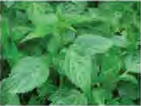
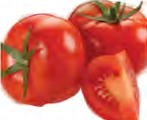
One point here needs care. Hydrochloric acid is found in the human stomach, yet it is not an organic acid. The kind an acid belongs to is decided by the source it is built from, not by the place it happens to be found. Hydrochloric acid is built from mineral substances, so it stays an inorganic acid even when it is found inside the body.
Strong Acids and Weak Acids
Acids can also be divided into two kinds according to how many hydrogen ions they give when they dissolve in water. Not all acids give the same amount. Some give many, some give only a few.
Strong acid: an acid that gives many hydrogen ions when it dissolves in water is called a strong acid.
Weak acid: an acid that gives only a few hydrogen ions when it dissolves in water is called a weak acid.
Most inorganic acids are strong acids, while organic acids are weak acids. That is why lemon juice can be tasted while laboratory sulphuric acid must not even be touched.
Physical Properties of an Acid
Take one lemon and carry out the steps below, and the physical properties of an acid show themselves. Write down what you see at each step.
- Taste a little lemon juice and write down what the taste is like.
- Dissolve the lemon juice in water and see whether it mixes or not.
- Dip red litmus into the lemon juice.
- Dip blue litmus into the lemon juice.
- Mix a little methyl orange into the lemon juice.
- Mix a little phenolphthalein into the lemon juice.
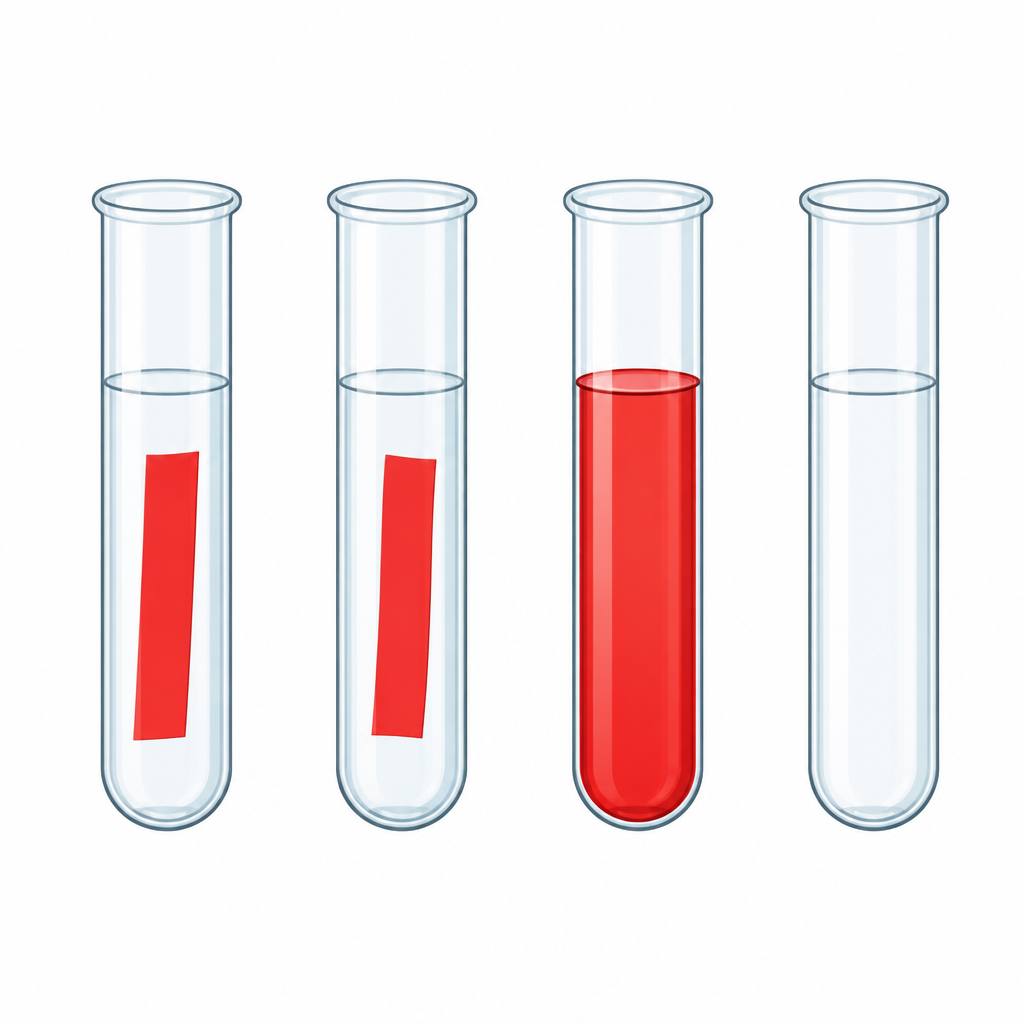
Putting those observations together, the physical properties of an acid come out like this.
- An acid tastes sour.
- An acid dissolves in water.
- An acid turns blue litmus red, but it does not change the colour of red litmus.
- An acid turns methyl orange red.
- An acid makes no change at all to the colour of phenolphthalein.
| Indicator | When put into an acid |
| Blue litmus | Turns red |
| Red litmus | No change of colour |
| Methyl orange | Turns red |
| Phenolphthalein | No change of colour |
If red litmus shows nothing when dipped into a liquid, do not read that as proof that there is no acid. Red litmus is already red, so an acid can bring no visible change to it. Blue litmus is the paper to use when testing whether an acid is present.
Chemical Properties of an Acid
How an acid behaves with other substances is what we call its chemical properties. The first of them is ionisation on dissolving in water. Acids give hydrogen ions when they dissolve. Hydrochloric acid breaks into a hydrogen ion and a chloride ion in water.
\[ \mathrm{HCl} \rightleftharpoons \mathrm{H}^+ + \mathrm{Cl}^- \]
Reaction with a Metal
What happens between an acid and a metal can be watched using magnesium ribbon and dilute hydrochloric acid. Magnesium ribbon, dilute hydrochloric acid and a matchstick are what the test needs.
- Take a little dilute hydrochloric acid in a test tube.
- Now put a small piece of magnesium ribbon into it.
- Watch carefully what is going on inside the test tube.
- Once bubbles appear, bring a burning matchstick near the mouth of the test tube and listen for whether a pop sound comes.
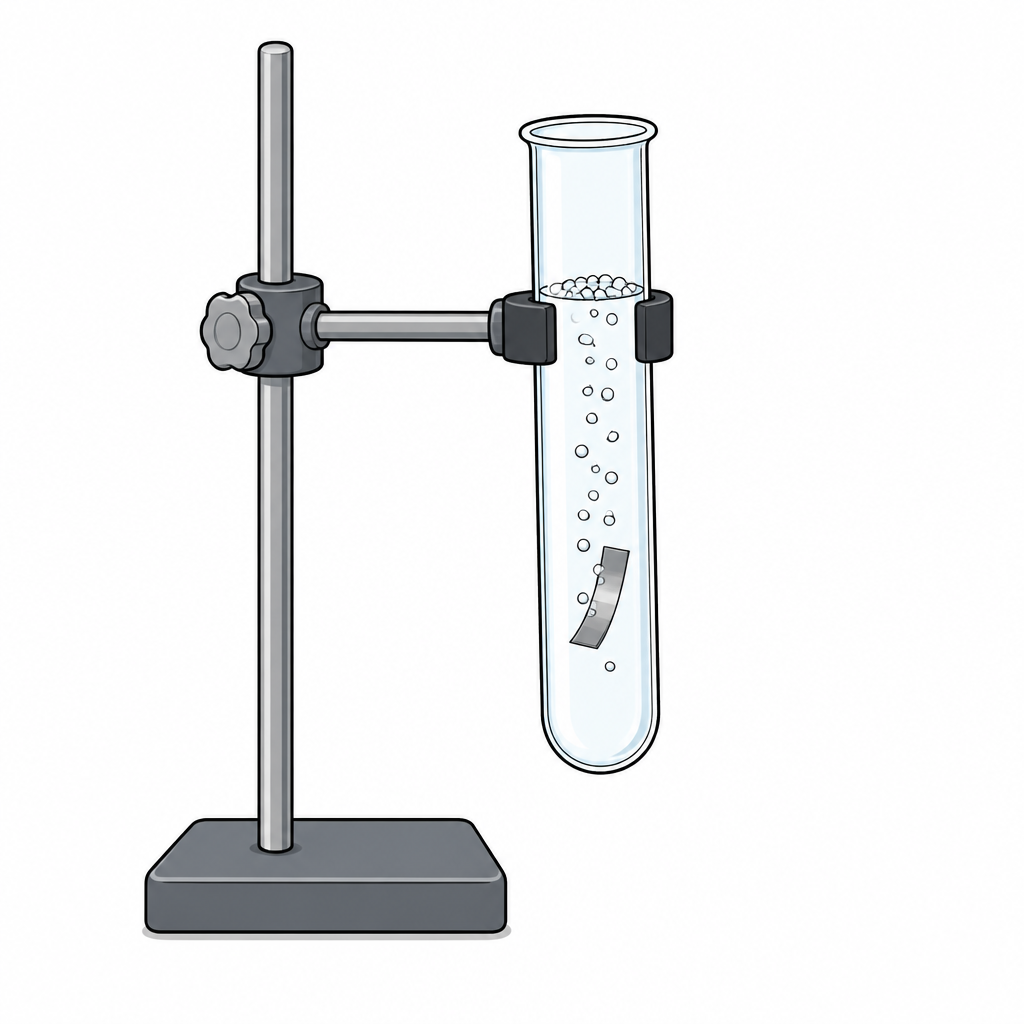
Bubbles rise in the test tube, and a pop sound comes when the burning matchstick is brought near. That sound is the sign of hydrogen gas burning. It shows that when acids react chemically with metals they produce the salt of the metal and hydrogen gas. Magnesium reacting with hydrochloric acid produces magnesium chloride and hydrogen.
\[ \mathrm{Mg} + 2\mathrm{HCl} \rightarrow \mathrm{MgCl_2} + \mathrm{H_2} \]
When the burning matchstick goes to the mouth of the test tube, never point that mouth at yourself or at a classmate. Hydrogen is a gas that catches fire.
Reaction with a Metal Carbonate
To watch the next reaction we need calcium carbonate, dilute hydrochloric acid and lime water.
- Take a few pieces of calcium carbonate in a test tube.
- Now add a little dilute hydrochloric acid to it.
- Observe the bubbles coming out in the test tube.
- Pass the colourless gas that comes out into lime water and see what happens to the lime water.
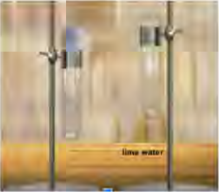
The lime water turns milky. That is the test which identifies carbon dioxide gas. It shows that when acids react chemically with metal carbonates they produce the salt of the metal and carbon dioxide gas. Calcium carbonate reacting with hydrochloric acid produces calcium chloride, carbon dioxide and water.
\[ \mathrm{CaCO_3} + 2\mathrm{HCl} \rightarrow \mathrm{CaCl_2} + \mathrm{CO_2} + \mathrm{H_2O} \]
Acid on a metal releases hydrogen, and a burning matchstick brought near gives a pop. Acid on a metal carbonate releases carbon dioxide, and lime water turns milky. These two tests are the easy way to tell which gas came out.
Reaction with a Base, and Neutralisation
The third reaction is between an acid and a base. It needs dilute hydrochloric acid, a few pellets of sodium hydroxide, a test tube, a porcelain basin, a spirit lamp or a bunsen burner, a spatula, a glass rod, a tripod stand and a wire gauze.
- Take a test tube half full of water.
- Put a few pellets of sodium hydroxide into it.
- Stir with the glass rod until the pellets dissolve fully.
- Pour the solution that forms into the porcelain basin.
- Mix dilute hydrochloric acid into it.
- Place the wire gauze on the tripod stand, heat the basin on it, and after some time observe what is left behind.
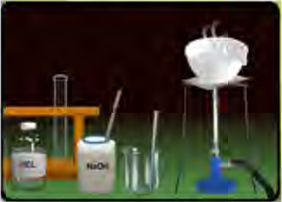
After the heating, a white solid stays behind in the basin. That solid is sodium chloride, which is common salt, and the water has gone off as vapour. When an acid and a base react chemically, a salt and water are formed.
Neutralisation reaction: the reaction in which an acid and a base act on each other to form a salt and water is called a neutralisation reaction.
\[ \mathrm{HCl} + \mathrm{NaOH} \rightarrow \mathrm{NaCl} + \mathrm{H_2O} \]
Uses of Acids
Acids are useful from the kitchen to the factory, and one easy test shows it. Cut a radish or a carrot into small pieces, divide them into two parts and put them into two bottles. Leave one bottle with nothing added, and pour vinegar into the other until the pieces are covered. Look at both bottles between one week and 15 days later. The pieces with no vinegar begin to rot, while the pieces under vinegar stay good for much longer, because the acetic acid stops the spoiling germs from growing.
The uses of the organic acids are given below.
| Acid | Use |
| Citric acid | To store food for a long time, and to bring a sour taste to food |
| Ascorbic acid | As a source of vitamin C, to make medicines for various diseases |
| Acetic acid | To make pickle |
| Tartaric acid | To make baking powder |
The uses of the inorganic acids are given below.
| Acid | Use |
| Hydrochloric acid | The hydrochloric acid produced in the human body helps digest the food eaten; it is also used to clean bathrooms and to make polyvinyl chloride |
| Nitric acid | To make nitrogen bearing chemical fertiliser, and to make explosives |
| Sulphuric acid | For use in batteries, to make chemical fertiliser, dye, detergent and artificial fibre, and to produce hydrochloric acid |
The full lesson is waiting for you
The notes are free to read in full. A free account opens the rest of the practice, and tracks your progress and confidence score for every subject. Presentations and videos need approval from Learn Yeti.