The Flower Mamata Looked At
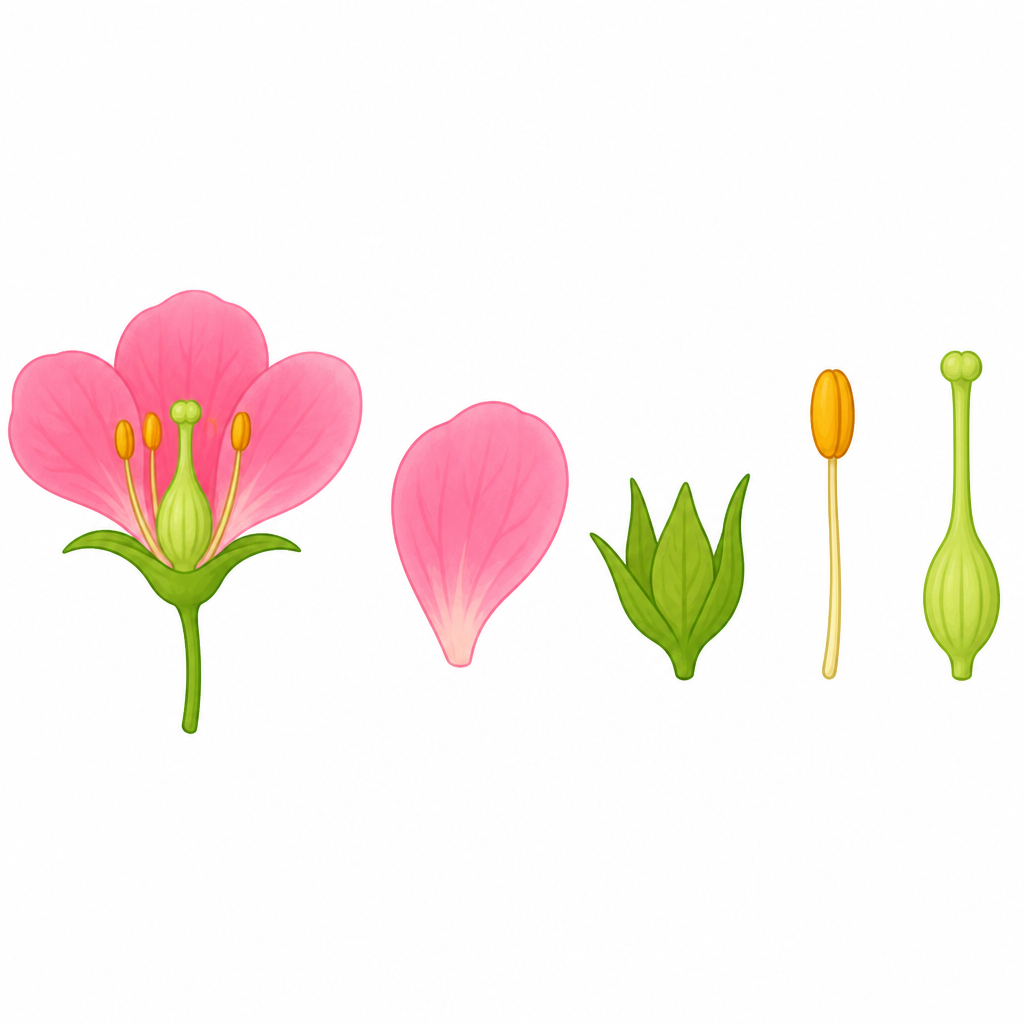
Mamata was walking in a garden where flowers of many colours had opened. She had already studied the parts of a flower in class, so she picked one flower and looked at it properly. From a distance a flower is only a patch of colour. Which part sits where, and what each part is shaped like, cannot be settled from a distance. So she took the flower apart slowly, pulling off one part at a time and looking carefully at each one before moving on to the next.
She removed the petals first, then the sepals, then the stamens, and the pistil last. Once she had each part lying separately in her own hand, what she had read in class made far better sense than it ever had on the page. A name learnt from a book becomes solid only when it is fastened to a real thing you have handled. This habit of looking on purpose is something science values highly.
From Caterpillar to Butterfly
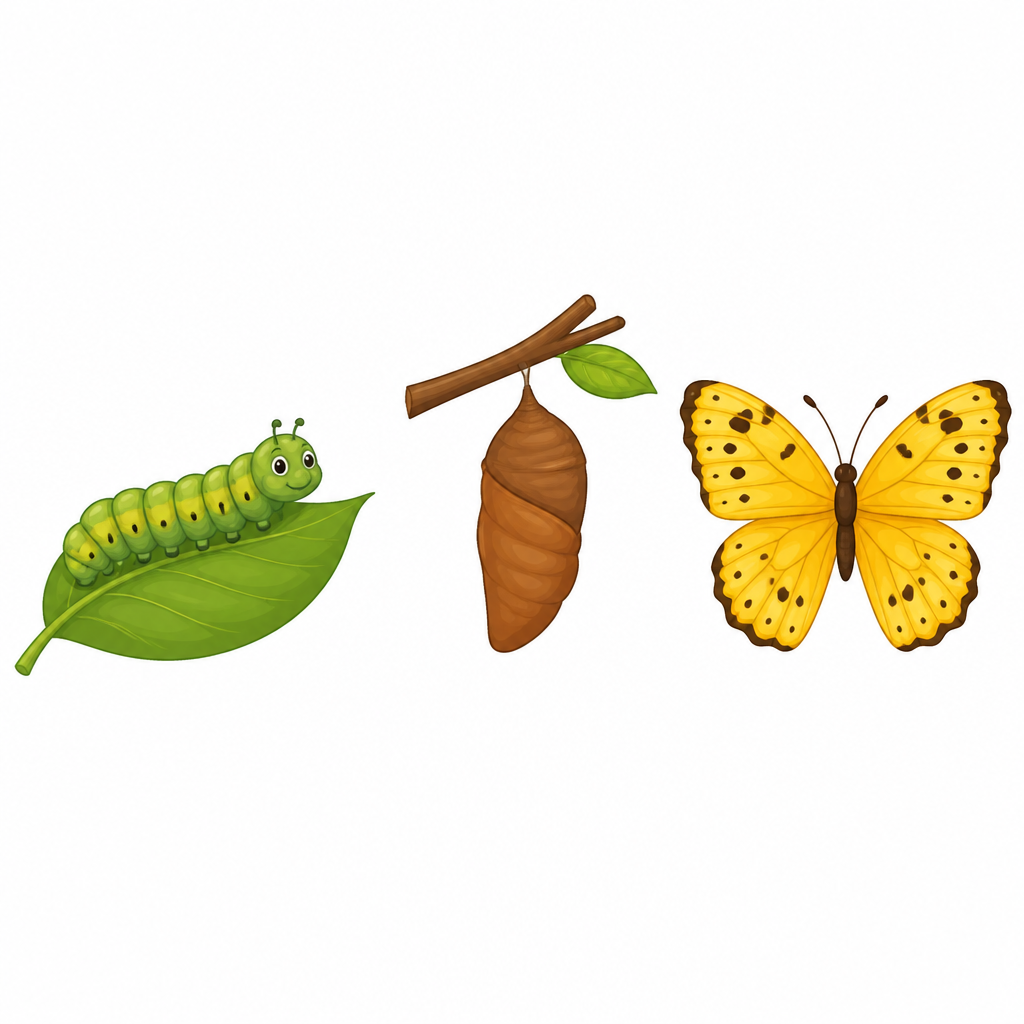
A moment later her eye moved to a caterpillar sitting on one leaf of the same plant. The caterpillars were eating the leaves. Mamata enjoyed watching them. She had learnt in an earlier class that a caterpillar turns into a pupa and a pupa turns into a butterfly. Here was a chance to watch with her own eyes what she had only read about, so she decided to keep one caterpillar at home and follow it.
- She gently picked up one caterpillar along with the leaf it was on.
- She kept it safely inside the house in a container.
- She did not close the lid of the container, so that air could reach inside.
- Every single day she put in fresh soft leaves for it to eat.
- She kept watching for the changes taking place in the caterpillar.
After about 15 to 16 days the caterpillar stopped moving and turned into a pupa. During the pupa stage it did not eat the leaves she put in, and in about 13 to 14 days a yellow butterfly with black speckled markings came out of it. Counting the days, watching for change, and noticing even that it had stopped eating: what she did was not simply looking. It was looking with a plan behind it.
Mamata told her friends and her science teacher about everything she had done. The teacher explained that all of it was observation, which is one part of the process of scientific learning, and that observation plays an important role in the study of science.
What Observation Means
Observation is the process of experiencing any object, event or process attentively by using the sense organs.
The sense organs are the eyes, the ears, the nose, the skin and the tongue, and information about the world around us reaches us through them.
Observation is done with the sense organs. We observe and experience a thing by seeing it with the eyes, hearing it with the ears, smelling it with the nose, feeling it with the skin and tasting it with the tongue. More than one sense organ may be used on the same object. A piece of bread left in a damp place shows black tips to the eye, gives off a different smell to the nose, and feels cold and soft to the fingers. The more senses you bring to a thing, the more complete your observation of it becomes.
| Sense organ | What it tells us | Example of observing |
| Eyes | Colour, shape, number, movement | Looking at the markings on a butterfly's wings |
| Ears | Sound | Hearing the sound water makes as it boils |
| Nose | Smell | Noticing the smell coming from damp bread |
| Skin | Warmth, roughness, smoothness | Feeling the difference between stone and wood |
| Tongue | Taste | Telling sugar from salt at home |
Tasting as a way of observing applies only to known foods at home, such as sugar or salt. Never taste a laboratory chemical or any substance you cannot name.
Instruments Where the Senses Fall Short
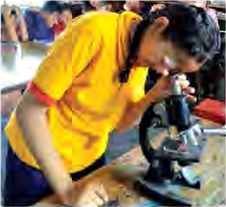
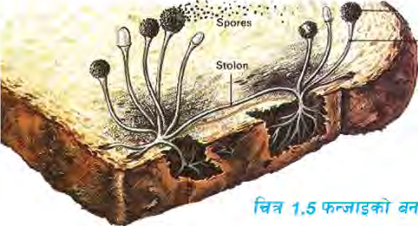
When the sense organs alone are not enough to observe something properly, instruments such as a hand lens or a microscope are used as well. Fungus on a slice of bread looks like nothing more than a black dot to the naked eye. Put the same fungus under a microscope and the thread like parts, the root like parts and the round bodies at the tips all become separate, visible things. An instrument does not create anything new. It brings within reach of the eye what was always there but too small for it.
Observation Is Not Only for the Laboratory
Observation does not always have to happen in a laboratory. Natural and man made objects, processes and events around the school and the home can all be observed, and from them the laws, principles and properties of science can be studied. Mamata observed a flower and a caterpillar in a garden and at home, yet her work was fully scientific observation. In the same way, a visit to a mushroom shed lets you see what kind of place mushrooms grow in, how many days they take to grow, and what temperature they need.
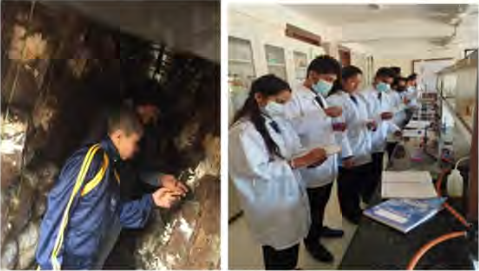
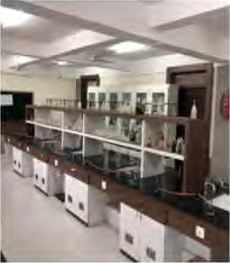
Observation is also the main job inside laboratory practical work. Whether the colour in the test tube changed or not, how long it took to change, whether a sound was produced: unless these things are watched attentively, an experiment yields no result at all. So you stand close while the experiment is still running, and you write down what you see at the moment you see it.
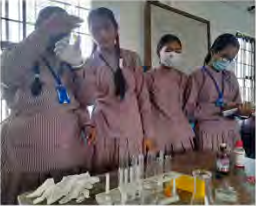
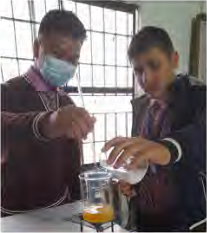
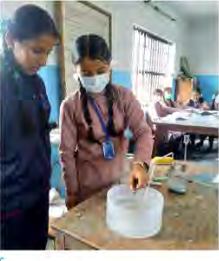
Besides these, visits to a zoo, a botanical garden, a medicine company or an information and communication company also let you observe a number of scientific laws and principles at work.
- A zoo: the build of animals, what they eat and how they behave.
- A botanical garden: the leaves, flowers and roots of many different plants.
- A medicine company: how medicines are made and how cleanliness is maintained.
- An information and communication company: how the devices that send and receive information work.
Planning an Observation Activity
Looking at things at random does not amount to observation. Before an observation activity begins, it must be clear which object, process or event is going to be observed. The objective of the activity is then fixed to match it. It must also be clear what exactly is to be observed, and how the information gathered will be presented afterwards. When the observing is finished, a report of the observation activity is written.
- Settle what is going to be observed.
- Fix the objective on the basis of that.
- Decide in advance which points you will look for.
- Decide how the information gathered will be presented.
- Finally, write the report of the observation activity.
Observation done without a plan usually ends with the thought that one important point was never looked at. Writing down beforehand what you intend to look for removes that problem.
Activity 1.1: Observing Fungus
The title of this activity is the observation of fungus, and its objective is to study the build and the structure of fungus. The materials needed are bread, water, forceps or tongs, a glass slide and a microscope.
- (a) Take one piece of bread.
- (b) Sprinkle a little water on it and keep it covered in a damp place.
- (c) Sprinkle a little water on it every day.
- (d) After a few days fungus will appear. Lift that fungus with forceps or tongs, place it on a glass slide, and look at it under the microscope.
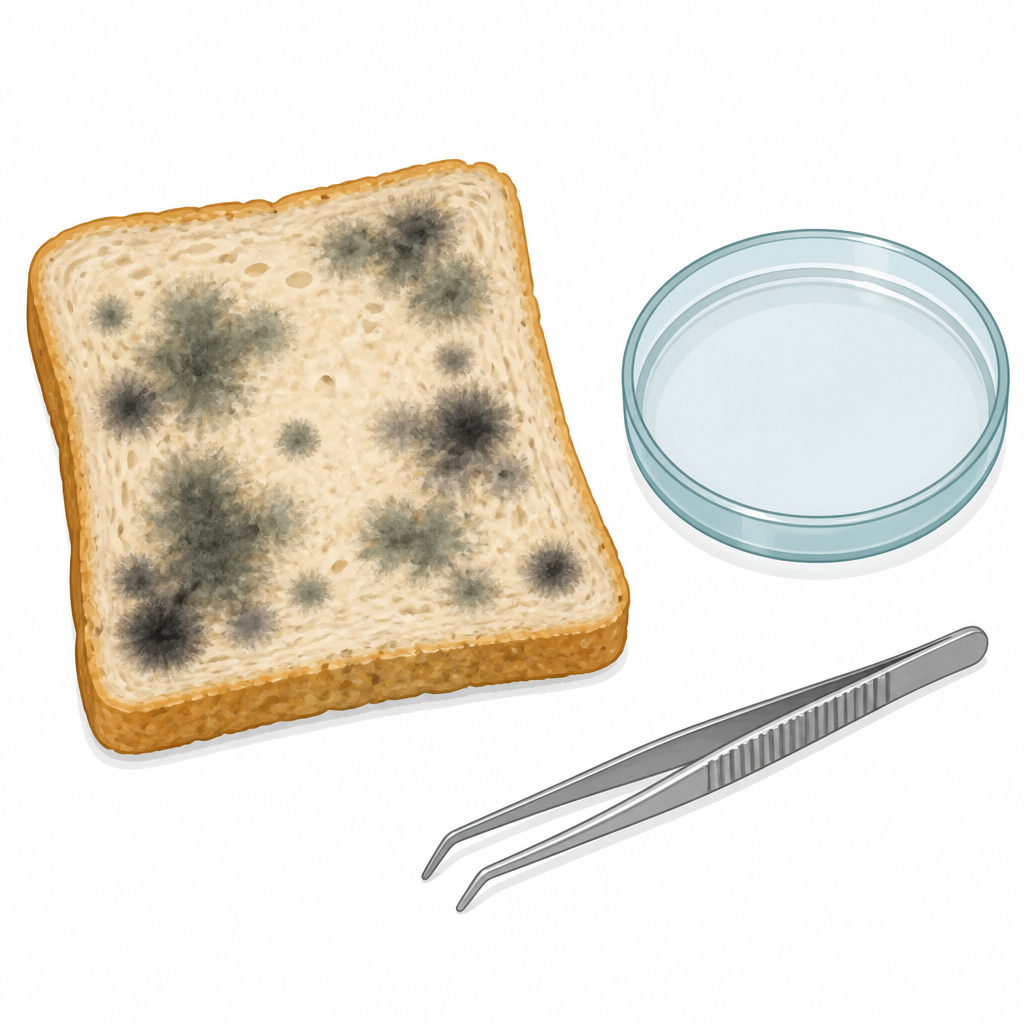
Now observe the build and the structure of the fungus and draw it in your practical copybook. On the basis of that drawing, write down the properties of fungus. Draw only what you actually saw through the microscope, not a copy of a picture from somewhere else.
Forceps are sharp, so handle them with care. Keep the fungus away from your mouth and eyes.
Writing the Observation Report
An observation report is an orderly written record of why an observation was made, how it was carried out, and what was seen.
A report can be set out in more than one format. The report of the fungus observation can be written under the headings given below. A drawing made by your own hand of what you saw makes the report clearer still.
- Title: what was observed, in a few words. Here, the observation of fungus.
- Objective: to study the build and the structure of fungus.
- Materials required: bread, water, forceps or tongs, a glass slide, a microscope.
- Method: everything that was done, written as work already completed.
- Result of the observation: what was actually seen.
- Precautions: the safety measures followed while working.
The method in the report is written like this. One piece of bread was taken. A little water was sprinkled on it each day and it was kept covered in a damp place. After a few days fungus appeared on the bread. That fungus was lifted with forceps or tongs, placed on a glass slide, observed under the microscope, and its build and structure were studied.
The method of an activity is written as an instruction, such as sprinkle water on it. The method in a report is written as work already done, such as water was sprinkled on it. Treating the two as the same spoils the report.
The following features were identified while observing the fungus.
- (a) No chlorophyll grains were seen in them.
- (b) Root like rhizoids were seen.
- (c) Stem like hyphae were seen.
- (d) Sporangia were seen at the tips of the long branches growing out of the hyphae.
The properties of fungus can also be written from these results. Since it has no chlorophyll grains, a fungus cannot make its own food and takes food from other things. The rhizoids help it hold on to the bread and draw food from it. The tiny grains held inside the sporangia grow into new fungus. Reaching a conclusion from what was seen is exactly what observation is for.
Only what you actually saw may go into the result section of a report. Writing what you did not see but expected to be there turns the observation into a guess.
Activity 1.2: Observing Single Celled Organisms
In the science laboratory, observe permanent slides of single celled organisms such as amoeba, paramecium and euglena with the help of a microscope, and prepare a report on the basis of what you see. The same order is followed here: fix the objective, decide in advance what to look for, observe attentively, draw what you see, and write the report at the end.
Observation is not simply the act of looking. It is a scientific process made of an objective, attention, a written record and a report.
The full lesson is waiting for you
The notes are free to read in full. A free account opens the rest of the practice, and tracks your progress and confidence score for every subject. Presentations and videos need approval from Learn Yeti.