Plants and Animals in Danger
Nepal is home to a huge variety of living things, from the tiger of the Terai grasslands to the red panda of the high bamboo forests. Many of these plants and animals are becoming harder and harder to find. Newspapers, radio and television often carry news about them: a count of tigers in a national park, a red panda seen in a new district, a bag of medicinal herbs caught at the border. Knowing which organisms are in trouble, and why, is the first step towards saving them.
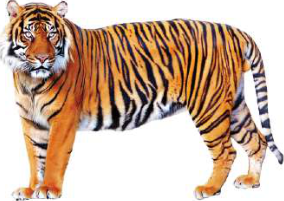

Both of these animals still live wild in Nepal, but far fewer of them survive than in the past. The one-horned rhinoceros, the snow leopard and the gharial crocodile face the same problem. Endangered living things are not found in Nepal alone, though. Every country has its own.

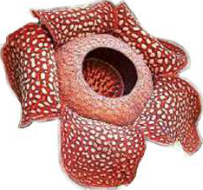
The giant panda and the red panda are two different animals. They share the word panda in their names, but only the red panda lives in Nepal.
Extinct, Endangered and Rare Organisms
The existence of many types of life on the Earth is disappearing because of climate change and various other reasons. The number of many animals is going down, and some have already vanished completely. Scientists use a few exact words to say where a species stands.
Extinct organism: a species of which not a single living member is left anywhere on the Earth. Once a species is extinct, it can never come back.
Rare or endangered organism: a plant or animal whose number has fallen so low that it is about to become extinct. Such rare organisms are found in different parts of Nepal.
Biodiversity: the variety of all the different kinds of plants, animals and microorganisms living in a place.
The survival of all plants and animals depends on biodiversity. Living things are tied to one another through food, shelter and pollination. A tiger needs deer to eat, deer need grass, and grass needs healthy soil. When one species disappears, the others linked to it suffer as well. So the loss of even one small plant can weaken a whole forest.
The dodo, a large bird that could not fly, lived on the island of Mauritius. It disappeared more than 300 years ago because of hunting by people and the animals they brought to the island. It is the best known example of an extinct animal.
Endangered does not mean extinct. An endangered animal such as the red panda is still alive in the wild and can still be saved. An extinct animal such as the dodo is gone for ever.
Why Plants and Animals Are Declining
Human activities and changes in nature in the course of modern development have reduced the number of animals and plants. As roads, towns and farms spread into forests, the natural world changes with them. Because of this, many plants and animals may become extinct. The main reasons are these:
- (a) The adverse effects of weather and climate change disturb the distribution pattern of plants and animals. As the hills grow warmer, plants that need cold move further up the mountain, and those already at the top have nowhere left to go.
- (b) Uncontrolled use of biological resources is lowering their numbers. When people cut trees, dig out herbs and hunt animals faster than they can grow back, the population shrinks every year.
- (c) Growing new species of plants without any research has affected the indigenous plants. A fast-spreading weed brought from abroad can cover the forest floor and leave no room for the local plants to grow.
- (d) Rearing new species of animals without any research has displaced the indigenous or existing animals of that area. A new kind of fish released into a lake, for example, may eat the eggs of the local fish or take their food.
- (e) Environmental pollution is increasing. Polluted water, air and soil poison plants and animals and ruin the places where they live.
Indigenous species: a plant or animal that belongs naturally to a place and has lived there for a long time, rather than one brought in by people.
Rare Plants of Nepal
Many species of plants are found in Nepal. Among them, some important plants such as Jatamasi, Champ, Sarpagandha, Panchaule and Lauth Salla have been decreasing. People use these plants for various purposes, but they are being used without any thought for how many are left. If this continues, they are likely to become extinct in the near future.
| Plant | Where it grows | Why people collect it |
| Jatamasi | High Himalayan pastures | Fragrant roots used for medicine and incense |
| Champ | Forests of the hills | Strong timber for furniture and houses |
| Sarpagandha | Forests of the Terai, Chure and inner Terai | Roots used to make medicine |
| Panchaule | High Himalayan pastures | Hand-shaped root used in traditional medicine |
| Lauth Salla | Forests of the Himalayan region | Leaves and bark used to make an anti-cancer medicine |
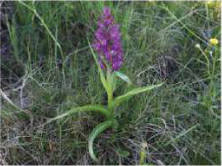
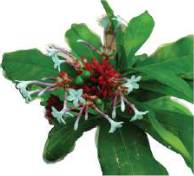
For Jatamasi and Panchaule, the useful part is the root itself. Digging out the root pulls up the whole plant, so every harvest kills a plant instead of trimming it. This is a big reason why these two plants are disappearing so quickly.
A Law for Rare Wildlife
Because these plants are disappearing, protecting them is a must, and various efforts have been made to do so. The Government of Nepal has implemented the Control of International Trade of Endangered Wild Fauna and Flora Act, 2073 for the conservation of rare wild animals and plants. This act includes rules on the following for rare wild animals and plants:
- Controlled breeding
- Study and research
- Sale and distribution
Fauna: all the animals found naturally in a region.
Flora: all the plants found naturally in a region.
International trade means buying and selling between countries. Rare herbs and animal parts fetch very high prices abroad, and that tempts people to smuggle them out. The act keeps this trade under control, so that nobody can legally sell a rare species across the border without permission.
The name of the act tells you what it does: it protects both wild animals (fauna) and wild plants (flora) by controlling their trade between countries.
Alongside the law, five main measures can be used to protect rare plants. Each is explained below.
Conserving the Natural Habitat
Natural habitat: the place where an organism lives naturally and finds its food, water and shelter.
Collecting firewood, fodder leaves and grass from the forest, forest fires, and the spread of pasture land all lead to the loss or destruction of the natural habitats of wildlife. These activities should be controlled. Rare plants can be conserved by protecting the places where they grow naturally. Cattle should not be allowed to graze haphazardly in forest areas, because they trample and eat young plants before they can grow. Places where rare plants grow should also be identified and protected.
Conserving Rare and Endangered Plants
Industries and factories need many kinds of raw materials, and much of it comes from plants: timber for furniture, herbs for medicine, and fibre for paper and cloth. While collecting such raw materials, people must keep in mind that the useful plants have to survive. Plants should never be destroyed in a way that stops them from growing again. Cutting only some branches, or leaving part of the root in the soil, lets a plant recover. The theft and smuggling of rare plants should also be controlled.
Producing More Saplings by Modern Methods
To increase the number of rare plants, their seeds should be collected and grown in a nursery. The young plants raised there are later planted out in suitable places.
Nursery: a place where young plants are raised until they are strong enough to be planted out.
Tissue culture: a modern technique in which a tiny piece of a plant is grown in a clean, nutrient-rich medium in a laboratory to produce many identical saplings at one time.
With tissue culture, one healthy plant can supply hundreds of saplings, so nobody needs to dig up more plants from the wild. After that, rare and useful plants can be planted widely through afforestation.
Afforestation: planting many trees and plants in an area to make a forest.
Making and Enforcing Suitable Laws
Rules and laws should be made to conserve plants that are about to go extinct and those that are at risk of extinction. A law does nothing if people have never heard of it. So information about these laws should be spread to the public, and the laws should be implemented effectively.
Medicinal Use and Public Awareness
It is necessary to make the public aware that most rare plants can be used for medicinal purposes. When people understand how valuable a plant is, they are more willing to protect it. So programmes to raise public awareness about rare plants should be organised at the local level. Local people, communities and organisations should be mobilised to protect rare plants, just as community forest user groups already guard their forests against theft.
A student can help too. Learn the names of the rare plants and animals near your home, never buy things made from protected species, and share what you know with your family and neighbours.
Matching Each Cause with a Remedy
Each conservation measure answers one of the reasons for decline. Seeing them side by side makes both easier to remember.
| Cause of decline | Conservation measure |
| Firewood and fodder collection, forest fires, grazing | Protect the natural habitat and stop haphazard grazing |
| Uncontrolled collection of raw materials | Harvest so the plant can grow again, and stop theft and smuggling |
| Too few plants left in the wild | Nursery, tissue culture and afforestation |
| Illegal trade between countries | The Act of 2073, and laws made known and enforced |
| People unaware of a plant's value | Local awareness programmes and community action |
The full lesson is waiting for you
The notes are free to read in full. A free account opens the rest of the practice, and tracks your progress and confidence score for every subject. Presentations and videos need approval from Learn Yeti.