What Blood Pressure Is
Every time your heart beats, the left ventricle squeezes hard and pushes pure, oxygen-rich blood into the arteries. That blood does not slide along quietly. It presses outward on the inner walls of the arteries, in the same way water presses on the inside of a garden hose when the tap is opened fully. This push of blood on the walls of the blood vessels, and most of all on the walls of the arteries, is blood pressure.
Blood pressure: the pressure created by blood on the walls of the blood vessels, especially the arteries.
How strong this push is depends on four things inside the body:
- the size of the blood vessel
- the flow of blood through it
- the amount of blood in the body
- the force created when the ventricle contracts
A narrow vessel, more blood, or a harder squeeze of the ventricle all raise the pressure. Blood pressure also depends on the person: their mental state, age, sex and physical state. That is why one person's reading changes during a day. It goes up when they are angry, frightened or running, and comes down when they sit and rest.
Blood pressure is measured in the unit mmHg, read aloud as millimetres of mercury. The number says how many millimetres high the pressure could push a column of mercury in a glass tube.
Two Readings: Systolic and Diastolic
The heart does two jobs in turn. The ventricle contracts and pumps, then it relaxes and fills again. The pressure in the arteries is highest while the ventricle contracts and lower while it relaxes. So blood pressure is always given as two values, an upper reading and a lower reading.
Systolic blood pressure: the upper reading of blood pressure, created by the contraction of the ventricle. In an adult it lies from 90 mmHg to 130 mmHg.
Diastolic blood pressure: the lower reading of blood pressure, created when the ventricle relaxes and comes back to its original position. In an adult it lies from 60 mmHg to 90 mmHg.
The normal blood pressure of an adult is 120/80 mmHg, said as "120 over 80". Here 120 mmHg is the systolic pressure and 80 mmHg is the diastolic pressure. The slash only separates the two readings. It does not mean divide.
| Reading | Created when | Range in an adult | Normal value |
| Systolic (upper) | the ventricle contracts | 90 mmHg to 130 mmHg | 120 mmHg |
| Diastolic (lower) | the ventricle relaxes | 60 mmHg to 90 mmHg | 80 mmHg |
Students often swap the two names. Systolic goes with contraction and is always the bigger, upper number. Diastolic goes with relaxation and is the smaller, lower number.
Measuring Blood Pressure
The device used to measure human blood pressure is the sphygmomanometer. A cloth cuff is wrapped around the upper arm and pumped up with air until it presses the artery shut for a moment. As the air is let out slowly, blood starts to push through again, and the health worker reads the upper and lower values on the scale.
Sphygmomanometer: the device used to measure the blood pressure of a human.
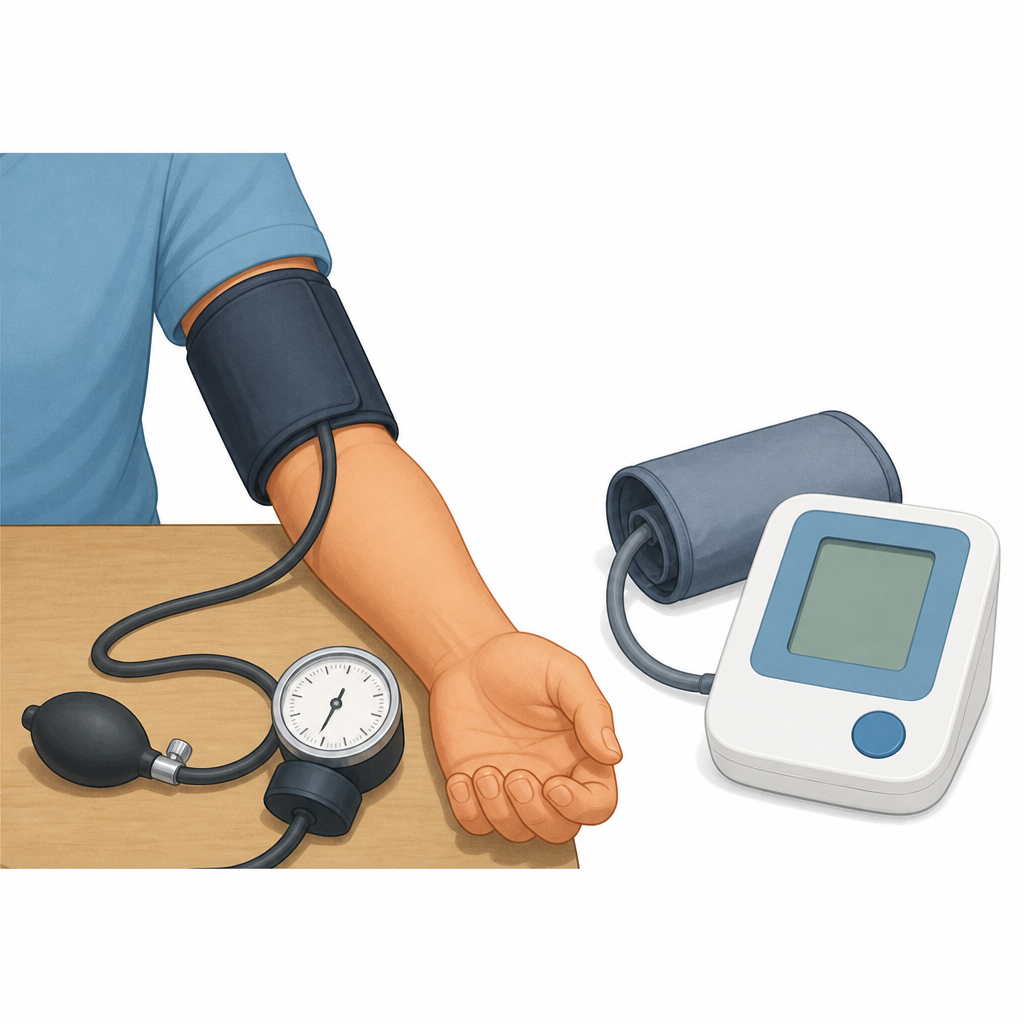
Nowadays blood pressure is also measured by digital methods. A digital machine pumps its own cuff and shows both readings as numbers on a small screen, so it is common in homes and health posts. Because mood and activity change the pressure, a person should sit quietly for a few minutes before the reading is taken.
High Blood Pressure or Hypertension
High blood pressure or hypertension: the condition in which a person's blood pressure exceeds 140/90 mmHg.
Suppose a man's reading is 150/95 mmHg. His systolic pressure of 150 mmHg is above 140, and his diastolic pressure of 95 mmHg is above 90. His reading exceeds 140/90 mmHg, so he has high blood pressure. A person with high blood pressure may show these symptoms:
- headache and shortness of breath
- bleeding from the nose
- sweating and fatigue
- a red face
- sleeplessness and anxiety
A headache or tiredness can have many other causes, and some people with high blood pressure feel nothing at all. The only way to know is to measure the pressure.
Causes of High Blood Pressure
High blood pressure has many causes. Most of them are habits of daily life, and one is passed down in families:
- lack of regular physical exercise
- high blood pressure running in the family (heredity)
- smoking and drinking alcohol regularly
- excessive body weight
- a physically and mentally stressful life
- eating too much salty and fatty food
Think of how each one acts. Extra body weight means the heart must push blood through more tissue. Fatty food can leave deposits that narrow the arteries, and a narrow vessel raises the pressure. Stress makes the heart beat harder. Each cause adds to the push on the artery walls.
Preventing High Blood Pressure
High blood pressure leads to many physical and mental problems, so it is best avoided by paying attention in time. These habits help:
- Pay attention to your daily meals and eat less salty and oily food.
- Avoid smoking and drinking alcohol.
- Eat a balanced diet.
- Take physical exercise every day.
- Do yoga, meditation and pranayama.
- Check your blood pressure often.
- Live a stress-free life.
- Take part in recreational activities.
Nearly every cause of high blood pressure has a matching habit that prevents it: salty food against less salt, smoking against no smoking, no exercise against daily exercise, stress against a calm life.
Diabetes: Too Much Glucose in the Blood
When rice, bread or fruit is digested, it gives glucose, a sugar that enters the blood. Body cells use this glucose for energy, but they need the hormone insulin to take it in and use it. When insulin becomes low for any reason, the cells cannot take in enough glucose. It stays in the blood, and the blood sugar level rises.
Insulin: the hormone that helps the body manage and use the glucose obtained from food.
Diabetes or hyperglycemia: the condition in which the amount of glucose in the blood is more than the body requires.
Symptoms of High Glucose Level in Blood
- excessive thirst and hunger
- frequent dizziness and unconsciousness
- frequent urination
- blurred vision
- the person becomes thin and tired
- muscle spasms and numbness in the hands and legs
- wounds that heal slowly
These symptoms fit together. The extra glucose leaves the body in urine, which pulls water out with it, so the person urinates often and feels thirsty. The cells are short of glucose even though the blood is full of it, so the person feels hungry and tired and slowly becomes thin.
Symptoms only raise a doubt. A blood sugar test at a hospital or health post is what confirms diabetes, so a person with these signs should be checked by a health worker.
Reasons for High Glucose Level in Blood
- not enough insulin being secreted
- obesity and an inactive lifestyle
- an imbalanced diet
- eating too much food rich in fat and carbohydrate
- heredity
Preventing High Blood Glucose
- Eat plenty of green vegetables and fruits.
- Exercise regularly.
- Keep your weight right for your body.
- Keep an active lifestyle.
- Live a stress-free life.
- Go for a morning walk every day.
- Eat a balanced diet.
Uric Acid and Where It Comes From
Some foods contain a substance called purine. The body also needs purine all the time, because it uses purine to build DNA and RNA. When purine is broken down, during digestion and during metabolism inside body cells, it forms uric acid. Eating too much purine-containing food produces more uric acid than usual.
Purine: a substance found in certain foods and used by the body to make DNA and RNA. It is the source of uric acid.
Uric acid: the acid formed when purine breaks down during digestion and metabolism in the body.
Uric acid is made mainly in the intestine and the liver. The blood carries it to the kidneys, which pass it out of the body. On the way it does useful work: it helps remove other toxic substances, including plaque deposited on the walls of blood vessels, and so keeps blood circulation smooth. Trouble begins only when there is too much of it.
Hyperuricemia: the problem caused by an increase in the level of uric acid in the blood.
Symptoms of High Uric Acid
- pain in the joints
- deep pain in the muscles
- a greater chance of kidney stones
- redness, swelling and a burning feeling in the skin
- severe pain in the joints of the toes
- difficulty in walking and moving
So if an old man's toes and knees swell and ache after a feast of meat, lentils and fried snacks, uric acid is the first thing to suspect.
Reasons for High Uric Acid in Blood
- The kidneys cannot work properly because of diabetes or another disease, so they cannot excrete uric acid.
- Eating too much purine-rich food.
- The habit of drinking too little water.
Notice that the first reason links two conditions of this topic. Diabetes can damage the kidneys, and weak kidneys let uric acid pile up in the blood.
Controlling and Preventing High Uric Acid
- Exercise regularly.
- Drink enough water, a little at a time, many times a day.
- Avoid drinking alcohol and smoking.
- Consume baking soda.
- Eat cherries. They contain anthocyanin, an antioxidant that helps lower uric acid in the blood.
- Eat less fatty red meat, sea food, pulses and similar foods.
- Keep purine-rich food to a small amount.
Three words here begin with hyper, which means too much. Hypertension is too much pressure. Hyperglycemia is too much glucose. Hyperuricemia is too much uric acid. Read the middle of the word before you answer.
The Three Conditions Side by Side
| Condition | What is too high | Signs that point to it | A key prevention |
| Hypertension | pressure of blood on artery walls, above 140/90 mmHg | headache, nose bleeding, red face | less salty and oily food |
| Diabetes (hyperglycemia) | glucose in the blood | thirst, hunger, frequent urination, blurred vision | green vegetables, fruit and a daily walk |
| Hyperuricemia | uric acid in the blood | pain and swelling in joints, especially the toes | plenty of water and less purine-rich food |
Regular exercise, a balanced diet, no smoking or alcohol and a stress-free life protect against all three conditions at once.
The full lesson is waiting for you
The notes are free to read in full. A free account opens the rest of the practice, and tracks your progress and confidence score for every subject. Presentations and videos need approval from Learn Yeti.