Genes: Instructions Passed from Parents to Offspring
Every living thing, from a small mustard plant to an elephant, carries genes. Genes are found in all organisms, and they are passed from one generation to the next. A gene is a part of DNA that holds coded instructions. A cell reads these instructions to synthesize proteins, and the same instructions carry hereditary characters, such as the coat colour of a guinea pig or the height of a pea plant, from parents to their offspring.
For a long time, people could only watch characters appear in offspring. Today scientists have found out what genes are, what each gene does, and how a gene can be altered by adding, deleting or substituting a part of the DNA. Once genes could be read and changed, a whole new field of technology opened up.
Genetic Technology
The world has advanced a lot in technology, and genetic technology is one of these advances. It helps to develop new qualities in an organism by making changes in its DNA easily and quickly. The change is made directly in the genetic material, that is, in the genes.
Genetic technology: the process of modifying genes by understanding genetic expression, taking advantage of natural genetic variation, and transferring genes to new organisms.
Identifying genes and finding out their functions is an important application of genetic technology. For this reason it holds an important place in biotechnology and molecular biology.
Genetic Engineering
Of all the kinds of genetic technology, genetic engineering is the one that works directly on DNA inside a laboratory.
Genetic engineering: the process that alters the DNA structure of an organism using laboratory-based techniques. It is also called genetic modification.
In genetic engineering, a new trait is developed in any of these three ways:
- changing a single nitrogen base pair (A-T or C-G) in the DNA
- deleting a gene from the DNA
- adding a gene to the DNA
The gene variants created through genetic engineering are not lost when the organism reproduces. Like natural genes, they can be passed from one generation to the next.
Where Genetic Technology Is Used
Using the information from DNA sequencing, it has become possible to change and regulate the characteristics of plants in their structure, function and processes. At present, genetic technology based on molecular markers, transgenic technology and gene expression is widely used in agricultural production. It has shown great potential to:
- improve agricultural yield and quality
- reduce losses caused by biotic factors, such as pests and disease, and abiotic factors, such as drought and frost
- improve the reproductive capacity of organisms
These modern DNA technologies, with their high potential and need, are important ways to guarantee the sustainable development of agriculture.
Outside farming, DNA technology is nowadays used mostly in forensic science, the use of science to investigate crimes.
DNA test: the use of DNA technology to investigate various cases, such as criminal cases.
DNA Testing in Investigations
DNA testing has made it easier to investigate criminal cases and identify the guilty. It is mostly used in two kinds of investigation:
- Criminal investigation: DNA from blood, hair or skin found at the scene is compared with the DNA of suspects.
- Paternity testing: a child gets half of its DNA from the mother and half from the father, so comparing the child's DNA with a man's DNA shows whether he is the father.
As a scientific method, DNA testing is effective in establishing facts. However, it is a complex and highly sensitive task. Even a simple error can lead to significant inaccuracies.
To make DNA testing reliable, fair and effective, special attention is needed while collecting and transporting samples. Samples must be protected from contamination, because DNA from another person's hands or breath can mix in and give a wrong result.
Selective Breeding
Since ancient times, people have been selecting plants and animals with good qualities and breeding them to get the farm products they want. A farmer who saves seed only from the fullest ears of rice, or keeps the cow that gives the most milk for breeding, is doing exactly this.
Selective breeding: the process of selecting animals and plants with the best qualities and interbreeding them to produce offspring with desired characters.
The main purpose of selective breeding is to introduce the desired traits in an organism and establish those traits in its future offspring. To do this, the mother, the father or both are selected and bred. Selective breeding does not change DNA in a laboratory. It emphasizes natural reproduction, using the gene variation that occurs naturally in organisms.
Here is how it works. If a farmer rejects dwarf animals and breeds only tall ones, the offspring inherit the gene for tallness. If this is repeated for many generations, the tall trait becomes established in future generations, while the quality of being dwarf or short disappears.
Some people criticise selective breeding. During the process, some natural qualities may disappear, or a mutation may occur and undesirable qualities may appear in the animals.
Artificial selection: another name for selective breeding. It is called artificial selection because it involves human interference: people, not nature, decide which organisms will breed.
Disadvantages of Selective Breeding
- It usually increases the population of plants and animals that have similar genetic traits.
- There is a chance of infectious diseases spreading genetically.
- Breeding is done between very closely related organisms, so the offspring are more likely to suffer congenital genetic problems.
- It involves human interference in nature, which is why it is also called artificial selection.
- It suppresses some naturally occurring genetic traits and can affect biodiversity, so some species may even become extinct in future because of a few bad traits.
Methods of Selective Breeding
Various techniques can be used in selective breeding. Four of them are inbreeding, line breeding, self-pollination and cross breeding. What mainly separates them is who is bred with whom.
Inbreeding
Inbreeding: a method in which closely related animals are allowed to interbreed, to establish a population of organisms with predictable traits.
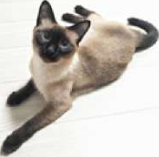
Close relatives share most of their genes, so when inbreeding is done continuously, genetically alike offspring are produced, and their traits can be predicted in advance. The Siamese cat and the Labrador Retriever dog are examples of purebred animals produced this way.
Purebred: organisms produced by continuous inbreeding, which are genetically alike, are described as purebred or inbred.
Line Breeding
Line breeding: a type of inbreeding in which breeding is done between more distant relatives to get animals with desired characteristics.
Distant relatives share fewer genes than close ones, so line breeding reduces the rate at which animals become purebred. It also reduces the risk of the ill health that is sometimes seen in purebred animals.
Self-pollination
Most plants have both male and female reproductive organs in the same body, so they are able to self-pollinate. Plants grown from seeds produced by self-pollination are identical to the mother plant in only some qualities, not all. This is because genes are reshuffled during sexual reproduction. Even so, this method helps to produce genetically identical plants.
Cross Breeding
Cross breeding: a method that involves breeding two unrelated individuals. Generally, it is done between two different species of the same genus.
Cross breeding is used to produce progeny with the desired traits of two different individuals. It is suitable for producing offspring that show the characteristics of interest, by crossing two purebred organisms. The main purpose of cross breeding is to enhance the quality of the hybrid. However, the qualities of a hybrid are not transferred to all the generations that follow.
Hybrid: an offspring produced by cross breeding.
Do not mix up inbreeding and cross breeding. Inbreeding uses related individuals and gives purebreds. Cross breeding uses unrelated individuals and gives hybrids.
Some Organisms Produced by Cross Breeding
Cross breeding has produced many hybrids, both animals and plants. The table below puts six of them side by side with their parents and what is special about each. Each one is then looked at in turn.
| Hybrid | Parents | What is special |
| Liger | male lion and female tiger | larger than both parents, behaves like a lion |
| Tigon | male tiger and female lion | smaller than the liger and both parents, looks like a tiger |
| Beefalo | buffalo (American bison) and bull | can reproduce |
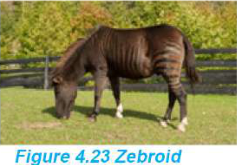
| Zebroid | zebra and horse | cannot reproduce |
| Mule | donkey and horse | carries loads like a donkey, runs like a horse, sterile |
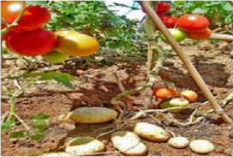
| Pomato | potato and tomato | tomato above the soil, potato below it |
Liger and Tigon
The hybrid obtained by crossing a male lion with a female tiger is called a liger. It is the best-known hybrid animal. A liger is larger than both of its parents, and it generally behaves like a lion.
Swap the parents, crossing a male tiger with a female lion, and the hybrid is called a tigon. A tigon is smaller than the liger, and it is smaller than either of its parents too. It resembles a tiger, but most of its qualities, such as roaring and socialization, are like those of a lion.
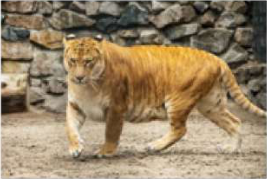
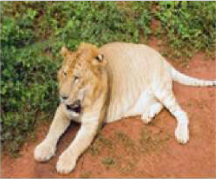
The first part of each name comes from the father. A LIger has a LIon father; a TIgon has a TIger father. Swapping which parent is male gives a different animal.
Beefalo and Zebroid
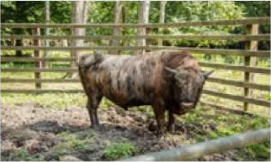
The beefalo is a hybrid produced by crossing a buffalo (American bison) with a bull. It is different from most other hybrids because beefalo can reproduce.
The hybrid obtained by crossing a zebra with a horse is called a zebroid. Zebroids cannot reproduce.
Mule
The hybrid animal produced by cross breeding a donkey and a horse is called a mule. It combines the useful qualities of both parents: it can carry loads like a donkey and run like a horse, which is why mules carry goods along the mountain trails of Nepal. A mule is also sterile, so it cannot produce offspring.
Pomato
Hybrids are not only animals. The pomato is a plant produced by crossing a potato with a tomato. In this plant, tomatoes grow on the stem above the soil and potatoes form underground, so one plant gives two crops.
Advantages of Cross Breeding
Cross breeding can be carried out in both plants and animals. New varieties of an organism can be produced by it, and farmers benefit from it. Its main advantages are:
- It combines the desirable qualities of two organisms from different breeds, varieties or species.
- Human beings can produce organisms with the characters they want.
- It gives the opportunity to make full use of a wide range of genetic material.
- Animals of better quality than their parents can be developed.
- The immunity, strength, lifespan and vigour of an organism can be improved.
- Crop production can be increased from plants produced this way.
Disadvantages of Cross Breeding
- Without proper understanding and management of cross breeding techniques, problems may arise in breeding policy in future.
- Products from cross breeding fetch a lower price than products from purebreds, so farmers cannot earn as much as they expect.
- There is a limit on selling cross-bred animals in the export market.
- As the external and genetic characteristics of hybrids keep changing, the chance of purebreds becoming extinct increases.
- The natural traits of the parents are not completely passed to the progeny, so those traits may gradually disappear.
Comparing the Methods of Selective Breeding
| Method | Who is bred with whom | Result |
| Inbreeding | closely related animals | genetically alike, purebred offspring |
| Line breeding | more distant relatives | desired characters, less risk of ill health |
| Self-pollination | a plant with itself | genetically identical plants |
| Cross breeding | unrelated individuals, different species of one genus | hybrids |
The closer the relatives, the more alike the offspring. Crossing unrelated individuals mixes the qualities of both and gives a new hybrid.
The full lesson is waiting for you
The notes are free to read in full. A free account opens the rest of the practice, and tracks your progress and confidence score for every subject. Presentations and videos need approval from Learn Yeti.