What pesticides are and why they are grouped
Farmers, gardeners and grain sellers all fight pests. Insects chew leaves, fungi rot fruit, weeds steal water and sunlight from crops, and rats raid grain stores. Pesticides are the poisonous substances used to remove, destroy, kill or control such harmful pests on seeds, plants, trees and animals, in stored food and even in construction areas. In Nepal, which pesticides may be brought in, made, sold and used is decided by the Pesticide Management Act 2076 (B.S.).
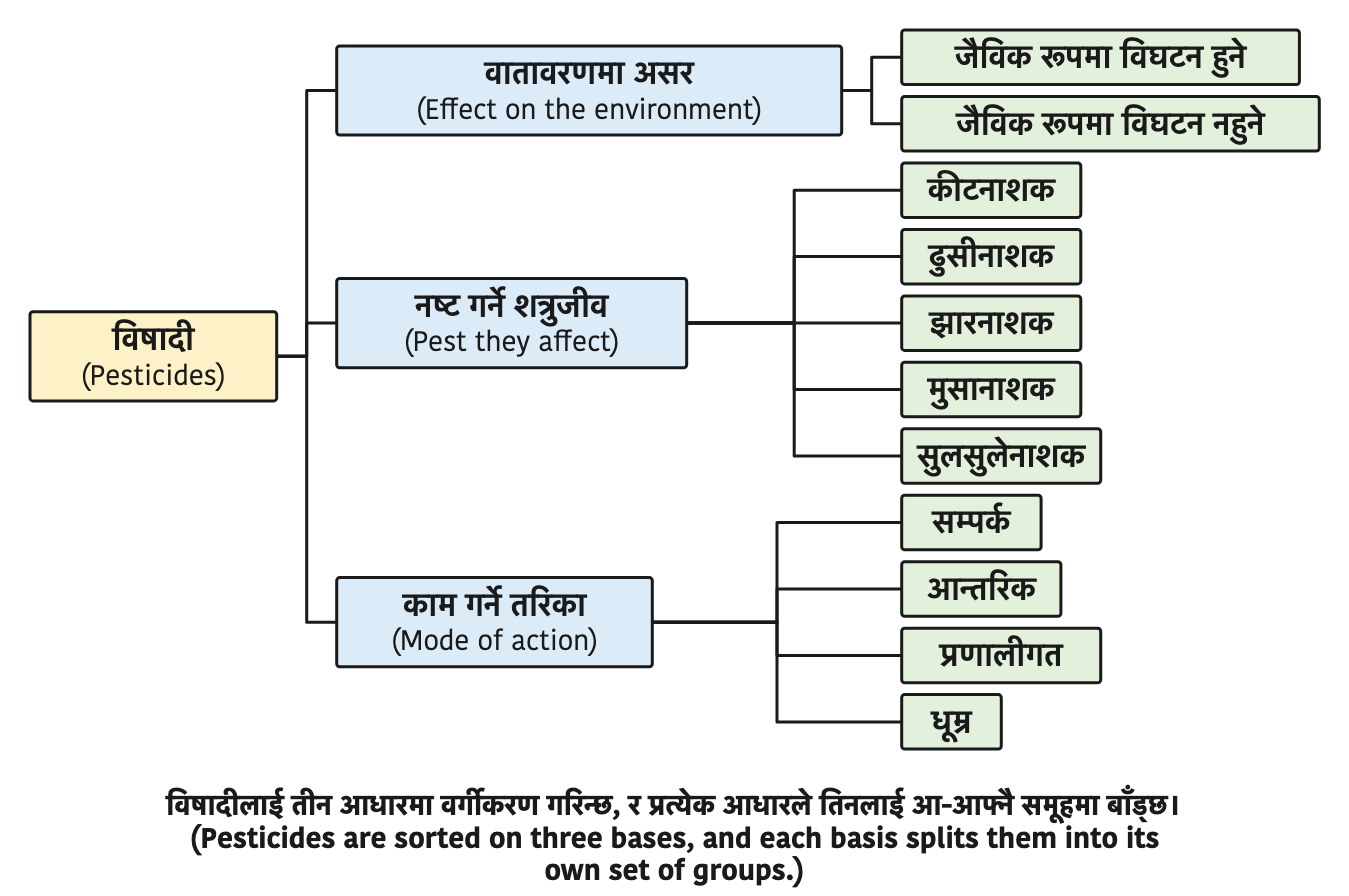
There are hundreds of pesticides on the market, and their names are long and unfamiliar. To make sense of them, pesticides are sorted on three different bases. Each basis asks a different question about the same pesticide:
- Effect on the environment: does it break down quickly, or does it stay in the soil, water and food for years?
- The pest it affects: is it meant for an insect, a fungus, a weed, a rodent or a mite?
- Mode of action: does it reach the pest by touching its body, through its food, through the plant's own sap, or as a poisonous gas?
1. Pesticides on the basis of effect on the environment
The first question is what happens to a pesticide after it has done its work. Some pesticides disappear from the soil, water and crops within a short time. Others stay behind for many years and keep poisoning living things. On this basis pesticides are of two types.
Biodegradable (non-persistent) pesticides are pesticides that are broken down into harmless compounds by microbes and other living organisms within a short time when they come in contact with water, air, light or heat.
Because they break down quickly, these pesticides do less lasting harm to the soil and water. Dimethoate, sold under names such as Nugor, Rugor and Dimet, and Malathion are examples.
Persistent (non-biodegradable) pesticides are pesticides that do not decompose easily in the environment and remain in the food chain for a long time.
A persistent pesticide sprayed on a field does not simply vanish. It stays in the soil and water, enters the plants, and passes on to the animals and people who eat those plants. Since nothing breaks it down, it keeps collecting in living bodies year after year. For this reason this type of pesticide is banned in most countries. In Nepal its use, export and import are all banned. DDT and Aldrin are examples.
| Feature | Biodegradable | Persistent |
| Breaks down in the environment | Yes, within a short time | No, stays for a long time |
| What breaks it down | Microbes and other organisms, helped by water, air, light or heat | Not broken down easily |
| In the food chain | Does not stay long | Remains for a long time |
| In Nepal | Can be used if permitted by law | Use, import and export banned |
| Examples | Dimethoate, Malathion | DDT, Aldrin |
2. Pesticides on the basis of the pests they affect
The second question is which pest a pesticide is meant for. The ending "-cide" means killer, so the first part of each name tells you the target. An insecticide kills insects, a fungicide kills fungi, and a herbicide kills unwanted herbs. On this basis there are five groups.
Insecticides are pesticides used to kill and control harmful insects.
Fungicides are pesticides used against fungi and the diseases caused by them.
Herbicides are pesticides used to destroy or control unwanted herbs and plants in crop fields.
Rodenticides are pesticides used to kill rats and other rodents such as mice, squirrels, hamsters and porcupines.
Miticides are pesticides used to kill mites.
| Group | Pest it targets | Examples |
| Insecticides | Harmful insects | Malathion, Cypermethrin, Fenvalerate, Nitenpyram |
| Fungicides | Fungi and the diseases they cause | Dimethomorph, Sectin, Mancozeb, Carbendazim |
| Herbicides | Unwanted herbs and plants | Butachlor, Isoproturon, Atrazine |
| Rodenticides | Rats, mice, squirrels, hamsters, porcupines | Zinc phosphide, Bromadiolone, Coumatetralyl |
| Miticides | Mites | Bifenazate, Fenazaquin, Propargite, Fenpyroximate |
Knowing the target group is the first step in choosing a pesticide. Suppose a farmer finds the leaves of her potato plants turning black and rotting because of a fungus. An insecticide sprayed on them would kill no fungus at all. It would waste money and put poison into the field for nothing. She needs a fungicide.
Mites are not insects. They are tiny eight-legged animals related to spiders, which is why they have their own group, the miticides. Do not call every small pest an insect.
3. Pesticides on the basis of mode of action
The third question is how the poison actually reaches the pest. On this basis pesticides are of four types.
Contact pesticides are pesticides that kill pests when the pest's body comes in direct contact with them.
The spray has to land on the pest itself. Contact pesticides are used against pests such as aphids, larvae, thrips and whiteflies. Malathion and Chlorpyrifos are contact pesticides.
Internal pesticides are pesticides that kill pests when the pests eat leaves, flowers or fruits carrying the pesticide, so that the poison acts from inside their bodies.
A caterpillar may never be hit by a single drop of spray. But once it chews a sprayed cabbage leaf, the poison is in its stomach and it dies. Malathion, Cypermethrin and Fenvalerate belong to this group.
Systemic pesticides are pesticides absorbed by parts of a plant such as its roots and leaves, so that the plant itself becomes poisonous and kills the pests that suck its juice or eat it.
Here the plant carries the poison through its own body. An aphid hiding under a leaf, or a stem borer tunnelling inside a maize stem, cannot be reached by an ordinary spray. Yet it dies as soon as it feeds on the poisoned sap or tissue. Systemic pesticides such as Thiamethoxam and Dinotefuran are used against aphids, larvae, thrips, whiteflies, leaf miners and stem borers.
Fumigant pesticides are pesticides that produce poisonous gases or fumes when they come in contact with air, and the gas kills the pests.
A gas spreads into every gap between the grains in a sack, where no spray could ever reach. That is why fumigants are generally used to kill pests while agricultural products are in storage. Aluminium phosphide and Methyl bromide are examples.
The gas a fumigant gives off is poisonous to people as well as to pests. A store being fumigated must stay closed, and nobody should enter it or breathe its air.
One pesticide, three groups
The three bases do not compete with each other. They are three different questions, so one pesticide has an answer to each. Malathion shows this well:
- By effect on the environment, it is biodegradable, because it breaks down within a short time.
- By the pest it affects, it is an insecticide, because it is used against harmful insects.
- By mode of action, it is both a contact and an internal pesticide, because it kills insects it touches and also insects that eat sprayed leaves.
Before naming the type of a pesticide, check which basis the question is using. The same pesticide can be biodegradable, an insecticide and a contact pesticide all at once.
Safety precautions in the use and storage of pesticides
Every pesticide is made to kill living things, and people, livestock, bees and fish are living things too. Most accidents with pesticides happen because the poison was bought, stored or sprayed carelessly. So the following precautions must be followed strictly whenever chemical pesticides are stored or used.
Buying pesticides within the law
- Only pesticides permitted by the Pesticide Management Act 2076 may be imported, produced, traded or used.
- Pesticides should be bought only on the advice of agricultural technicians.
- The most dangerous pesticides, listed as Group IB pesticides, must be bought only under the direction of a crop protection officer.
- Only pesticides that are less harmful but still effective should be chosen.
Storing pesticides safely
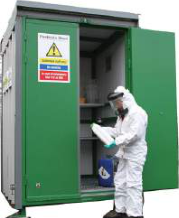
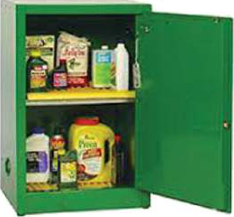
- Pesticide left over after use must be stored and managed in a safe place.
- The label of every pesticide container must be clear and intact.
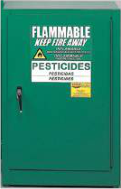
- Pesticides must not be stored where children can easily reach them, or near where food is stored.
- Pesticides must be stored in an airtight container that does not leak.
A torn or faded label is dangerous, because nobody can then tell which poison is inside the bottle, how much of it to use, or what to do after an accident. A pesticide poured into an old soft drink bottle is even worse, since a child may drink it thinking it is a drink.
Protecting the person who sprays
The label on a pesticide is its instruction sheet. A small mistake or a moment of carelessness by the user can cause an accident and serious harm, so the instructions on the label must be read and followed strictly.
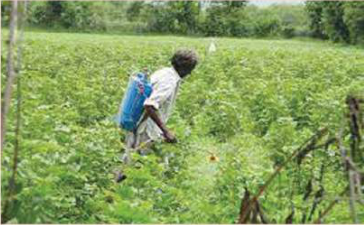
Spray drops can enter the body through the skin, the eyes, the nose and the mouth. So while spraying, the whole body must be covered:
- a protective suit that covers the whole body
- a mask over the nose and mouth
- goggles over the eyes
- gloves on the hands
After spraying
- The equipment used for spraying should be cleaned immediately after use and stored in a safe place. It should not be cleaned near water sources such as streams, wells or taps.
- The sprayer should wash their hands and take a bath immediately after spraying.
- Vegetables, fruits and crops should not be sold or eaten immediately after pesticide has been used on them.
- The integrated pest management method should be followed as far as possible.
A sprayed crop still carries poison on it and inside it. Each pesticide needs its own waiting period to break down before the crop is safe to eat, and a vegetable picked the same evening carries that poison straight to the family table. Washing a sprayer in a stream carries the poison to the fish and to everyone downstream who drinks that water. Integrated pest management reduces all these risks by controlling pests with several methods together and using chemical pesticides only when they are really needed.
All pesticides are poisons. They are not medicines.
The full lesson is waiting for you
The notes are free to read in full. A free account opens the rest of the practice, and tracks your progress and confidence score for every subject. Presentations and videos need approval from Learn Yeti.