Chemicals in Our Daily Life
From the moment you wake up, you are handling chemicals. The salt in your dal, the soap you bathe with, the powder that cleans your school uniform and the spray that keeps insects off the vegetables are all chemicals. Some of them come from nature, like salt from rocks and sea water and sugar from sugarcane. Others are manufactured in factories. Chemicals used for cleaning, food preservatives, pesticides, chemicals used to preserve fruits and vegetables, and chemical fertilizers are some of the chemicals we meet every day.
Industrial chemistry is the branch of chemistry in which we study the different aspects of transforming matter through chemical processes to manufacture materials useful to people.
We can sort the chemicals in a home by the job they do. Some clean our bodies, clothes and dishes. Some kill harmful pests such as rats, cockroaches and the insects that eat our crops. Some are eaten as food, and some keep food from going bad. The five chemicals shown below are found in almost every Nepali home.
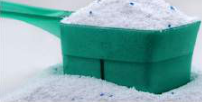
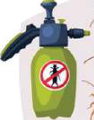

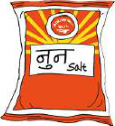
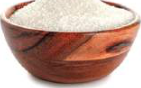
| Chemicals used as food | Chemicals used as food preservatives | Chemicals used for cleaning | Chemicals used as pesticides |
| Salt, sugar | Salt, sugar | Soap, detergent | Rat poison (rodenticide), insect spray |
| Honey, edible oil | Vinegar, edible oil, honey | Washing soda, bleaching powder | Mosquito coil, weed killer |
One chemical can do more than one job. Salt and sugar sit in two columns because we eat them and we also use them to keep food from spoiling.
Why Food Spoils
Leave a slice of bread in a warm, damp corner for a few days and fuzzy green and black patches appear on it. Leave milk outside the fridge on a hot day and it turns sour. Cooked rice kept overnight in summer becomes sticky and smells bad. In each case the food has decayed. Decay happens because tiny living things, namely bacteria, yeast and mould, settle on the food and grow on it. They feed on the food and change its smell, taste, colour and texture, and some of them make it unsafe to eat. Like all living things, these microbes need water, warmth and air to grow.
Pickle shows how this decay can be stopped. Cut radish or carrot into small pieces and dry them in the sun for a while. Put half of the pieces into a jar just as they are. Mix the other half well with salt and oil, press it down into a second jar, and leave both jars for a week. The plain pieces start to rot and grow mould. The pieces in salt and oil stay firm and fresh. Salt pulls water out of the vegetable and out of any microbe that lands on it, so the microbe cannot grow. Oil coats the pieces and keeps air away from them. Even the sun drying helps, because it removes water. Salt and oil stop food from decaying, so they are called food preservatives.
Food Preservatives
Food preservatives are the substances used to protect food from decaying. They check the growth of bacteria, yeast and mould in food.
Preservatives let us store food for a long time. They are used for cereals such as rice and wheat, legumes such as lentils and beans, vegetable products, fruits and vegetables, and animal products like meat, milk and milk products. Without them, a family would have to eat everything soon after it was harvested or bought, and grain from a good season could not be kept for a hard one.
First-Class and Second-Class Preservatives
Preservatives are classified into two classes. The class depends on where the preservative comes from and on how much of it can safely go into food.
First-class preservatives belong to natural sources and can be used in food in the amounts needed. Sugar, salt, vinegar, honey, spices and edible oils are first-class preservatives.
Second-class preservatives are obtained by chemical derivation of compounds and can be used only in a certain, limited amount. Sodium or potassium nitrate, benzoic acid and its salts, and sulphur dioxide are second-class preservatives.
| Basis | First-class preservatives | Second-class preservatives |
| Source | Natural sources | Chemical derivation of compounds |
| Amount allowed | As much as the food needs | A certain, limited amount only |
| Examples | Sugar, salt, vinegar, honey, spices, edible oils | Sodium or potassium nitrate, benzoic acid and its salts, sulphur dioxide |
Never use more than one type of second-class preservative in any food. Each one is safe only within its own small limit.
Old and New Ways of Keeping Food
People have always found ways to keep food. Drying in the sun, keeping food in a cold place, and soaking it in salt or sugar solution are old methods that still work well. In Nepal, green leafy vegetables are fermented and dried to make gundruk, radish is treated the same way to make sinki, meat is dried into sukuti, and fruits are boiled with sugar into jam and syrup. A refrigerator is simply the modern form of a cold place.

Chemicals are also used to keep food, and other chemicals are used to make fruits ripen quickly for the market. Used carelessly or in excess, such chemicals are very harmful to human health and to the environment. So wherever a natural preservative can do the job, it is the better choice.
Wear a mask and gloves while using chemical preservatives or ripening chemicals. Wash your hands with soap and water after using them. Never use them in excess.
Three Types of Food Preservatives
Food preservatives keep the nutrients of fruits, vegetables, milk, curd, meat and fish from being lost, and they prevent food spoilage. They are of three types:
- Chemical food preservatives
- Natural food preservatives
- Preservatives that induce ripening of fruits, also called artificial ripening agents
Chemical Food Preservatives
Salt and oil are chemicals too, and they control the growth of microscopic germs and organisms. Factory-made foods use other chemicals that do the same job in very small amounts. The chemicals used as food preservatives include:
- Sodium benzoate
- Sorbate
- Sulphur dioxide
- Nitrates and nitrites
- Butylated hydroxyanisole (BHA)
- Butylated hydroxytoluene (BHT)
- Calcium propionate
- Sodium metabisulfite
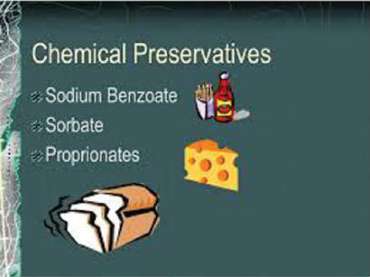
Next time you pick up a packet of noodles, a bottle of tomato ketchup or a box of fruit juice, read its list of ingredients. You will often find one of these names, or a code number standing for it, near the end of the list. They are permitted only in small, fixed amounts.
Natural Food Preservatives
We use food every day and buy or harvest it again within short gaps, so a safe, natural way of keeping it matters in every home.
Natural food preservatives are substances that come from organic matter and prevent food from decaying. They are obtained from plants, animals, fungi and algae.
Mugwort, the bitter herb known in Nepal as titepati, is spread among stored grain to keep pests away. Neem oil does the same job in food stores. Lemon concentrate, a thick sour liquid made by boiling down citrus juice and sold as chuk, keeps pickles sour and safe. Traditional natural methods include drying food in the sun, keeping it in cold places or above water, covering it with wood ash, and mixing it with turmeric and oil.
Newer methods are now used in both towns and villages. Pasteurization heats milk to a set temperature for a short time and then cools it quickly, killing most harmful microbes without boiling the milk. Freezing and cold stores keep food so cold that microbes almost stop growing.
Every method, old or new, takes away something microbes need to grow: water, warmth or air. Drying and salting remove water, cold removes warmth, and a coat of oil keeps out air.
Ripening Agents: Making Fruits Ripen Fast
Fruits such as mango and banana are picked when they are fully grown but still hard and green. Even after reaching maturity they take a long time to ripen, so chemicals are used to make them ripen sooner.
Ripening agents are the chemicals used for fast ripening of fruits. Calcium carbide, ethylene gas and ethephon are ripening agents.
Ethylene is a gas that ripening fruits give off on their own, and it makes the fruit soften, sweeten and change colour. Ethephon releases ethylene when it is sprayed on fruit. Calcium carbide gives off a gas called acetylene when it meets moisture, and acetylene acts on the fruit in much the same way as ethylene.
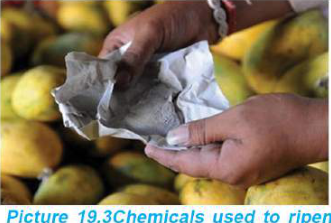
Fruit was ripened long before these chemicals existed. Farmers wrapped fruits in a jute sack, packed them with the leaves of the Malabar nut plant, which is called asuro in Nepali, kept a sack of fruit inside a pit and covered it with soil from the top, or bedded the fruit in a thick layer of husk or hay. Each of these traps the fruit's own ethylene and warmth around it, so it ripens faster with nothing added.
Nowadays calcium carbide is used excessively to ripen fruits, because it is an easier and cheaper method. Both the person using it and the person eating the fruit need to be careful.
Overuse of calcium carbide and similar ripening chemicals can cause skin irritation, skin burning, red blisters on the skin, lung effusion and eye irritation. These chemicals must not be used in excess, and fruit ripened with them must be eaten with care.
The full lesson is waiting for you
The notes are free to read in full. A free account opens the rest of the practice, and tracks your progress and confidence score for every subject. Presentations and videos need approval from Learn Yeti.