Cleaning with Materials from Nature
Long before soap bars and shampoo bottles reached every village shop, people in Nepal kept their bodies, hair, clothes and cooking pots clean with things that grew around them or were left over from the kitchen fire. Many families still use them today, and some of these materials are now added to products sold in shops as well.
The natural materials used for cleansing are reetha (soapberry), mustard seed cake (peena), wood ash, lemon juice and Sajiban. They come straight from plants or from burnt wood, and they need very little processing before they are used.
Natural cleansing materials: Substances obtained from nature, such as plant fruits, seed cakes, plant juices and ash, that are used to clean the body, hair, clothes, teeth or utensils.
These five do not all clean in the same way. Reetha makes foam, just as soap does. Wood ash is gritty, so it scrubs dirt off. Lemon juice is acidic, so it dissolves stains and dull coatings. Peena washes hair and feeds it at the same time, and Sajiban twigs are used to brush the teeth. To understand any one of them, ask two questions: what does it contain, and how is it used?
Reetha (Soapberry)
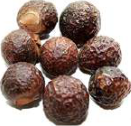
Reetha is the round fruit of the soapberry tree, a traditional medicinal tree found in Nepal, India and China. When the fruit ripens it dries into a wrinkled brown shell around a hard black seed. Drop a few broken shells into warm water, rub them between your hands, and the water soon turns cloudy and frothy.
That foam comes from saponin, a substance stored in the fruit. Saponin acts as a foaming agent. Because of this, reetha can be regarded as a soft natural soap.
Saponin: The natural substance present in reetha that acts as a foaming agent, producing a lather in water as soap does.
Foaming agent: A substance that produces foam or lather when it is shaken or rubbed with water. The foam helps to lift dirt away from a surface.
Reetha has been in use for centuries to clean our body and to wash clothes. The lather from a soaked and rubbed shell is spread on hair, skin or cloth and then rinsed away with clean water. The tree is also valued in traditional medicine, and reetha is generally used to make ayurvedic medicine. Today the dried fruit is ground into a powder and added to shampoo as a foaming agent, so the lather in some modern shampoos comes from the very fruit our grandparents used.
Reetha cleans because its saponin makes foam. That is why it is called a soft natural soap.
Peena (Mustard Seed Cake)
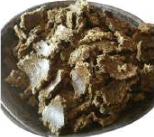
When mustard seeds are crushed in an oil mill, the oil flows out and a brown, crumbly solid is left behind. This solid is peena, or mustard seed cake. In Nepal it has been used for a long time to wash hair. It is soaked in water until it softens, then rubbed into the hair and scalp and rinsed out.
Peena does more than remove dirt. It makes hair soft and strong, because it contains the nutrients needed for the healthy growth of hair. These nutrients are:
- folate
- niacin
- thiamine
- vitamin B6
All four are forms of vitamin B complex. With regular use, peena can control hair fall to a large extent, and it keeps hair soft and healthy.
Vitamin B complex: A group of several B vitamins. Folate, niacin, thiamine and vitamin B6 all belong to this group.
Thiamine is a vitamin of the B complex, also called vitamin B1. A similar sounding word, thymine, names a completely different substance found in DNA. The two are easy to mix up in spelling.
Wood Ash
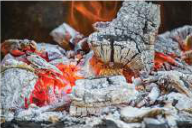
When firewood burns completely in a hearth or stove, a soft grey powder is left behind. This is wood ash, and in many Nepali kitchens it has long served as the scrubbing powder for pots and pans. Mixed with a small amount of water, ash forms a paste. The paste is rubbed on a dirty surface, where it works as an abrasive cleaner.
Abrasive cleaner: A cleaner made of fine, slightly rough particles that remove dirt by rubbing or scrubbing it off a surface.
A paste of wood ash and water can be used to:
- brighten metals that have become dull
- clean dirty utensils, such as a pot blackened by smoke
- remove sticky residue and adhesive, such as the glue a label leaves on a glass jar
Use only ash that is completely cold. Ash taken straight from a fire can hide glowing embers that burn the skin.
Ash is useful even after the washing is done. It is a good source of potassium, phosphorus and magnesium, which plants need, so wood ash can also be used as a fertilizer. This is why many families scatter their leftover ash in the kitchen garden.
Sajiban
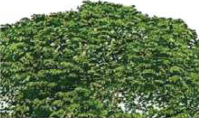
Sajiban is a very useful plant found naturally in different regions of Nepal. Its scientific name is Jatropha curcas. It is a hardy bush with broad leaves and small fruits that hold oily seeds, and it has been used in many different ways.
The main uses of the Sajiban plant are:
- Animals do not eat this plant, so it is grown as a fence around fields.
- Its leaves are used to make compost manure.
- Its juice is used to cure burns.
- It can be used as an anticancer medicine.
- Its twigs can be used for brushing the teeth.
- It is a good source of nitrogen, phosphorus and potash, so it is also used as an organic fertilizer.
Organic fertilizer: A fertilizer made from plant or animal matter that adds nutrients such as nitrogen, phosphorus and potash to the soil.
Sajiban is linked to cleansing in two ways. Its twigs keep the teeth clean, and the oil pressed from its seeds is used to make soap. The oil has many other uses too, which are set out in the next section.
Sajiban seeds look like small nuts, but they are poisonous if eaten. Never taste the seeds or the oil.
The Importance of Sajiban
The juice of Sajiban, and above all the oil pressed from its seeds, can be put to many uses:
- The juice and oil are applied on cattle to kill the lice on their bodies.
- The oil is applied to cure skin diseases and infections.
- The oil relieves muscular and joint pains.
- The oil is used to make soap and to light lamps.
- The oil is used to produce glycerin.
- The twigs are used to clean the teeth.
- The leaves make compost, and the seed cake left after pressing is used as manure.
- The oil can be refined to get biodiesel.
Biodiesel: A fuel obtained by refining plant oil, which can be used in place of diesel.
Scientists have referred to Jatropha curcas found in Nepal as an excellent source of biodiesel. A Sajiban seed generally consists of about 30 to 48% oil, which means that every 100 g of seeds holds somewhere between 30 g and 48 g of oil. About one litre of oil can be produced from 3 kilograms of Sajiban seeds.
Worked example: A farmer collects 12 kg of seeds from the Sajiban fence around his field. About how much oil can be produced from them?
Step 1: Finding how many 3 kg lots there are in 12 kg:
\[ 12\ \text{kg} \div 3\ \text{kg} = 4 \]
Step 2: Each 3 kg lot gives about 1 litre of oil, so multiplying 1 litre by the 4 lots:
\[ 4 \times 1\ \text{L} = 4\ \text{L} \]
So 12 kg of Sajiban seeds give about 4 litres of oil, which can then be refined into biodiesel. A plant that animals will not even eat can turn a field boundary into a small source of fuel.
Lemon Juice
Lemon juice consists of citric acid in high concentration. That acid gives a lemon its sour taste, and it is also what makes the juice a cleaner. Lemon juice is a good natural cleaner for two reasons: it has a low pH value, and it has antibacterial properties.
Citric acid: The acid present in high concentration in lemon juice. It makes the juice sour and acidic.
pH value: A number that shows how acidic or basic a substance is. A low pH value means the substance is acidic.
Antibacterial: Able to kill bacteria or stop them from growing.
Natural bleach: A substance from nature that removes stains and lightens colour.
Lemon juice also works as a natural bleach, lifting stains out of what it cleans. It has a good smell, and unlike harsh cleaners it does not destroy materials like wood and clothes when it is used to clean them. It cleans copper surfaces efficiently and makes them shiny. A copper water jug that has turned dull and dark can be rubbed with a cut lemon, rinsed and dried, and the bright colour of the metal comes back, because the acid removes the dull coating. Lemon juice has also been used as a medicine for decades.
Lemon juice cleans because of its citric acid: the low pH dissolves stains and dull coatings, and its antibacterial property kills germs.
How the Five Materials Clean
Each material cleans in its own way because each contains something different. The table sets them side by side.
| Material | What it contains | How it cleans | Used to clean |
| Reetha (soapberry) | Saponin | Makes foam like soap | Body, clothes, hair (in shampoo) |
| Peena (mustard seed cake) | Folate, niacin, thiamine, vitamin B6 | Washes hair and nourishes it | Hair |
| Wood ash | Potassium, phosphorus, magnesium | Gritty paste scrubs dirt off | Utensils, metals, sticky residue |
| Sajiban | Oil in its seeds; nitrogen, phosphorus, potash | Twigs scrub teeth; oil is made into soap | Teeth |
| Lemon juice | Citric acid in high concentration | Low pH dissolves stains; kills bacteria; bleaches | Copper, wood, clothes |
Natural materials clean in three main ways. They foam, as reetha does. They scrub, as wood ash does. Or they dissolve, as the acid in lemon juice does.
Notice also how little of these materials goes to waste. Wood ash and Sajiban feed the soil as fertilizers after their cleaning work, while reetha, lemon juice and Sajiban are used as medicines as well. A material that cleans and then does a second job is one reason these practices have lasted for so many generations.
The full lesson is waiting for you
The notes are free to read in full. A free account opens the rest of the practice, and tracks your progress and confidence score for every subject. Presentations and videos need approval from Learn Yeti.