What Vitamins Do for the Body
Food gives the body many kinds of nutrients. Vitamins are the nutrients that every cell needs to carry out its normal work and to grow. Each vitamin has its own particular job, so one vitamin cannot stand in for another. A plate full of rice gives plenty of energy, but if it holds no vegetables, fruit, milk or eggs, some vitamins will still be missing.
Vitamins help with the digestion that goes on inside cells, they build up the body's power to fight disease, and they help the body produce hormones. When a child goes short of vitamins from an early age, many health problems appear, and growth and development are held back as well. A vitamin that is missing for a long time shows itself as a particular disease. That is why each vitamin is learnt in three parts: what it does, where it is found, and what goes wrong when there is too little of it.
Two Groups of Vitamins
Vitamins are sorted into two groups according to what they dissolve in.
Fat-soluble vitamins: vitamins that dissolve in fats and oils. Vitamins A, D, E and K belong to this group.
Water-soluble vitamins: vitamins that dissolve in water. Vitamin B and vitamin C belong to this group.
Water-soluble vitamins are not stored in the body, so foods that carry vitamin B and vitamin C have to be eaten regularly. The four letters A, D, E and K are an easy way to hold the fat-soluble group in mind.
Vitamin A
Vitamin A plays an important part in the growth of bones. It helps new cells form and develop. It makes the immune system stronger and so protects the body from infection. Above all, it is very useful for the eyes.
When vitamin A runs short, the eyes suffer first. Night blindness is the condition in which a person cannot see properly in dim light or after dark. Xerophthalmia is the disease in which the eyes become dry. A lack of vitamin A can also leave the skin wrinkled, weaken the body's defences and bring colds and coughs again and again.
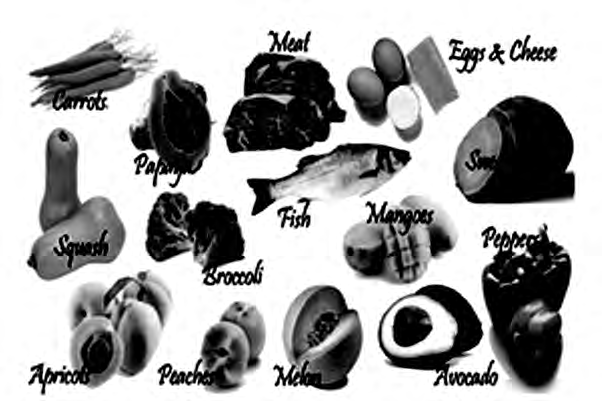
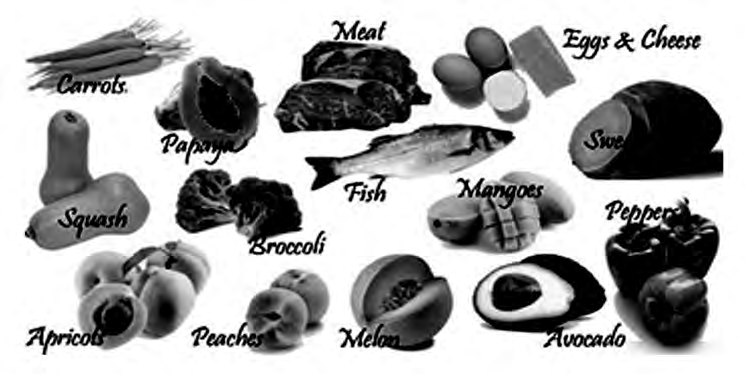
Vitamin A is found in carrots, sweet potatoes, fenugreek leaves, broccoli, cabbage, fish oil, egg yolk, green leafy vegetables and yellow fruits. Oranges and pumpkin are also rich in it.
Vitamin D
Vitamin D is needed for the health of the whole body. It keeps the amount of calcium in the body under control. Bones and teeth are built from calcium, so vitamin D is what makes them strong. It also supports the work of the digestive system and plays an important part in keeping the immune system strong.
A child who lacks this vitamin grows slowly, gets teeth late, and has bones that turn soft and bend. The disease in which bones do not grow and develop properly, the legs become bent and the teeth do not form well is called rickets. Osteomalacia, another disease in which the bones become soft, is also caused by too little vitamin D.
What makes vitamin D special is that the body can make it for itself. There is cholesterol in a layer just beneath the surface of the skin. When the ultraviolet rays in sunlight fall on that cholesterol, vitamin D is formed. This is why sunlight is the main source of vitamin D.
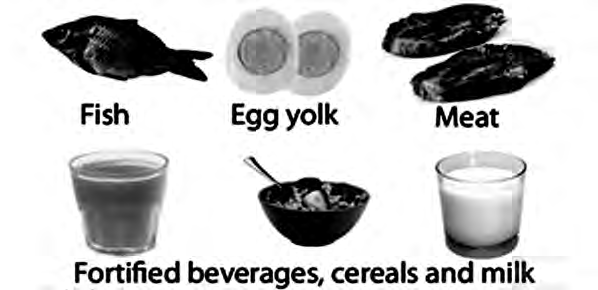
Besides sunlight, vitamin D can also be had from milk, eggs, chicken, fish, mushrooms and liver.
Vitamin E
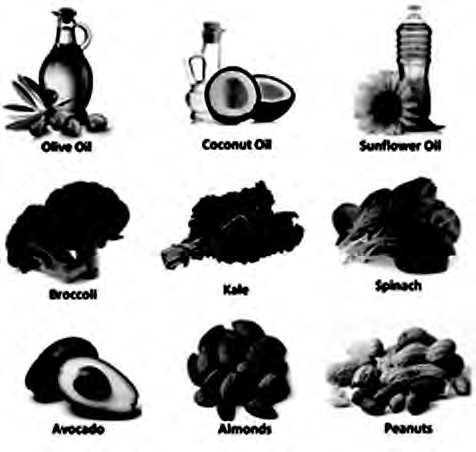
Vitamin E is one of the vitamins that dissolve in fat. It does these jobs in the body:
- It helps to make red blood cells.
- It helps the body grow and develop.
- It helps to prevent allergies.
- It helps to keep a woman's monthly period regular.
- It keeps the skin soft and healthy.
The main sources of vitamin E are liver, eggs, peanuts, walnuts, leafy green vegetables, sweet potatoes, mangoes and chestnuts. When it is lacking, the muscles waste away, a condition called muscular dystrophy.
Vitamin K
Vitamin K is very useful for building bones and for preventing heart disease. It also protects against infections of the breathing system. Its best-known job is helping blood to clot. When you cut your finger, the blood at the wound thickens into a clot and the bleeding stops. Vitamin K is needed for that to happen. It also makes bones strong.
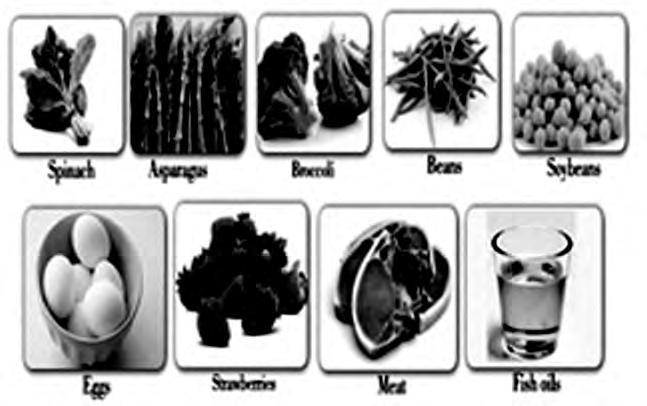
If the body does not have enough vitamin K, bleeding from a wound or injury does not stop quickly. Vitamin K is found in broccoli, cabbage, green leafy vegetables, fenugreek leaves, fish, eggs and liver.
Vitamin B Complex
Vitamin B is one of the water-soluble vitamins. It is not a single vitamin but a family of several, and the whole family is called the vitamin B complex. Because every member dissolves in water, none of them is stored in the body. Fish, seafood, chicken, eggs and foods made from milk are sources of the B complex.
Vitamin B complex: the name given to all the different kinds of water-soluble vitamin B taken together as one group.
The main members of the B complex, each with a short introduction, are these:
| Vitamin | Short introduction |
| Vitamin B₁, thiamin | A water-soluble vitamin. It brings on appetite, keeps the nerves healthy and helps the body grow and develop. |
| Vitamin B₂, riboflavin | Its chemical name is riboflavin. It keeps skin and muscle tissue healthy. Too little of it causes sores at the corners of the mouth. |
| Vitamin B₃, niacin | Dissolves easily in water. Its lack causes the disease pellagra. |
| Vitamin B₆, pyridoxine | Dissolves easily in water. Its lack brings mental confusion, harms the nervous system, and causes sores on the tongue and dry lips. |
| Vitamin B₉, folic acid | Needed for cells to increase in number and size. It makes red blood cells and so protects against anaemia. It is essential for the body and nerves of a baby growing in the womb. |
| Vitamin B₁₂, cyanocobalamin | Needed for the growth of cells, especially red blood cells. Without it the bone marrow cannot make blood cells, and anaemia results. |
Folic acid is essential for the body and nerves of an unborn baby to form, and that is why pregnant women should be given folic acid.
Vitamin C
Vitamin C is a water-soluble vitamin. It does these jobs in the body:
- It strengthens the immune system and protects against many infections.
- It keeps the gums healthy.
- It plays an important part in making and repairing red blood cells.
- It gives strength to the blood vessels.
- It helps the body store iron and helps the intestine take in iron and other minerals.
When a child lacks vitamin C, the immune system grows weak and diseases attack quickly and easily. The main disease caused by its lack is scurvy. In scurvy the teeth and gums bleed, wounds refuse to heal and bones break more easily.
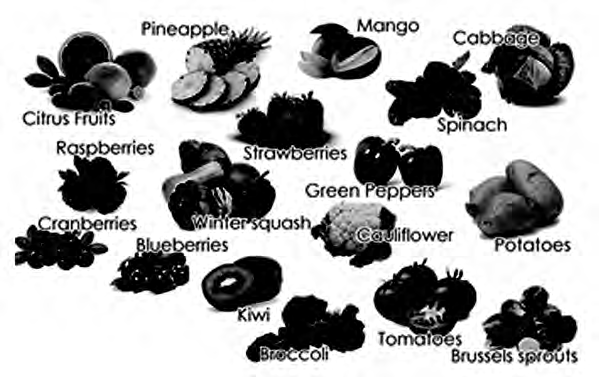
The main sources of vitamin C are sour citrus fruits such as oranges and lemons. It is also found in strawberries, potatoes, melons, cabbage, cauliflower, spinach, mangoes, papaya, asparagus, peas and milk.
All the Vitamins in Two Tables
Every vitamin above is brought together in the two tables below, so that its benefit, its local sources and the illness its lack causes can be read side by side. The fat-soluble vitamins:
| Vitamin | Benefit | Local sources | Deficiency disease or problem |
| Vitamin A | Normal growth; healthy eyes and skin | Carrots, sweet potato, fenugreek leaves, broccoli, cabbage, fish oil, egg yolk, green leafy vegetables, yellow fruits, oranges, pumpkin | Night blindness, dry eyes, wrinkled skin, weak immunity, frequent colds and coughs |
| Vitamin D | Strong bones and teeth | Sunlight, milk, eggs, chicken, fish, mushrooms, liver | Rickets and osteomalacia: bones do not grow and develop, legs become bent, teeth do not form properly |
| Vitamin E | Helps make red blood cells; supports growth and development | Liver, eggs, peanuts, walnuts, leafy green vegetables, sweet potato, mango, chestnuts | Muscular dystrophy, in which the muscles waste away |
| Vitamin K | Helps blood clot at a wound; makes bones strong | Broccoli, cabbage, green leafy vegetables, fenugreek leaves, fish, eggs, liver | Bleeding from a wound or injury does not stop quickly |
The water-soluble vitamins:
| Vitamin | Benefit | Local sources | Deficiency disease or problem |
| Vitamin B₁ | Brings on appetite; keeps nerves healthy; supports growth | Liver, eggs, potatoes, green vegetables, oil, peanuts, lentils | Beriberi, headache, dizziness, upset digestion |
| Vitamin B₂ | Keeps skin and muscle tissue healthy; helps make red blood cells | Bananas, milk and milk products, liver, meat | Sores inside the mouth, burning eyes, rough and scaly skin on the face |
| Vitamin B₃ | Keeps the skin, digestion and nervous system healthy | Meat, liver, fish, milk, eggs | Pellagra, skin disease, diarrhoea |
| Vitamin B₆ | Supports the brain; keeps eyes and skin healthy | Meat, green leafy vegetables, bananas, potatoes, oranges | Mental confusion, dry lips, tingling legs, sores on the tongue |
| Vitamin B₁₂ | Makes red blood cells | Meat, eggs, milk and milk products | Anaemia, infertility, tiredness, weakness |
| Vitamin C | Strengthens immunity against infection; builds cells and blood vessels; helps absorb iron and other minerals from the intestine | Oranges, lemons, strawberries, potatoes, melon, cabbage, cauliflower, spinach, mango, papaya, asparagus, peas, milk | Scurvy: bleeding, wounds that do not heal, bleeding teeth and gums, bones that break easily |
The amount of a vitamin is sometimes written in micrograms and sometimes in IU, which stands for International Units. One microgram is equal to 40 IU. This conversion is the one used when writing amounts of vitamin D.
Fibre
Fibre: a nutrient from plants, similar to carbohydrates, which, unlike other carbohydrates, is not easily digested.
Fibre is not the kind of molecule the body can digest easily, the way it digests rice or sugar. Even so, it is very effective in many of the body's processes: digestion, keeping body weight under control, blood circulation and keeping cholesterol in balance. Eating the right amount of fibre helps people live longer on average and lowers the chance of deadly diseases such as cancer.
According to medical science, the amount of fibre it is good to eat each day depends on age:
- People under 50 years of age: 25 to 38 grams a day
- People over 50 years of age: 21 to 30 grams a day
Fibre is generally of two kinds: soluble fibre and insoluble fibre.
Soluble fibre: fibre that dissolves in water. It lowers the amount of glucose in the blood and helps keep the level of cholesterol in the blood in balance.
Insoluble fibre: fibre that does not dissolve in water. It helps speed up the flow of blood in the digestive system.
Sources of soluble fibre:
- Apples
- Citron, the large sour lemon
- Peas
- Lentils
- Beans and other pulses
- Bayberries
- Barley
- Bananas
Sources of insoluble fibre:
- Finger millet
- Cauliflower
- Potatoes
- Tomatoes
- Sugarcane
- Chillies
Water
Water is needed to keep the body healthy, clean and fit, and for it to grow and develop properly. Water makes up 65 to 70 percent of the total weight of the human body. So a student who weighs 50 kilograms carries between 32.5 and 35 kilograms of water.
Water is made of two parts hydrogen and one part oxygen, and its chemical formula is \( H_2O \). Water is not spread evenly through the body. Blood, soft tissues, nerve tissue, the intestines and the muscles hold a large share of water, while bones, teeth and nails hold much less.
Dehydration: the condition in which the body's cells dry up because the body has too little water.
A person who is dehydrated must be given rehydration solution. Without it, dehydration can cause death very quickly.
About 20 percent of the water we need comes from food itself, from fruit, vegetables, lentil soup and curries. Under normal conditions the body needs about two litres of water a day.
The full lesson is waiting for you
The notes are free to read in full. A free account opens the rest of the practice, and tracks your progress and confidence score for every subject. Presentations and videos need approval from Learn Yeti.