Hydroelectricity
Hydroelectricity is the electrical energy produced when the force of flowing water spins the coil inside a generator.
Nepal's rivers rush down from high mountains, so flowing water carries a great deal of energy. To turn that energy into electricity, a dam is first built across the river to store the water. The stored water is then sent down a tunnel called the penstock, so it falls with very high speed. At the bottom sits a turbine joined to a generator, and the fast falling water makes the turbine spin.
As the turbine spins, the coil inside the generator, which is placed in a magnetic field, spins along with it. When a coil spins inside a magnetic field, an electric current is produced at the two ends of the coil. To distribute this electricity to homes, offices and factories, a transformer converts it to a high voltage, and transmission lines carry it to substations. From the substations it reaches our houses.
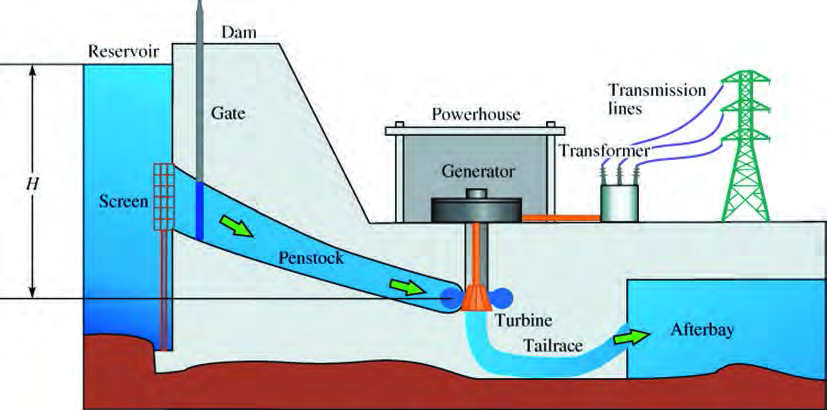
- Dam and reservoir: hold back the river and store its water.
- Penstock: sends the water rushing downward at high speed.
- Turbine: spins under the push of the falling water.
- Generator: produces current as its coil spins inside a magnetic field.
- Transformer: raises the electricity to a high voltage and sends it toward the substations.
Advantages of Using Hydroelectricity
Building a hydropower project costs a great deal at the start, but once it is built, the river keeps flowing for free. Over a long period, therefore, this is a very cheap form of energy. It causes no pollution of any kind, and because water is a renewable source, this energy is never used up.
- The starting cost is high, but in the long run it works out cheap.
- It causes no pollution of any kind.
- Being renewable, it can never run out.
- Electricity runs modern machines and appliances, so it helps economic activity grow.
- When enough is produced and used at home, air pollution falls, petroleum imports fall, and the trade deficit shrinks.
- Trading electricity with other countries helps the nation's economy grow.
Use of Alternative Sources of Energy in Nepal
In Nepal, different places have long been supplied with energy from different sources. At present the use of hydroelectricity is growing so that it can displace petroleum products. But no single source can reach everywhere, so sources that can be used in place of the traditionally used main ones are also needed.
Energy sources that can be used in place of the traditionally used main sources of energy are called alternative energy. Bio energy, wind energy and solar energy are examples of alternative sources of energy.
The Alternative Energy Promotion Centre
The Alternative Energy Promotion Centre was established in Nepal on 3 November 1996. Its objective is to develop and promote renewable and alternative sources of energy. The centre supports the production of alternative energy sources such as biogas, solar panels, solar dryers, solar cookers, wind mills and briquettes. Because the government created a separate body for this work, alternative energy technologies have been spreading from villages to cities.
The Use of Briquettes
As an alternative source of energy, briquettes are mainly used for heating rooms and for cooking food. To make the production and use of bio briquettes more systematic, the Alternative Energy Promotion Centre of the Government of Nepal, together with various governmental, non governmental, private and vocational educational institutions, is working in this field. The centre also provides the training needed to produce briquettes. This creates employment in the villages themselves and reduces the use of firewood.
Promotion of Biogas
The Government of Nepal began promoting biogas technology in 2030 B.S. Under the Biogas Support Programme, the government has been encouraging farmers through subsidies to build cattle dung biogas plants. Such plants have been built in the rural areas of every district of the country.
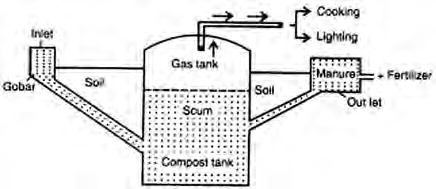
Aimed at urban areas, a new biogas technology has been adapted to suit town surroundings and ways of living. In it, organic matter is arranged to decompose in an oxygen free environment, so gas can be made even from the decaying waste that leaves a kitchen.
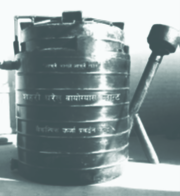
The Alternative Energy Promotion Centre has adopted a policy of building large plants in partnership with municipalities, so that biogas is produced from the decaying waste the municipalities dispose of. Large gas plants run by the private sector are also operating in our country. The biogas plant at Sukrauli in Nawalparasi is the first large gas plant built in Nepal to produce compressed natural gas, CNG. This gas is used as an alternative to liquified petroleum gas, LPG.
Do not mix up CNG and LPG. The Sukrauli plant compresses gas made from decaying matter to give CNG, so it is produced inside the country. LPG is a gas obtained from petroleum and has to be imported. CNG is used as an alternative to LPG.
Wind Energy
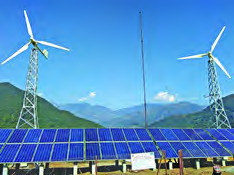
Wind energy is a renewable source of energy. Using a wind turbine, electricity can be generated from the energy of the wind. Turbines are installed at places where the wind keeps blowing continuously. The electricity produced depends on the speed of the wind, its direction and how steadily it blows. Small wind power centres have been set up in the rural areas of Nepal. One risk in producing this kind of energy is that very fast winds or storms can damage the turbines. Windy places of Nepal, such as Mustang, have a high potential for generating electricity from wind turbines.
Solar Dryers at Work
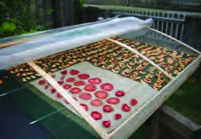
Farmers use solar dryers for both household and commercial purposes to dry fruits and green vegetables. For example, solar dryers are used to dry mango, orange, kiwi, fermented dried greens called gundruk, dried vegetable balls called masyaura, mushrooms and chillies. Solar dryers are also used to dry fish. Food that dust and flies would spoil in the open sun dries cleanly and quickly inside a solar dryer.
Commercial products prepared in solar dryers, such as gundruk, fermented dried radish called sinki, dried bamboo shoots called tama, and mushrooms, have a market both inside the country and abroad. Dried fruits and dried tomatoes have also found a good market in urban areas. Dried herbs, ginger, turmeric, cardamom and tea are exported to India. In this way the energy of the sun is raising the income of farmers themselves.
The full lesson is waiting for you
The notes are free to read in full. A free account opens the rest of the practice, and tracks your progress and confidence score for every subject. Presentations and videos need approval from Learn Yeti.