What Bioenergy Is
The bodies of living things are made of organic matter. When this organic matter decomposes or burns, energy is released. The firewood that cooks rice in a village kitchen, the dried dung cakes burnt for warmth, the straw piled in a shed and the husk that comes out of a rice mill were all once parts of living things, and burning any of them gives heat.
Bioenergy is the energy obtained from the different parts of plants and from the dung and urine of animals. The energy we get from firewood, dried dung cakes, straw and husk is bioenergy.
Trees grow again, crops come every year and animals produce dung every day. Because the source keeps forming, bioenergy is a renewable energy. Bioenergy is used as transport fuel, for heat and for generating electricity.
Biomass Energy
Biomass is the dry organic matter obtained from living things. Weeds, dry leaves, rice husk, sawdust, agricultural residues and dried dung cakes are all examples of biomass.
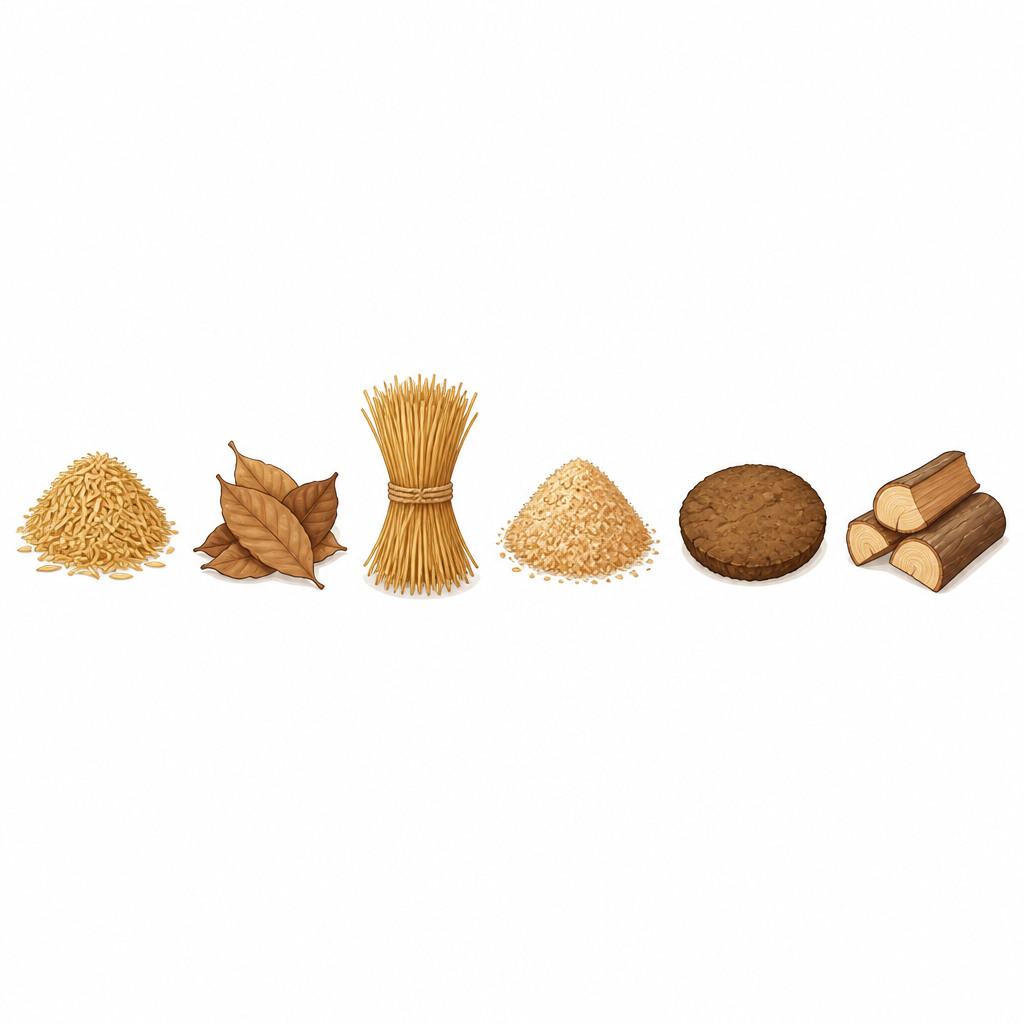
Traditionally, biomass is simply burnt to get heat. Loose, uncompressed biomass has two problems though. First, it is light and scattered, so storing it and carrying it about is troublesome. Second, loose biomass does not burn well: it gives off a lot of smoke and produces little heat. Both problems are solved by pressing the loose biomass into a compact form before burning it.
Briquettes
A briquette is a solid fuel made by compressing loose biomass, using a binder to hold it together.
Briquettes are used for heat in homes and in industries. Because the material is packed tight, a briquette burns for a long time, is easy to carry and gives far more heat than the same material burnt loose. Briquettes are of two main kinds: carbonized briquettes and noncarbonized briquettes.
Carbonized Briquettes
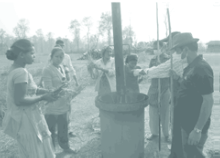
A carbonized briquette is a compressed block of char. Here the biomass is not pressed directly. It is first turned into char, and the briquette is made from that char.
Charring is the method of preparing char by burning carbon rich materials such as firewood, weeds and husk in a low supply of oxygen.
A carbonized briquette is made in this order:
- Carbon rich material such as firewood, weeds or husk is burnt in a low supply of oxygen to make char.
- The char is ground into a powder.
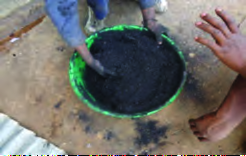
- The char powder is mixed with a binder and kneaded into a paste.
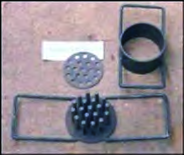
- The kneaded mixture is placed in a moulder and pressed, which produces a briquette of a fixed shape.
The binders used are sticky clay, a paste cooked from broken rice flour, and molasses. Starch in liquid form, like the starch found in plants, can also be used. The binder's job is to glue the char particles to one another so that the briquette does not crumble.
Noncarbonized Briquettes
In a noncarbonized briquette the biomass is pressed directly, without being turned into char first. In most villages of Nepal, husk is mixed into cattle dung, the mixture is shaped by pressing with the hands, and the shaped lump is dried into a dung cake. A dung cake made with this low hand pressure is one kind of noncarbonized briquette.
Noncarbonized briquettes are also made by pressing biomass such as sawdust, husk and paper under high pressure. Agricultural residues can be used too: sugarcane bagasse, sunflower stalks, groundnut shells, peanut shells and coconut shells. Made this way, a machine that presses under high pressure is used, and besides the high pressure, heat and a binder are added as needed. Piston press, screw press and roller press technologies are used to make noncarbonized briquettes.
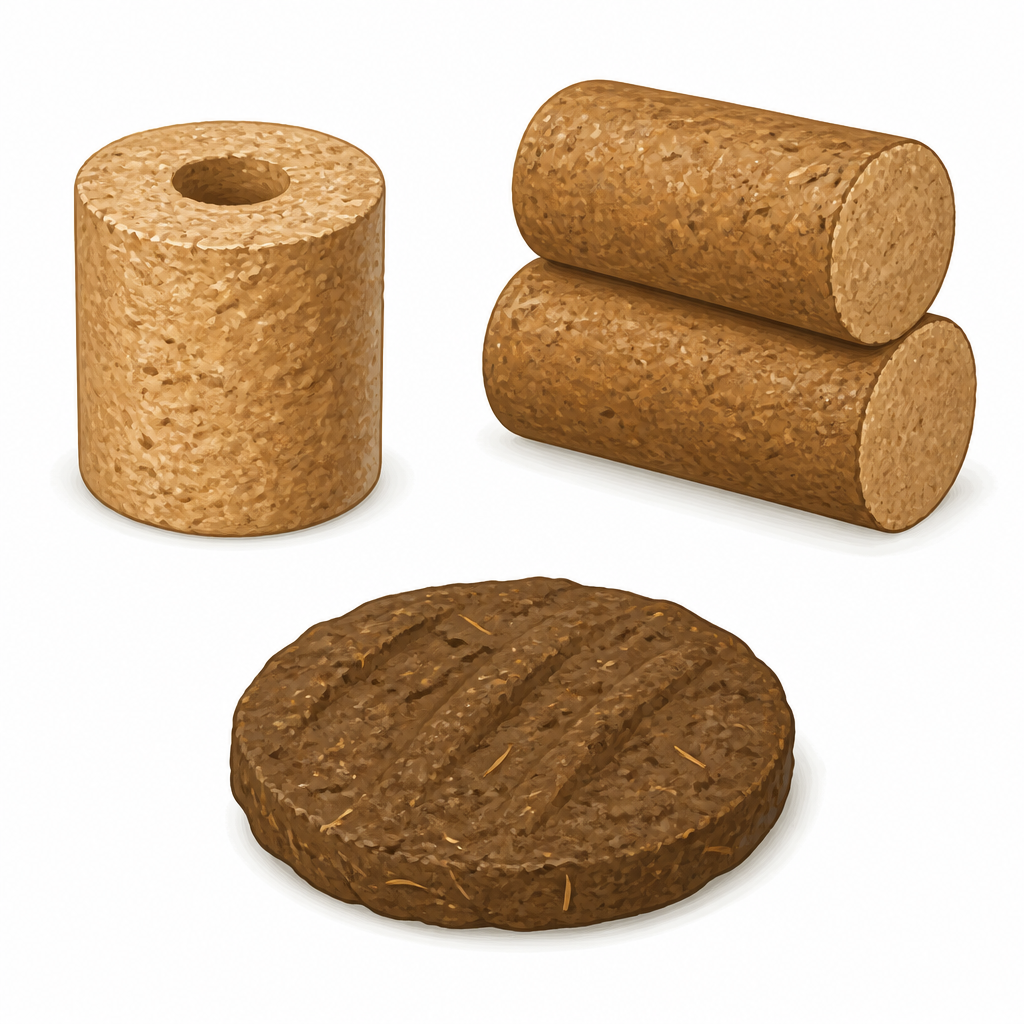
Briquette technology is not new to Nepal. In 1986 AD a private Japanese company prepared husk briquettes with screw press technology at the Khumaltar agriculture complex. From 2078 BS, Nepal Rastra Bank brought in a machine to make briquettes out of old worn out banknotes instead of burning them.
| Basis | Carbonized briquette | Noncarbonized briquette |
| State of raw material | The biomass is first charred into char | The biomass is pressed directly |
| How it is made | Char powder is kneaded with a binder and pressed in a moulder | Pressed by low hand pressure or by a high pressure machine |
| Example | A compressed block of char | A dung cake, or a pressed sawdust briquette |
Uses of Briquettes
- To warm rooms in winter
- To cook food and heat water
- To give warmth to a mother after childbirth and to warm her baby
- To dry goods such as vegetables, mushrooms and wool in industry
- To give heat to chicks on a poultry farm
Advantages of Briquettes and Precautions
A briquette is a source of renewable energy. The advantages of using briquettes are these:
- It gives off little smoke when burnt, so air pollution is reduced.
- Agricultural residues are put to good use by turning them into briquettes.
- Less firewood is burnt for heat, which helps conserve the forests.
- Briquettes can be produced commercially and sold for income.
- Briquettes are easy to transport and use and give high heat, so time is saved.
For all these advantages, producing briquettes commercially is expensive. Briquettes also spoil in the rainy season if they cannot be stored where they stay dry.
Never burn a briquette with the doors and windows closed. Keep a burning briquette far from the reach of children. Do not burn a briquette placed straight on the floor: set it in a container resting on stones or bricks and burn it there.
Biogas
Biogas is the gas collected by letting organic matter decompose in an environment that has no oxygen.
In rural areas biogas is collected mainly from cattle dung, which is why it is also called gobar gas, the Nepali name for dung gas. Along with methane, biogas contains carbon dioxide, hydrogen, nitrogen, water vapour and hydrogen sulphide. Methane is the gas that burns, so biogas can be burnt in a stove to cook food.
Construction of a Biogas Plant
A biogas plant is built with three main parts: the mixing tank, the dome and the outlet chamber. Dung and water are blended in the mixing tank, the gas collects in the dome, and the used slurry leaves through the outlet chamber.
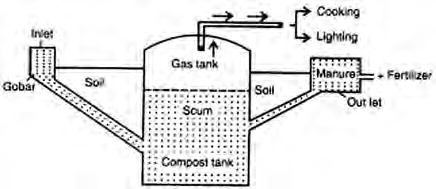
The plant works like this:
- With the help of the stirrer in the mixing tank, dung or other organic matter is blended with water into a slurry.
- The slurry is sent down the inlet pipe into the digester.
- In the digester, with no oxygen present, the dung or organic matter decomposes and biogas is produced.
- The gas produced collects in the dome.
- Opening the valve fitted on the gas outlet pipe lets the collected gas travel along the pipe to where it is used.
- As the pressure of the gas pushes down, the extra slurry in the digester moves into the outlet chamber.
- When that chamber fills too, the slurry passes through the slurry outlet and collects in the compost pit outside.
One plant gives two products: burnable gas from the dome, and manure for the fields from the compost pit.
Advantages of Using Biogas
Gobar gas is worth using because it is a strong source of heat, the organic manure it leaves behind is of good quality, it pollutes less, and it protects the forests:
- Burning biogas is smokeless, so air pollution is controlled.
- Building the plant takes a large investment at the start, but after that it is almost a free source of energy for a long time.
- Biogas can also light lamps for illumination.
- Using biogas replaces the burning of firewood, which helps conserve the forests.
- The slurry from the plant, kept in a pit and used as compost manure, gives plants good growth and development.
Do not put the slurry straight onto the fields. Leave it in the open and use it only after some days.
The full lesson is waiting for you
The notes are free to read in full. A free account opens the rest of the practice, and tracks your progress and confidence score for every subject. Presentations and videos need approval from Learn Yeti.